Radio signals seen directly from an exoplanet for the first time—here's what astronomers found
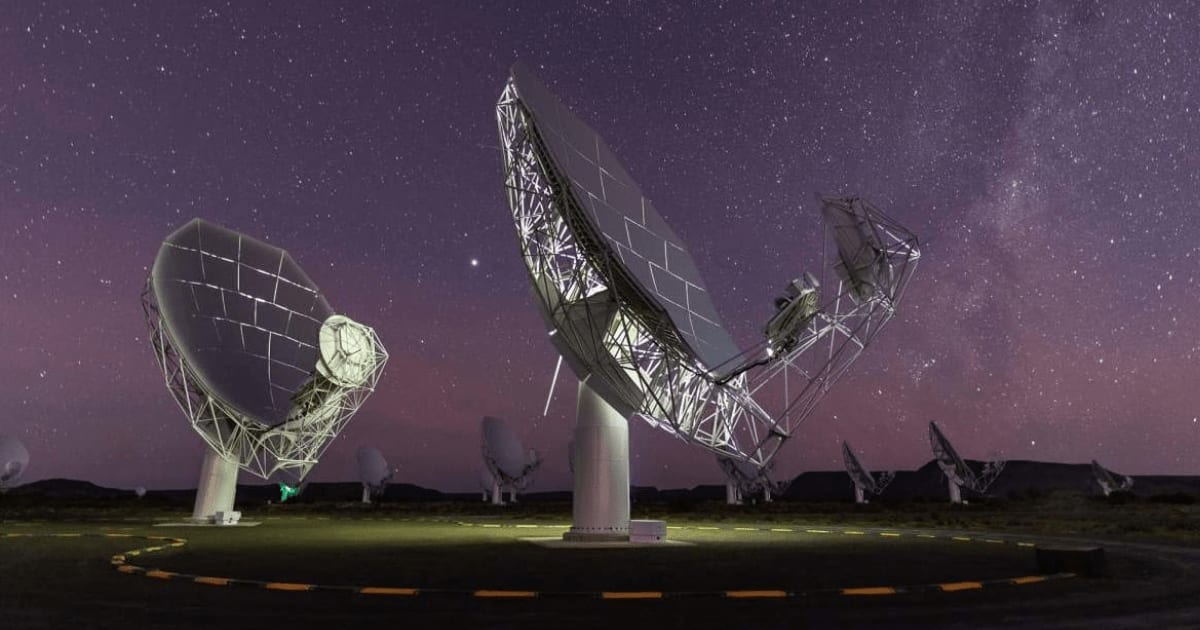
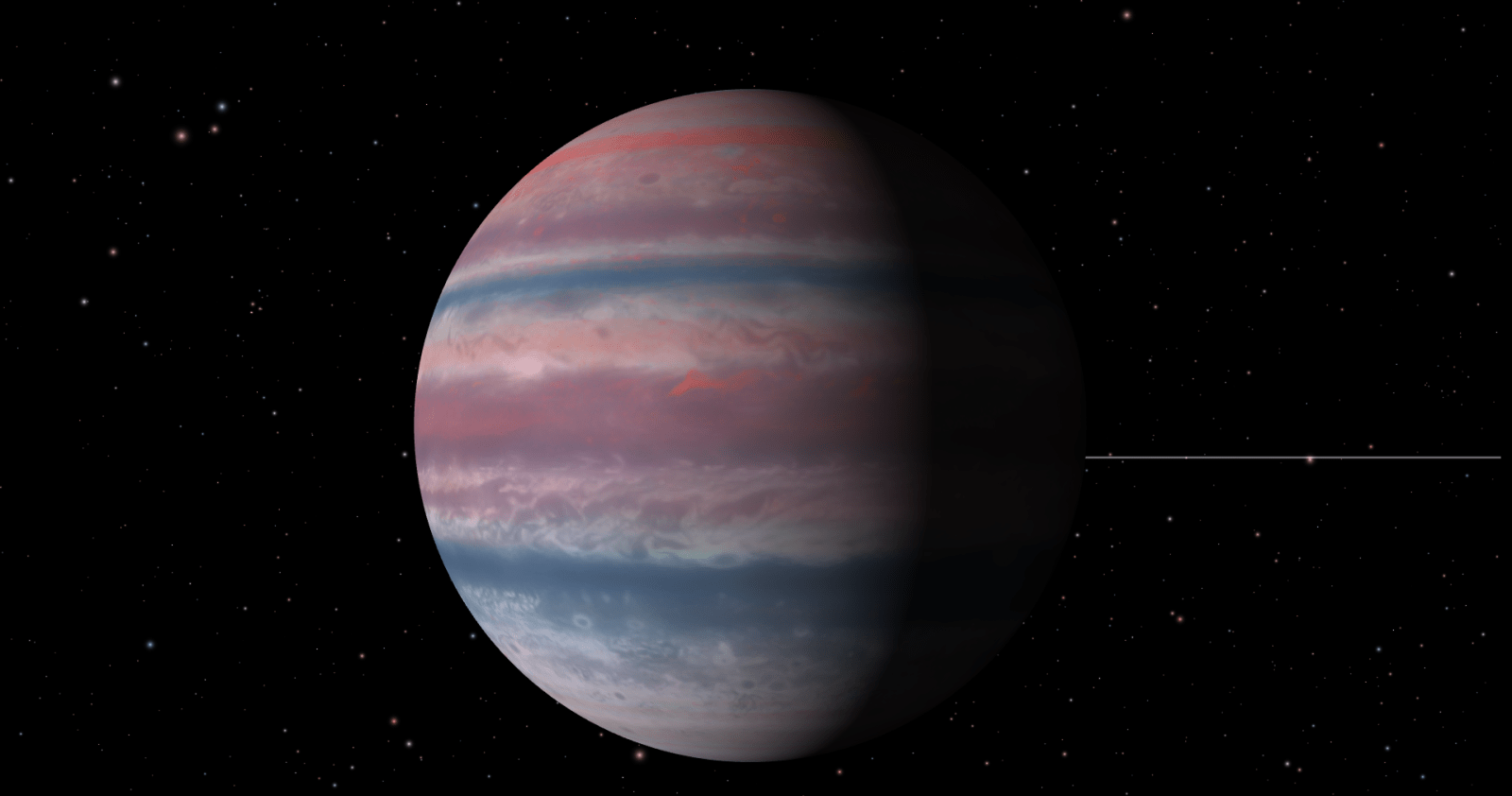
Astronomers have been waiting to detect radio waves from exoplanets ever since their discovery in the 1990s. And now, they have finally been able to detect one. Using the MeerKAT radio telescope in South Africa, a team of researchers from the Center for Astrophysics | Harvard & Smithsonian and the University of Oregon spotted rapid and recurring radio bursts arising directly from Beta Pictoris b—a huge gas giant located around 64 light-years away. The study, which is the first-time direct observation of radio emissions from an exoplanet, is yet to be published in a peer-reviewed journal but is available online at arXiv.
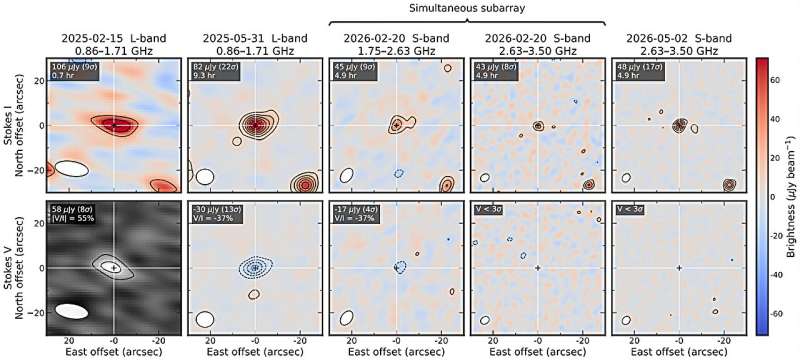
Earlier attempts to trace radio signals from exoplanets faced a major hurdle: scientists were unsure whether the radio signals detected originated from the planet or the host star. In this study, scientists used a unique method to uncover the source—the team compared the radio images with the exact positions of background quasars at distant locations. Using these positions as fixed markers, the team plotted the precise positions of the exoplanet and its host star. Layering the radio images over the plotted map then showed that the radio signals aligned with Beta Pictoris b's position rather than the star's.
And no, the detection of radio signals from exoplanets is not a sign of communication from aliens. The signals came from auroras associated with the planet's magnetic field. Auroras are triggered when high-energy charged particles move along a planet's magnetic field lines and interact with its upper atmosphere, exciting the molecules present in the atmosphere and producing a glow. This is also how the northern lights are produced on Earth.

But how did the researchers link the detected signals to auroras? The answer lies in a certain characteristic of auroral radio waves. Auroras have been known to produce circularly polarized radio waves—which was observed by the researchers in the signals from Beta Pictoris b.

The radio emissions also reveal information regarding the planet’s magnetic field, making this potentially the first direct measurement of an exoplanet's magnetic field strength, as claimed by the researchers. According to the report, Beta Pictoris b has a magnetic field strength of around 1,250 gauss in the region producing the radio signals. That's not only stronger than Earth's magnetic field, which is about half a gauss, but also Jupiter's. “It’s an incredibly, incredibly strong magnetic field, much stronger than anything in our solar system," co-author Yvette Cendes from the University of Oregon told Science News.

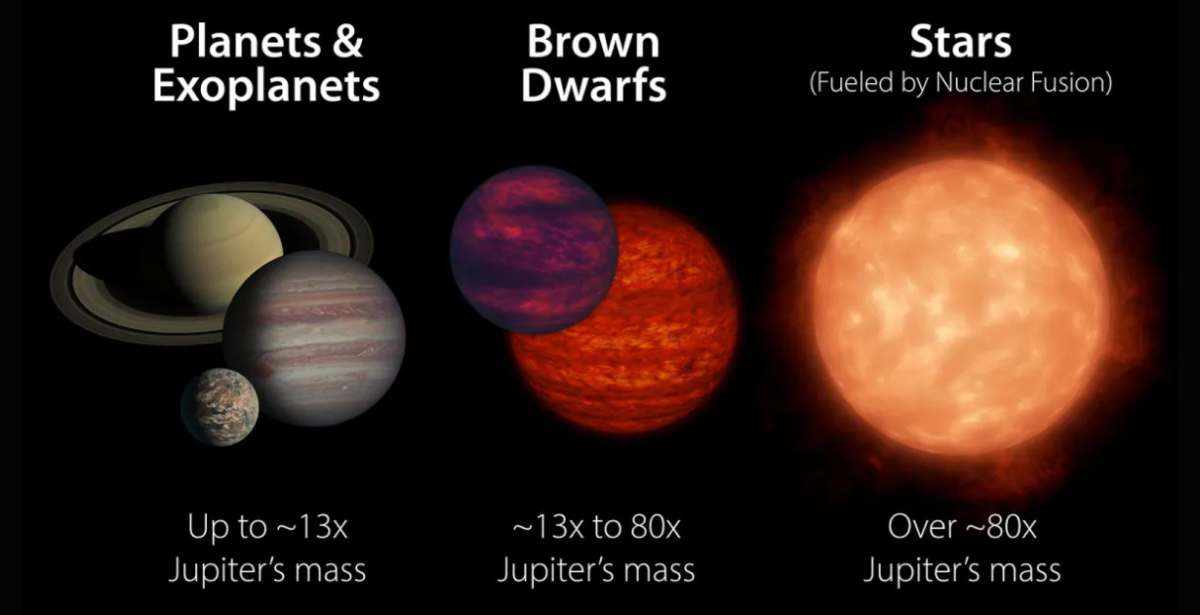
That said, it's not surprising at all considering the exoplanet has a mass that is around 10 times that of Jupiter. It is, in fact, comparable to brown dwarfs—celestial bodies that are too large to be planets and too small to be stars. Previous evidence of the presence of auroras on brown dwarfs indicates magnetic field strengths of thousands of gauss, further implying that the recent findings may not be an anomaly.
The team states that their findings are validated by theoretical predictions for the magnetic field strengths of young, massive giant planets. These recent observations also offer astronomers a new way to perform direct measurement of an exoplanet's magnetic field and test theoretical models of planetary interiors.
More on Starlust
We may have been looking for alien signals on the wrong radio channels
Earth’s radio signals highlight regions where extraterrestrial life could find us