Watch: Astrophotographer spots NASA’s Nancy Grace Roman Telescope on its way to Lagrange Point 2
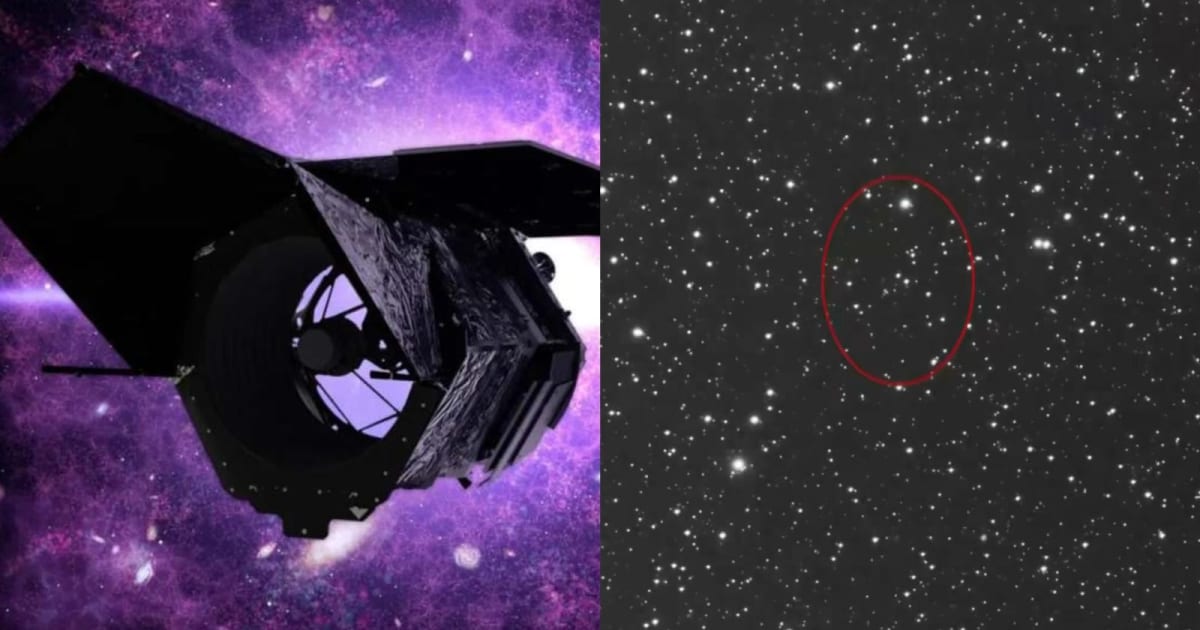
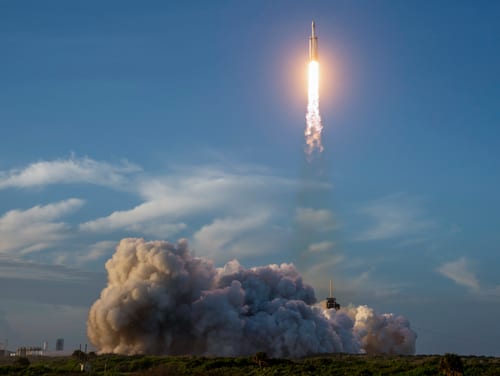
It has been nearly two weeks since the launch of NASA’s Nancy Grace Roman Space Telescope, and visuals of its journey to space continue to pour in. The latest among those visuals is one from astrophotographer Andrew McCarthy, who spotted the observatory cruising to its destination in deep space. On his social media platforms, McCarthy shared a compilation video of how he captured Roman’s launch on a SpaceX Falcon Heavy rocket and how he tracked it when the telescope was over half a million miles away from Earth.
Once Roman separated from the rocket, McCarthy said he relied on the ephemeris shared by NASA’s Jet Propulsion Laboratory (JPL) to find its location using a tracking mount on his telescope. An ephemeris is a data set that provides the calculated locations of different astronomical objects, both natural and artificial. “I just had to plug that (ephemeris) into my tracking mount to find it,” McCarthy says in the video.
Nancy Grace Roman Space Telescope: capturing it during launch, and again halfway to L2! pic.twitter.com/JBT6jCIgLL
— Andrew McCarthy (@AJamesMcCarthy) September 8, 2026
In the process, he photographed the Helix nebula, which is located approximately 650 light-years away from Earth in the constellation Aquarius, and the 118-mile-wide Metis asteroid, among thousands of other objects that were in the view. Finally, he found what he was looking for—the Roman telescope visible as a tiny moving dot against the backdrop of a sea of stars.
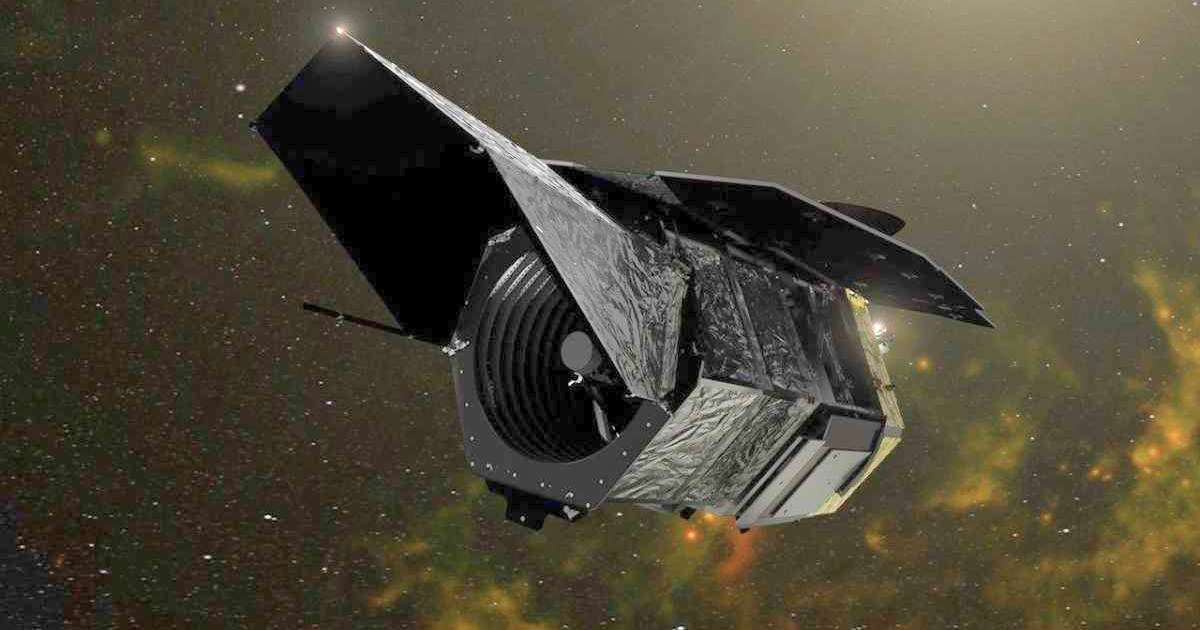
The Roman telescope is currently on a three-month journey to the second Earth-Sun Lagrange Point, or L2, which is about a million miles from our planet. It will soon enter a halo orbit around L2, which is the perfect spot for Roman as it will provide an unobstructed view of the universe with little fuel usage. Besides, Roman will observe the universe in infrared light, so its instruments need to be protected from the heat of unwanted objects like the Sun and Earth—something which wouldn’t have been possible on Earth or in its orbit.
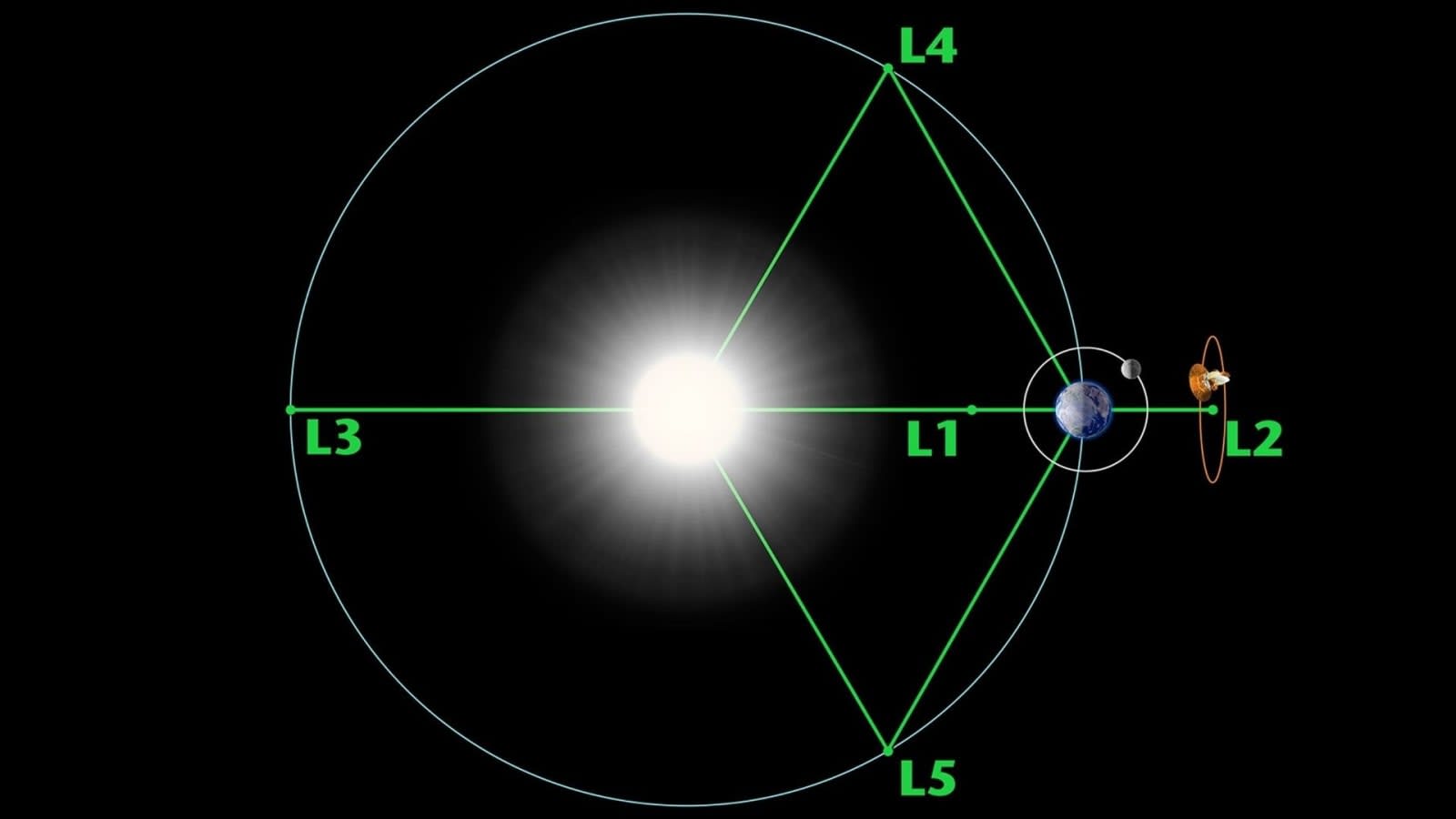
Until Roman reaches L2, the mission teams will conduct a series of procedures and course corrections to ensure the telescope is healthy and on the right trajectory. On August 31, NASA announced the successful completion of the first mid-course correction burn. Its orbital insertion at L2 will take place approximately 100 days after launch, and once it enters the halo orbit, Roman will carry out station-keeping burns roughly every 28 days to stay stable. Until now, several major components of the telescope have been deployed and a key instrument has been powered on. These include the high-data-rate dish antenna, which will send terabytes of data every day, the solar panels that generate electricity, and the sunshade that will block unwanted sunlight from entering the telescope. The coronagraph instrument, which will directly image exoplanets, has also been activated.

The Roman telescope is designed to study worlds outside our solar system and unravel secrets of the dark universe—primarily dark energy and its role in cosmic expansion. Its field of view is at least 100 times greater than that of the Hubble telescope, and it will observe the sky a thousand times faster than Hubble. Scientists have predicted that by next year, Roman will find thousands of new exoplanets while providing new insights into celestial objects such as supernovae and black holes.
More on Starlust
Why NASA's Nancy Grace Roman Space Telescope could change how we see the universe?
NASA’s Roman Space Telescope may finally reveal how the universe's first black holes formed