Artemis II: NASA starts rolling the SLS rocket and Orion spacecraft to Launch Pad 39B
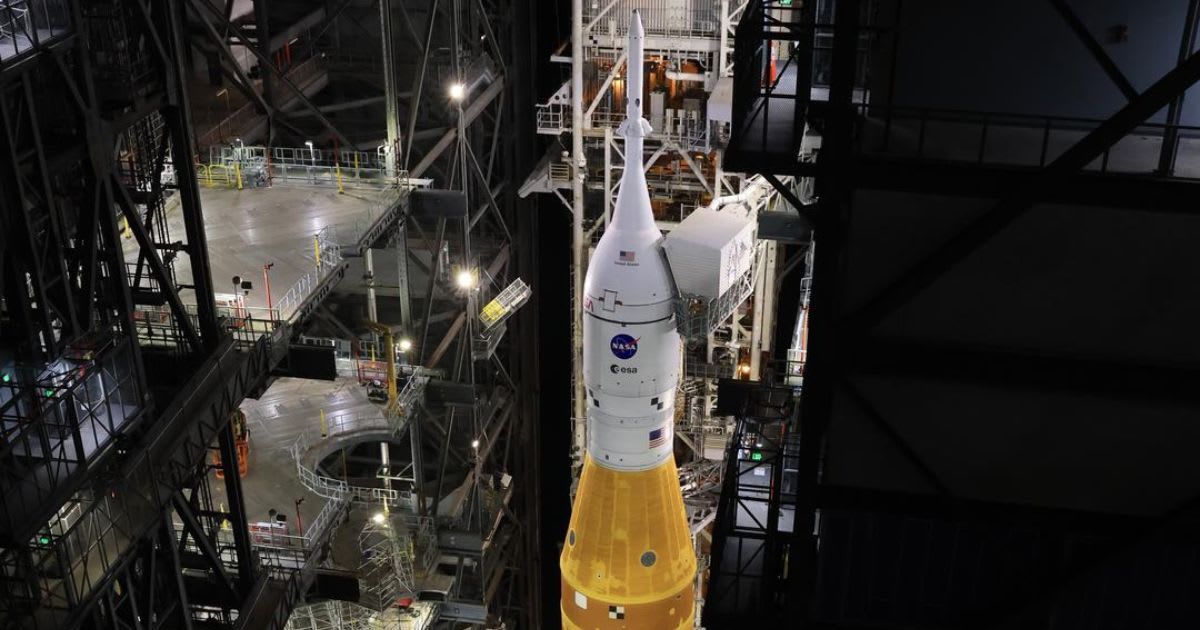
The much-awaited rollout of NASA’s Artemis II rocket is officially underway, as the massive Space Launch System (SLS) rocket and Orion spacecraft are now being transported. NASA started the rollout at 12:20 am EDT on March 20 from the Vehicle Assembly Building (VAB) to Launch Pad 39B at the Kennedy Space Center in Florida. The first motion was scheduled for 8 p.m. EDT on March 19 but got delayed for over four hours, possibly due to weather conditions. The 11-million-pound stack, including the mobile launcher, is carried by the agency’s crawler-transporter 2, moving at about 1 mph over 4 miles (6.4 km)—a journey that can take up to 12 hours. The agency’s official YouTube channel is currently livestreaming the rollout—you can watch it here.
The ongoing SLS rollout is a key prelaunch milestone ahead of Artemis II’s highly anticipated launch, currently targeted for the first week of April. The rocket will be carefully moved along a specially built crawlerway toward the launchpad, where the teams will prepare the vehicle for liftoff. The rollout is conducted to complete essential checks, like verifying the systems and integration with ground support equipment. This marks the second rollout of the Artemis II rocket, following a previous rollout on January 17 for the first wet dress rehearsal.
Engineers are targeting 8 pm ET on Thursday, March 19, for rollout of Artemis II.
— NASA Artemis (@NASAArtemis) March 18, 2026
NASA’s crawler-transporter 2 will carry the 11-million-pound stack at about 1 mph along the four-mile route from the Vehicle Assembly Building at @NASAKennedy to the launch pad. pic.twitter.com/5Agyd997ou
The first full fueling test was cut short by a liquid hydrogen leak in the SLS—fixed later on the launch pad. Despite a successful second wet dress rehearsal, the rocket was rolled back to the VAB due to a persistent helium flow problem, among other issues. With these resolved, the rocket now rolls out to the pad without another wet dress rehearsal planned, ready to capitalize on the launch window that opens from April 1. Meanwhile, the Artemis II crew of four—Reid Wiseman, Victor Glover, Christina Koch, and Jeremy Hansen—has entered quarantine in Houston to prepare for the flight. The 10-day mission around the Moon marks the first crewed journey beyond low Earth orbit since 1972, as further missions like Artemis IV aim for a long-pending lunar landing.
More on Starlust
Here's what NASA is planning for Artemis IV and V now that the roadmap to the Moon has been revised
NASA may roll out Artemis II SLS rocket sooner than expected as ground teams make up time