Expedition 74 conducts quantum experiments in search for dark matter among other activities on ISS
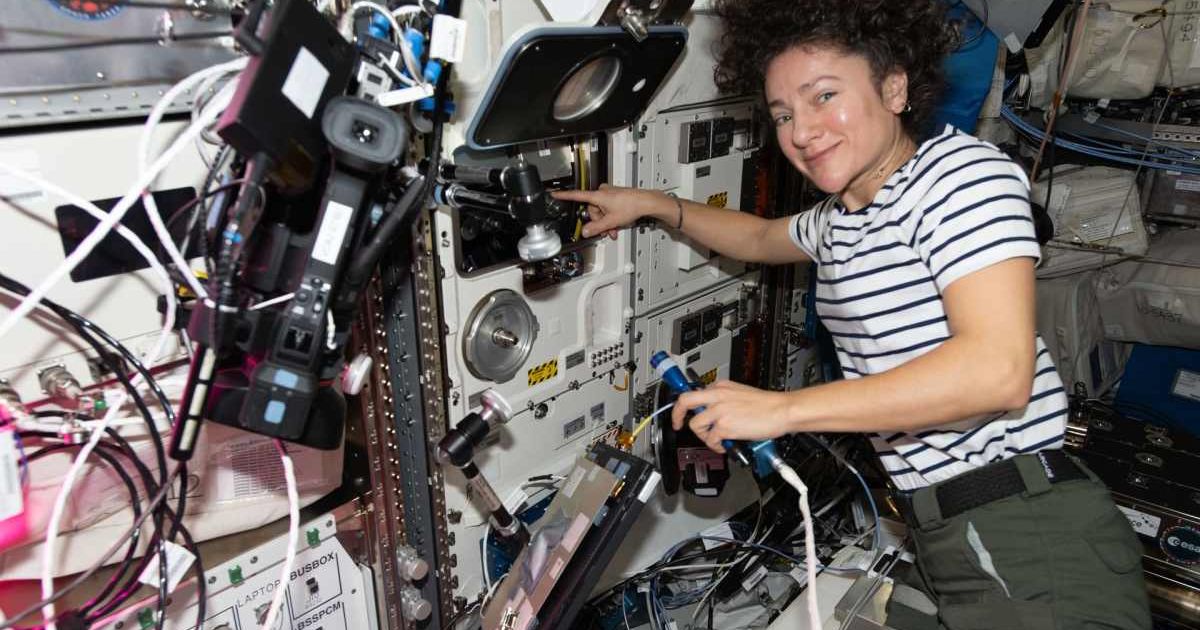
According to NASA, the Expedition 74 crew members aboard the International Space Station focused a part of their efforts on quantum research as of April 29, 2026. NASA astronaut Jessica Meir led the research by servicing the Cold Atom Lab (CAL), a facility that chills atoms to temperatures near absolute zero (0 Kelvin), a point where there are no vibrations of particles. Preparations were made by the SpaceX Crew-12 commander to trap and measure atoms with extreme accuracy by connecting fiber-optic cables that emit light with precision. This work is essential for studying atomic wave functions and testing the principles of general relativity. The unique environment of space is helpful in conducting physics in ways that are impossible under the heavy influence of Earth's gravity.
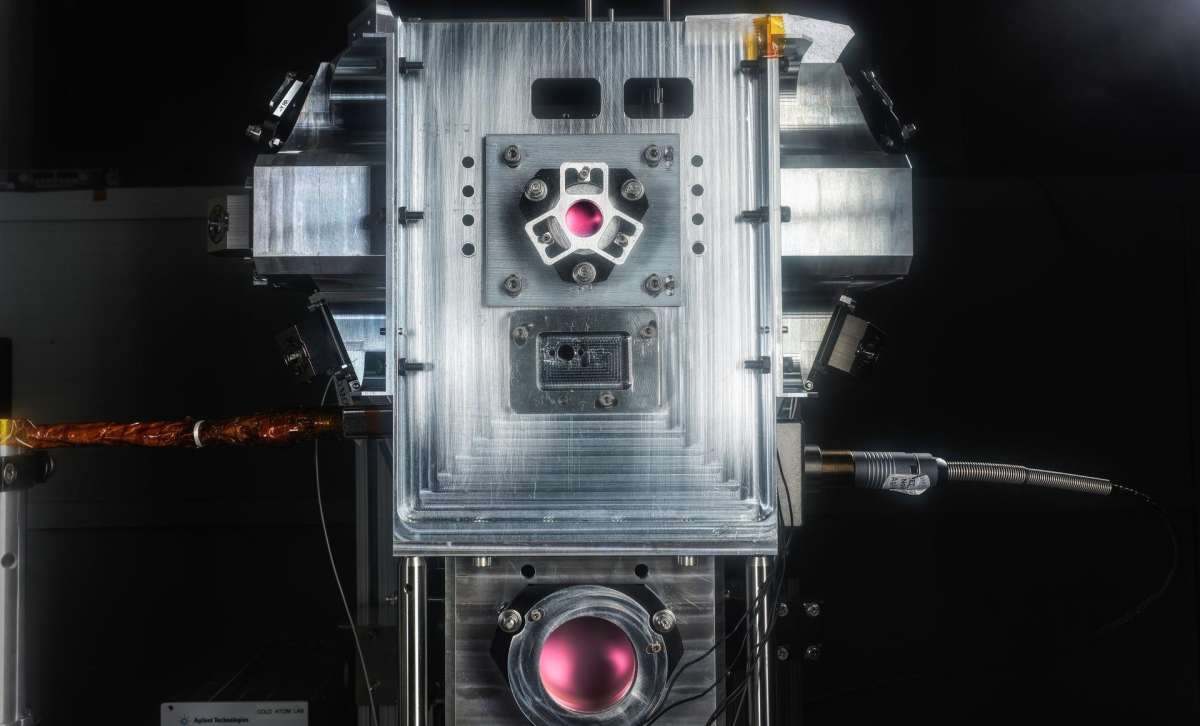
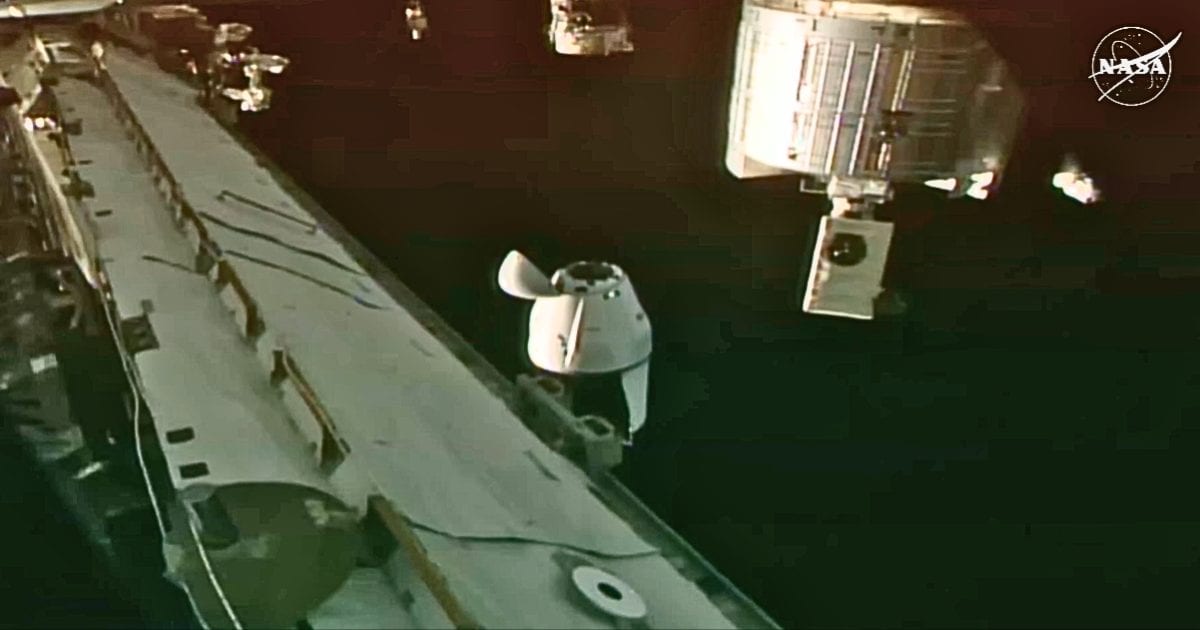
Aboard the ISS, CAL creates conditions where clouds of atoms are exposed to conditions about ten billionths of a degree above zero kelvin. A feature called Delta-kick cooling allows scientists to access a range of effective temperature that allows precise focusing and shaping of atomic clouds. Meir’s work with the lab allows scientists to study fundamental behaviors that are difficult for ground-based experiments. This is because the constituent particles lose their kinetic energy at such low temperatures, leaving behind only their quantum characteristics. The recent delivery of the Science Module-3X with Northrop Grumman’s CRS-24 also increases CAL’s capabilities by raising the number of atoms it can produce. This should allow researchers to not only get a better grasp of Einstein’s general relativity but also provide insights into dark matter as well.
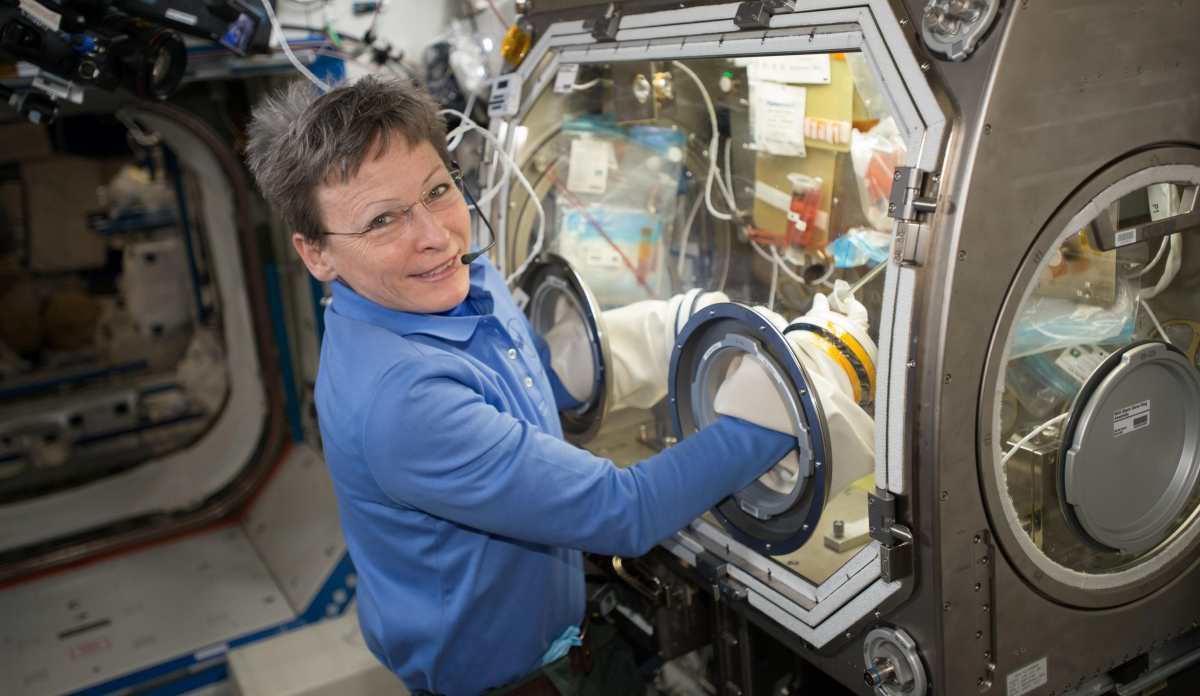
Besides quantum physics, Meir utilized the Microgravity Science Glovebox (MSG) to explore the behavior of colloidal solids, which are tiny particles suspended in a Jello-like substance. The MSG is a specialized rack-level facility in the US Laboratory that provides a safe, contained environment for handling materials that might be hazardous. This specific investigation, known as COLIS (Colloidal Solids), looks at how these soft solids form and remain stable without being disturbed by gravitational forces. Because gravity often interferes with how proteins and particles interact on Earth, conducting this research in weightlessness allows for a deeper understanding of material design. The findings from this investigation could eventually revolutionize manufacturing, leading to better food textures, improved personal-care products, and advanced medicines.
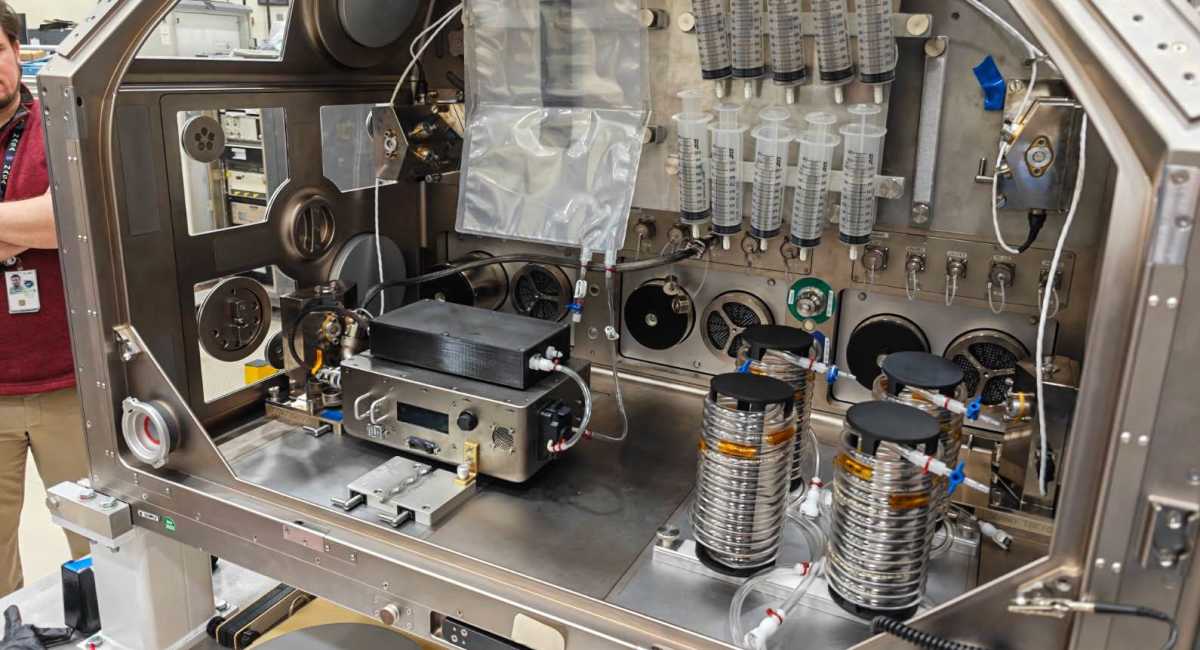
The crew also prioritized self-sufficiency for future deep-space travel through a biomedical study called IVGEN Mini (Intravenous Fluid Generation – Mini). French astronaut Sophie Adenot of the European Space Agency worked with a miniaturized system designed to turn the spacecraft's clean drinking water into medical-grade saline solution. Adenot’s work will let researchers determine how long the fluids need to mix in microgravity to ensure they are safe for treating patients. This technology is vital for missions traveling far from Earth, as it reduces the need to pack heavy medical supplies that might expire. Proving that crews can generate their own intravenous fluids on demand is important to NASA and its partners for getting closer to a reality where astronauts can manage medical emergencies independently during long-haul voyages.
Exp 74 trained to configure quantum physics hardware, analyzed intravenous fluid produced on the space station, and pedaled on a brand new exercise cycle on Wednesday advancing knowledge and health in space. More... https://t.co/ZXzVYr5CM7 pic.twitter.com/BWVGn2Ltsk
— International Space Station (@Space_Station) April 29, 2026
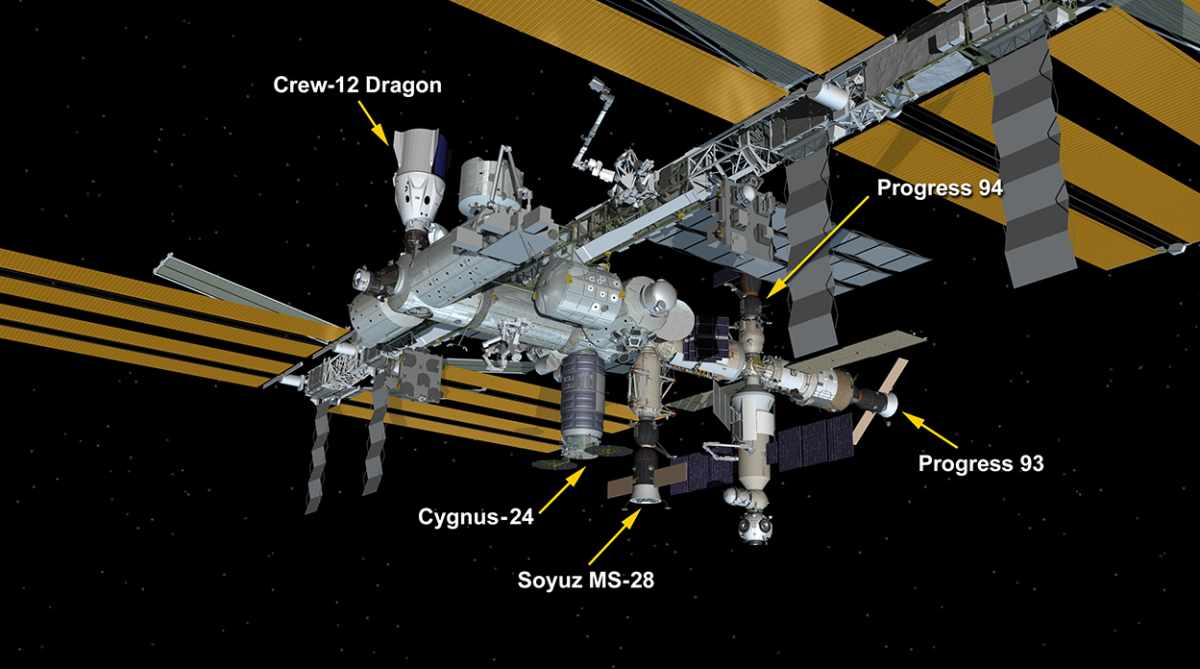
NASA's Chris Williams, alongside Adenot, worked inside the Columbus laboratory module, which is ESA's largest contribution to the station, to install new hardware and ethernet cables. These upgrades will allow ground controllers to downlink research data faster. Williams also tested the new European Enhanced Exploration Exercise Device (E4D), his first time doing so. Crew-12’s pilot, Jack Hathaway, inspected a separate exercise device called the advanced resistive exercise device in the Tranquility module, which uses resistance to mimic the experience of lifting free weights in Earth's gravity. In another part of the station, Roscosmos’ ISS Commander Sergey Kud-Sverchkov and cosmonaut Sergei Mikaev unloaded the Progress 95 Soyuz cargo ship, which delivered fresh food, clothing, and scientific supplies. They also worked on the spacecraft's docking hardware and air ducts. In the meantime, Andrey Fedyaev performed maintenance within the Rassvet module, disinfecting water tanks and cleaning the ventilation fan screens that keep the station’s air breathable. These routine tasks are what ensure that the orbital outpost remains functional before it is planned to cease operations in 2030.
More on Starlust
Clumps of apparently 'collisionless' dark matter may explain certain cosmic puzzles
NASA's Hubble Space Telescope detects a faint galaxy that is almost entirely dark matter