You can track Artemis II mission in real time, thanks to this new NASA platform
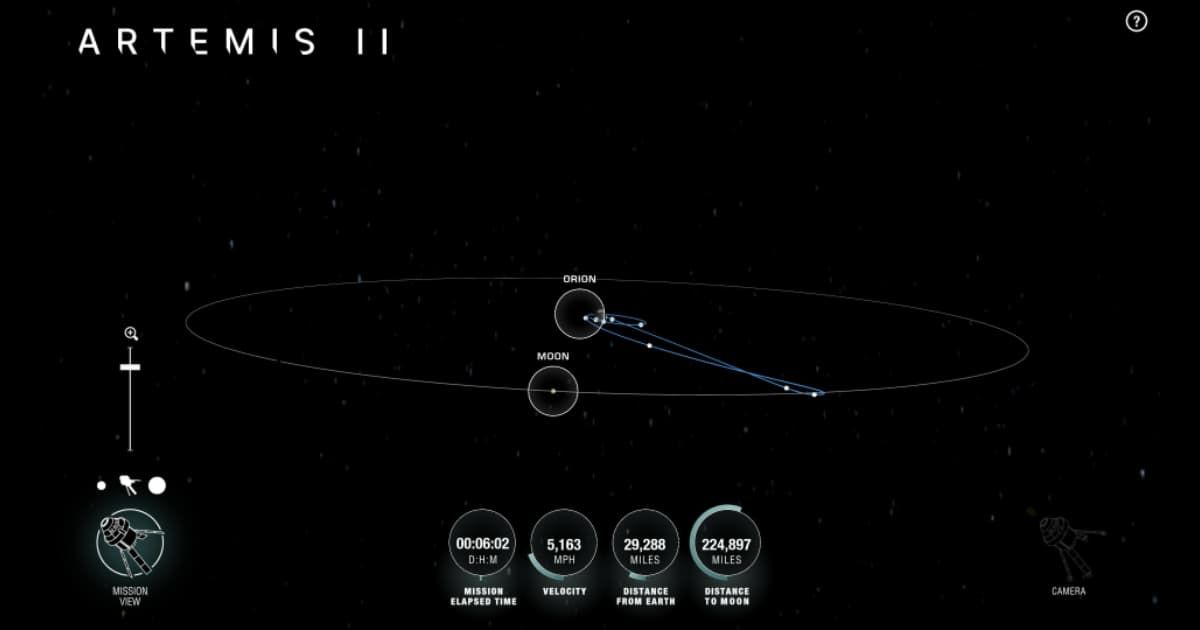
In an effort to make its Artemis II mission more accessible to the masses, NASA has come up with a platform that will share real-time flight data with the public. The platform, known as the Artemis Real-time Orbit Website (AROW), tracks the position of Artemis II’s crew inside Orion throughout its free return trajectory around the Moon and back. As long as one can access the internet, they can learn about the distance of Orion from the Earth and the Moon, the velocity of the spacecraft, as well as the elapsed mission time. The platform has been made available on both NASA's app and website, accessible via the following links:
Website: www.nasa.gov/trackartemis
The way AROW will work is by relying on the data being transmitted to Houston’s Johnson Space Center by Orion. After a proximity operations demonstration of Orion to check its handling by the pilot, precise readings of its movements can be made as well. Onboard the spacecraft are many sensors that gather this precise data, which consists of what is called ‘state vectors’. These vectors denote each and every movement that Orion makes. Other basic information about the flight will be available across the entire duration of the mission, except for about a minute post liftoff and after reentry of Orion into our atmosphere.
Follow the crew around the Moon during the Artemis II mission with AROW—the Artemis Real-Time Orbit Website—on web and mobile!
— NASA Artemis (@NASAArtemis) March 6, 2026
Track Orion’s location, get mission stats, and even use AR on mobile to see where the crew is relative to your spot on Earth. https://t.co/tlH0b4ZvTB pic.twitter.com/50M2SfOjE4
AROW will also provide contextual information about our natural satellite. This includes facts about the landing sites chosen during the Apollo program, as well as characteristic features of the Moon. The app, which will allow tracking about three hours into the mission upon the separation of SLS’ upper stage, also features an augmented reality tracker. Once a user calibrates their device, indicators guiding movements for users will appear in such a way that Orion can be located relative to them on Earth.
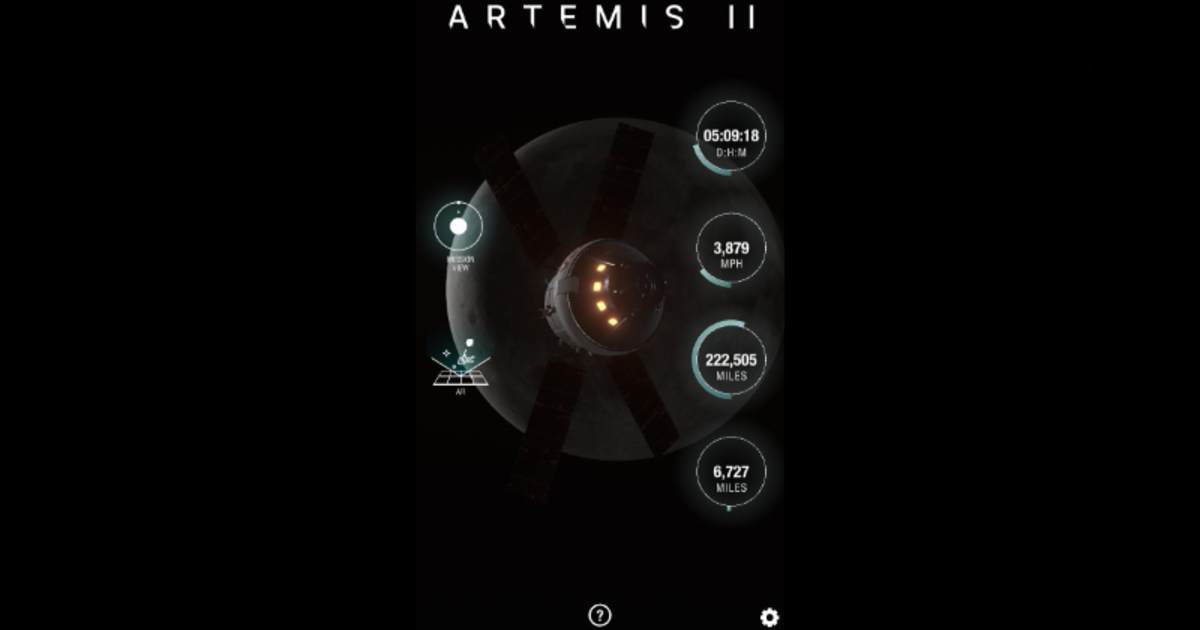
While for many enthusiasts, learning about the real-time position of the Orion capsule would suffice, what NASA also aims to achieve is giving artists and creators a reference point to work with. Should they need information to create their own applications for tracking Orion or to describe the mission visually through art, animations or models, they can do so with much greater accuracy. This should go along way in helping the public gain a much better understanding of the mission’s scale and importance. Artemis II is the first flight of Orion with a crew, and only the second overall flight of the SLS rocket. The mission will help test the spacecraft’s life-sustaining capabilities and the rocket’s performance in putting humans on course to the lunar surroundings.
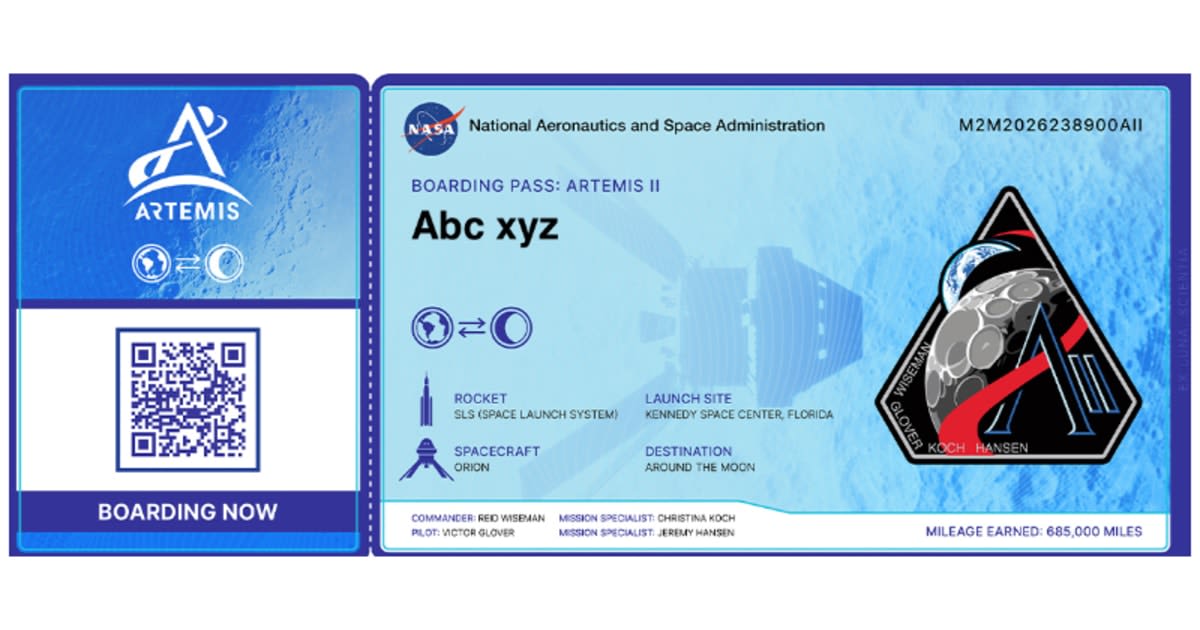
This is not the first time that NASA has made an effort to increase public engagement for the second mission of the program. Earlier, the agency invited the public to submit their names as a part of another initiative to make the mission inclusive. The submitted names are said to be stored in an SD card and brought along by the crew with their spacecraft, 'Integrity.' While a chance to get a ‘boarding pass’ was initially limited to January 21, 2026, registration for doing the same is still open owing to the launch delays that have taken place since. So far, over 5 million people have participated, showing the public enthusiasm that exists for this mission. This enthusiasm was also catered to by NASA with the introduction of the #NASAMoonCrew campaign.
More on Starlust
Here's what NASA is planning for Artemis IV and V now that the roadmap to the Moon has been revised
Artemis II: NASA fixes upper-stage helium flow issue, continues to work towards rollout