Artemis program receives boost as Blue Origin's lunar lander passes critical test at NASA facility
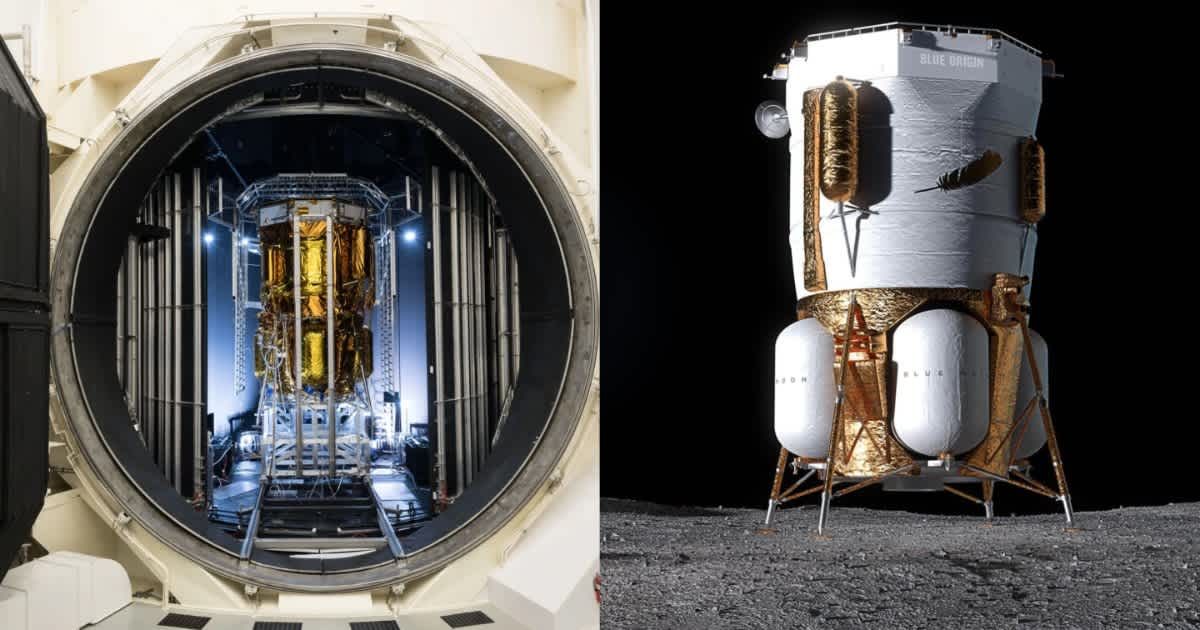
On Monday, May 4, NASA announced that Blue Origin’s Blue Moon Mark 1 (MK1) lunar lander completed environmental testing inside Thermal Vacuum Chamber A at the Johnson Space Center in Houston. Clearing this critical test was a big step forward for the uncrewed MK1 lander, also known as Endurance. The mission is funded by Blue Origin as a demonstration to advance Human Landing System (HLS) capabilities in support of NASA’s Artemis program.
Future lunar landings are taking shape right here at Johnson Space Center. 🌕
— NASA's Johnson Space Center (@NASA_Johnson) May 4, 2026
Blue Origin’s Blue Moon Mark 1 cargo lander recently completed environmental testing at @NASA's Johnson Space Center, preparing it to withstand the harsh, airless conditions modeling the vacuum of… pic.twitter.com/B4mHUg5cpr
NASA Johnson’s Chamber A is one of the largest thermal vacuum facilities in the world. Essentially, it allows engineers to simulate the vacuum of space as well as the extreme temperature conditions that a spacecraft would experience out there. Testing here enabled the team to evaluate how MK1's systems performed and verify its structural and thermal integrity before launch.
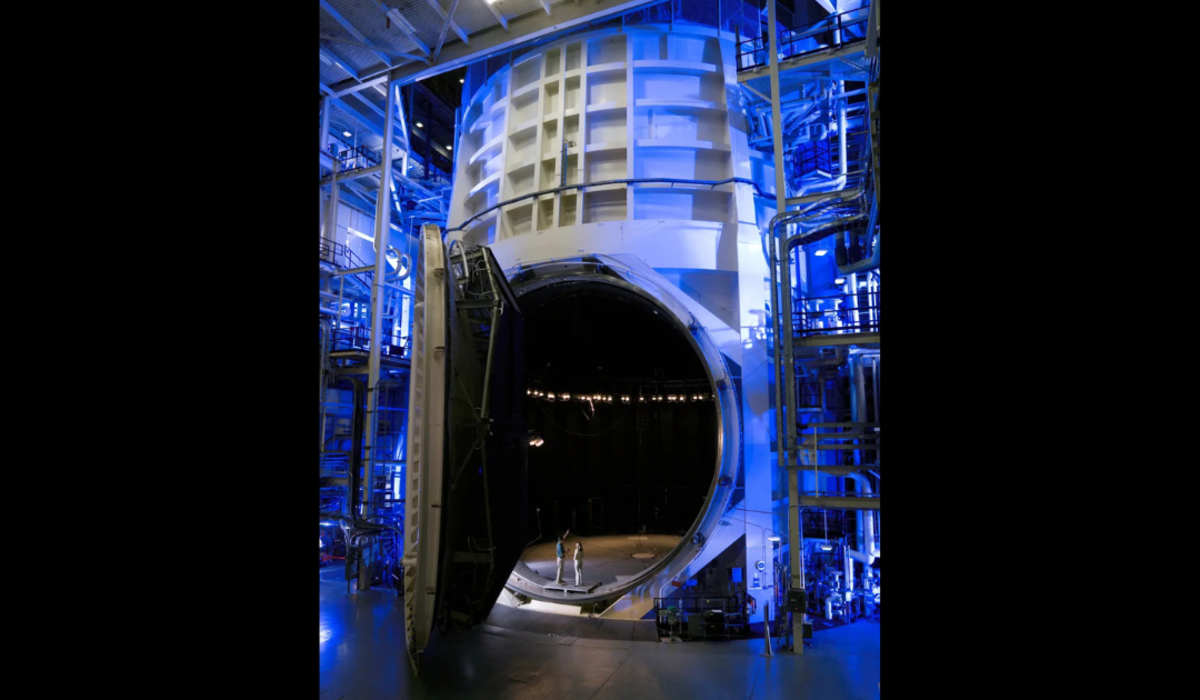
Blue Origin conducted the test for the Blue Moon Mark 1 lander under a reimbursable Space Act Agreement with NASA. As a part of their public-private partnership approach, the agency typically allows companies to use their facilities while ensuring the maintenance of safety standards, mission assurance, and alignment with their objectives.
Our second Blue Moon MK1 is moving through the production line at Lunar Plant 1 in Florida.
— Blue Origin (@blueorigin) March 23, 2026
The aft module and LOX/LH2 tanks are in assembly, with the aft module recently transitioning from a test fixture to a low-test stand for processing.
Each lander is a step toward Lunar… pic.twitter.com/ToUaCpO9MZ
The MK1 lander will carry two NASA payloads to the lunar South Pole region this year, under the Commercial Lunar Payload Services (CLPS) initiative. The Stereo Cameras for Lunar Plume-Surface Studies are high-resolution cameras to study how the lander’s engine plume (rocket exhaust) interacts with the lunar surface during descent and landing. The Laser Retroreflective Array helps orbiting spacecraft determine precise surface location using reflected laser signals.
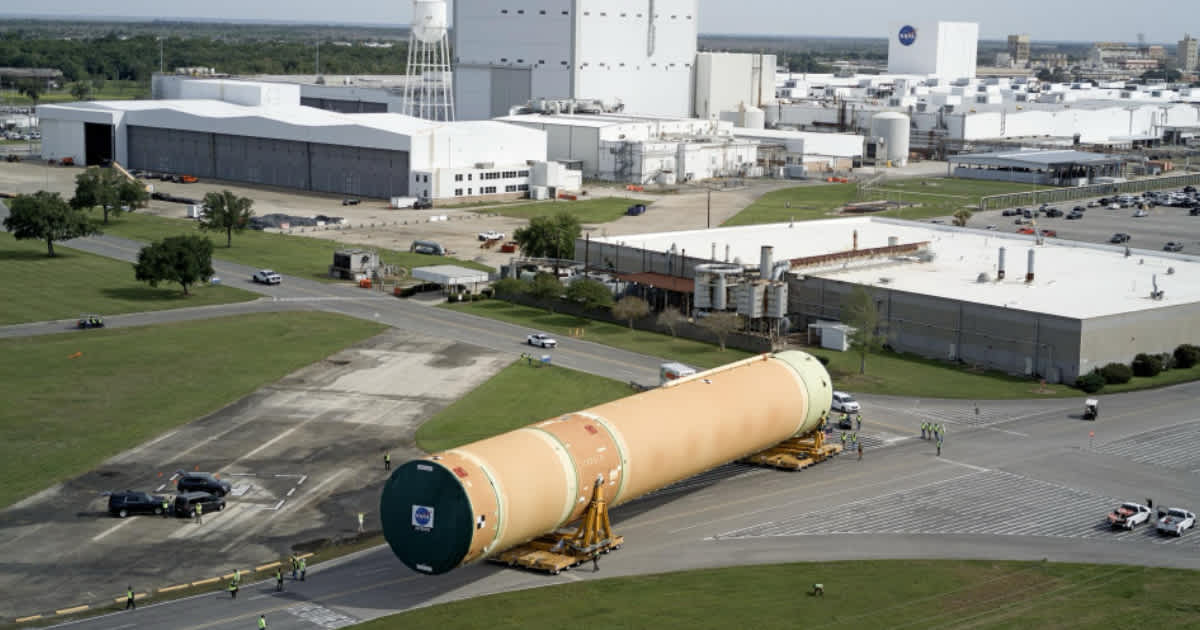
The Blue Origin lander is expected to support future lunar surface operations by demonstrating a whole array of capabilities like precision landing, cryogenic propulsion, and autonomous guidance, navigation, and control. NASA and Blue Origin will use the lessons learned from MK1’s design, integration, and testing throughout the Artemis program and beyond. MK1 will also directly contribute to the development of the Blue Moon Mark 2 (MK2). This large, crew-capable lander can transport astronauts between lunar orbit and the surface—a key step to putting humankind on the Moon again.
Blue Origin and SpaceX are both under multibillion-dollar contracts with NASA to deliver human-rated landers for upcoming Artemis missions. In fact, at least one of them is expected to deliver a lander in time for the Artemis III mission, which is going to be a low-Earth orbit enterprise under the revised roadmap. On April 27, NASA Administrator Jared Isaacman said, “I’ve received responses from both vendors, both SpaceX and Blue Origin, to meet our needs for a late 2027 rendezvous, docking, and test of the interoperability of both landers in advance of a landing attempt in 2028,” during a House hearing on Trump’s proposed budget cuts to NASA.
More on Starlust
Lunar landers could accidentally ruin the hunt for biological building blocks on the Moon
NASA Chief suggests reconsideration of SpaceX lunar lander contract amid 'race against China'