What are coronal holes on the Sun? How do they affect us on Earth?
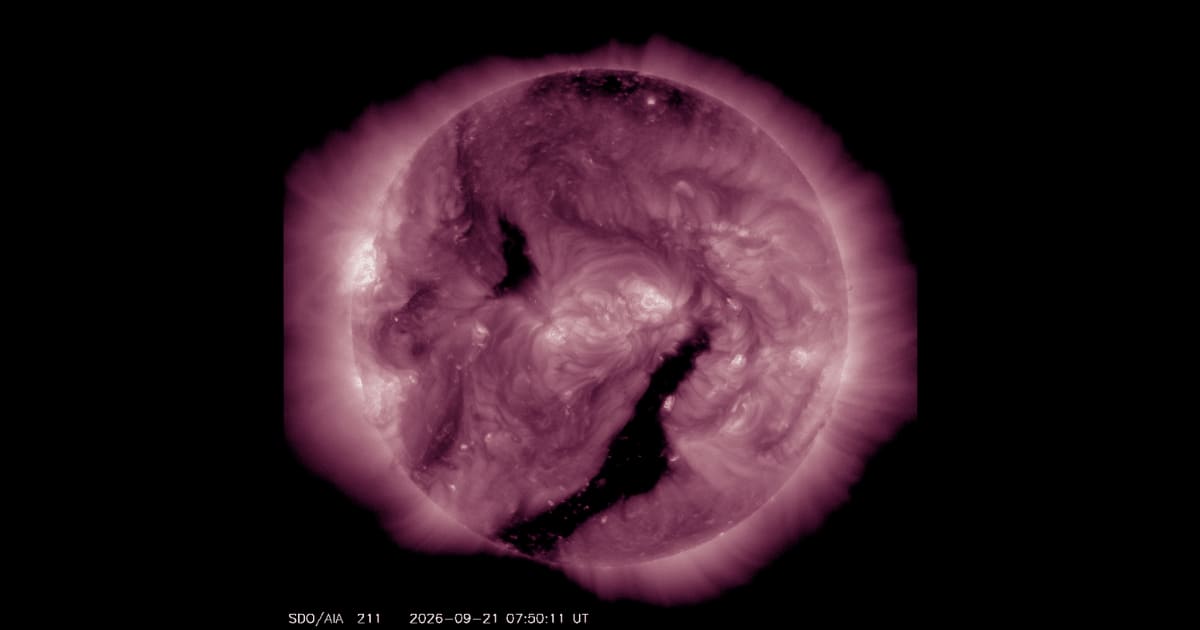
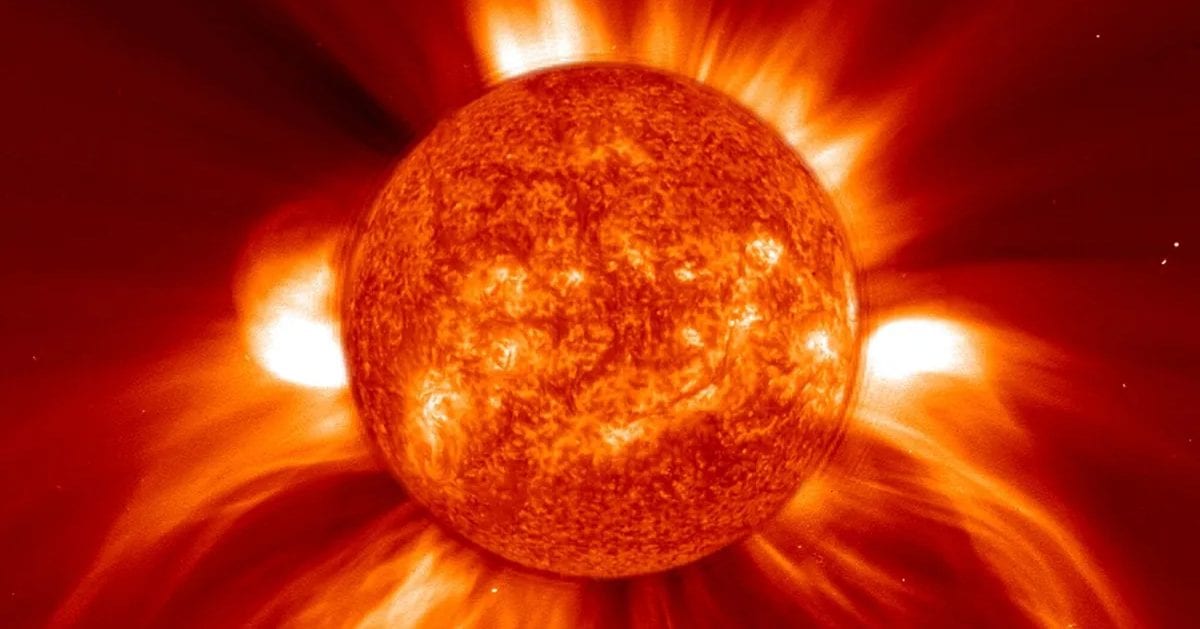
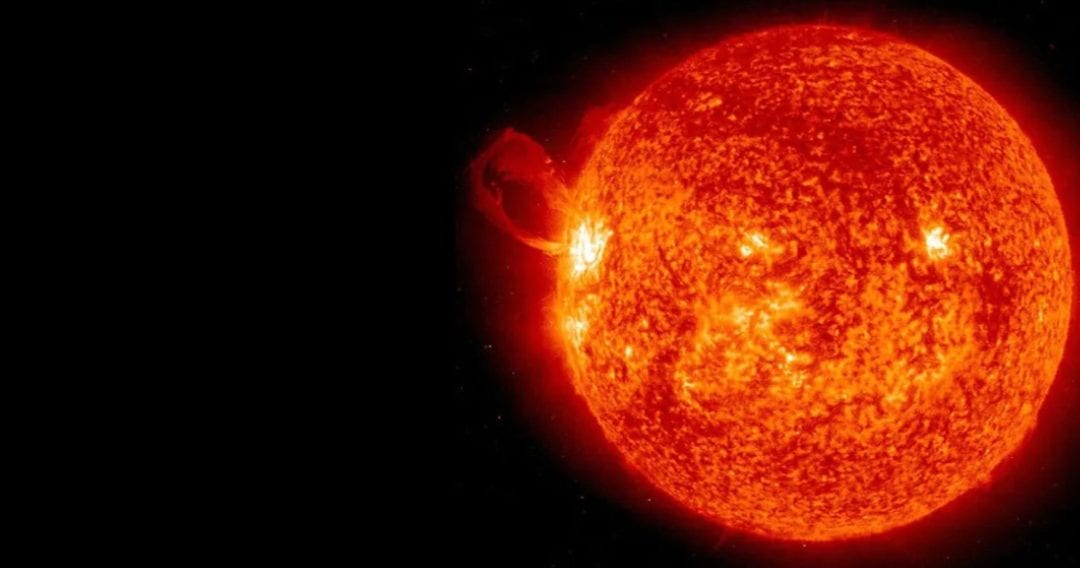
The Sun is a dynamic engine where multiple physical processes are taking place simultaneously. While many of these result in violent releases of energy in the form of solar flares and coronal mass ejections (CMEs), some are rather discreet. That said, they can still have some of the same consequences here on Earth. One such phenomenon is known as a coronal hole. When seen in extreme ultraviolet (EUV) and soft X-ray light, these look like dark patches on the Sun which occasionally spin into view as the star rotates every 27 days on average. These temporary regions can become sources of fast jets of charged particles that can impact Earth quite often.
How do coronal holes form?
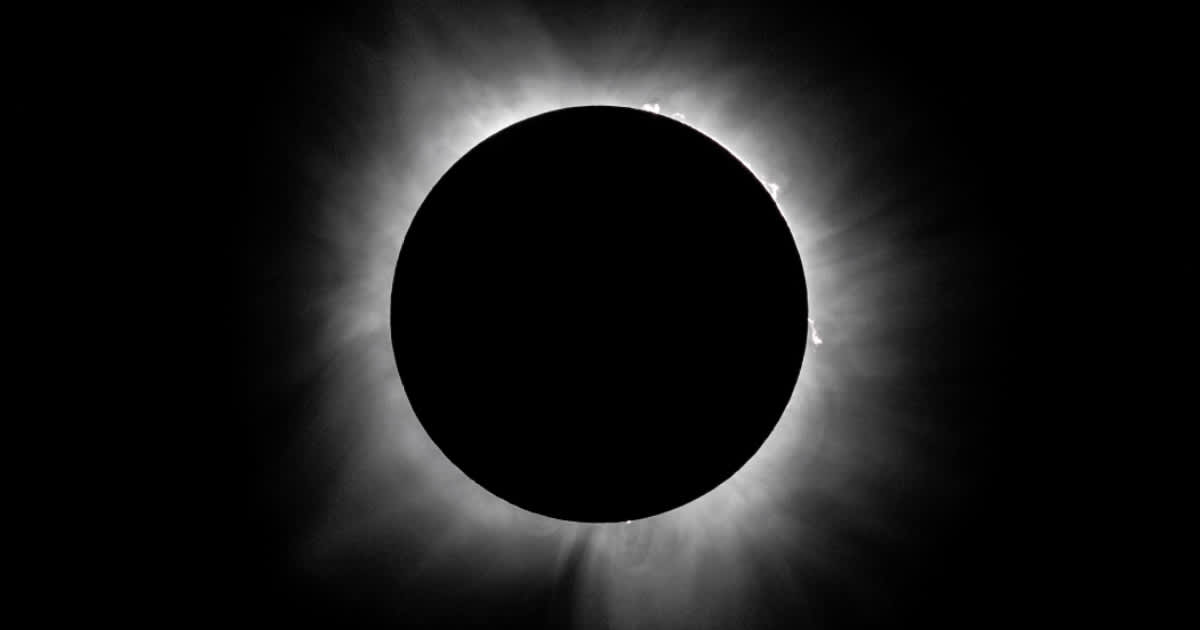
Even though the Sun blows out billions of pounds of solar material into space every second in the form of solar wind, the material escaping from coronal holes travels much faster. These jets are known as coronal hole high-speed streams (CH HSS). The outermost layers of the Sun—the photosphere, chromosphere, and corona—as well as the magnetic fields around our host star, play a part in why CH HSS are particularly relevant to us. The photosphere is the layer we actually see, which is the brightest but the coolest of the three. It forms the boundary between the Sun’s interior and the layers we can observe. The chromosphere lies above that, and is about a few thousand miles thick with a slightly higher temperature than the photosphere. After this, the temperature rises rapidly from about 6,000 degrees Celsius to hundreds of thousands of degrees as the corona begins. The corona is significantly less dense than the other two layers, but in places where its density is even lower than normal, coronal holes form.
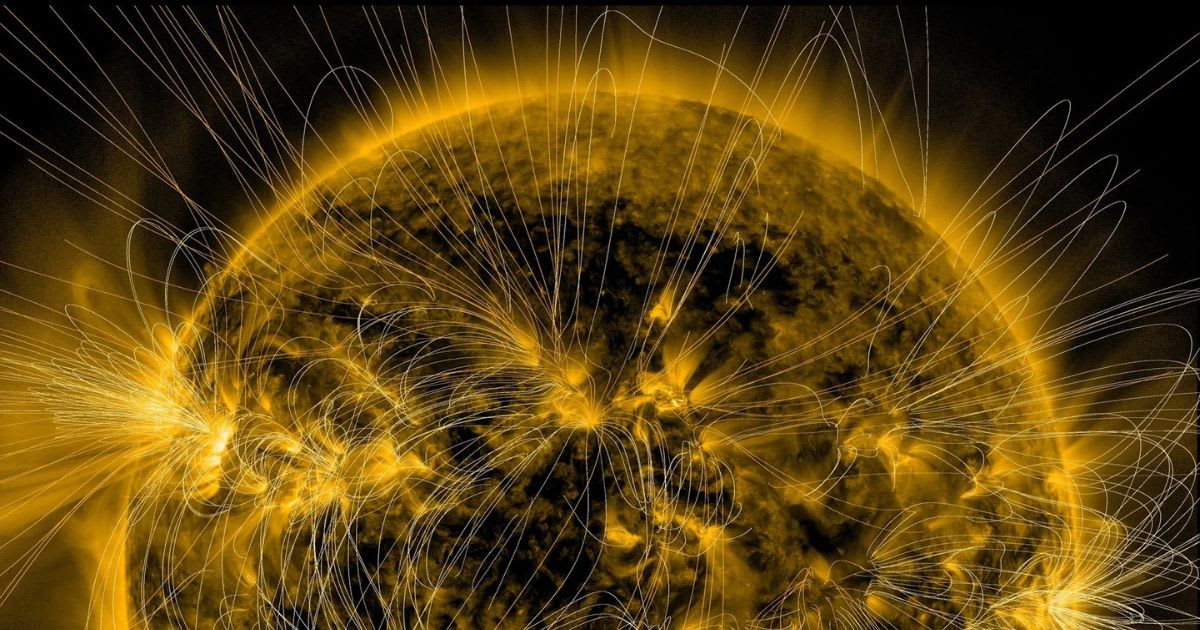
However, the thinness of the corona is not the only reason for solar winds launching faster. The magnetic field lines distributed all over the Sun have a vital say here. Most magnetic fields start off vertical to the solar surface, before looping back down. These closed fields usually dictate the occurrence of solar prominences, while their sudden snapping when twisted can result in solar flares, which, in turn, can trigger CMEs. When a coronal hole appears, observations have shown that these regions feature magnetic fields that never loop back down towards the Sun. Instead, the magnetic field lines extend outward into interplanetary space. These are known as open magnetic fields, which allow for the rapid, unimpeded escape of solar wind.
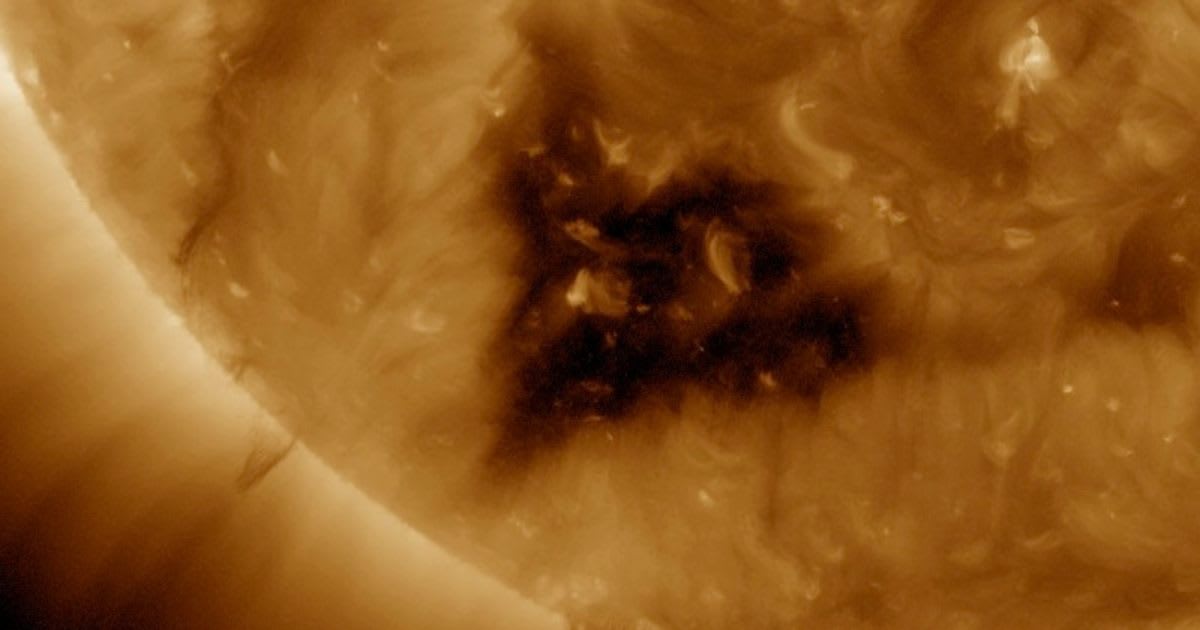
Coronal holes generally form near the poles of the Sun, before sometimes moving to more equatorial regions. They can often break up into different coronal holes, with each continuing on independently. In some isolated cases, they can form near the equator too, although they are usually more stable near the poles. When they do reach the equatorial regions, they are more likely to send CH HSS our way. Because of the latter’s adverse effects, it is important for organizations like NASA as well as the National Oceanic and Atmospheric Administration (NOAA) to make predictions of harsh space weather in advance by means of solar observatories.
How do coronal hole high-speed streams affect us?
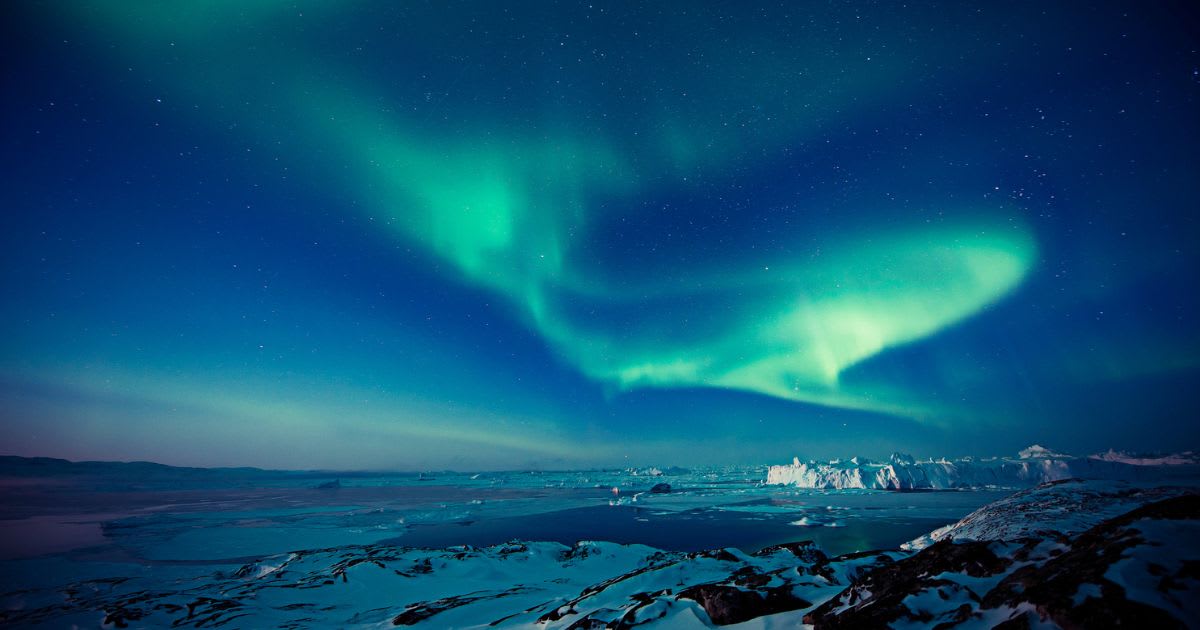
CH HSS can produce a pressure wave when they push against the relatively slow solar wind around them. This creates a compression layer called a co-rotating interaction region (CIR). When Earth is hit by a CIR, the solar wind speed rises significantly and the interplanetary magnetic field strength increases. During this time, a geomagnetic storm is also triggered due to the disturbances caused in the Earth’s magnetic field and the interactions in the ionosphere. Depending on the CH HSS speed, effects can span from minor to severe disruptions to satellite operations like communication and navigation. Moreover, electric power grids can also see fluctuations due to induced currents. On the positive side, the spectacular auroras are also triggered, creating windows of opportunity for skywatching enthusiasts and photographers. Only recently, a couple of coronal holes on either hemisphere of the Sun resulted in aurora formation, while a third triggered enough ionospheric disturbances to degrade communications and produce quite prominent auroras in the mainland U.S.
More on Starlust
NOAA’s SOLAR-1 is now operational—and it's changing how the U.S. watches space weather
NASA's DAPHNE mission takes key step toward predicting space weather for future Moon and Mars crews