NASA's DAPHNE mission takes key step toward predicting space weather for future Moon and Mars crews
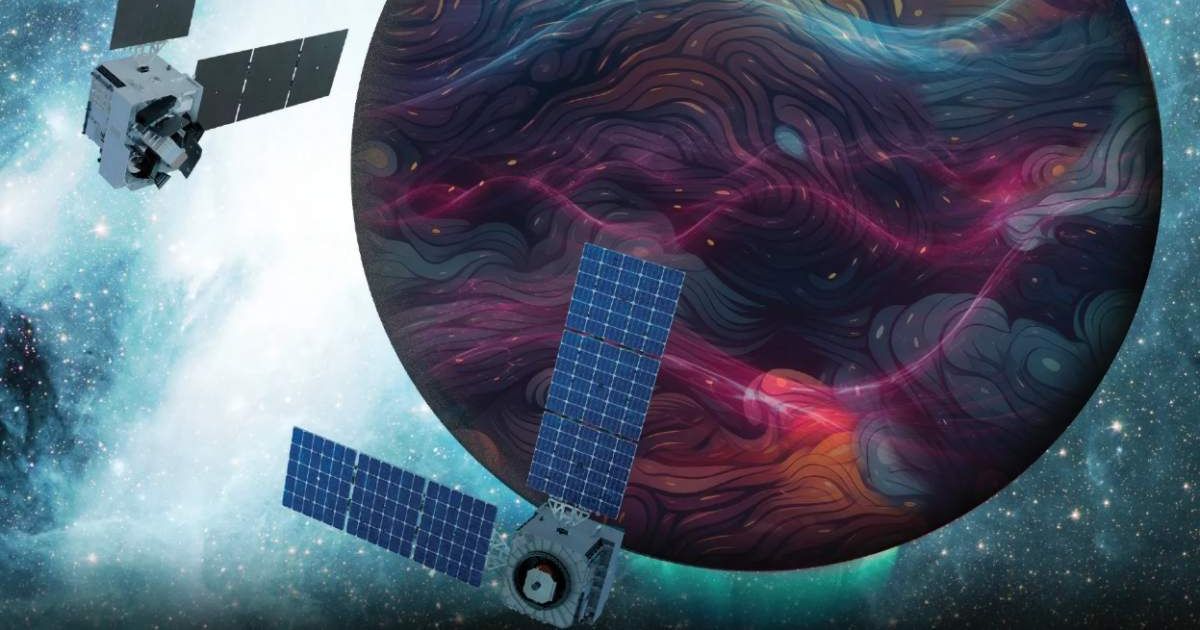
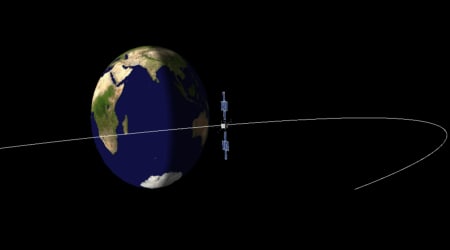
A new NASA mission concept dubbed DAPHNE (Dynamic Atmosphere-Ionosphere Explorer) is ready to enter its planning and design phase. The mission will feature two identical spacecraft that will gather data on the changes in Earth's lower atmosphere that affect the upper atmosphere where space weather manifests. The data will help improve space weather prediction models and develop better strategies to protect crucial infrastructure like GPS and low Earth orbit satellites as well as astronauts in space.

Nicky Fox, associate administrator, Science Mission Directorate at NASA Headquarters in Washington, affirmed the benefits of DAPHNE. “By providing new insights into Earth’s atmosphere, we can better predict and prepare for impacts in our daily lives on Earth and in space," she said in a statement. The mission, led by Aimee Merkel from the Laboratory for Atmospheric and Space Physics at the University of Colorado, Boulder, is slated to launch no earlier than 2029.

Next year, another confirmation review of the mission’s progress will take place that will also determine if funding can be made available. NASA stated that should the mission get the green light, its budget exclusive of launch costs will not be above $250 million in fiscal year 2023 US dollars. The concept was one of the three that were selected for the DYNAMIC (Dynamical Neutral Atmosphere-Ionosphere Coupling) mission in 2024.
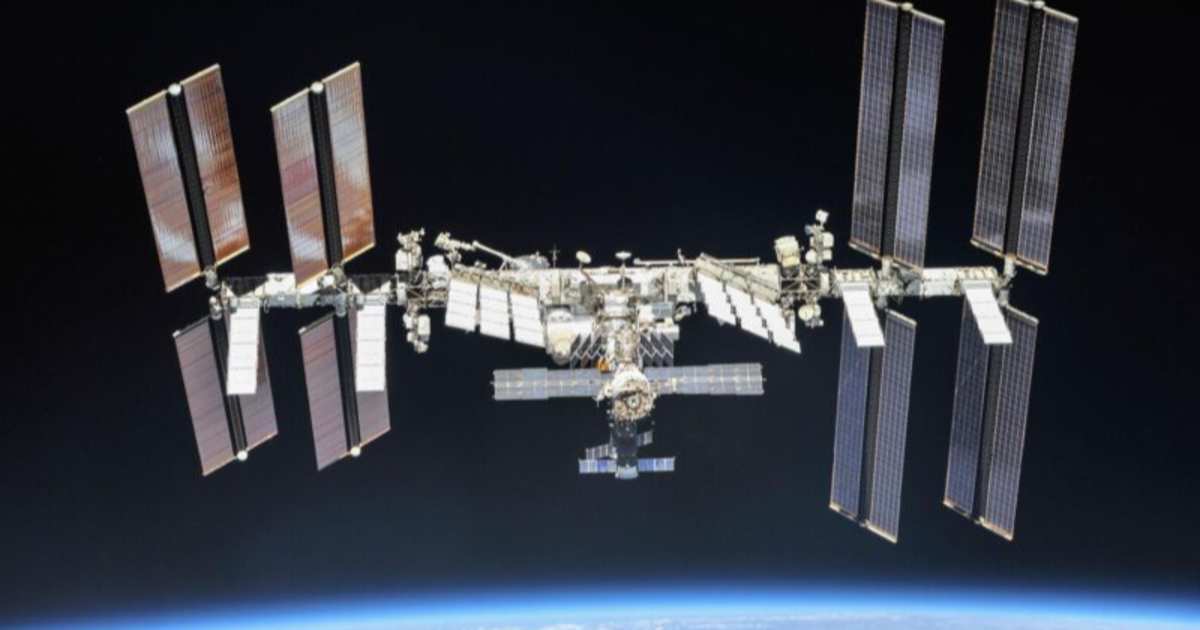
NASA sees DAPHNE as a low-risk and high-reward concept, with the twin spacecraft scanning the thermosphere for neutral winds, temperature, and composition. The ionosphere and thermosphere are layers of Earth’s atmosphere that overlap to a large degree and stretch from a height of roughly 50 miles to around 400 miles. It is within these regions that the largely neutral nature of the atmosphere gradually turns into the ionized plasma of outer space. The properties of the ionosphere affect how radio and GPS signals are communicated. Moreover, many satellites, including the International Space Station, orbit within these overlapping regions, making it imperative that the interactions in these regions be understood.

Fox, highlighting the long-term importance of the mission with regard to human spaceflight, stated, “As NASA sends astronauts beyond Earth’s magnetic protection to the Moon, Mars, and beyond, DAPHNE will join the NASA science fleet strategically located across the solar system to provide data that will help mission planners predict and mitigate the effects of space weather for the benefit of all." Fox was also part of the recent Artemis III crew announcement event, where she had intertwined the scientific goals of the mission with the risks future Artemis hardware and crews will be exposed to due to radiation on the way to the Moon. "We will study Earth's atmosphere, the environment around Orion during the mission, and the impact of space's influence within the Orion capsule," she had explained. "We're going to use this flight to buy down our risk for land admissions by developing our science processes, procedures, and readiness specifically for Orion to ensure the health and safety of our astronauts and spacecraft for our future Artemis missions."
More on Starlust
NOAA’s SOLAR-1 is now operational—and it's changing how the U.S. watches space weather