Starship Ship 40, used for Flight 13 and recovered from Indian Ocean, returns to SpaceX's Starbase
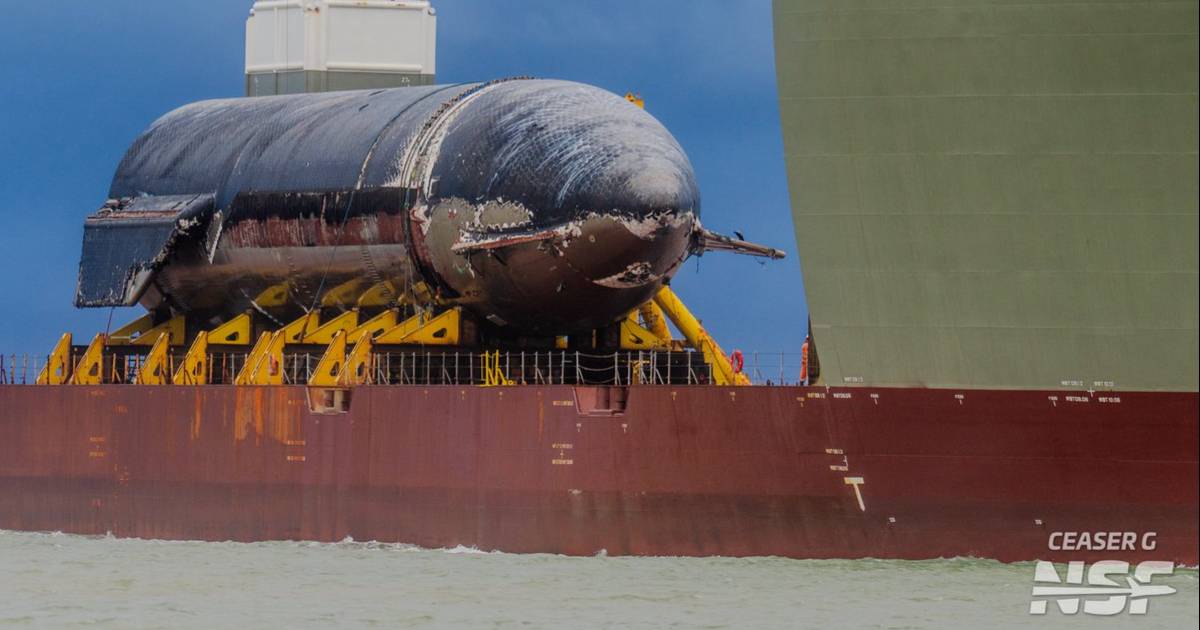
SpaceX's Starship upper stage used for Flight 13 returned to its launch site on Wednesday. Footage from cameras pointed at Starbase in Texas shows a vessel called Forte carrying the 171-foot-long spacecraft, called Ship 40, through waterways leading to SpaceX's spaceport via the Port of Brownsville. The vehicle splashed down into the Indian Ocean after its flight back in July, before tugboats moved it for an in-water inspection near Christmas Island in August.
The Port of Brownsville has released aerial footage of Forte carrying Ship 40 into the channel. 📷Shot by: The Port of Brownsville https://t.co/h4SGbK2rVC
— Lunar Citizen (@LunarCitizens) October 8, 2026
The Elon Musk-owned company has been able to leverage the fact that the vehicle didn't explode upon landing in the water. While all three flights of Starship V3 so far have been successful in performing landing burns, both the upper stages used on Flights 12 and 14 exploded moments after splashdown. The landing burn was being done in a way that replicates a landing burn needed to achieve a tower catch landing, which has been planned for Flight 15. In the case of Flight 13, it simply tipped over and stayed afloat. This prompted SpaceX to attempt a recovery of the ship for a closer inspection of its heatshield, among other parts.
Ship 40: Return To Launch Site. https://t.co/9t8s9X51D8 https://t.co/CCoPonKCXI
— NSF - NASASpaceflight.com (@NASASpaceflight) October 7, 2026
Although at one stage it seemed like pulling the massive spacecraft to shore wouldn't be possible, teams eventually succeeded. They removed a few heatshield tiles from it and reused them on Flight 14. While SpaceX had already accounted for the possibility of the destruction of the Starships flown thus far, having the Flight 13 vehicle stay intact was a major boon. This is because, even though teams had equipped the Starlink V3 satellites carried to space by Starship on Flight 14 with cameras to visually assess the heatshield tiles' performance, physically recovering the vehicle provided engineers with real data about an important aspect that will make Starship reusable. Full and rapid reusability is the ultimate goal SpaceX has with Starship, which will make it capable of transporting large amounts of cargo to orbit and to places like the Moon and Mars.
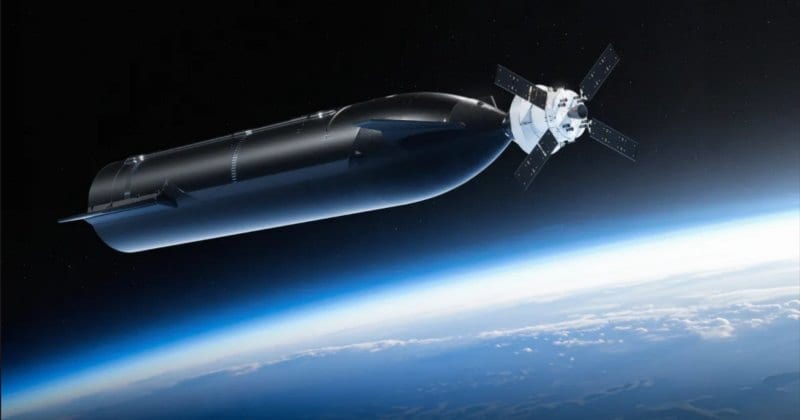
At the moment, SpaceX is also obliged to get Starship ready by next year. This is because the Artemis III mission by NASA in 2027 will require the company to launch a test article of its flagship vehicle to space, called the Starship Human Landing System (HLS). The Starship HLS used for this mission will be a stripped-down version, only featuring a docking port at its nose and no accessible interiors for astronauts. Nonetheless, testing rendezvous operations with NASA's Orion spacecraft in the vacuum of space will be vital for the agency. This is so that NASA can entrust SpaceX with delivering an actual Starship HLS for landing on the Moon. Even as concerns have been raised about Starship HLS' suitability for a crewed lunar landing with Artemis IV and V on the rough terrain of the lunar south pole, the potential of Starship's reusability has been hailed as the 'holy grail of rocketry' by the company. Up next, SpaceX could launch Starship Flight 15 as early as October 19.
More on Starlust
SpaceX says preparations are going ‘super well’ for first Starship launch from Florida
SpaceX's 35th space station resupply mission: Launch date, timing, live coverage, and cargo details