Scientists found a galaxy so old its chemistry points directly to the universe's very first stars
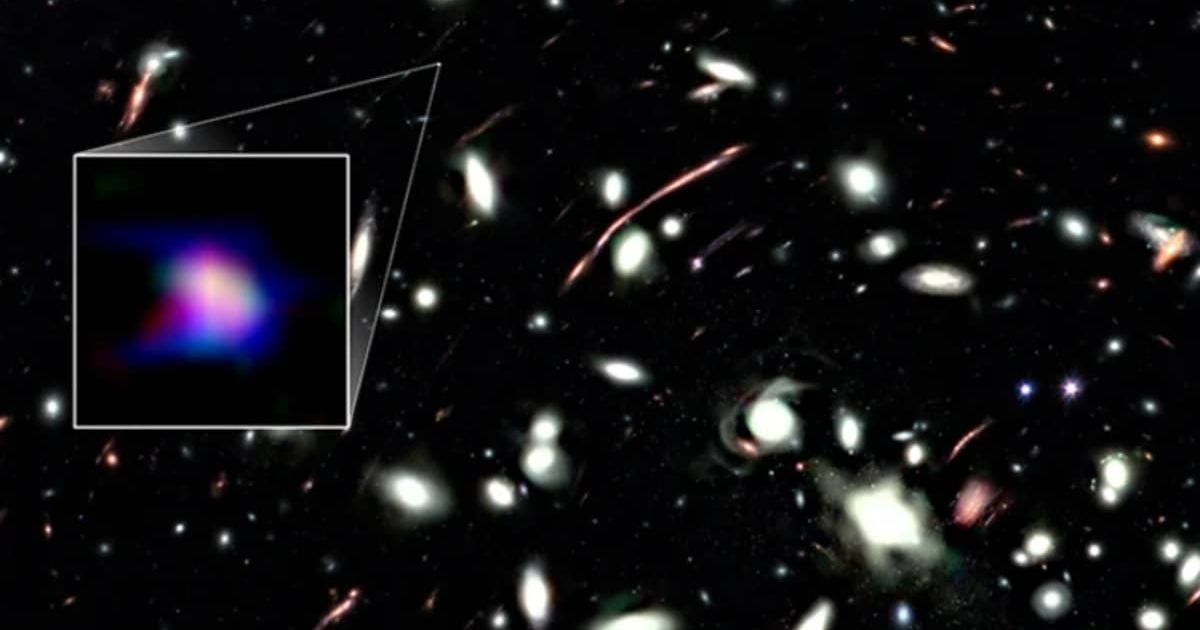
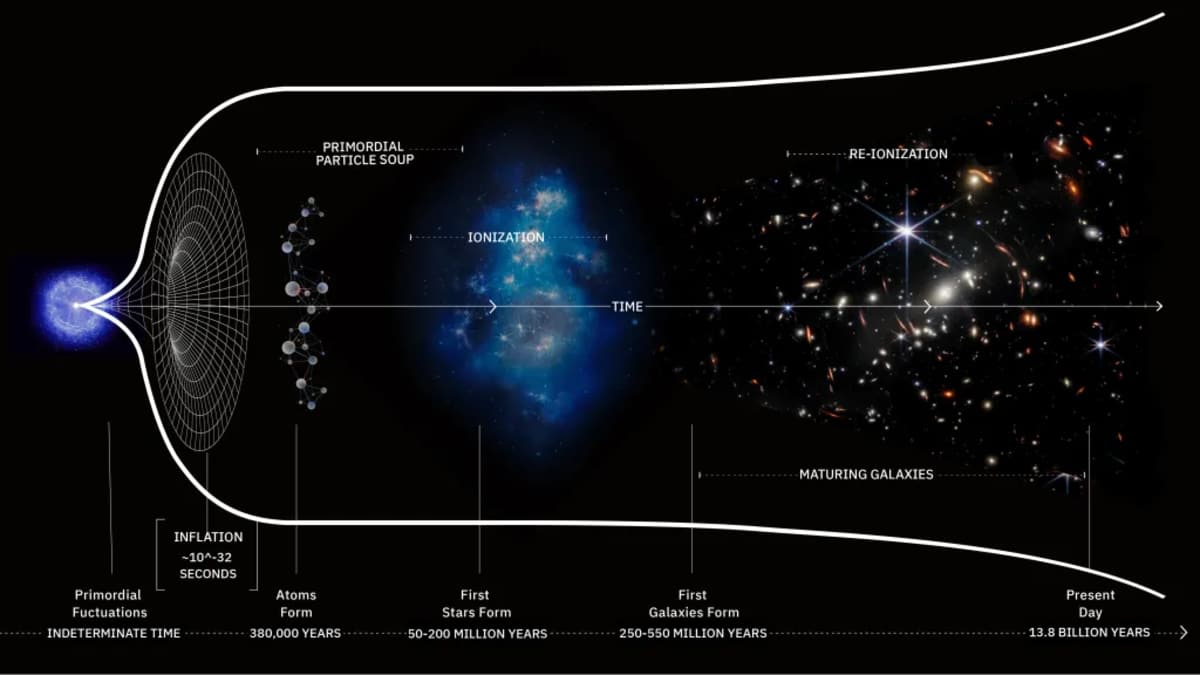
Galaxies in the early universe were tiny and made almost entirely of the two elements: hydrogen and helium. Everything else that exists today did not yet exist. Light from such primitive galaxies is extremely faint, making it nearly impossible for astronomers to study their chemical makeup. But an international team of researchers led by Kimihiko Nakajima, an associate professor at Kanazawa University, has been able to characterize LAP1-B, an ultra-faint galaxy from 13 billion years ago, and it has found it to be the most chemically bare galaxy ever observed in the early universe.
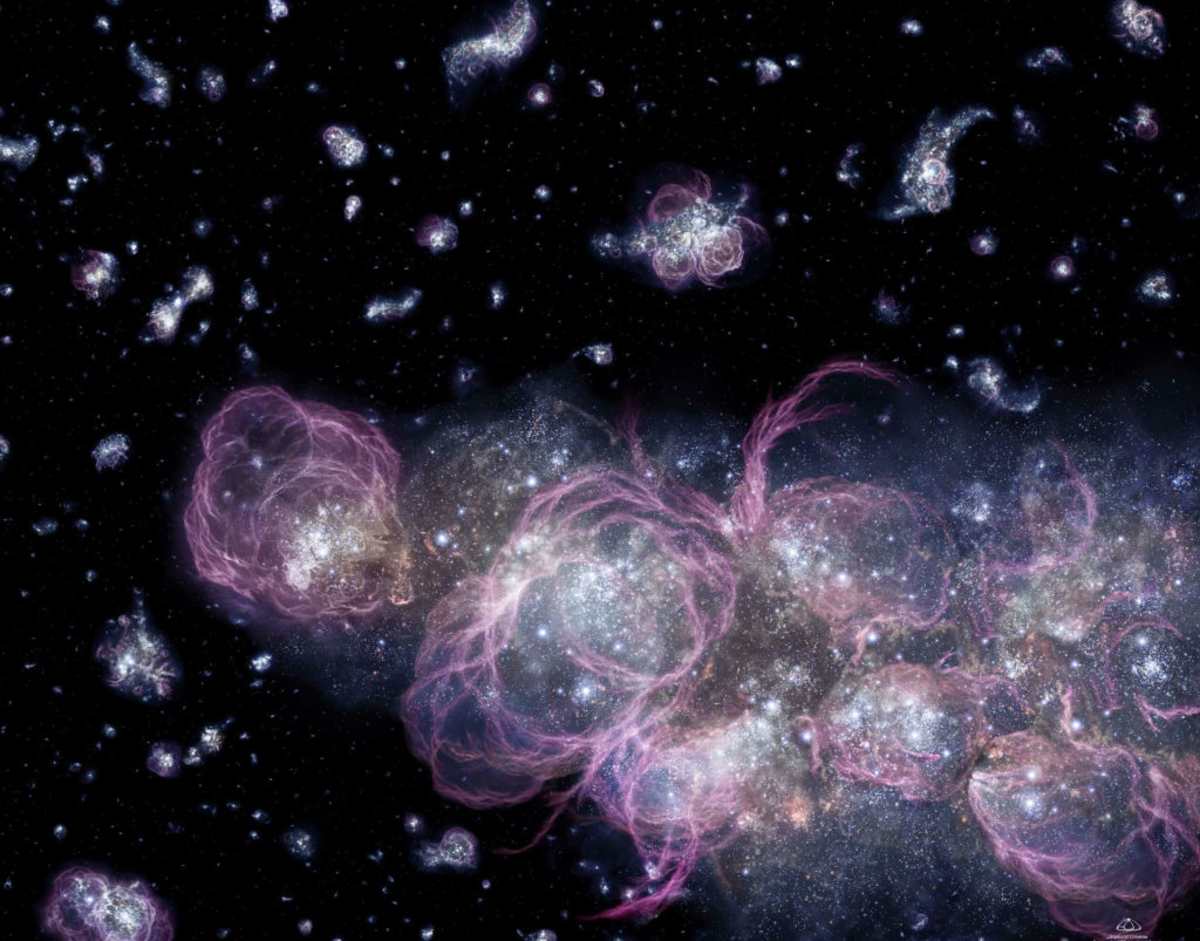
LAP1-B has an oxygen abundance of just 1/240th that of our Sun, a record low for any galaxy observed in the early universe. This indicates a chemically primitive state, as heavier elements like oxygen and carbon were created inside the first generation of stars. The team also found that LAP1-B's carbon-to-oxygen ratio closely matches what scientists predicted would result from the explosions of the universe's first stars, known as Population III stars.
"I was instantly thrilled by the extreme lack of oxygen revealed in the data. Finding a galaxy in such a primitive state is astonishing. It's a chemical signature that clearly indicates a primordial galaxy caught in the moments shortly after its formation," said Nakajima in a statement. "Usually, we act like 'cosmic archaeologists,' trying to guess the past by looking at old stars in our own neighborhood. But now, we can analyze the gas directly from the original scene 13 billion years ago. We are witnessing the moment when a galaxy first inherited the chemical building blocks created by the universe's earliest stars." The research was published in Nature on May 13, 2026.
The missing link astronomers had been searching for
Scattered around the Milky Way today are ancient dwarf galaxies called Ultra-Faint Dwarf galaxies (or UFDs). They are made up of stars over 12 billion years old and carry almost none of the heavier elements found in newer galaxies. Scientists suspected these UFDs were the leftover remnants of the universe's very first galaxies. But no one had ever found a direct ancestral object in the early universe that matched their profile. LAP1-B fits that UFD profile almost exactly. It is 3,300 times less heavy than the Sun and is dominated by a dark matter halo, both of which are hallmarks of UFDs.
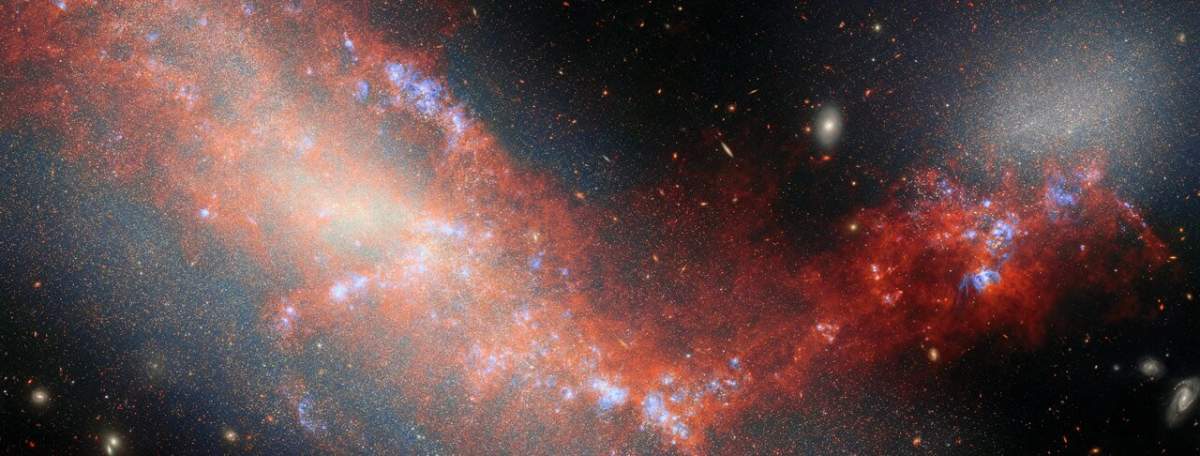
Explaining the significance of the UFD connection, Professor Masami Ouchi, an astronomer at the National Astronomical Observatory of Japan and the University of Tokyo, said, "UFDs are not only the faintest galaxies; they are composed of ancient stars over 12 billion years old and are often described as 'fossils of the universe.' Astronomers suspected they might be the remains of the universe's earliest galaxies because they lack heavy elements, but astronomers never had a direct link—until we found LAP1-B. It is a profound surprise to find that LAP1-B looks exactly like the 'ancestor' we had only imagined in theories. This helps us solve the mystery of why these cosmic fossils have survived in their current form to the present day."

Studying LAP1-B was not an easy task. The galaxy is far too dim to observe directly, even for the James Webb Space Telescope (JWST). The team used gravitational lensing, a method where a massive galaxy cluster sitting between Earth and LAP1-B bent the galaxy’s light and made it about 100 times brighter. That extra boost with 30 hours of deep spectroscopy from JWST allowed researchers to finally break down LAP1-B’s chemical makeup in detail. The team will continue using JWST to search for even more chemically simple galaxies, including some of the very first that formed in the universe. Sharing the team's broader expectations, Nakajima said, "We hope this discovery marks a historic step in understanding how the elements that make up our own bodies were first born and accumulated across the universe."
More on Starlust
Four major lunar missions set to launch in 2026 to support NASA's goal to 'stay' on the Moon