Cosmic connections: NASA's Fermi spots first-ever evidence of a sibling supernova
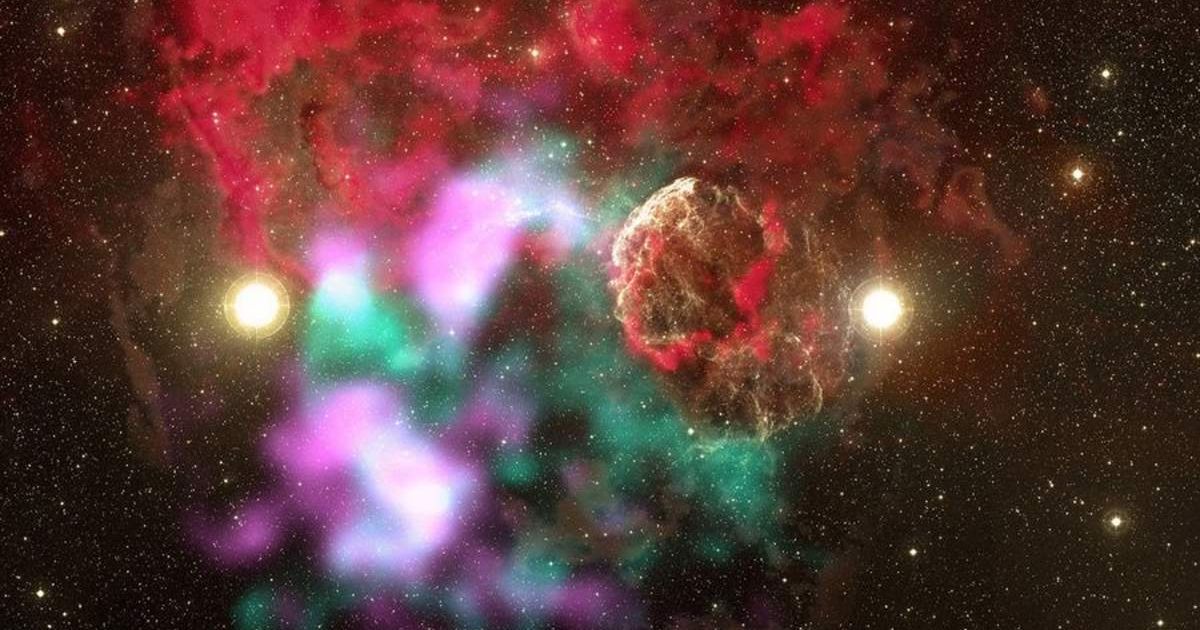
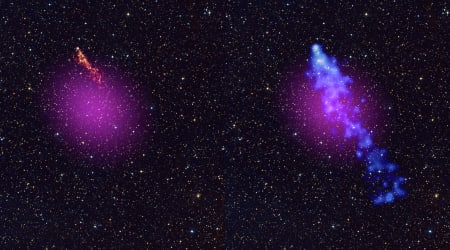
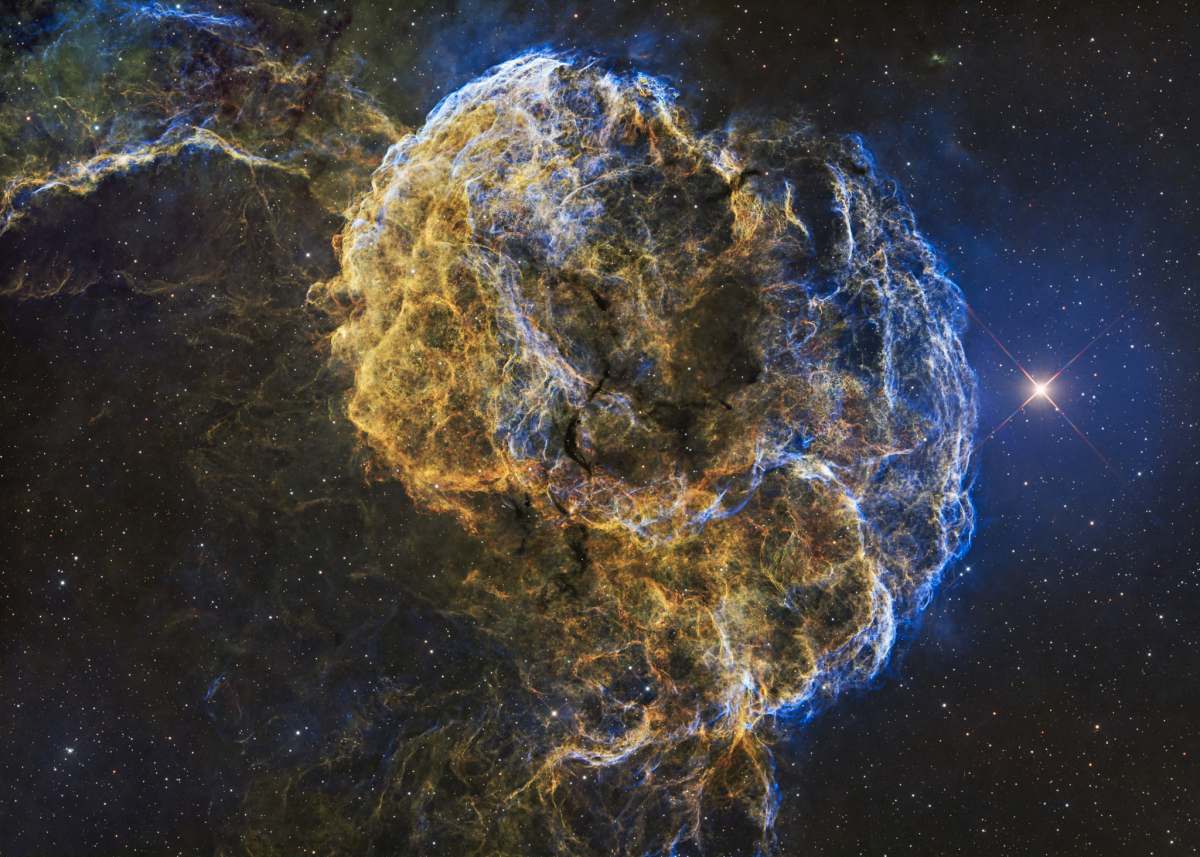
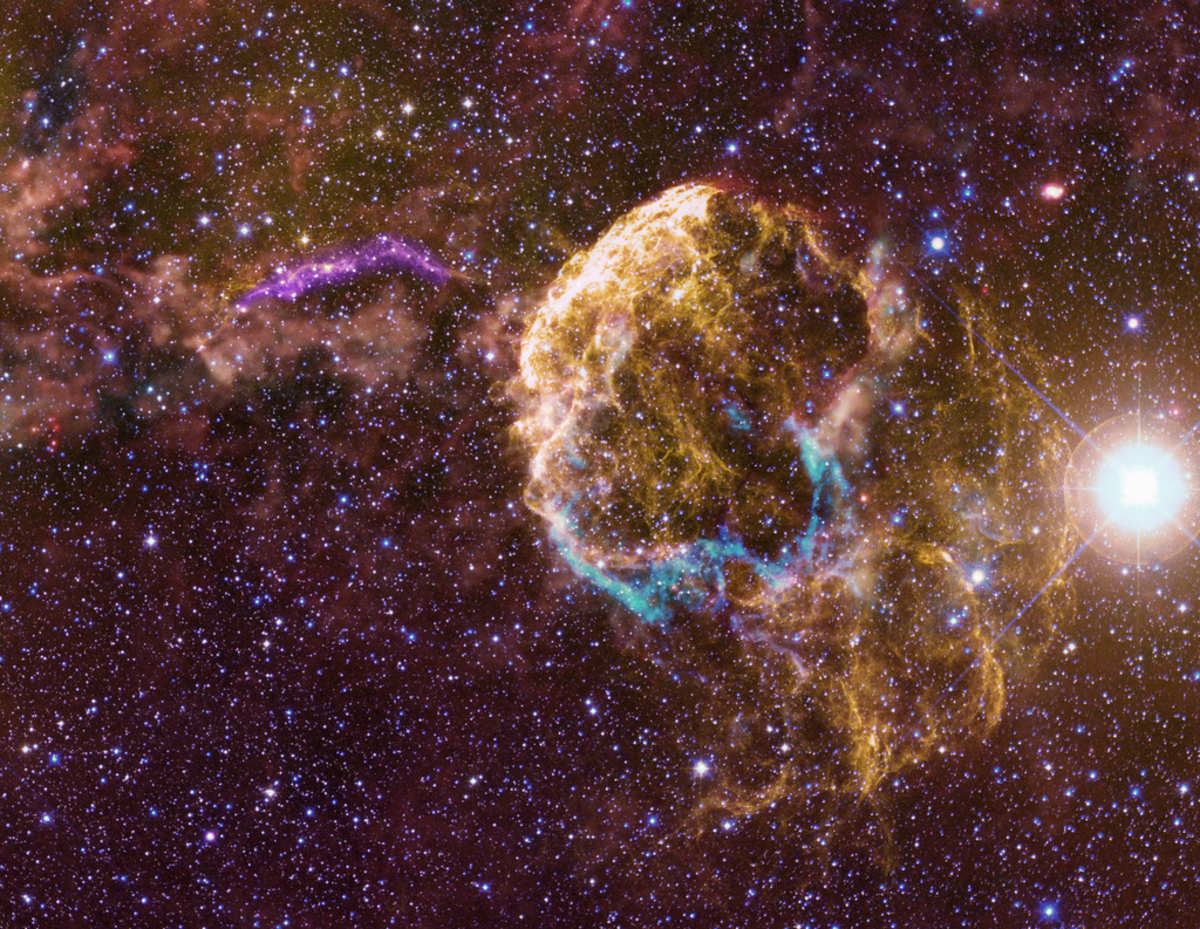
Massive stars often form and live as pairs, and when one runs out of nuclear fuel, it collapses and explodes in a supernova. But while models have long predicted this dual-demise, astronomers had never found observational proof that both stars in a single binary pair actually went through this—until now. For the very first time, astronomers say they've found strong evidence connecting two separate explosions in the same patch of sky to a single pair of stars. This study made use of 16 years of data collected by NASA's Fermi Gamma-ray Space Telescope. One of the two remnants analyzed in the study is IC 443, better known as the Jellyfish Nebula, which is one of the most extensively studied supernova remnants in the sky because of its glowing filaments.
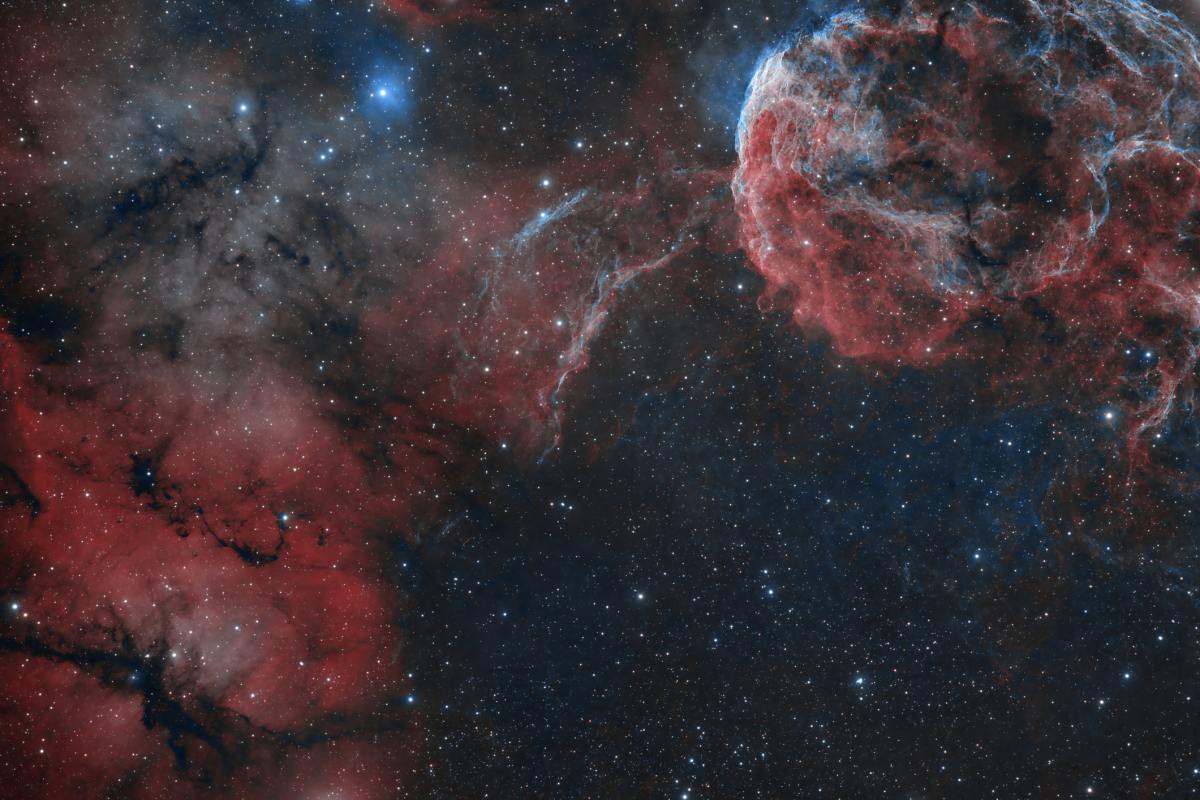
Sitting almost on top of it is a fainter, far less studied remnant called G189.6+3.3, first spotted back in 1994 through an X-ray survey. For years, G189.6+3.3 had gone largely unnoticed, overshadowed by its brighter neighbor. Stanford University postdoctoral fellow Miltiadis Michailidis, who led the research, said in a statement, "Using 16 years of data from NASA's Fermi Gamma-ray Space Telescope, our analysis uncovered gamma rays associated with a supernova remnant that was hidden in the glare of its neighbor, the Jellyfish Nebula, one of the brightest gamma-ray-emitting supernova remnants known."
According to the study, one star blew up first, and the sudden loss of mass in the system sent its partner hurtling away. Thousands of years later, that surviving star exploded too. If confirmed, it would be the first documented case of both members of a stellar pair ending their lives this way and leaving behind detectable remains. "There are so many striking connections between the two remnants that we conclude they're likely related, giving us the first known example of a binary system where both stars have undergone supernova explosions," Michailidis added. The findings of this research were shared at the 248th meeting of the American Astronomical Society in Pasadena, California, with a full paper set to appear in Nature Communications.
Why does this discovery matter?
This finding gives researchers a rare opportunity to study how two stars that once lived together may have also died together, just on different timelines. Researchers calculated that the two remnants sit roughly 6,000 light-years from Earth, with their explosion sites separated by about 40 light-years in projection. The original stars are estimated to have been at least 20 times more massive than the Sun. The first star (which formed G189.6+3.3) likely exploded somewhere between 20,000 and 110,000 years ago and kicked its companion star off into space. That companion then traveled alone—possibly for up to 100,000 years—before exploding around 8,000 to 9,000 years ago, triggering the formation of the Jellyfish Nebula.
To test how likely this scenario actually is, the team ran computer simulations of one million massive binary star systems. The simulations showed that stars orbiting closely enough to exchange material can naturally produce two supernova explosions with a similar separation and time gap as the ones observed here. The team also calculated that the odds of this happening randomly are less than 1%, which strongly supports the idea that the remnants are actually connected. Co-author Marianne Lemoine-Goumard, an astrophysicist with the French National Centre for Scientific Research (CNRS) based at the University of Bordeaux, said, "With Fermi's LAT instrument, we found gamma-ray emission associated with accelerated protons in the northern part of the fainter remnant. If both remnants are interacting with the same structure, then they must share a common distance from us."
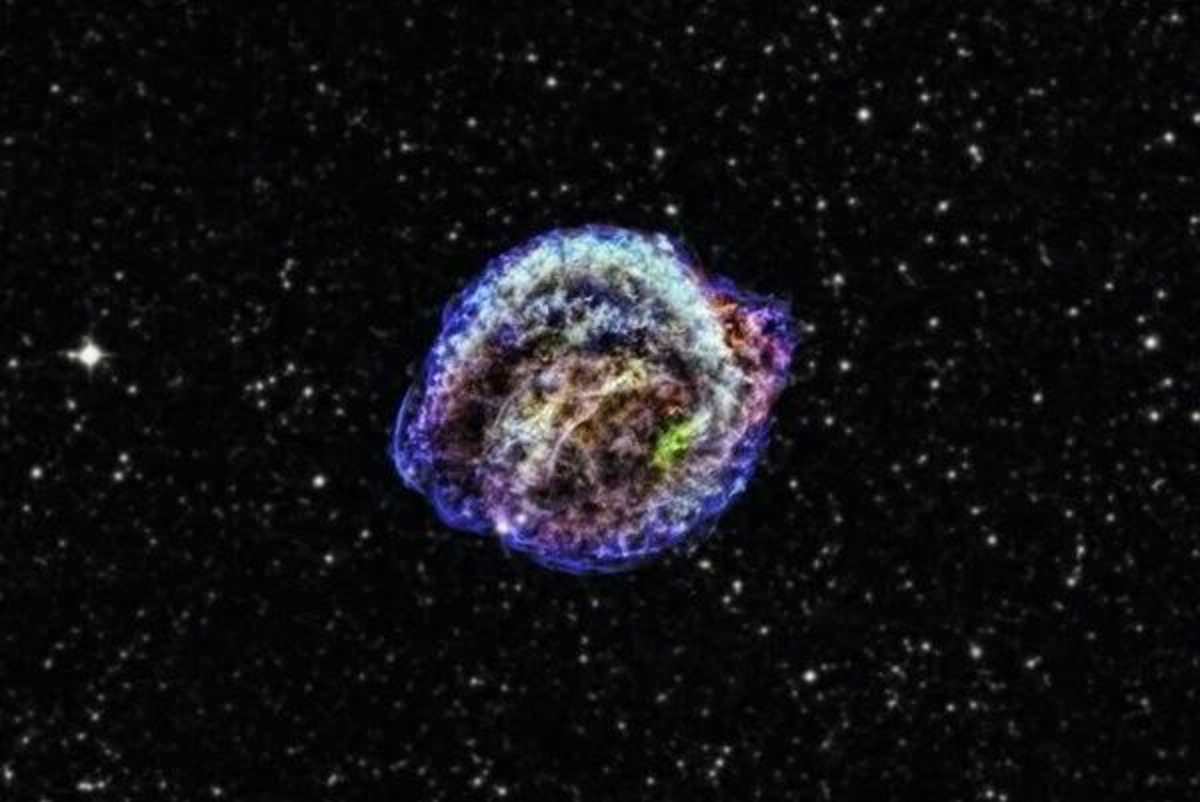
The Jellyfish Nebula is already considered a candidate "PeVatron," a kind of natural particle accelerator capable of pushing protons to energies high enough to nearly escape the galaxy. Finding a second possible accelerator sitting right next to it could help researchers understand how supernova remnants develop that extreme power in the first place. As Fermi project scientist Elizabeth Hays put it, "We can now connect the glowing remains of two massive stars to a powerful pair that evolved together over thousands of years."
More on Starlust:
Some of the galaxy's unusually cold 'stars' could actually be alien megastructures
The first alien civilization we find might already be nearing its end