One of the mysterious 'little red dots' has been identified as a 'black hole star'
![This artist’s concept portrays the supermassive black hole at the center of the Milky Way galaxy, known as Sagittarius A* (A-star). [Representative Cover Image Source: NASA, ESA, CSA, Ralf Crawford (STScI)]](https://d3hedi16gruj5j.cloudfront.net/807437/uploads/a6bdf390-6bc2-11f1-b1d0-155fe9c207a4_1200_630.jpeg)
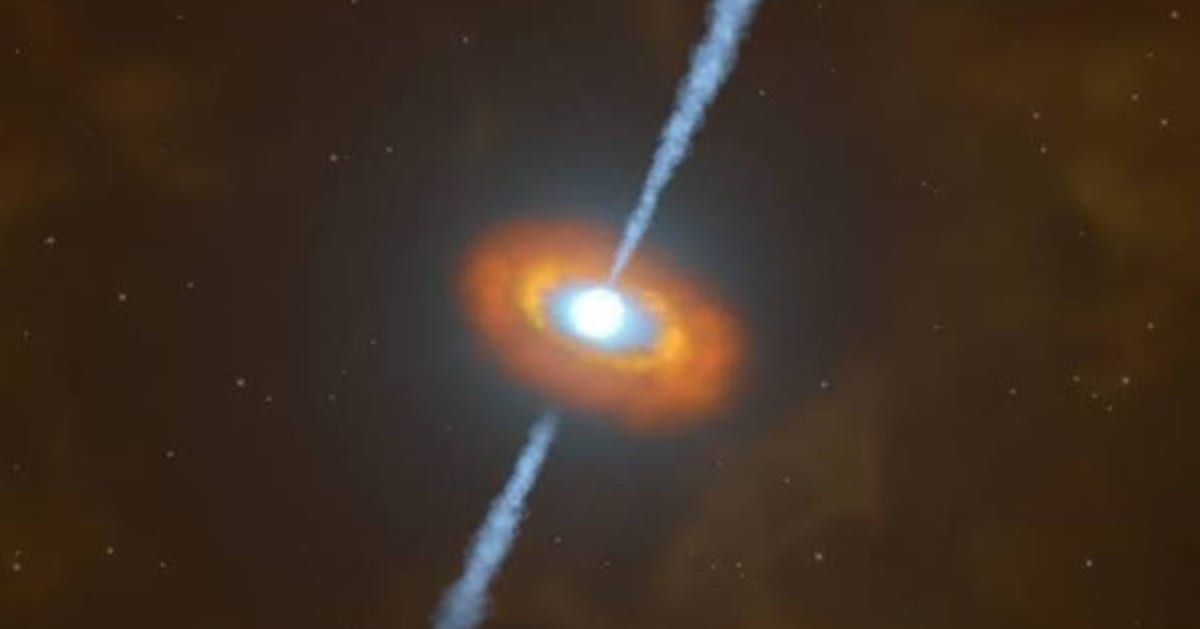
The mysterious little red dots have baffled astronomers since their discovery by NASA’s James Webb Space Telescope in 2022. Now, one of those red dots has shot into fame by drawing the attention of a team of astronomers. By carefully analyzing the light from the dot named GLIMPSE-17775, the team has interpreted it as a supermassive black hole wrapped in a dense cocoon of partially ionized gas, a model referred to as the BH* (black hole star) scenario. The paper detailing the study has been published in The Astrophysical Journal.
![The little red dot GLIMPSE-1775 (yellow square) is located behind the Abell S1063 galaxy cluster. [Image Source: NASA, ESA, CSA, Vasily Kokorev (UT Austin); Image Processing: Alyssa Pagan (STScI); edited by Starlust staff]](https://de40cj7fpezr7.cloudfront.net/93c608ec-3728-4e61-b388-a86893761c2f.png)
“I think part of the scientific community is converging on a singular picture—that little red dots can be explained by black hole star models. But none of the previous little red dots have all of the pieces of evidence in the same place,” said lead author Vasily Kokorev of the University of Texas at Austin in a statement. “With GLIMPSE-17775 we can test these models because of how deep and amazing this source’s spectrum is.” The JWST found these enigmatic objects soon after it began its operations. Analysis revealed that the objects emerged just 600 million years after the Big Bang.
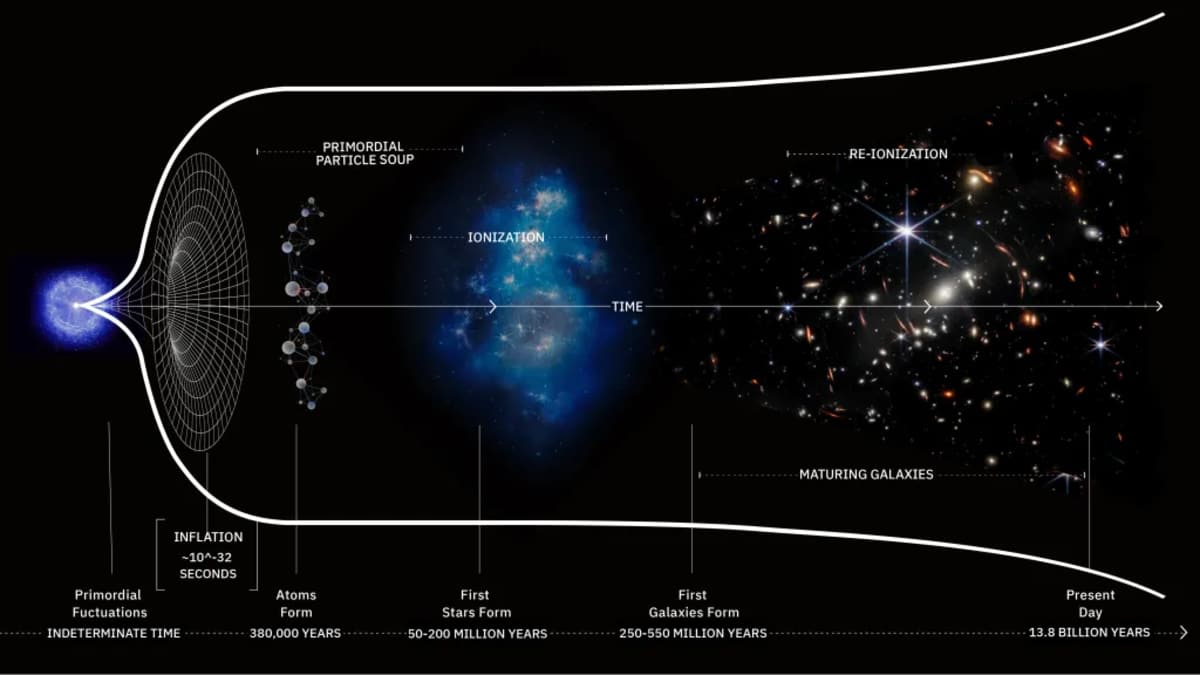
GLIMPSE-17775 popped up while Webb was looking for Population III stars and faint galaxies in galaxy cluster Abell S1063. With a redshift of 3.5, the red dot existed 1.8 billion years after the Big Bang and is far more distant than Abel S1063. However, the galaxy cluster between Webb and GLIMPSE-17775 acted as a gravitational lens. The cluster’s immense gravity bent and magnified light from the dot, making it appear brighter than it otherwise would have been.
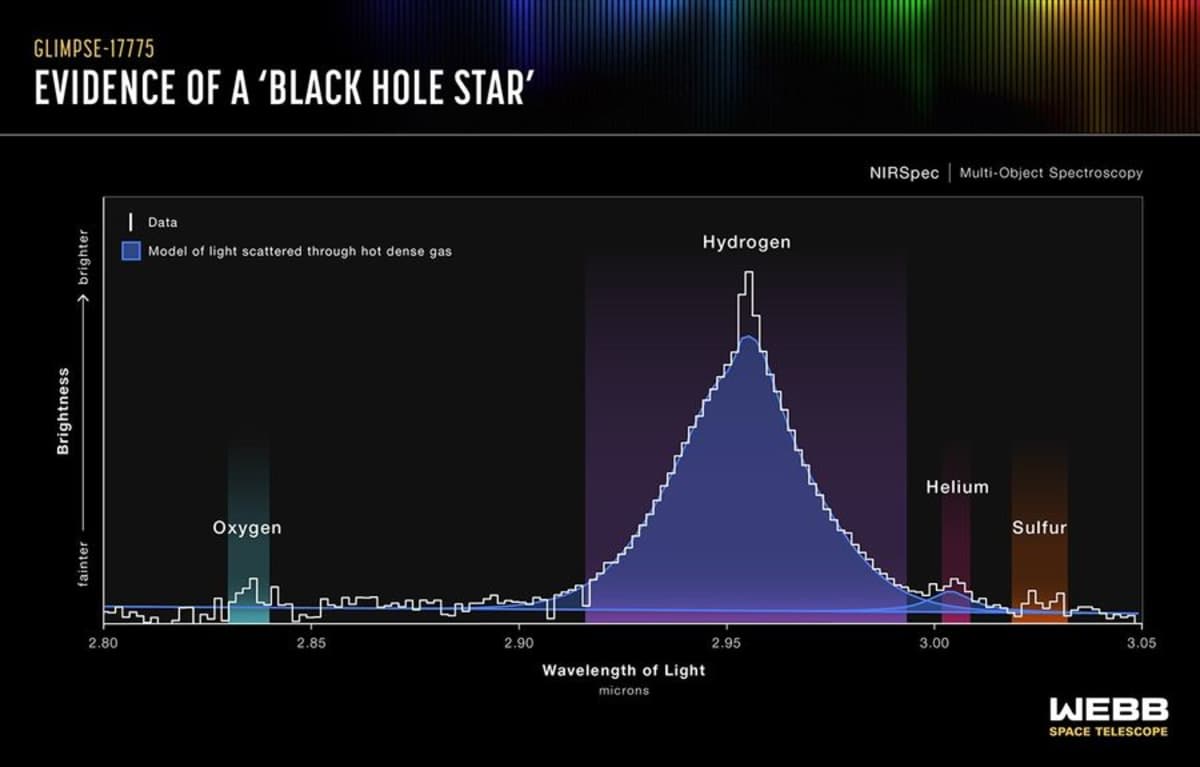
Because of this, Webb obtained data equivalent to 80 hours of observation time even though it actually observed the object for 30 hours. This allowed the researchers to detect more than 40 spectral lines. These lines act like fingerprints that reveal the object's properties. “When we saw the spectrum for the first time, it was like having all the pieces of a puzzle scattered on the floor,” said Kokorev. “We picked up each piece of the puzzle, measured the lines, and started combining the different pieces into a mosaic. Maybe a few pieces looked like nothing at first, but then a couple of them came together, and we realized that there was something there.”
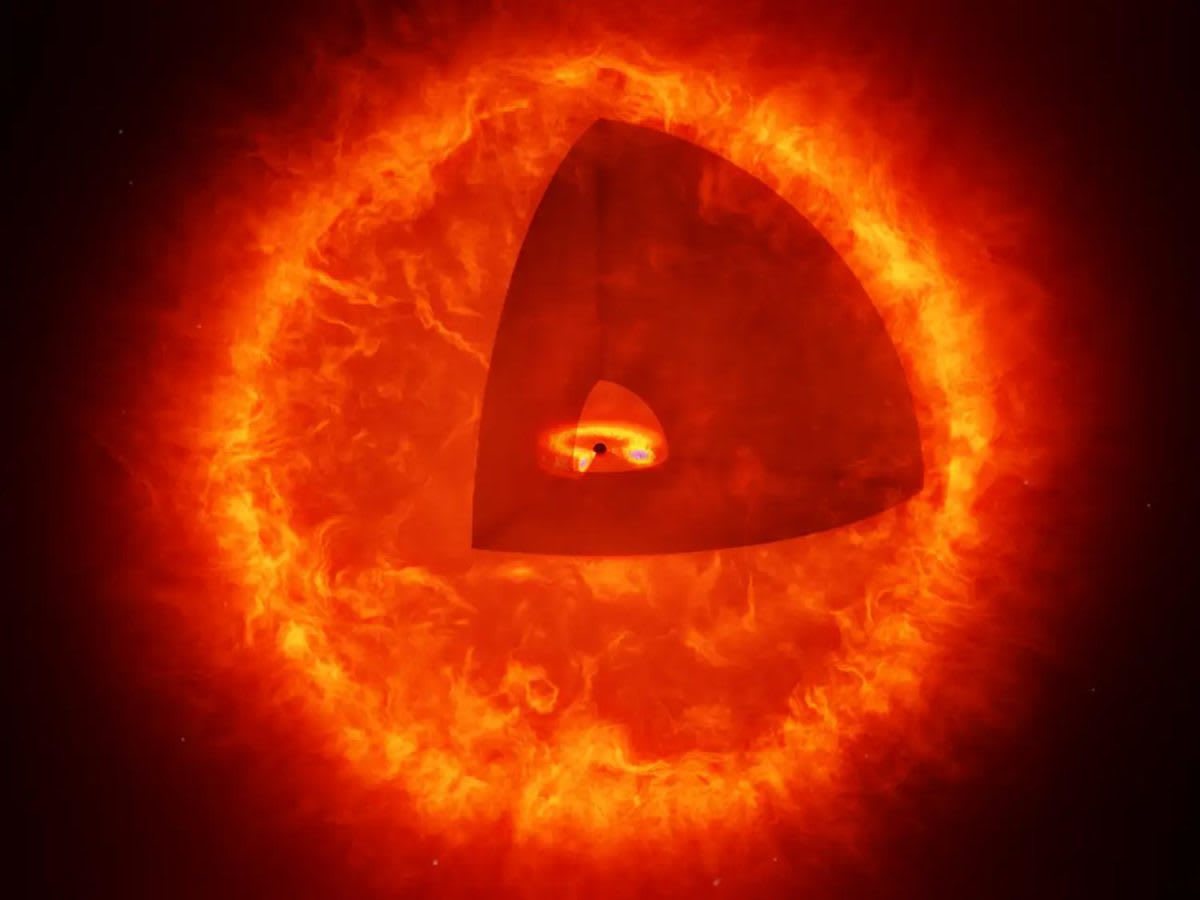
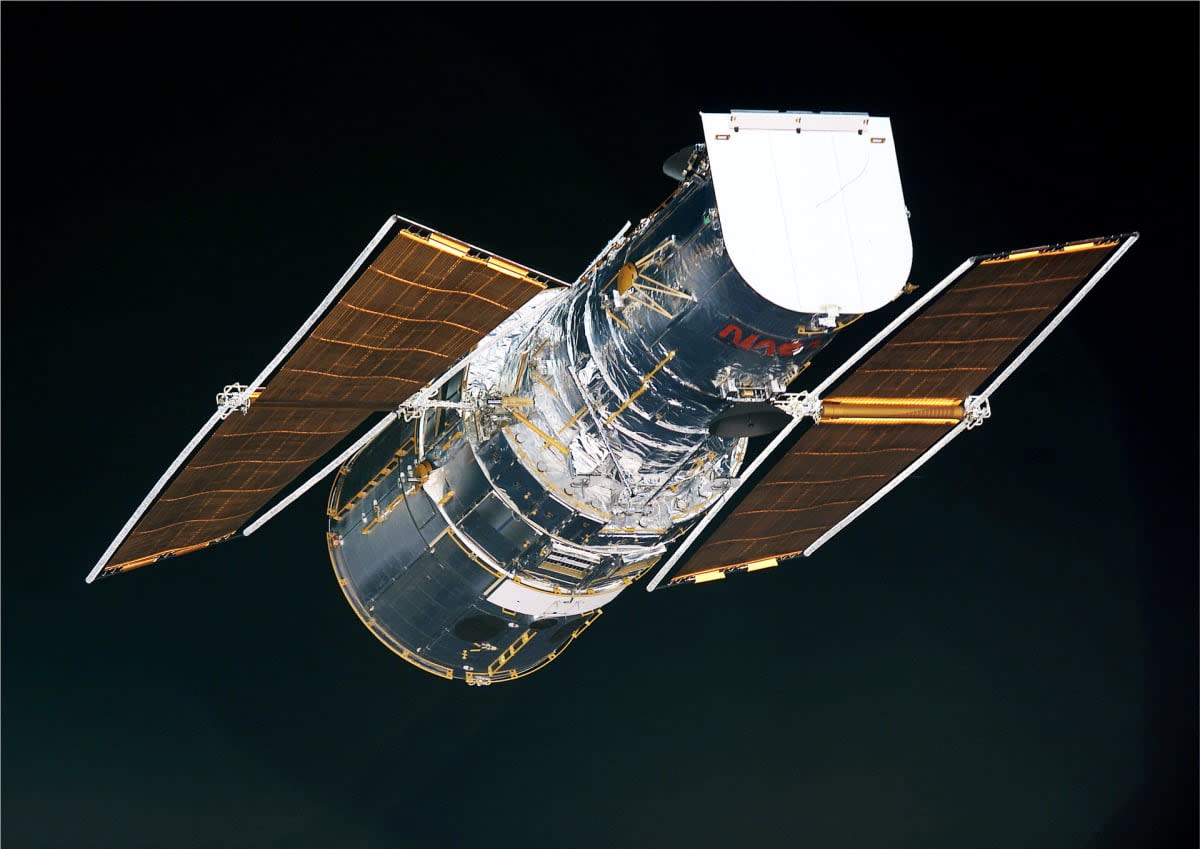
Spectroscopic analysis suggests that the little red dot is not an ordinary star or galaxy. But it points to a black hole that is swallowing matter and growing. While doing this, it remains surrounded by a dense cocoon of gas. Radiation produced close to the black hole does not escape directly. Instead, the surrounding gas absorbs and re-emits that energy, generating spectral features that match what Webb observed. Spectral lines linked to hydrogen, oxygen, and helium do not fit a simple model of a rotating gas cloud. The astronomers also detected 16 iron lines. Those, along with certain oxygen lines, point towards a high-energy source like a hungry black hole. To get a more comprehensive view of the little red dot, the researchers combined the Webb data with those of the Hubble Space Telescope. It revealed a giant host galaxy that is surrounding the little red dot. The host galaxy of a little red dot hasn't been seen at this scale before, but it is still consistent with the dense cocoon model, which attributes excess blue light to the host galaxy's stars.
When the little red dots were first discovered, scientists thought of them as anomalies, as they couldn't figure out how galaxies could have evolved so quickly in the early days of the universe. But Kokorev and the team think there is nothing "broken" about GLIMPSE-17775. “Everything fits, nothing is broken, and I think that makes the puzzle that is our universe even better,” said Kokorev. “Looking ahead, I’m eager to dive deeper and learn about what is powering the central engines of little red dots. While we think it’s a black hole, there are some other interesting theories being proposed, which is exciting. Maybe in a year or two, we’ll have the final answer to what powers these sources.”
More on Starlust
Mysterious 'Little Red Dots' found by James Webb Telescope may not be baby black holes after all
A supernova remnant may have been found near the Milky Way's central supermassive black hole