Four generations of stars discovered in region near the center of the Milky Way
![Terzan 5, within our Milky Way galaxy’s central bulge. [Image Source: NASA, ESA, CSA, STScI, Giorgia Zullo (University of Bologna), Francesco Ferraro (University of Bologna); Processing: Alyssa Pagan (STScI)]](https://d3hedi16gruj5j.cloudfront.net/807228/uploads/76aa0170-6a10-11f1-9234-710137f5a4de_1200_630.jpeg)
Astronomers have reclassified Terzan 5, which was once considered a globular cluster. Even though it is located within the crowded central bulge of the Milky Way galaxy, Terzan 5 has managed to maintain its own separate identity and was found to contain as many as four generations of stars. A globular cluster, on the other hand, typically has only one ancient star population. The newfound properties of Terzan 5, which is now described as a 'bulge fossil fragment,' have been reported in a research paper published in the journal Astronomy & Astrophysics. The findings were also discussed at a conference of the American Astronomical Society held on June 16, 2026, in Pasadena, California.
Located in the bulge of our Milky Way galaxy, Terzan 5 resembles a globular cluster 🪩 a dense ball of ancient stars. However, observations from @Hubble_Space and Webb have revealed that it contains four distinct populations of stars.
— ESA Webb Telescope (@ESA_Webb) June 16, 2026
This makes it the prototype of a new class… pic.twitter.com/N2JoWqteIK
Terzan 5 was already thought to showcase properties distinct from globular star clusters when, in 2009, it was observed that the stars within it could be divided into two age groups. By 2016, data from the Hubble Space Telescope yielded the first age estimations of the two generations of stars within the stellar system. The first group was estimated to be about 12 billion years old, and the second generation was dated back to 5 billion years ago. This led to the belief that the creation of the second generation of stars was triggered because of a possible interaction with a giant molecular cloud or another globular cluster. However, the recent study conclusively rejects that idea.

The reclassification of Terzan 5 as a bulge fossil fragment describes the current understanding of the star system's structure. Using data gathered by Hubble and combining it with infrared observations from NASA's James Webb Space Telescope, researchers were able to make note of the tiny apparent changes of positions of the stars within Terzan 5, called 'proper motion' due to their movements. This allowed the researchers to differentiate them from the otherwise dusty and star-enriched central bulge of the Milky Way galaxy. "For some reason, this peculiar clump of stars formed separately from the bulge and was not destroyed as the bulge itself formed," said Francesco R. Ferraro, a professor at the University of Bologna and principal investigator of the Webb observations, in a statement. "Terzan 5 is what we now call a bulge fossil fragment because it resembles the primordial clumps that contributed to the formation of the bulge."
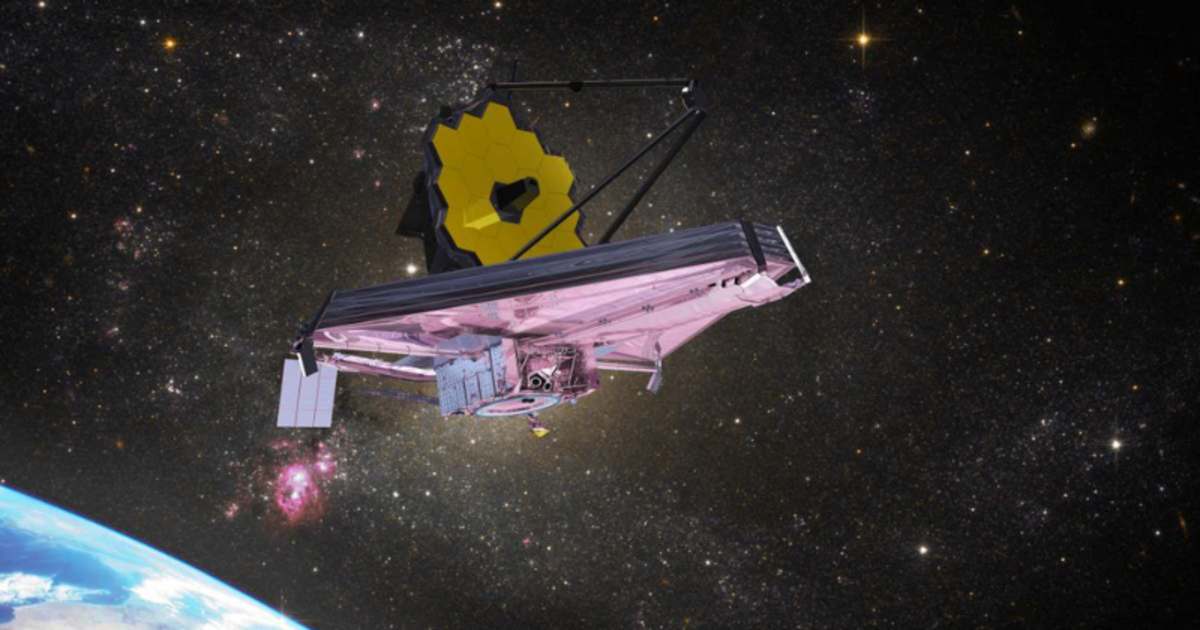
As for the two additional star populations that the combined data from Hubble and Webb revealed, they go back 3.8 and 2.5 billion years. In fact, thanks to the data, the researchers were also able to estimate the ages of the two previously known star populations with greater precision, dating them back to 12.5 and 4.7 billion years ago. They explained that the reason Terzan 5 was able to birth multiple generations of stars is that it could retain the necessary raw materials required for the process. There is evidence that supernova explosions took place within Terzan 5. These formed heavier elements that the young star populations pulled in. Ordinarily, the material might have been ejected from the stellar system entirely, but due to the large mass of Terzan 5's progenitor that formed 12.5 billion years ago, the material never left.
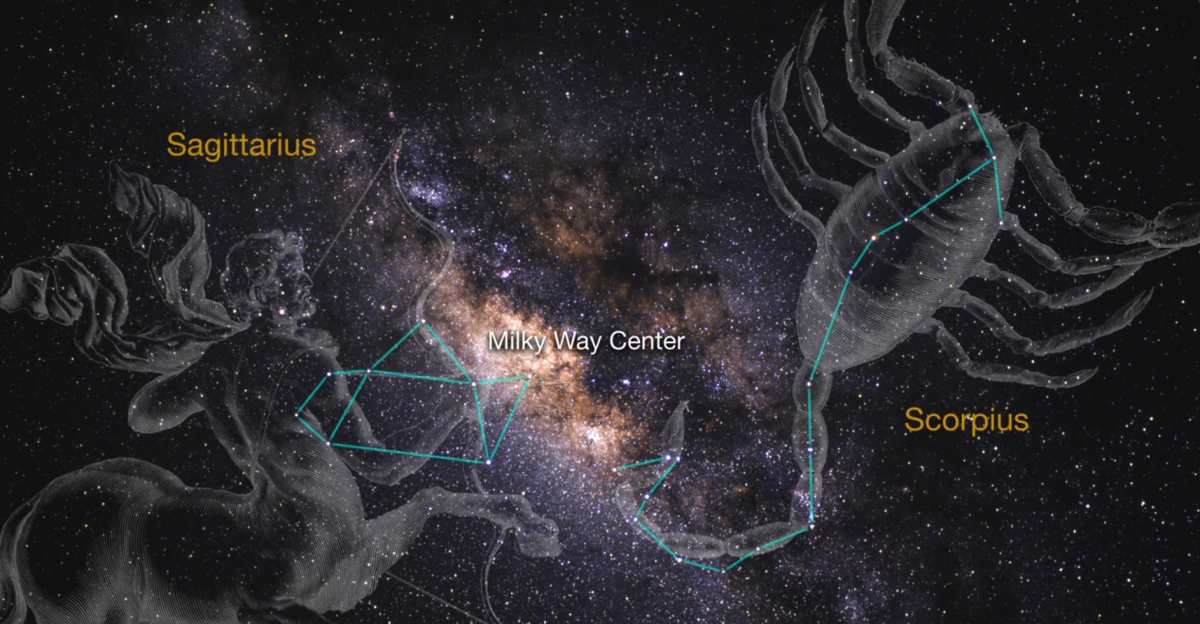
In addition to Webb and Hubble, the W. M. Keck Observatory and the European Southern Observatory’s Very Large Telescope were also party to establishing the multi-generational nature of the stars of Terzan 5, which was discovered in 1968 by astronomer Azop Terzan. Thanks to this revelation, astronomers may develop a better understanding of how galaxies and their bulges form and evolve. "Based on observations and in-depth simulations, we think that galaxies in the early universe had huge disks of gas that fragmented into clumps and formed stars. These clumps migrated to the center of the galaxies, and many merged to form their bulges," said Barbara Lanzoni, an associate professor at the University of Bologna, who co-authored the study led by PhD student Giorgia Zullo. "Terzan 5 may provide direct evidence that can help explain how bulges formed in galaxies throughout the universe."
More on Starlust
A supernova remnant may have been found near the Milky Way's central supermassive black hole
NASA's Nancy Grace Roman Space Telescope to launch in September; will work 1,000x faster than Hubble