Hunt for dark matter: Study finds new clue in unexplored electron-atomic nuclei interactions
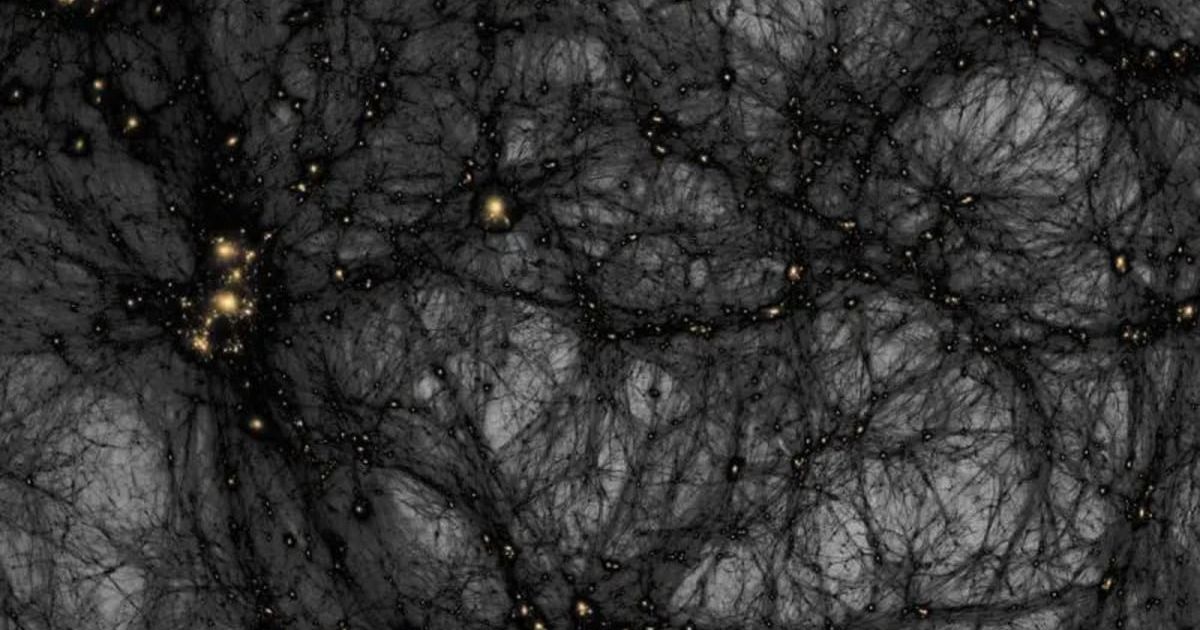
Dark matter doesn’t absorb or emit light. It also doesn't interact with ordinary matter, making it hard to detect. Yet, a new theoretical study shows that hypothetical dark matter particles could influence the interaction between electrons and atomic nuclei. This discovery was reported in a recent paper published in Physical Review Letters. The study, conducted by Dr. Konstantin Gaul, Dr. Lei Cong, and Professor Dr. Dmitry Budker of Johannes Gutenberg University Mainz (JGU), Helmholtz Institute Mainz (HIM), and the PRISMA++ Cluster of Excellence, places new constraints on previously unknown interactions of hypothetical dark matter candidates.
The Standard Model of particle physics (SM) describes three fundamental forces—electromagnetic, weak, and strong interactions—and classifies known subatomic particles but doesn't account for dark matter. To shed light on how dark matter might shape interactions at the subatomic level, the team analyzed extant precision measurements of barium monofluoride (BaF) molecules and, for the first time, established constraints on subatomic interactions mediated by hypothetical Z-prime (Z’) bosons. Z’ bosons, unlike the established Z bosons in the Standard Model, are hypothetical particles that mediate weak interactions and appear as primary candidates for dark matter particles in many Beyond Standard Model theories.

“These results address a significant blind spot in physics: a regime of forces between electrons and nuclei that had remained unexplored by both laboratory experiments and cosmological data,” explained Gaul in a statement. The visible matter that makes up planets, stars, and even life on Earth constitutes only around 4 percent of the universe. The rest of the cosmos consists of invisible dark energy and dark matter, with the latter making up roughly 23 percent of the universe. While dark matter is known to shape the structure of galaxies, scientists still do not know what particles comprise it.

In their hunt to uncover the properties of potential dark matter particles, Gaul and his peers made use of the supercomputer MOGON 2 at the JGU to run calculations and reinterpret experimental data of BaF molecules to determine the possible role of Z' bosons in delicate interactions between electrons and atomic nuclei. “Because the dense internal environment of polar molecules naturally amplifies subtle physical effects, they act as powerful laboratories for detecting new forces that are otherwise invisible to science,” Gaul explained.
Gaul’s research group also found similar constraint bounds by re-analyzing the results of experiments carried out with the atom cesium-133, which is traditionally used to probe the interaction between electrons and atomic nuclei. However, experiments with diatomic molecules such as BaF offer a distinct advantage, insofar as analysis of such molecular experiments is not affected by uncertainties related to nuclear theory, thereby allowing for cleaner theoretical extraction of such limits. “The current study proves that measurements of molecular physics are an emerging tool for new physics, rivaling traditional atomic methods,” Gaul pointed out. “Our findings demonstrate that future experiments with heavy diatomic species like BaF will boost sensitivity by 100-fold, pushing deeper into unexplored territory to hunt for the hidden forces of the universe," he added.
More on Starlust
Clumps of apparently 'collisionless' dark matter may explain certain cosmic puzzles
Astronomers identify another galaxy missing dark matter, supporting collision theory