Nearby Sun-like star ate one of its planets in the blink of an eye. Here's how astronomers caught it
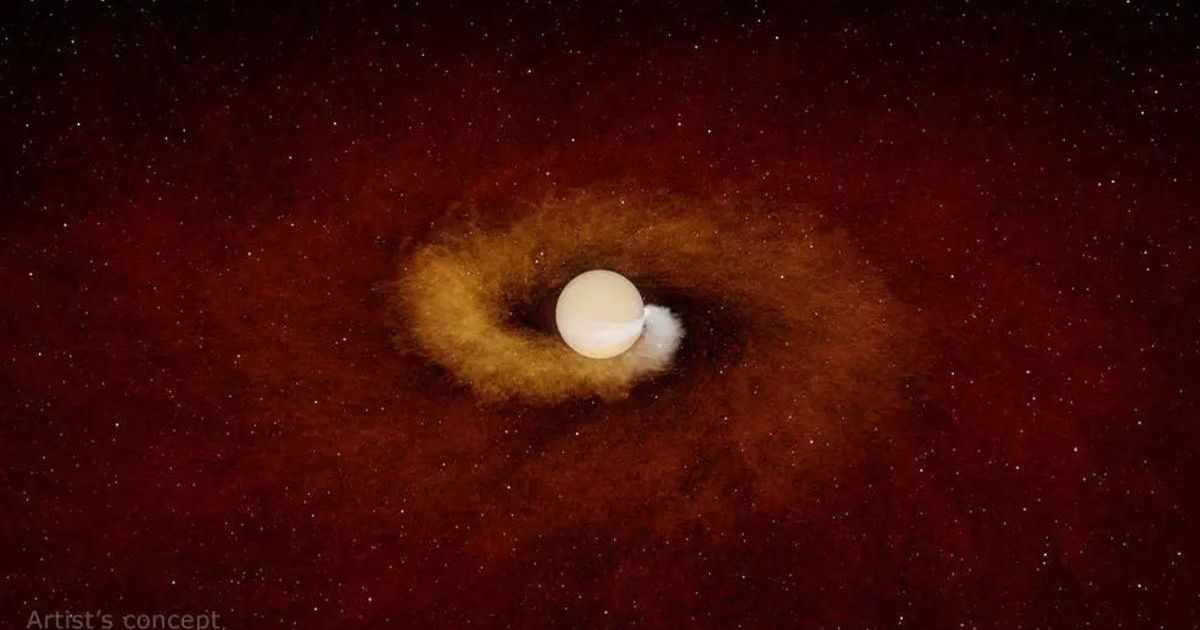
A team of astronomers thinks that TOI-5882—a Sun-like star located about 1,300 light-years away—has likely devoured one of its planets. Led by Brooke Kotten of the University of Michigan, the team has rooted its claim in the chemical composition of the star, which seems to have an unusually high concentration of lithium. Kotten and her colleagues have published their findings in the Astrophysical Journal.
"You are what you eat, right?" said Kotten, a graduate student researcher at the U-M Department of Astronomy, in a statement. "We know that there's much more lithium in planetary material than there is in stars. So, if a star eats a planet, it's going to take on a bunch of lithium." Such events, called "engulfments" by astronomers, are over in the blink of an eye (in astronomical terms), taking place over just weeks or even days. So there's no way of seeing them live.
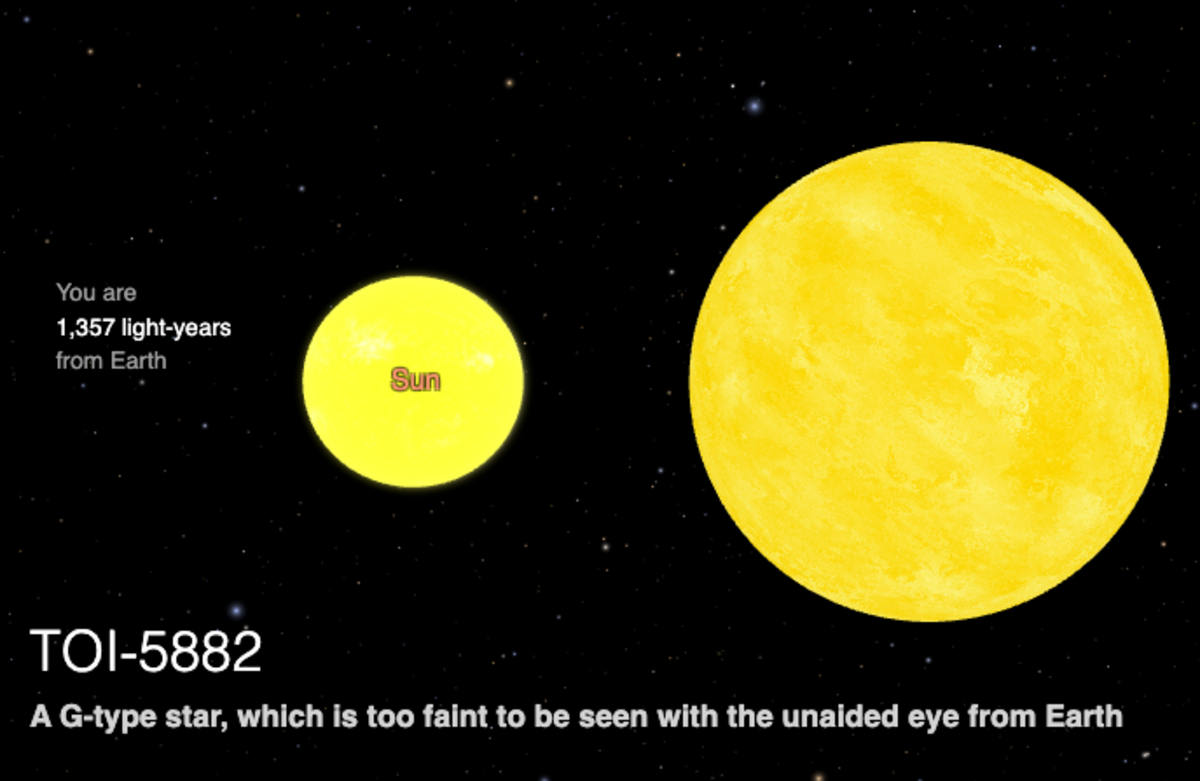
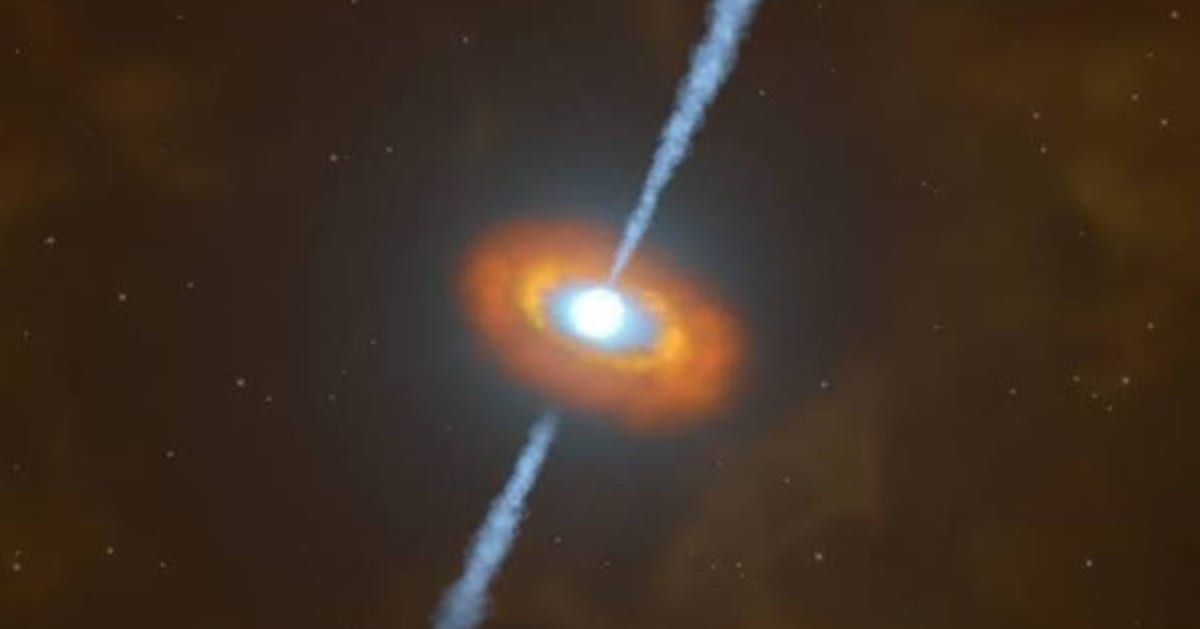
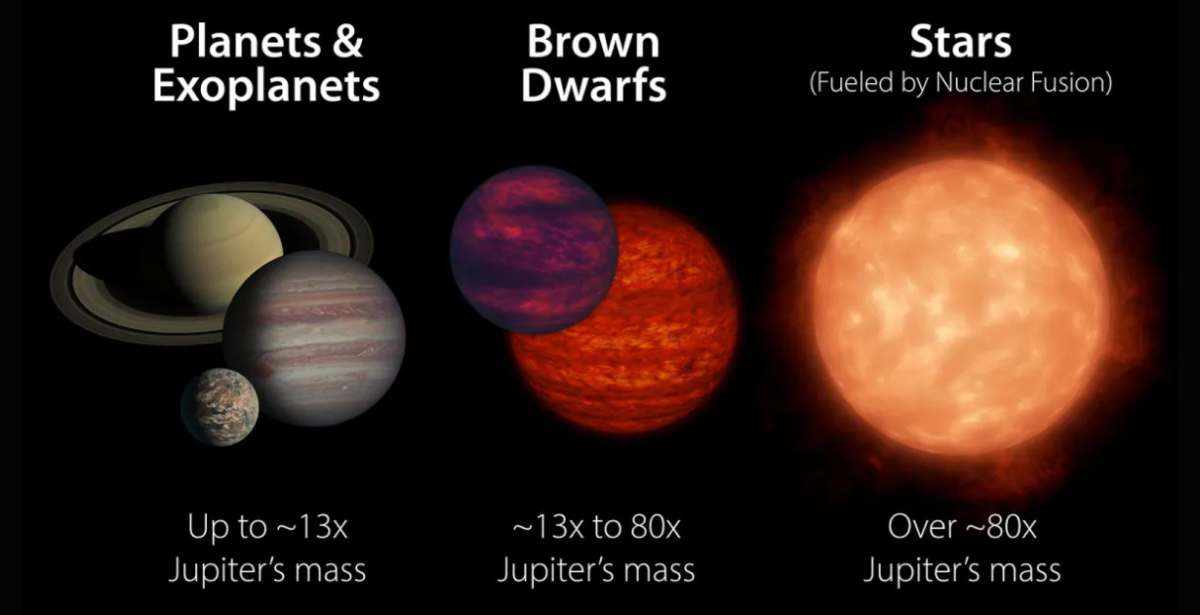
"That's what makes this field so exciting. You really are solving a mystery," said Kotten, who started working on the study as an undergraduate student as part of the Lamat Program at the University of California, Santa Cruz. "We can't just watch the crime happen, so we have to work with all the clues we're given to figure out whodunit." Normally, a star, in later stages of its life, swells into a red giant and engulfs nearby planets. Our Sun, too, will evolve into a red giant in about five billion years. Then it will consume Mercury, Venus, and possibly Earth. But what's weird is that TOI-5882 is not a red giant yet. The team suspects that the star had a partner in crime, which might have steered the planet towards TOI-5882. They say that there is a gas giant that orbits the star. It has 20 times the mass of Jupiter but is not big enough to become a star.
“Lithium is a powerful piece of forensic evidence because, although stars have some naturally, planets are heavily enriched in it,” said Seth Jacobson, a senior author of the study and assistant professor at Michigan State University. "Lithium atoms delivered by planetary engulfment to a star are like sports fans arriving at a stadium," he further explained. "There may already be a few early arriving fans present, representing the initial amount of lithium in the stellar atmosphere, but they are quickly outnumbered."
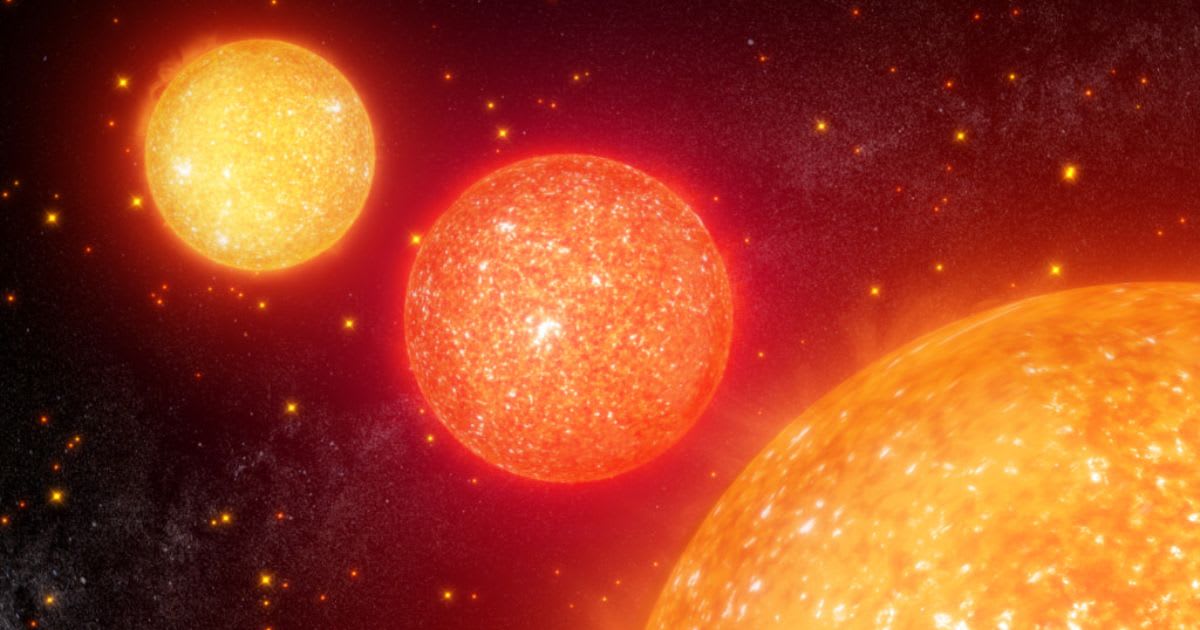
The amount of lithium the astronomers observed has led them to estimate that TOI-5582 might have swallowed a planet with a mass between a couple of Earths and Neptune. "The fact that we can look at a star 1,300 light-years away and say with confidence, 'This star has more lithium than you would expect,' is a testament to both the precision of modern instrumentation and the hard interpretive work that goes into making sense of that signal," said Melinda Soares-Furtado, a senior author of the study and assistant professor at the University of Wisconsin.
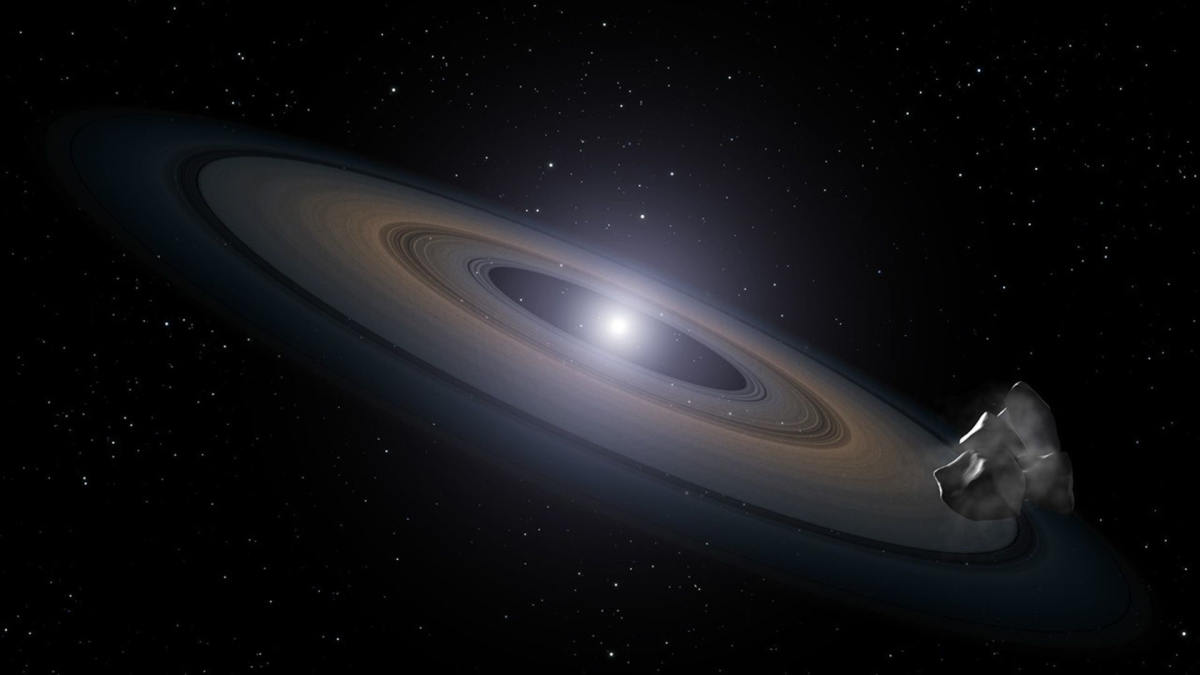
To prove that the lithium content was not just high but unusually so, the team created a control group of 62 stars with comparable size, age, mass, and temperature. They then compared TOI-5582 with the control stars in multiple ways. "And it's not like you have to cherry-pick the data to make it stand out. It's robust," Soares-Furtado said. "No matter how you slice it, TOI-5882 is so enriched in lithium it shows up as being at least in the 97th percentile." What's also interesting is that many of the stars in the control group also showed high lithium concentrations. Such discovery spurs the interest of young astronomers like Kotten. "When I was growing up, I dreamed about becoming a private investigator," she said. "I think that explains a lot about where I ended up. I do feel like a detective."
More on Starlust
A brown dwarf may have dimmed a star in what was one of the longest eclipses ever
15 years of data reveals temperate super-Earth around a red dwarf star just 28 light-years away