The Milky Way’s core is emitting mysterious gamma rays. Scientists think it could be linked to dark matter.
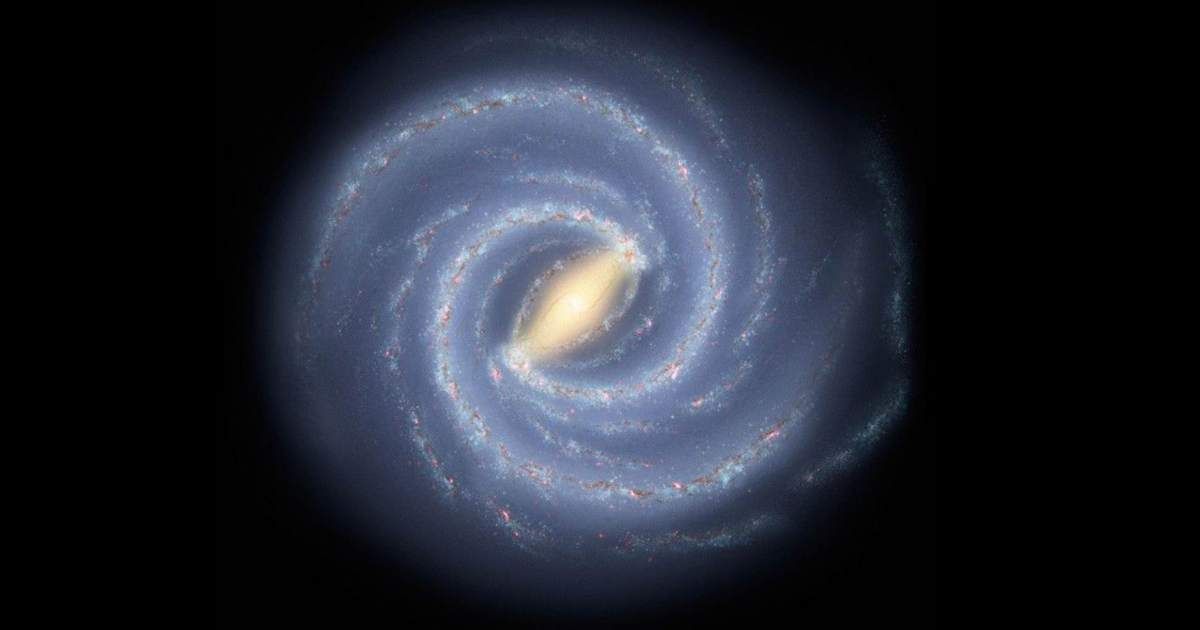
For over a decade, a mysterious glow of high-energy light from the Milky Way's center has had astronomers searching for answers, with several competing theories on the table. Millisecond pulsars (ancient, rapidly spinning neutron stars) have been among the most considered explanations. Now, new research published in Physical Review Letters has found that this explanation is unlikely, strengthening the hypothesis that dark matter is one of the most plausible causes. The study was conducted by Florian List of the University of Vienna and Nick Rodd of the Lawrence Berkeley National Laboratory.
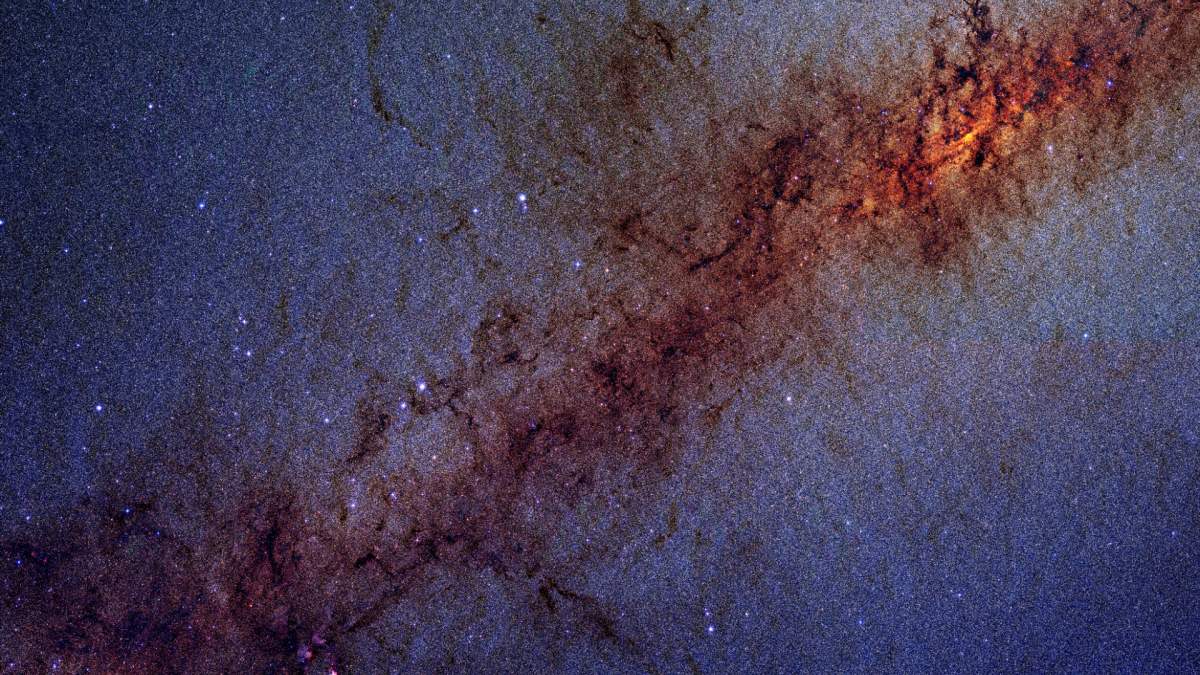
What exactly is glowing at our galaxy's core?
Astronomers call this the Galactic Center Excess. It is a roughly spherical haze of gamma-ray light spreading outward for thousands of light-years from the middle of our galaxy. The problem is that the galactic center is one of the brightest and most crowded regions in the gamma-ray sky. The core is packed with bright sources of radiation that make it hard to isolate individual signals. As University of Vienna researcher Florian List put it, "Interpreting the signal is particularly difficult because the Galactic Center is an exceptionally bright and crowded region of the gamma-ray sky." That difficulty has left researchers debating the cause for over a decade.
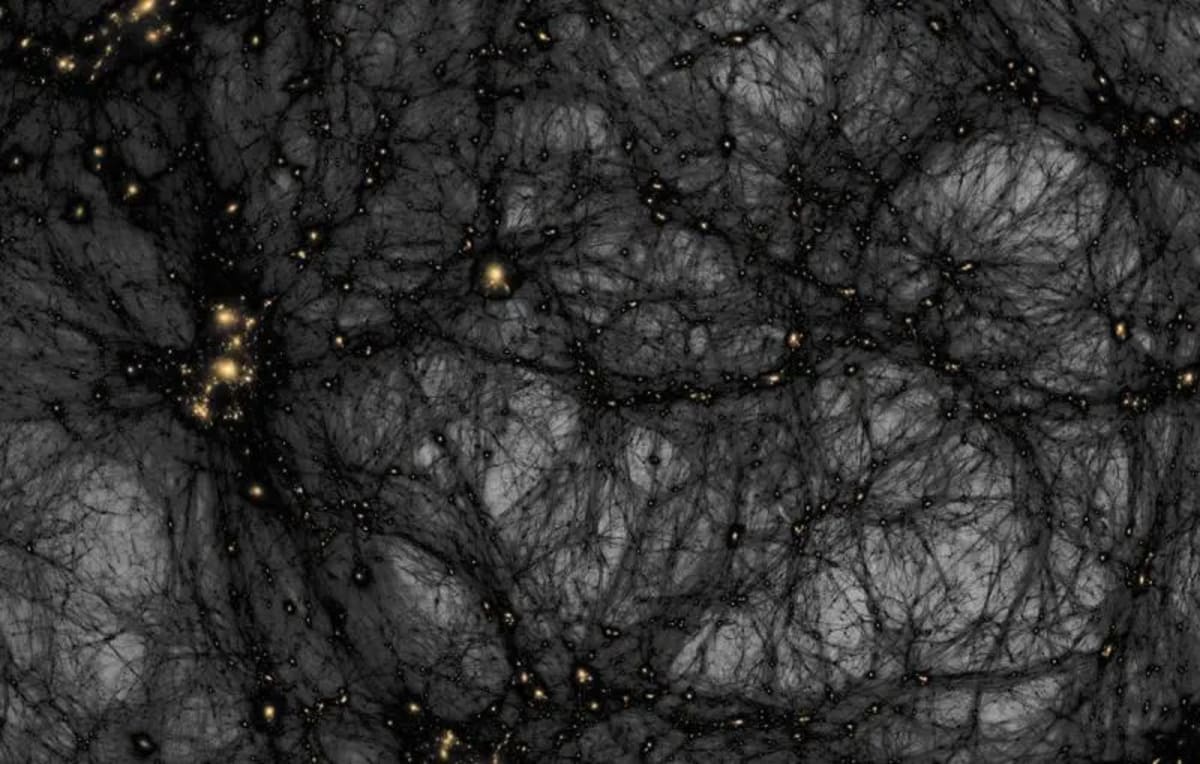
Several explanations have been put forward, but two have attracted the most attention. The first is dark matter particles. In prominent theoretical scenarios, two dark matter particles crashing into each other could wipe each other out and produce gamma rays. Since dark matter is usually diffuse and completely ignores itself, self-annihilation is practically nonexistent in the sparse outer regions of our galaxy. But near the core of a galaxy, where dark matter is far more densely packed, those collisions become frequent enough to generate a continuous signal. Those gamma rays, released through self-annihilation, remain a prime theoretical candidate for the spherical glow scientists have been observing.
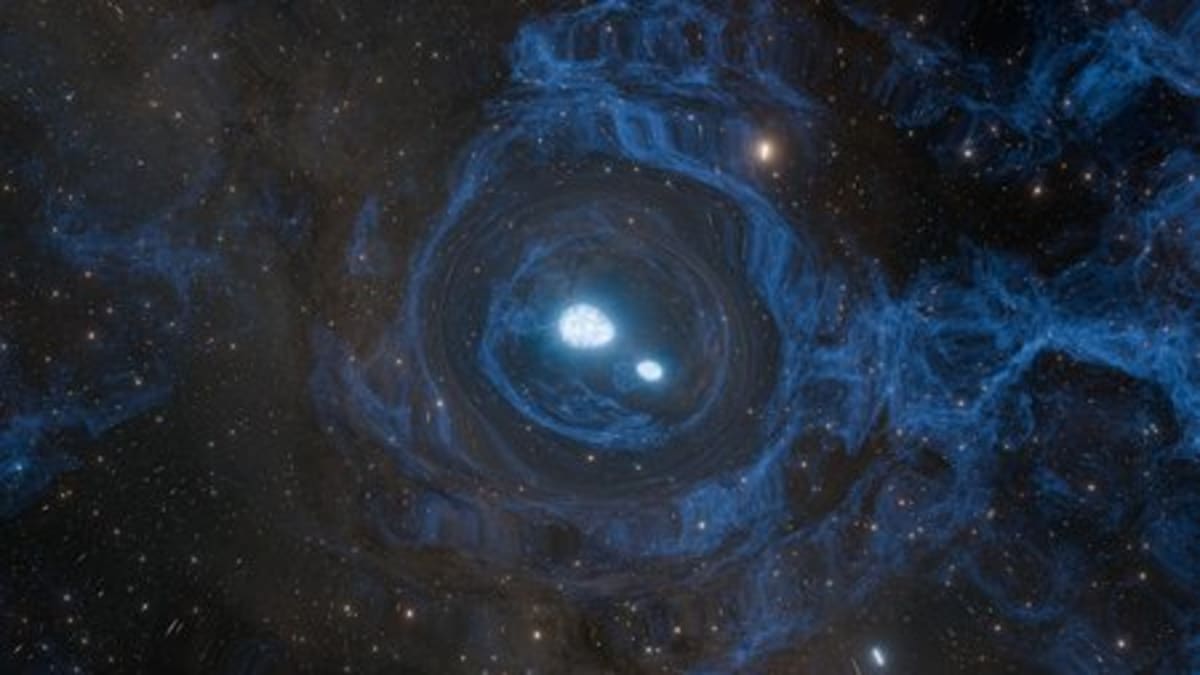
Another explanation points to millisecond pulsars. These are ancient, rapidly spinning neutron stars found in large numbers across our galaxy. A large enough population of them near the galactic center has been put forward as a possible source of the Galactic Center Excess. Previous models had suggested that a population ranging from a few hundred to a few thousand of these pulsars might be sufficient to explain the excess, which seemed like a workable number. But this new research says otherwise. Florian List and Nick Rodd trained a machine learning model on more than one million simulated gamma-ray observations. But unlike earlier studies that mapped only the spatial location of the light, their algorithm simultaneously evaluated the specific energy of every single detected photon. Using this approach, they wanted to figure out how bright individual point sources (like pulsars) would need to be in order to produce the Galactic Center Excess on their own.
Instead of a few hundred brightly shining pulsars, the team found that more than 35,000 would be needed, and each one would have to be extraordinarily faint. Explaining the findings, Rodd said, "Our new analysis shows that the sources would have to be so faint that they would be almost indistinguishable from the emission expected from annihilating dark matter." It is important to note that this study does not confirm dark matter as the source. What it does do is make the pulsar explanation significantly harder to stand behind, shifting the momentum back toward the dark matter hypothesis. "The origin of the Galactic Center Excess is one of the longest-running debates in astrophysics," List said. "Our work does not show that dark matter is responsible for the signal. However, it suggests that it is still too early to rule out this possibility." So the debate continues.
More on Starlust:
Some of the galaxy's unusually cold 'stars' could actually be alien megastructures
The first alien civilization we find might already be nearing its end