Four major lunar missions set to launch in 2026 to support NASA's goal to 'stay' on the Moon
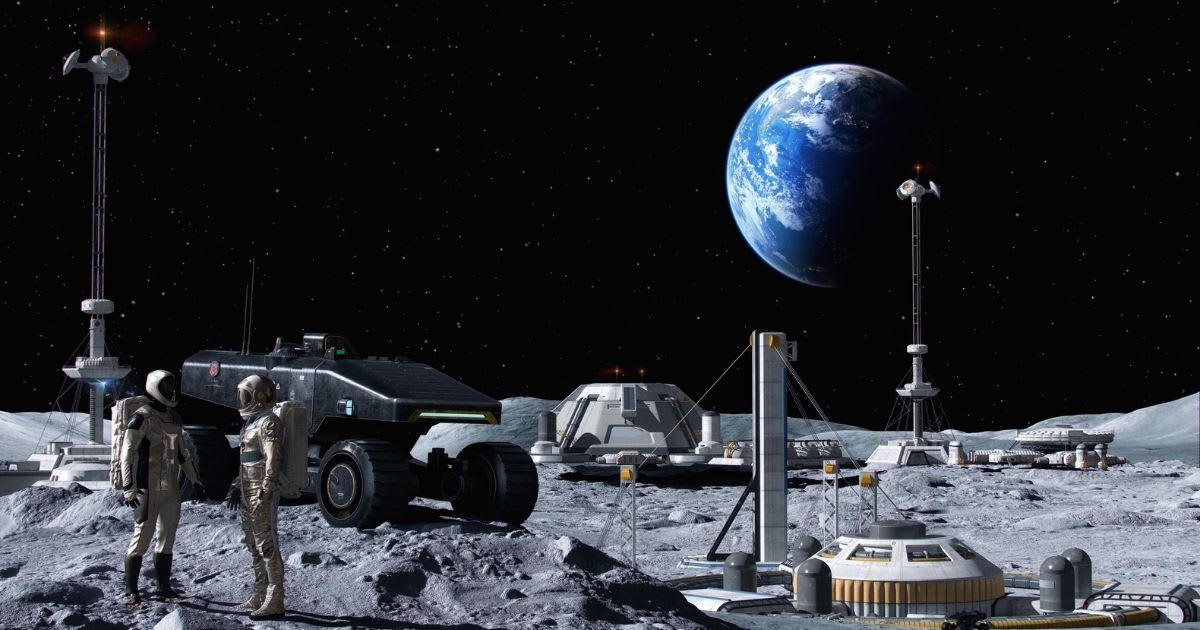
On May 26, NASA Administrator Jared Isaacman stood at the podium at the agency’s headquarters in Washington, D.C, and said: "This time, the goal is not flags and footprints. This time, the goal is to stay." With this announcement, NASA laid out its plan to build humanity’s first permanent home near the Moon’s South Pole that could support science, technology, and future deep-space exploration by 2036. NASA also detailed several initiatives to support the goal, including an investment of up to $20 billion over the next few years as part of its $30 billion program.
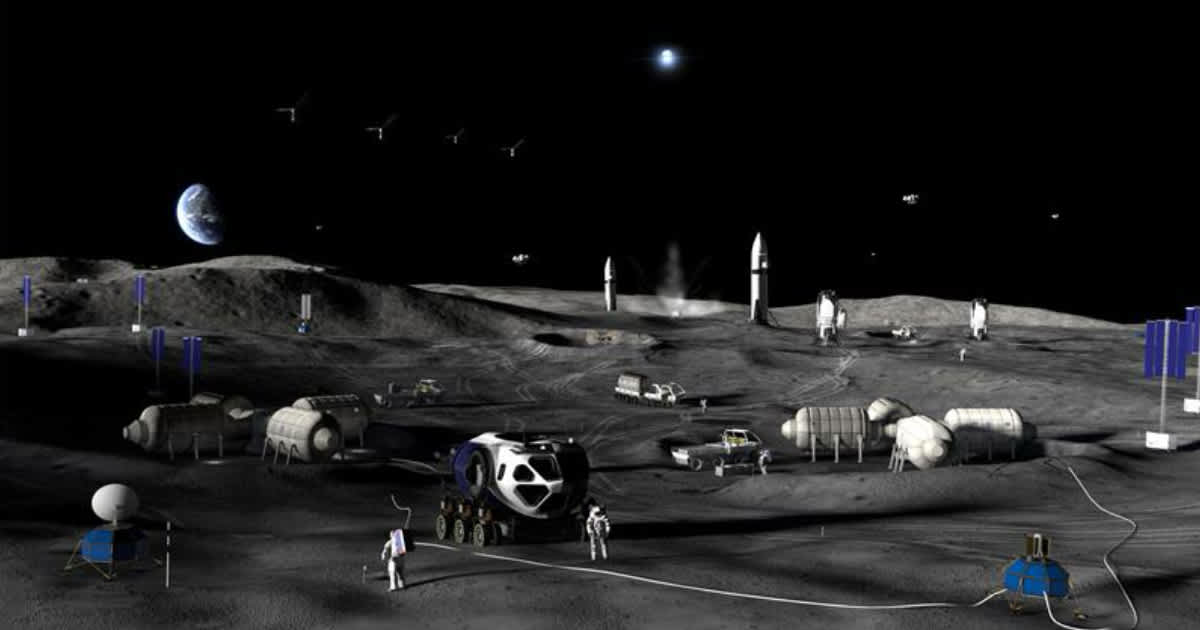
“The Moon Base will be America’s and humanity’s first outpost on another celestial world. Every mission, crewed and uncrewed, will be a learning opportunity as we return to the lunar surface, build the infrastructure to stay, and master the skills required to live and operate in one of the most demanding and dangerous environments imaginable," said Isaacman in the official statement. He added, "We will go for the science, for all we stand to gain from an economic and technological perspective, for the innovations that will make life better here on Earth, and to prepare for where we will inevitably go next."
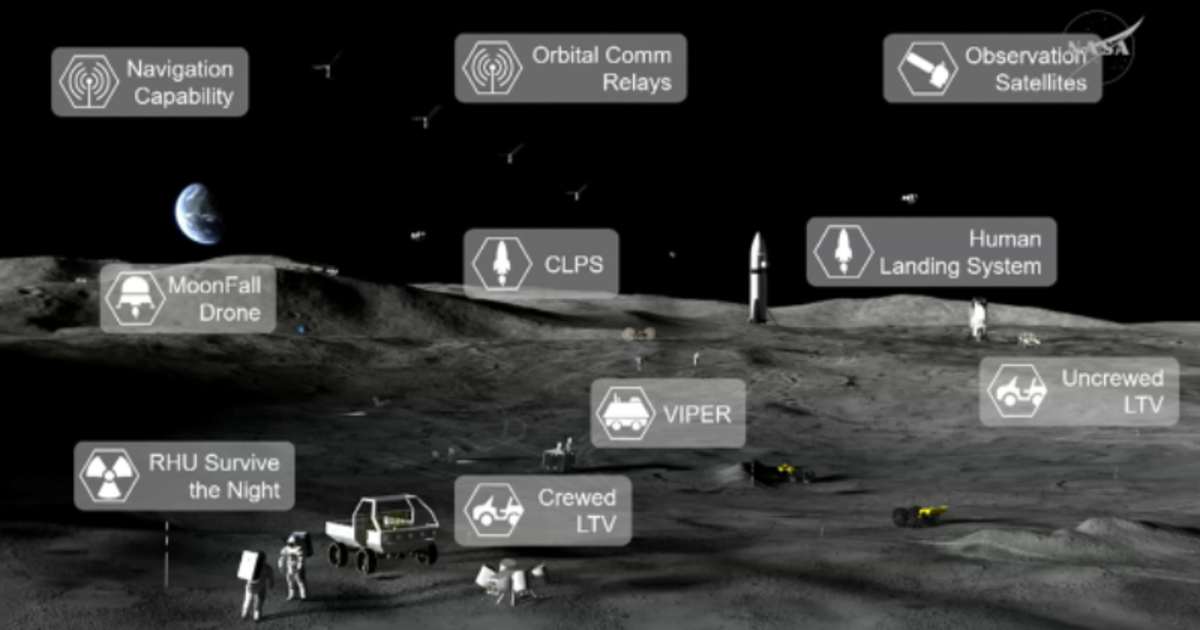
However, before astronauts can actually live and work there, NASA and its partners first need to test the technology and study the environment up close, and the first steps to reach these goals are already underway. Across labs and launch facilities, robotic landers are currently being assembled and prepared for flight in 2026. Three of them were officially numbered at the May 26th event as Moon Base I, II, and III. If everything stays on track, the next phase of lunar exploration will begin in the second half of 2026. Here’s a closer look at the upcoming lunar missions associated with NASA that could shape the future of life on the Moon.
Astrobotic Griffin-1 (NASA Moon Base II): Expected July 2026
This mission is led by Pittsburgh-based aerospace company Astrobotic Technology, operating under NASA's Commercial Lunar Payload Services (CLPS) program. This is the company’s second and stronger attempt at the Moon, as their first Peregrine Mission One suffered a propellant leak shortly after launch in January 2024 and never made it to the lunar surface. Astrobotic Griffin-1 (officially designated as NASA Moon Base II mission) is their comeback. It will deliver over 1,100 pounds of cargo to the Moon, including a rover. The launch is planned for July 2026, with lift-off from Launch Complex 39A at NASA’s Kennedy Space Center.
Aboard our Griffin-1 lander heading to the Moon late 2026, @Astrolab_Space's FLIP has a suite of payloads heading to the lunar surface! 🌙🧪 Check them out: https://t.co/hfIptiDAoy https://t.co/pFenuy2jZ6
— Astrobotic (@astrobotic) May 18, 2026
The landing target is the Moon’s South Pole, in the Nobile Crater region near Mons Mouton, an area that NASA is actively studying for future human missions. Onboard is FLIP, the FLEX Lunar Innovation Platform rover from Venturi Astrolab. It will test the rover systems, including batteries, tires, sensors, avionics, and software in actual lunar conditions. "Each milestone brings us closer to delivering payloads to the lunar surface, demonstrating precision landing, and advancing sustainable lunar infrastructure," said Astrobotic Technology in the official Griffin-1 Mission Update.
Blue Origin Blue Moon Mark 1 “Endurance” (NASA Moon Base I): Expected Fall 2026
The Blue Moon Mark 1 Endurance will be the first attempt by Blue Origin to land on the Moon. It is expected to launch no earlier than fall 2026 under NASA’s CLPS program and the new Moon Base initiative. The landing site is the Shackleton Connecting Ridge near the Moon’s south pole, a key region for future human missions.
Lunar Permanence is only possible with recurring access to the Moon, and it starts this year. Proud to support @NASAMoonBase at the lunar South Pole with our Blue Moon MK1 vehicles delivering high-cadence, low-cost access—MK1-101 Endurance (Moon Base 1), followed by MK1-102… https://t.co/ZEGPcWwo5I
— Blue Origin (@blueorigin) May 26, 2026
The lander's name, “Endurance,” is inspired by Ernest Shackleton’s expedition ship, known for enduring extreme polar conditions. This makes it a fitting choice as the mission’s goal is to operate in one of the Moon’s harshest environments. The payloads will include Stereo Cameras to study how thruster exhaust interacts with the lunar surface during landing, and a Laser Retroreflective Array to help orbiting spacecraft determine precise locations using reflected laser signals. These findings will reduce risk for future crewed Artemis missions planned for 2028.
Intuitive Machines IM-3 (NASA Moon Base III): Expected Second Half of 2026
Led by Intuitive Machines, IM-3 will be the company’s third attempt to land on the Moon. Its previous missions, IM-1 “Odysseus” in 2024 and IM-2 “Athena” in 2025, both reached the surface but tipped over after landing. IM-3 is planned for launch in the second half of 2026 using a Nova-C class lunar lander named Trinity. The lander will target the Reiner Gamma region on the Moon’s western near side. This area is known for its lunar swirls—bright patterns on the regolith—which are hypothesized to be magnetic anomalies, which scientists still do not fully understand.
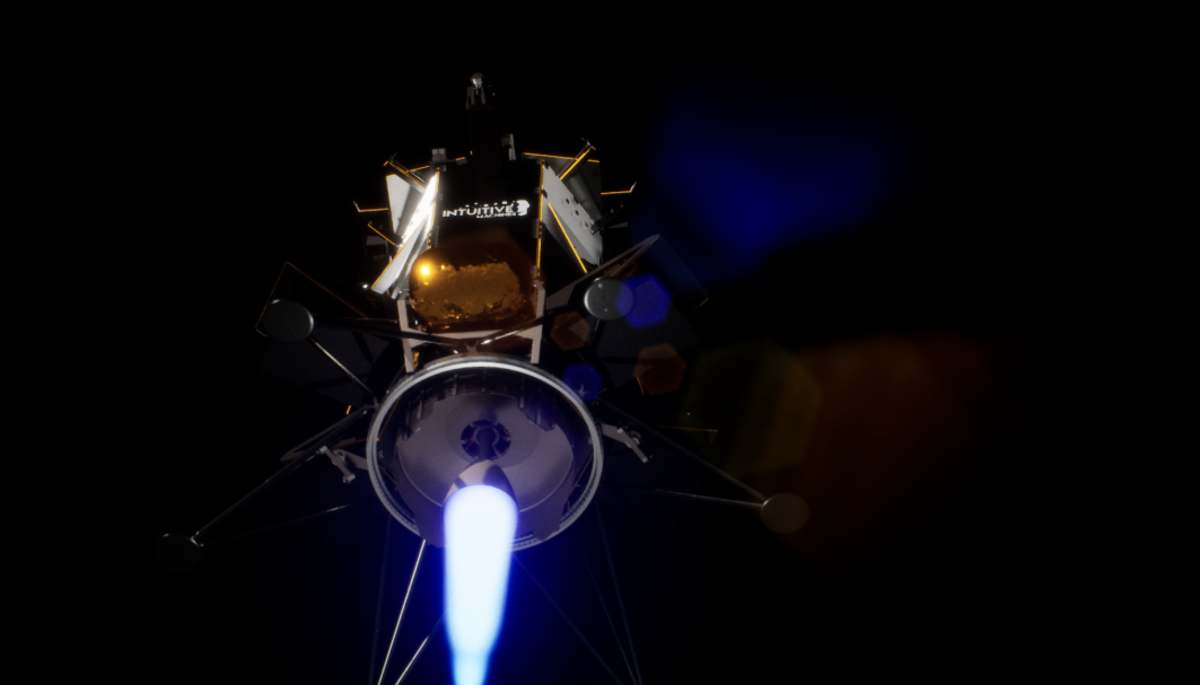
The mission carries around 203 pounds of NASA payloads. This includes Lunar Vertex by the Johns Hopkins Applied Physics Laboratory, which will study local magnetic fields. It also includes CADRE (Cooperative Autonomous Distributed Robotic Exploration), a trio of small autonomous rovers designed to capture 3D images and test coordinated robotic exploration without explicit instructions from Earth. IM-3 will also deploy early lunar data relay satellites to support NASA’s Near Space Network Services.
Firefly Blue Ghost Mission: Expected 2026
After completing its first fully successful commercial lunar landing in March 2025, Firefly Aerospace is now aiming for the far side of the Moon with Blue Ghost Mission 2. The launch is planned for late 2026, with the destination being the lunar far side, a region only China has safely landed on with its Chang’e 4 and Chang’e 6 missions. Firefly's mission is expected to operate for about 10 days on the surface. The standout payload is NASA’s LuSEE-Night radio telescope, which will study low-frequency radio signals and the 21-centimeter hydrogen line. This will help scientists explore the early universe and the formation of the first stars. Additionally, the mission will include the UAE’s Rashid 2 rover, Australia’s Fleet Space SPIDER payload, a user terminal, and other instruments. At the same time, Firefly's Elytra transfer vehicle will deploy the ESA's Lunar Pathfinder communications satellite into lunar orbit.
“Firefly’s Blue Ghost Mission 2 will deliver both NASA and international commercial payloads to further prove out technologies for Artemis and help enable a long-term presence on the Moon,” said Ray Allensworth, Firefly’s spacecraft program director. “The extensive spacecraft environmental testing we did at JPL for Mission 1 was a critical step in Firefly’s test campaign for our historic lunar mission. Now we’re collaborating again to support a successful repeat on the Moon that will unlock even more insights for future robotic and human missions.”
More on Starlust:
Ancient crystals in Chile's salt flat may offer hints about life on Mars
How scientists traced an 800-year-old solar event using ancient trees and historical records