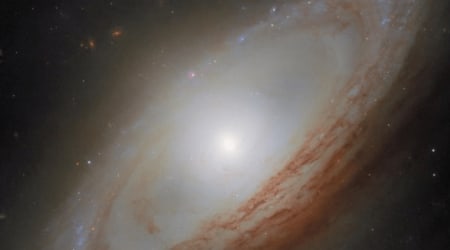
Supermassive black holes seen 'burping' years after devouring unlucky stars
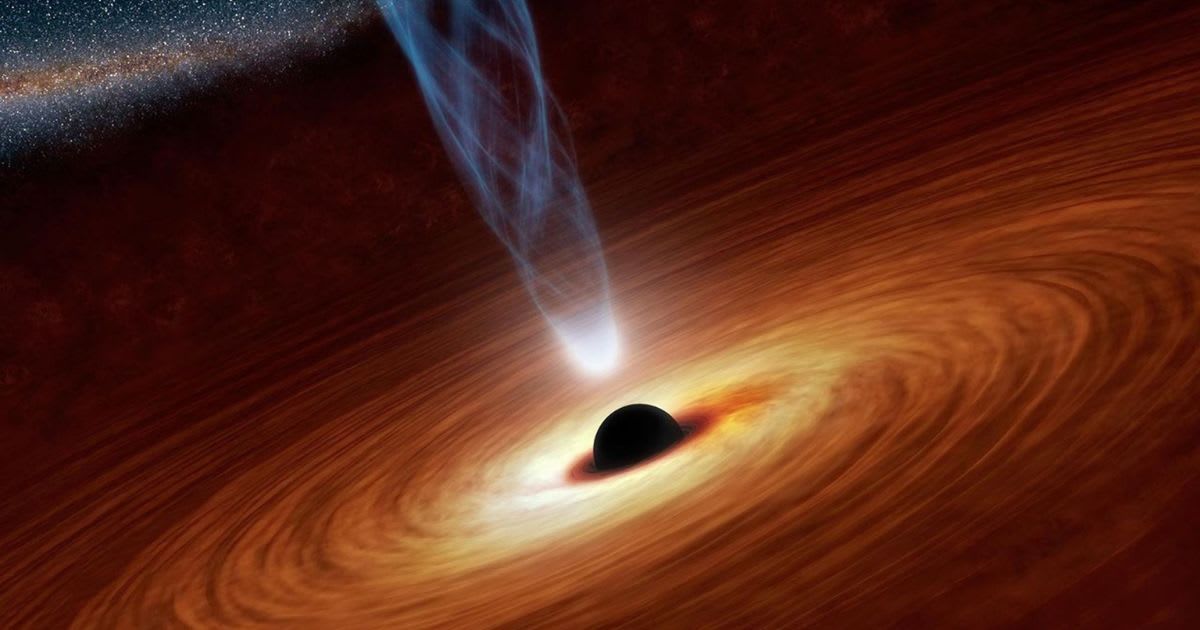
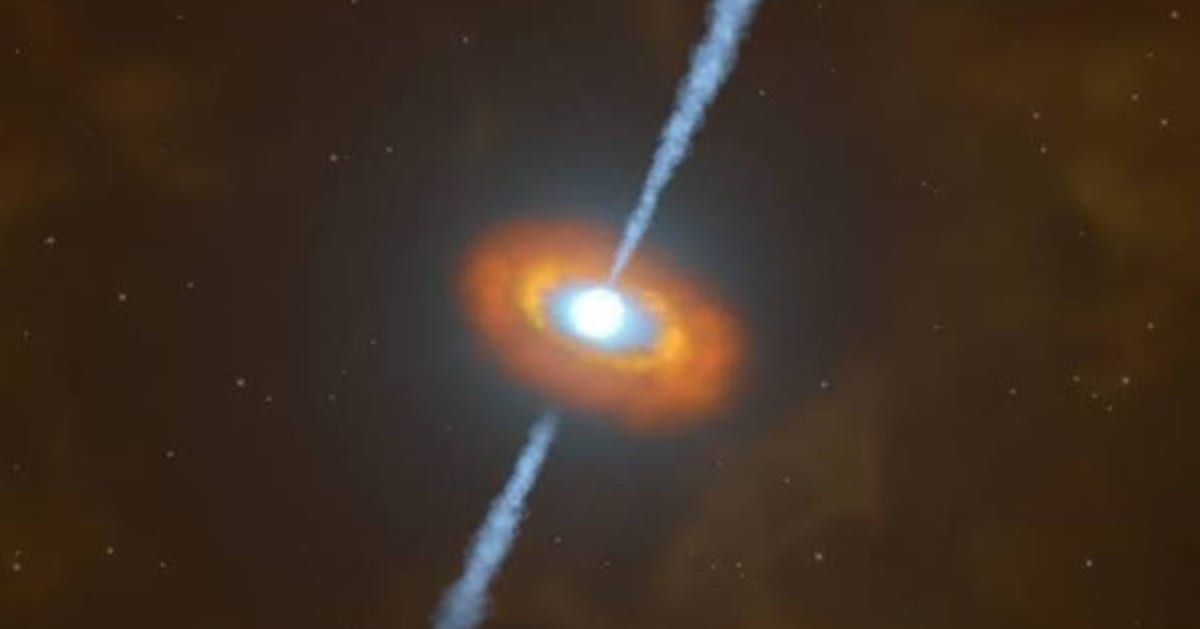
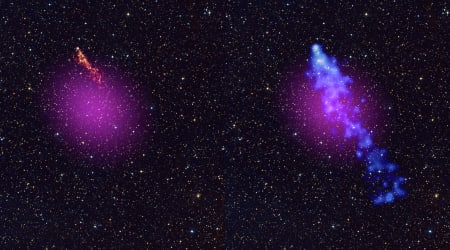
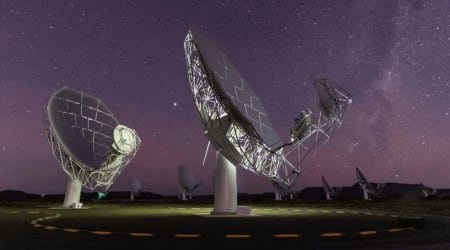
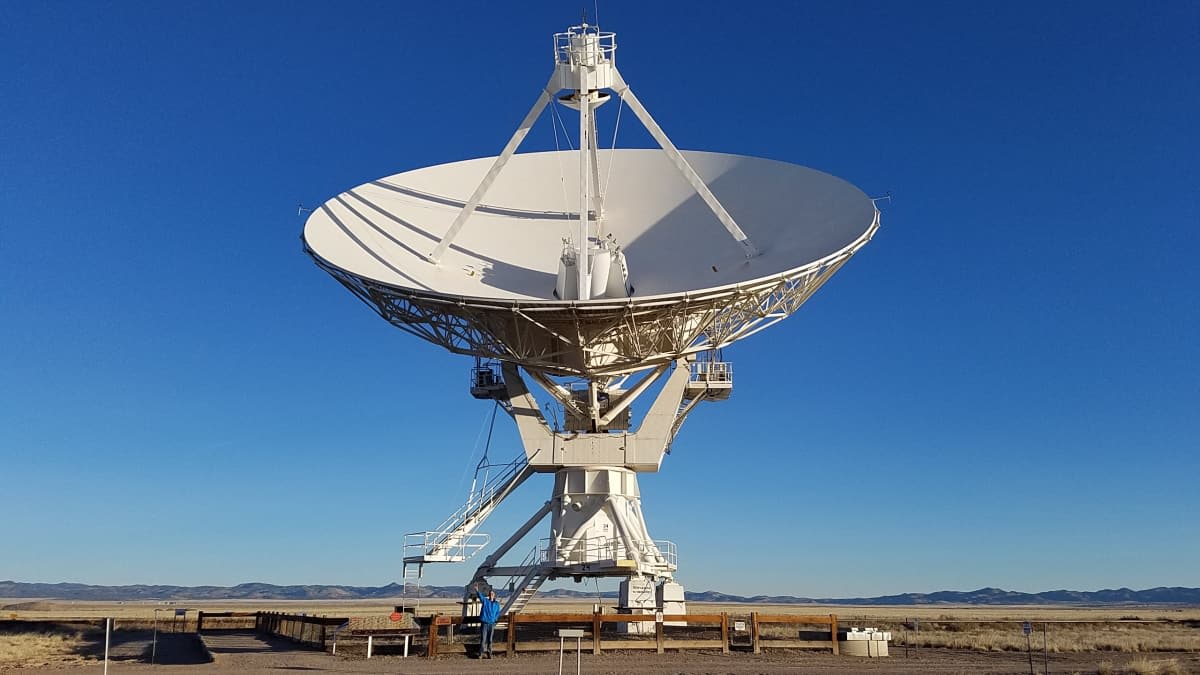
Supermassive black holes have been caught burping years after devouring hapless stars. The National Science Foundation’s Karl G. Jansky Very Large Array (NSF VLA) telescope captured this surprising cosmic spectacle happening billions of light-years away. As a black hole burps, it emits radio waves, pouring out streams of material that collide with the surrounding gas. A research team, led by Kate Alexander of the University of Arizona, has discovered this widespread phenomenon and reported it in The Astrophysical Journal.
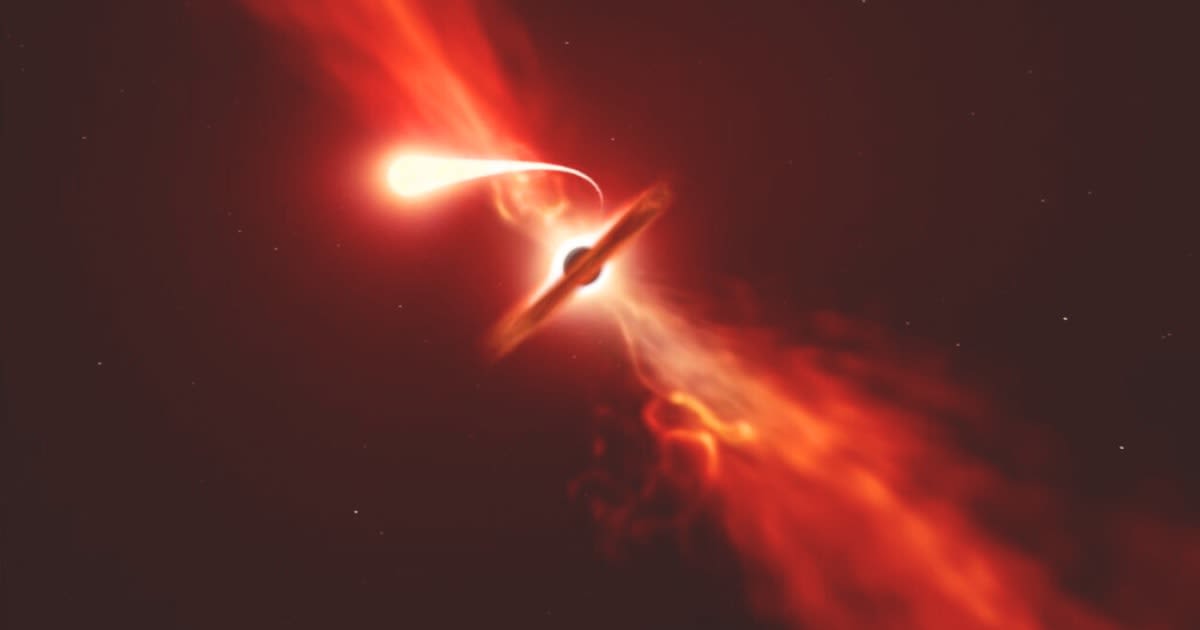
A supermassive black hole lurks at the center of most galaxies. When a star wanders too close to one, the black hole's strong gravity tears the star apart, generating a bright flash of visible, ultraviolet, and X-ray light. Such a cosmic phenomenon is known as a tidal disruption event, or TDE. This lights up the center of an otherwise quiet galaxy. Gradually, the flares die down, causing the black hole to sink into obscurity. However, the NSF VLA picked up a surprising signal from these systems at radio wavelengths long after their visible flares dimmed. The astronomers were surprised to find that the star’s death produces a delayed radio flare that can brighten months to years later, which is akin to a burp that we let out after a heavy meal.

"We used to think the show was over once the optical light faded," said lead author Alexander of the University of Arizona in a statement. "In fact, our first large program dedicated to systematically studying TDEs with the NSF VLA focused on the first year after discovery, and we were surprised to find that many TDEs don't show radio light during this time frame at all. Fortunately, we kept looking, and now the NSF VLA is showing us that the black hole can come back years later with a dramatic encore performance in radio light." Using the NSF VLA, the team was able to detect late-time radio observations of 31 tidal disruption events. They combined the VLA’s data with optical, ultraviolet, and X-ray data from other telescopes. This allowed them to track when and how each system glowed in radio and to link those ‘burps’ to what the black hole was doing at the time.
When a star passes close to a supermassive black hole, it gives a rare moment to observe how the black hole’s binging changes in real time. In the initial stage, the black hole eats stellar debris very quickly. But over time, the feeding slows down as the gas reserve depletes. Repeated observations of such events with the telescope can reveal how radio flares change as the black hole continues to gorge. Analyzing all the data, the team found that late-time radio emission doesn’t stem from a single feeding state. Instead, they detected two distinct pictures. Scanning other galaxies, the VLA finds that radio emission begins hundreds of days after a tidal disruption event when the black hole is still sucking in matter. In some galaxies, the radio flare surfaces only after the system becomes quieter and slower. In each case, the black hole doesn’t consume the whole gas but expels a fraction of it.

When material is flung away from the black hole's accretion disk, it collides with surrounding gas, generating shock waves that make particles move faster and produce radio waves. This proves that jets or winds blow away from a region close to the event horizon. Such behavior can be detected in other black hole systems where high and low accretion rates can trigger radio-bright outflows. The researchers say that TDEs capable of producing delayed radio flares are less likely to show helium emission lines in their early optical spectra. TDEs, which look different in visible light from the start, may be the best candidates to watch out for future “burps”. A black hole's eating frenzy is an ongoing story in which they continue to reshape their surroundings, letting us know how black holes and galaxies grow together.
More on Starlust:
Astronomers spent 6 years studying a supermassive black hole’s revival. Here’s what they found
One of the mysterious 'little red dots' has been identified as a 'black hole star'