Nuclear weapons in space? MIT scientist proposes way to detect hidden nukes on satellites
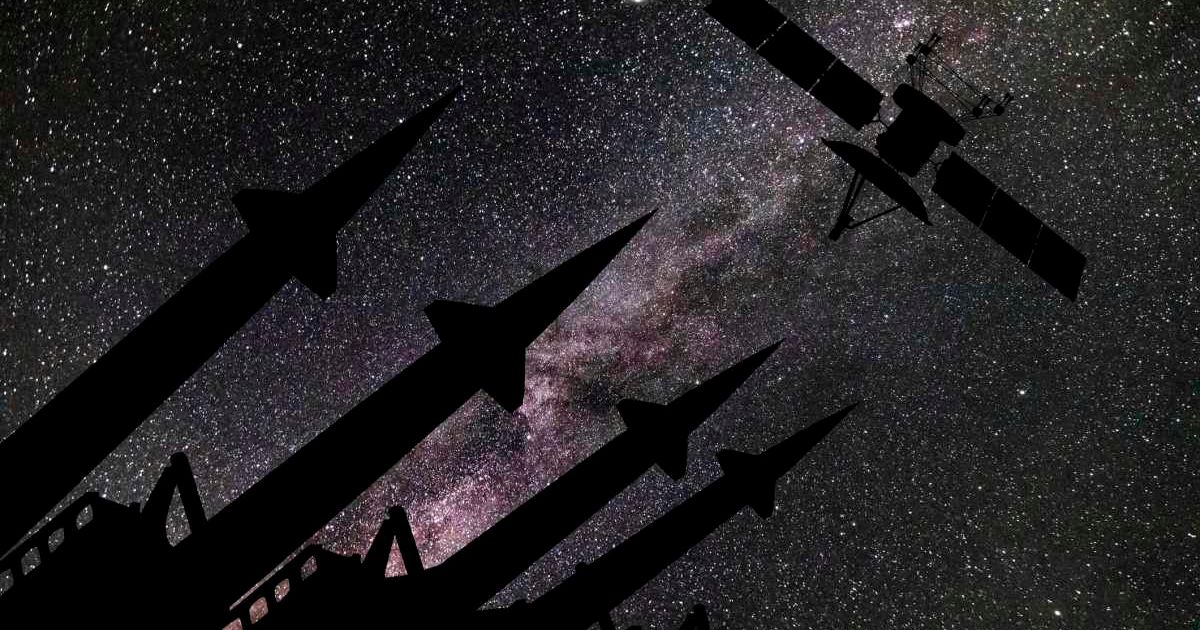
Space in low-Earth orbit has become the hub of global communications, with thousands of satellites circling our planet and enabling the day-to-day functioning of society in the 21st century. But what if a nuclear weapon was hidden inside one of these satellites? Would we even know, much less be able to act on it? Areg Danagoulian, a scientist at the Massachusetts Institute of Technology (MIT), has gone over this unsettling scenario and proposed a solution. In a new paper published in the journal Nature, the MIT researcher has detailed his idea for building an inspector satellite that could effectively hunt down and detect other satellites carrying a nuclear payload.
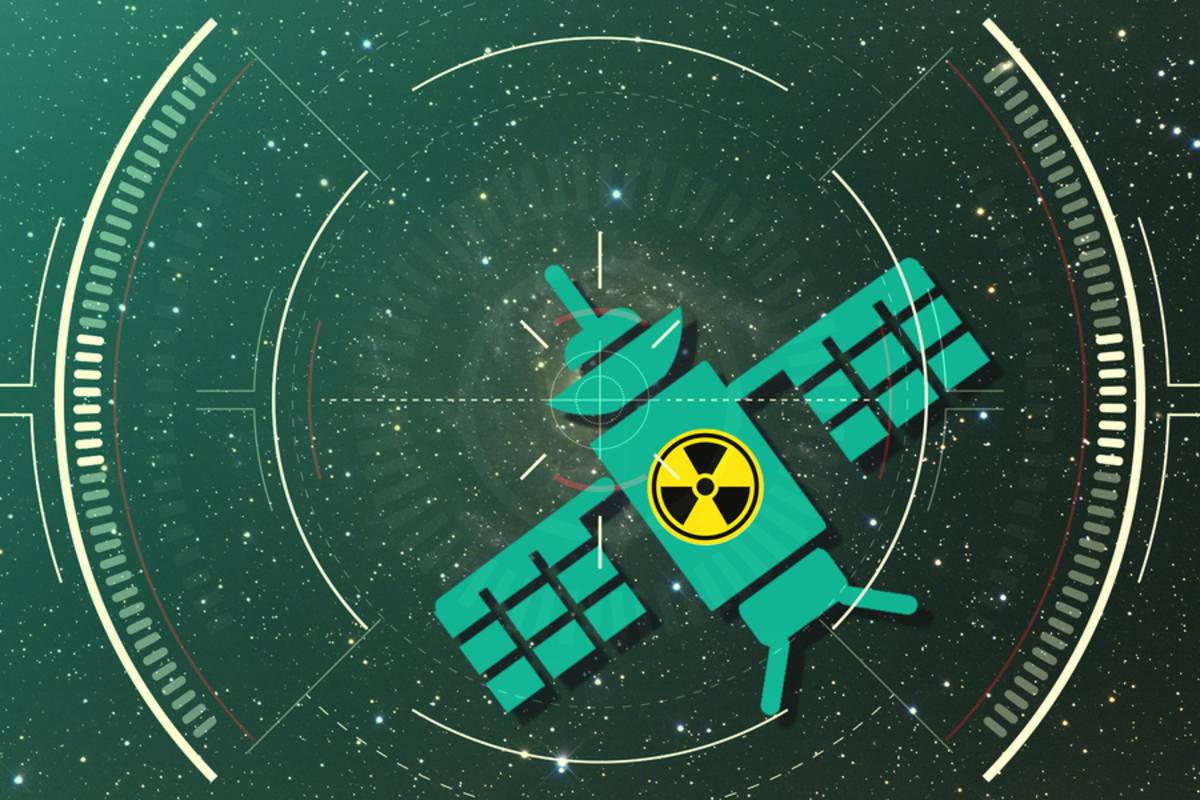
The threat of a nuclear-capable satellite reared its head most recently in 2022, when Russia secretly launched a satellite into a dangerous, high-radiation orbit just weeks before invading Ukraine. By 2024, the spacecraft, known as Cosmos 2553, triggered considerable geopolitical concern, prompting U.S. officials to publicly warn that Russia could be developing a nuclear anti-satellite weapon. While Moscow has maintained that the spacecraft was launched for scientific pursuits and surveillance, Western officials remain deeply skeptical. If the satellite does, in fact, contain the components for a nuclear device, the geopolitical consequences could be staggering.

In the worst-case scenario, the detonation of a nuclear warhead in low-Earth orbit would unleash trillions of highly energized particles, which, trapped in our planet's magnetic field, could cripple satellites across vast regions of space, disrupting critical infrastructure, including navigation systems, weather forecasting, space-based internet, and global communications in a single stroke. The 1962 high-altitude detonation of Starfish Prime, a 1.4-megaton thermonuclear warhead, stands as a reminder of the kind of devastation this can unleash, having unintentionally damaged several early satellites. To prevent a repeat, the Outer Space Treaty was drafted in 1967 to prohibit placing nuclear weapons in orbit. The treaty has since been signed by 118 countries, yet we currently lack any reliable, unclassified way to verify if a satellite is secretly violating it.
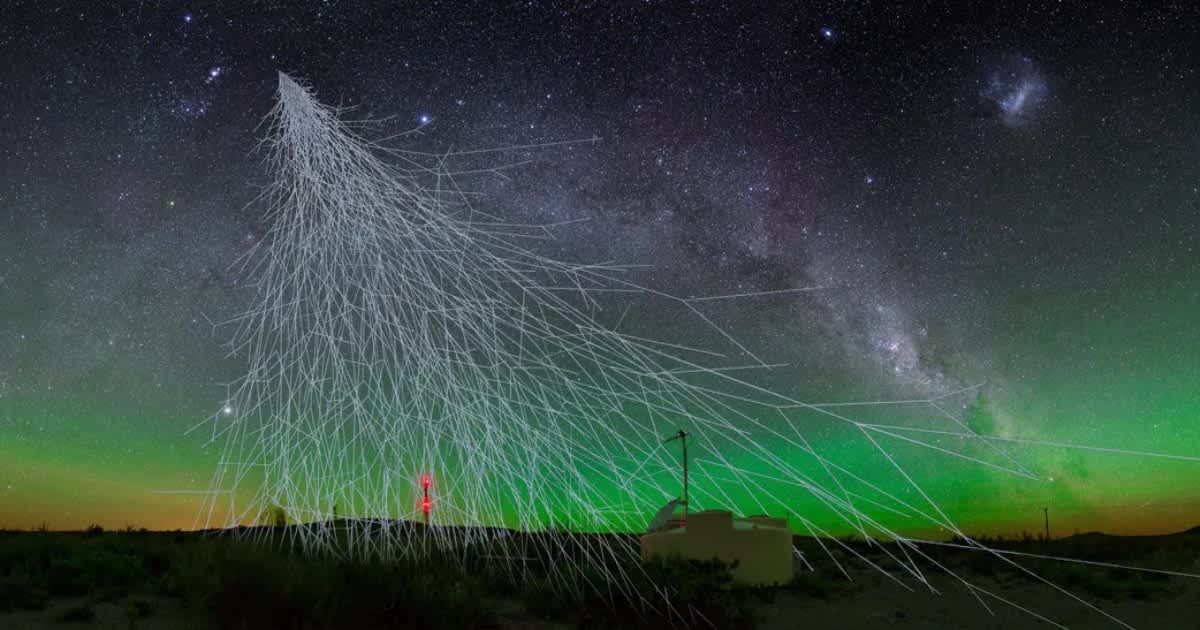
This critical gap is what Danagoulian's paper addresses. Bypassing cameras and conventional surveillance, the MIT scientist's concept relies on subatomic particles for detection. Earth's inner Van Allen radiation belt is constantly swarming with highly energetic trapped protons. When these protons strike elements with a high atomic number, such as uranium or plutonium, they trigger a reaction known as spallation. A single proton slamming into heavy radioactive material can knock loose as many as 40 neutrons. While ordinary spacecraft components produce very few of these particles, a satellite carrying weapons-grade nuclear materials would generate a clearly discernible and overwhelming neutron signature.
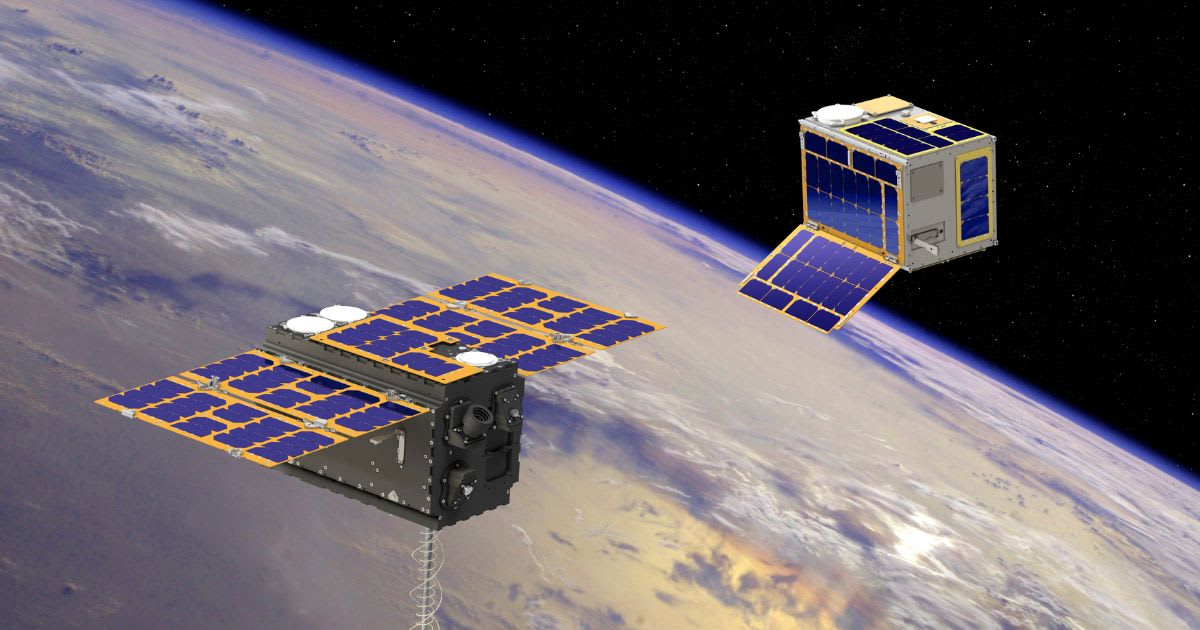
To catch this signature, Danagoulian has envisioned a compact inspector satellite equipped with advanced neutron detectors. Flying close to a suspect spacecraft, the inspector would search for these neutrons while filtering out the constant background radiation found in orbit. According to his calculations, the instrument could be remarkably small, roughly the size of a large encyclopedia. Equipped with pixelated scintillator panels (which emit light when interacting with radiation) placed between synthetic diamond-based detectors, the system will be able to identify spallation neutrons and separate them from the natural protons and electrons racing through space. If the inspector hovers within 4,000 meters of a suspicious spacecraft for about a week, it could identify the presence of nuclear material with roughly 99 percent accuracy, Danagoulian's proposal claims.
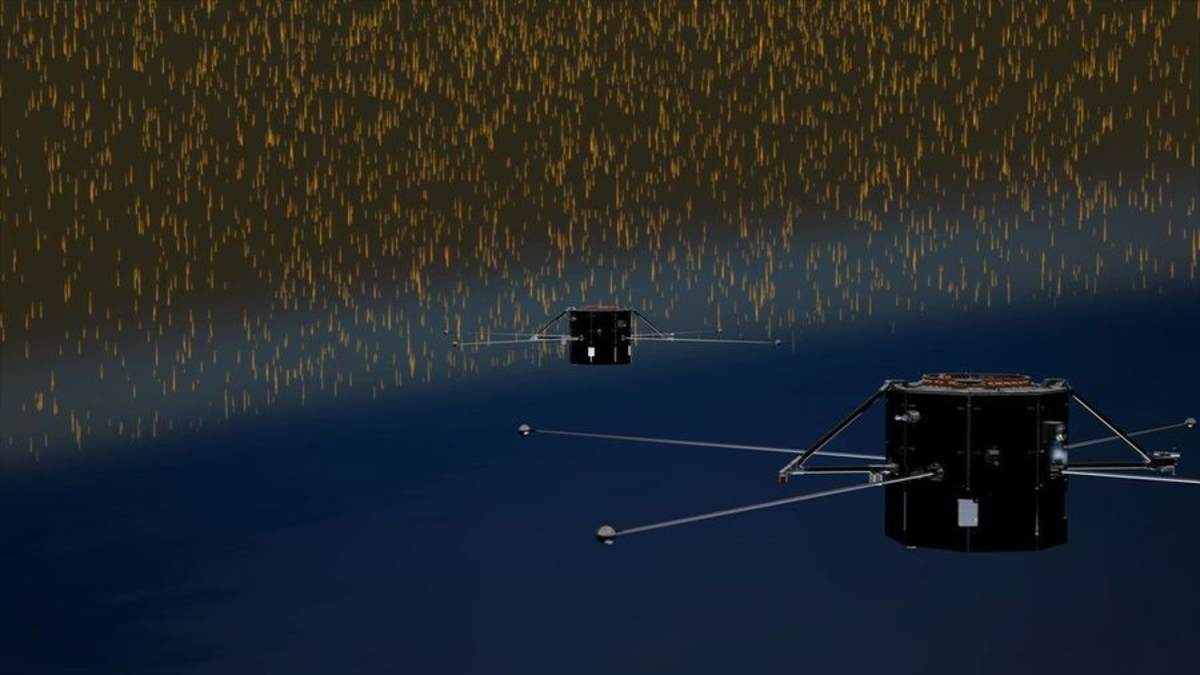
This rather short timeline could shrink even further if multiple inspector satellites are deployed or if the probe edges closer. At a distance of 1,000 meters, a single sensor satellite could positively identify a hidden nuclear weapon in about an hour, effectively requiring just a single flyby. “Most neutron detectors are very sensitive to protons, so you have to come up with some smart ways to reject protons but keep neutrons,” Danagoulian explained in a statement. “You also have to tell the difference between naturally occurring neutrons and neutron spallation from the satellite,” he added. Ultimately, the MIT scientist hopes that this proof-of-concept technology will grow into a verification system capable of surviving the extreme radiation of low-Earth orbit. If successful, such a system could be used to enforce transparency and compliance in space.
More on Starlust:
A fleet of six spacecraft could be Earth's first active defense against solar storms
SpaceX's Falcon 9 launches world's first commercially built nuclear-powered satellite