Newly discovered quasars, as bright as a trillion Suns, are offering a glimpse of the early universe
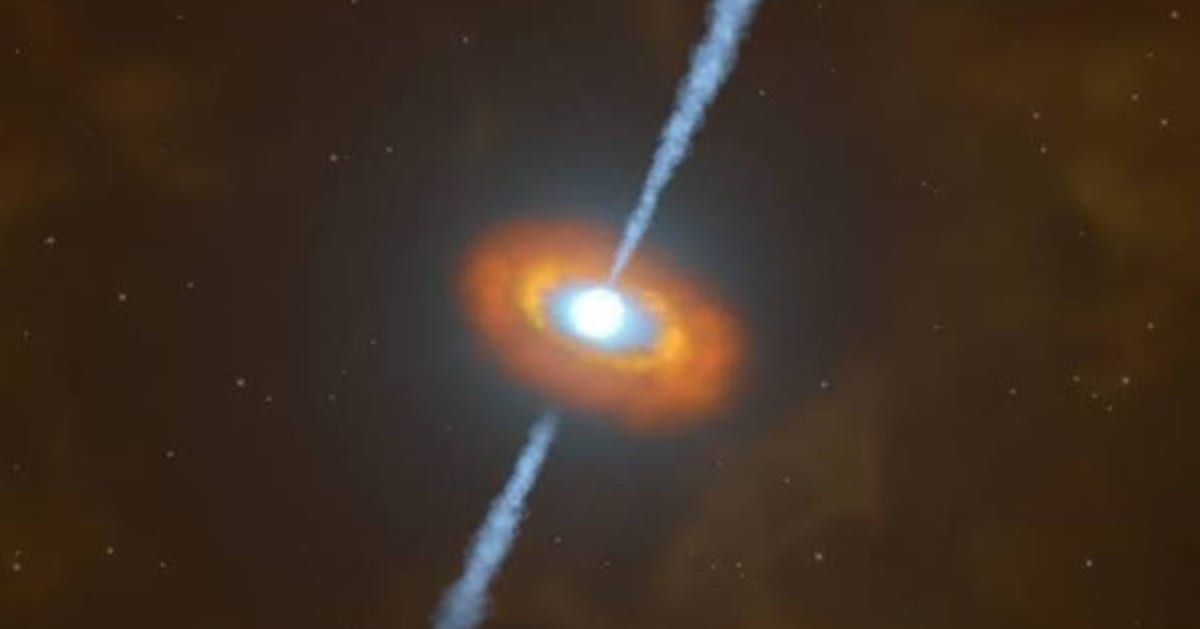
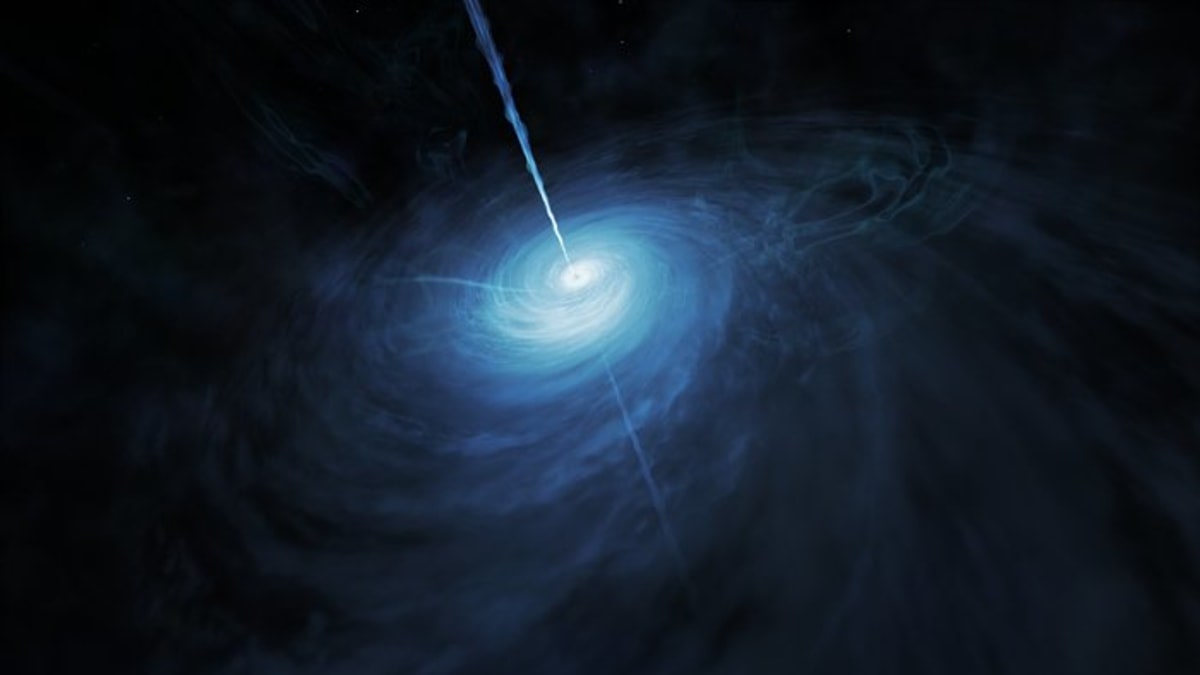
![This artist's concept depicts a distant galaxy with an active quasar at its center. [Representative Cover Image Source: NASA, ESA and J. Olmsted (STScI)]](https://d3hedi16gruj5j.cloudfront.net/809520/uploads/9163be20-79c4-11f1-9be1-8da1c73ca97e_1200_630.jpeg)
A team of scientists has discovered 31 ancient quasars as bright as a trillion Suns, which date back to a time when the universe was in its infancy—just about 670 million years old. The researchers have reported their findings in a paper published in Astronomy & Astrophysics.
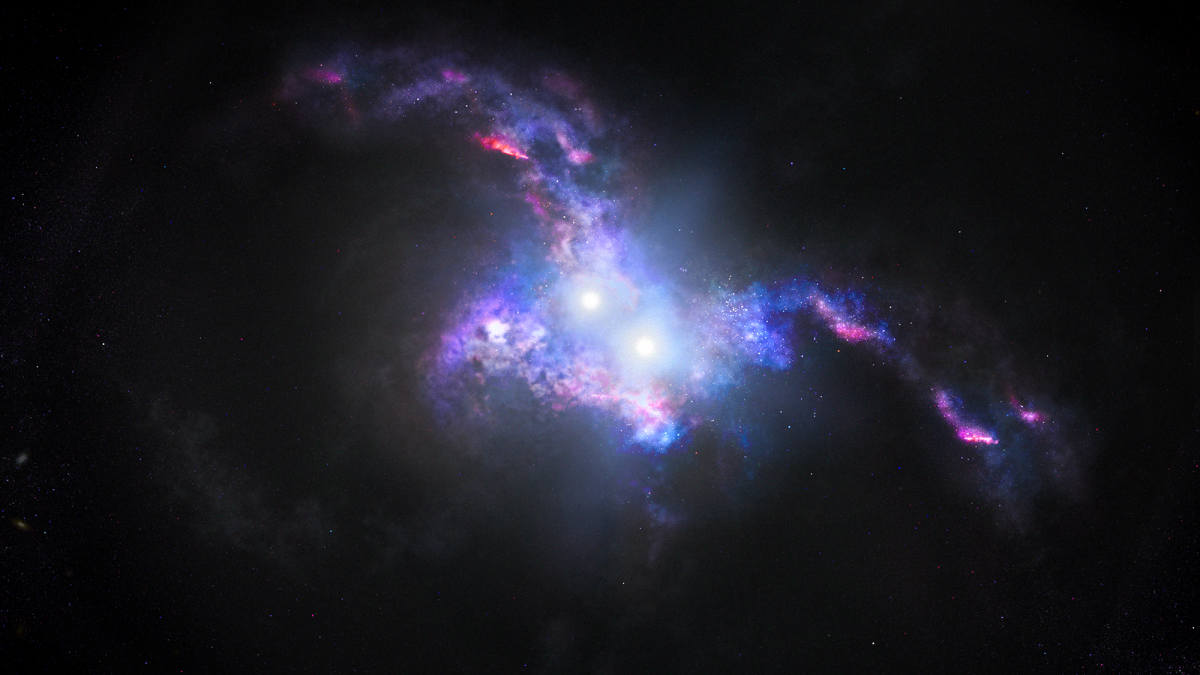
Powered by supermassive black holes at the centers of galaxies, quasars are among the brightest objects in the universe, whose light can travel enormous distances. The hunt for the universe's very first quasars has been going on for decades, but it is difficult to detect these from earlier than about 770 million years after the Big Bang. That's because galaxies need time to grow large enough to produce them. Even the light from the few galaxies that had grown large enough during the universe's infancy is faint and can be easily mistaken for light from stars lying much closer. Moreover, since light from such quasars travels great distances, it is stretched from ultraviolet to near-infrared wavelengths by cosmic expansion. Since Earth's atmosphere glows brightly in this range, these already faint signals are easily drowned out.
Against this backdrop, the discovery of ancient quasars is very significant. “These objects provide the best clues for understanding how supermassive black holes form,” said co-author Joseph Hennawi, a physics professor with joint appointments at UC Santa Barbara and Leiden University, in a statement. “These monsters—weighing billions of times the mass of our sun—somehow already existed when the universe was in its infancy. We don't yet have a good understanding of how they grew so massive, so fast.”
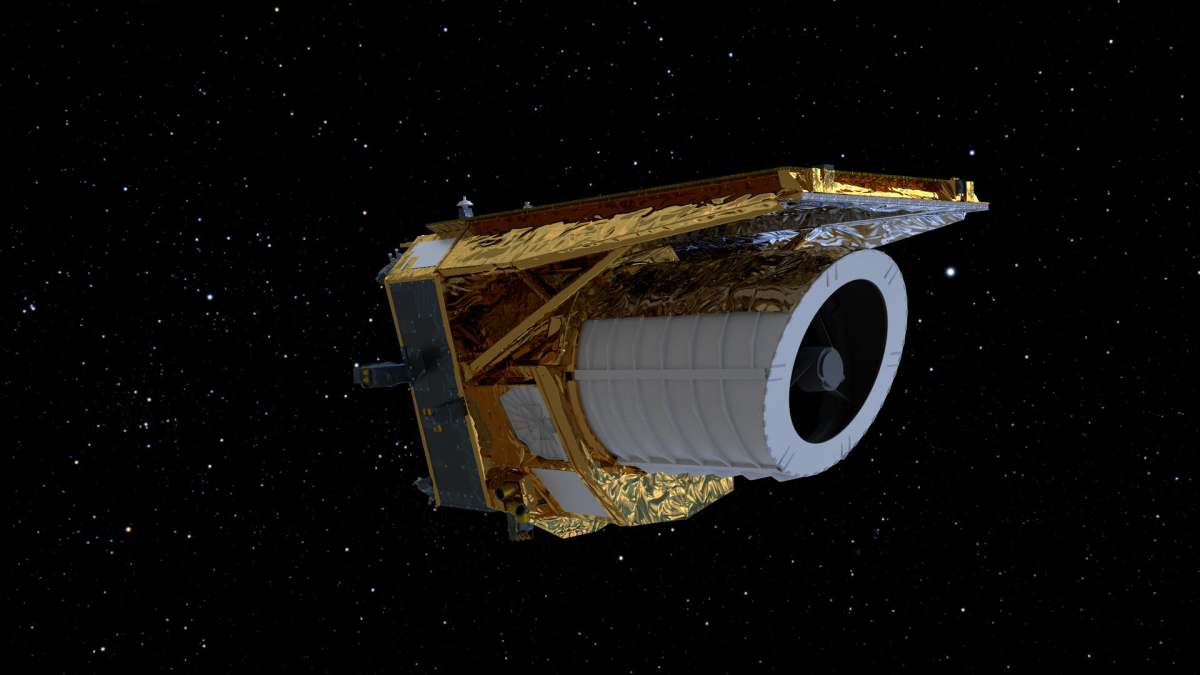
Since Earth's infrared glow drowns out faint signals coming from quasars, it is nearly impossible to detect them with ground-based observatories. This is where the European Space Agency's Euclid space telescope came in. From above our planet's infrared haze, Euclid scanned an area of the horizon far larger than what ground-based observatories could cover at comparable depths, helping the astronomers discover 31 quasars from the universe when it was just 5% of its current age. The researchers found that 14 of the quasars are at or above a redshift of 7. “A redshift of 7 takes us to when the universe was just 750 million years old, less than 6% of its current age,” Hennawi explained. Two of the quasars have redshift values of 7.69 and 7.77. Lying over 13 billion light-years away, these two emerged in the universe's first 670 million years, breaking the record for the earliest quasars ever found.
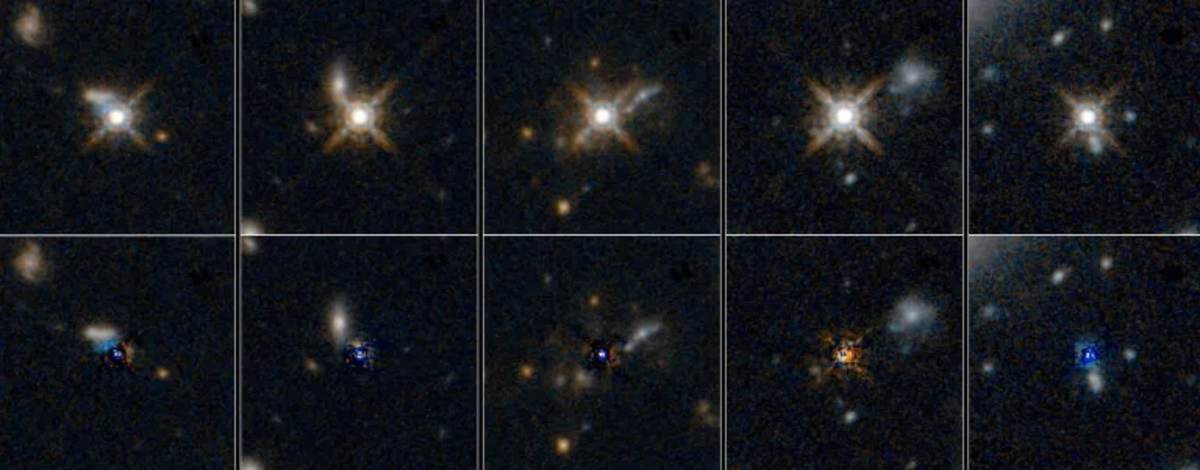
“Every step further back in time makes the puzzle more perplexing: How did the universe produce supermassive black holes so quickly?” Hennawi said. “We're finding black holes with hundreds of millions of times the mass of our sun at a time when the universe was barely getting started.” Hennawi and his teammates want to peer further back in time to find a quasar beyond redshift 8. That will bring them close to the first 630 million years of the universe.
More on Starlust
Peering into the cosmic dawn, MIT astronomers find earliest known flickering quasar