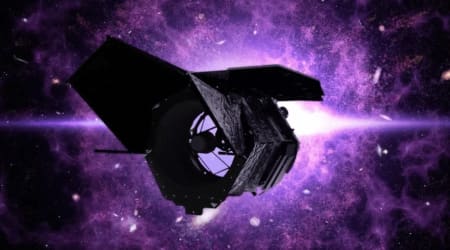
NASA’s Mars-bound ESCAPADE mission snaps family portrait of Earth and the Moon
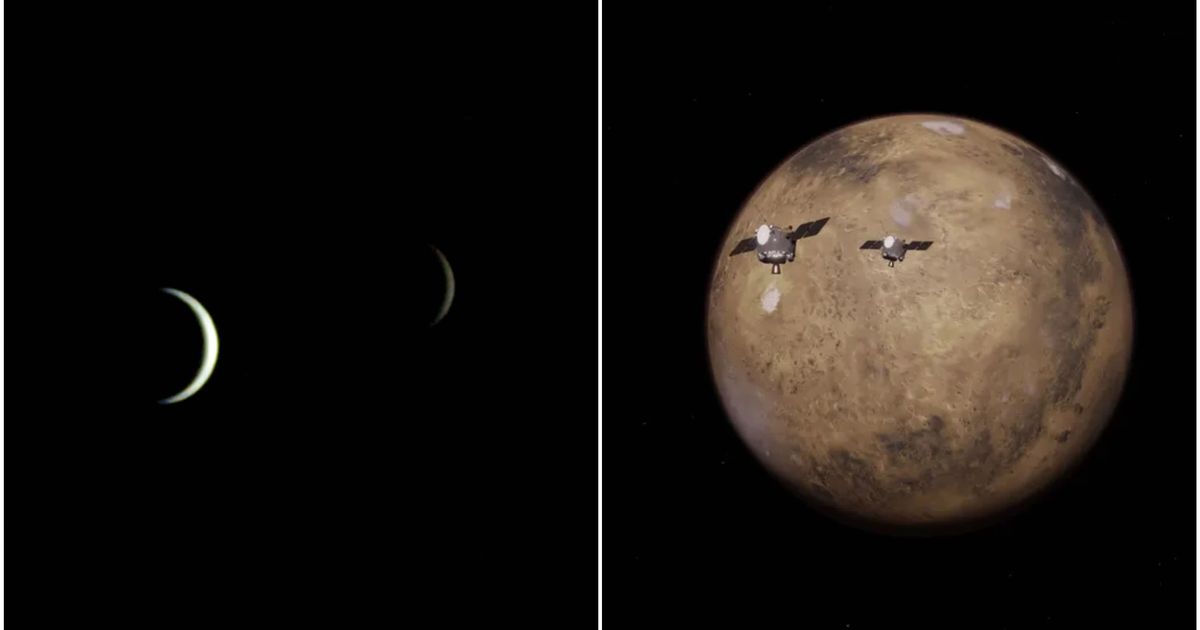
As the ESCAPADE spacecraft continues on its journey to Mars, the mission team is testing its critical instruments that will help study the Red Planet. Just last week, NASA shared a thrilling picture captured by one of the two orbiters’ cameras featuring the Earth and the Moon in visible and infrared light. The picture was taken on July 3 when the orbiters, which fly in formation, were 363,250 miles (584,600 kilometers) from Earth and 115,600 miles (186,100 kilometers) from the Moon.
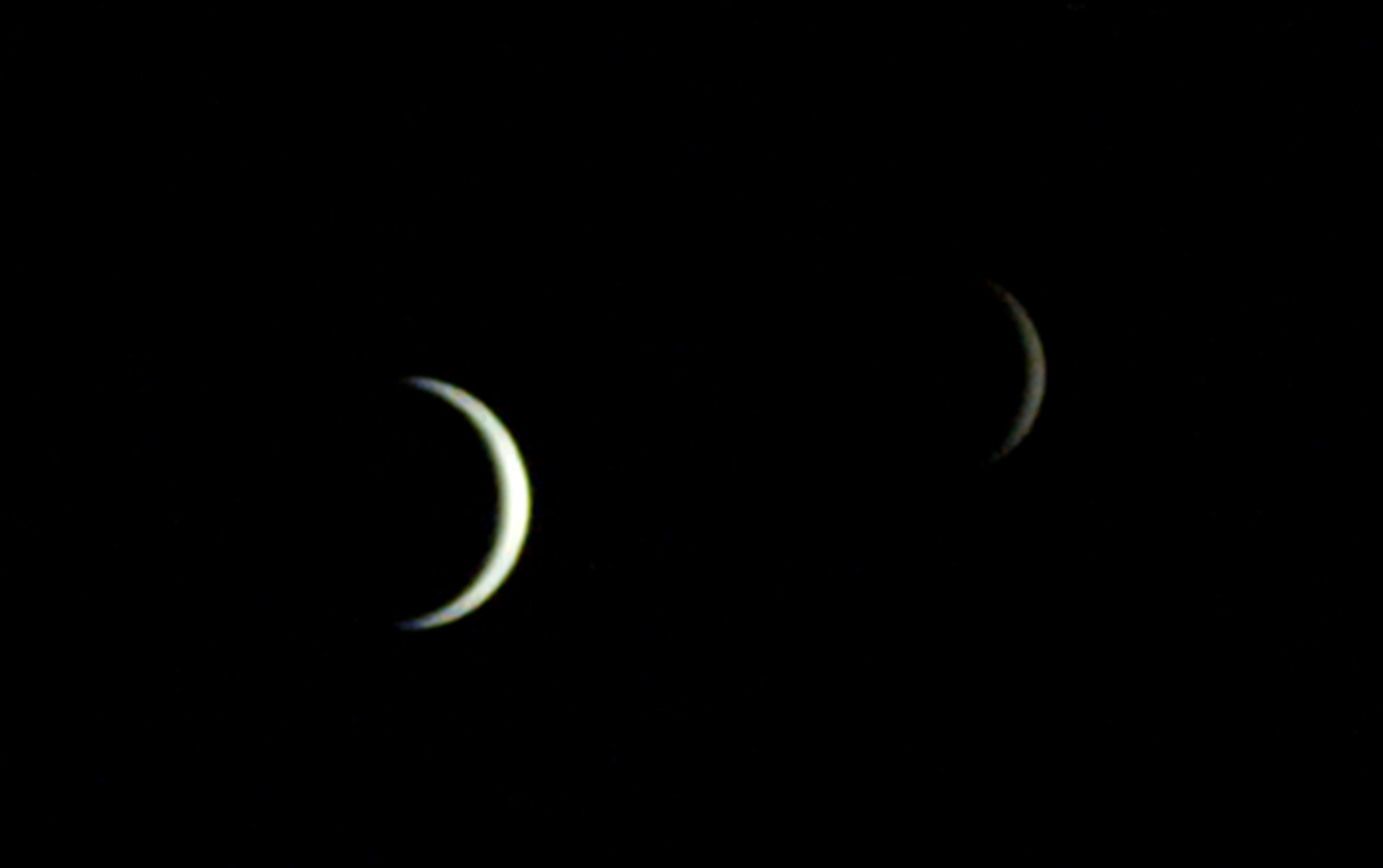
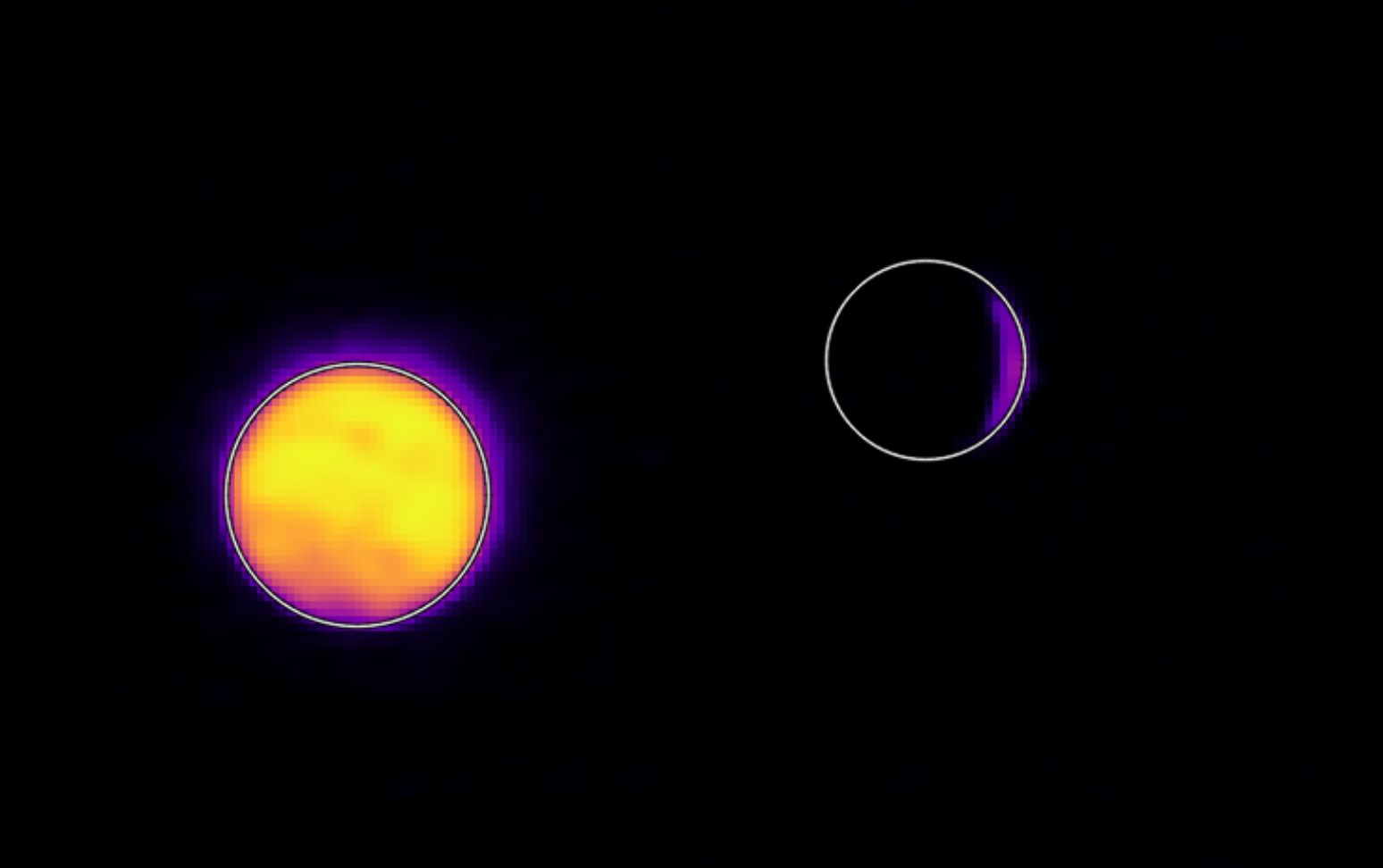
The ghostly image, captured using the Visible and Infrared Observation System cameras provided by Northern Arizona University, shows a crescent Earth and the Moon with just 8 per cent of their faces sunlit in visible light. The infrared image, however, tells a whole new story. While the Earth looks completely illuminated by heat from its atmosphere and surface, the Moon’s far side is extremely cold because it lacks the insulating blankets of oceans and atmospheres. For comparison, our planet is glowing at minus 10 to 44 degrees Fahrenheit (250 to 280 kelvin) while the lunar far side is minus 280 degrees Fahrenheit (100 kelvin).
"We are thrilled that ESCAPADE was able to accommodate these excellent space-qualified cameras which will search for visible Martian aurora and investigate thermal properties of the Martian surface and atmosphere,” Rob Lillis, the mission’s principal investigator at the University of California, Berkeley, said in a statement. “Since Earth and the Moon are well-known targets, imaging them provides an important calibration check for ESCAPADE’s cameras.”
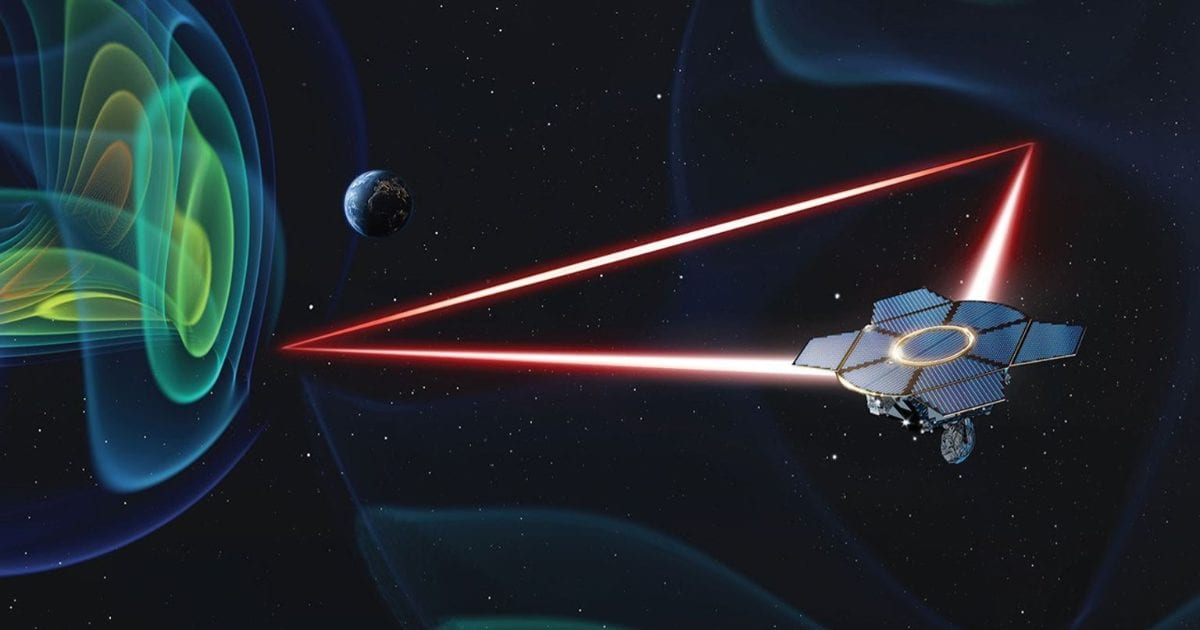
Launched on November 13, 2025, ESCAPADE, or Escape and Plasma Acceleration and Dynamics Explorers, is designed to study the hybrid Martian magnetosphere and determine how the planet got stripped of its atmosphere due to solar wind. The two orbiters are currently in a ‘loiter orbit’ around the second Earth-Sun Lagrange point and will slingshot toward Mars in the fall of 2026 when the Red Planet aligns with Earth.
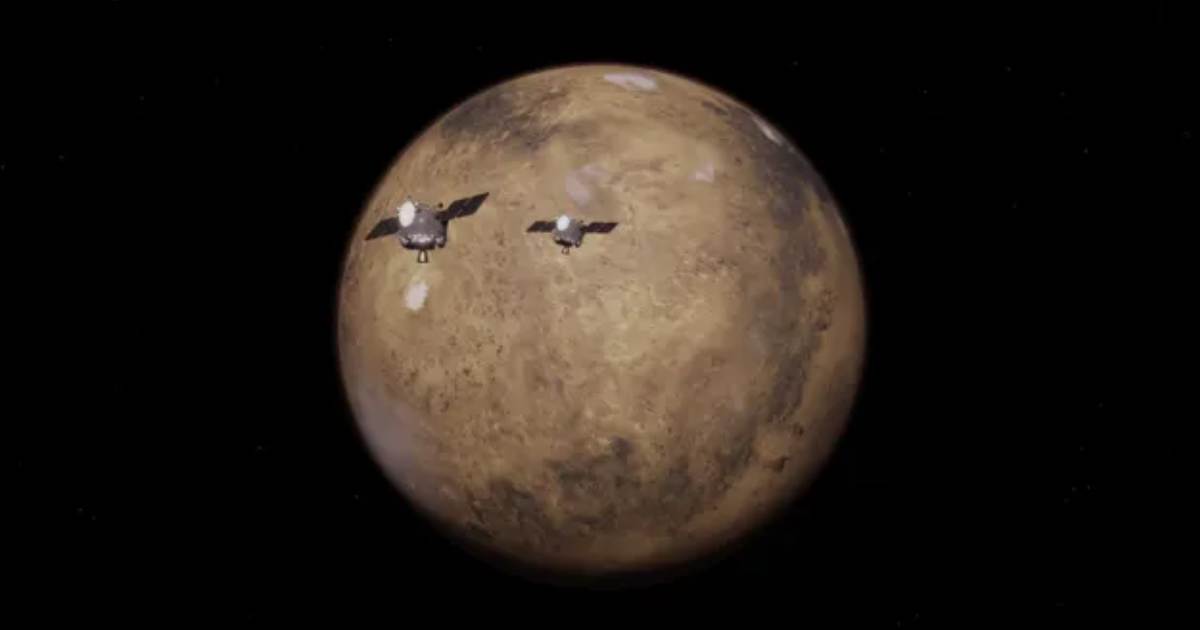
“By collecting data on how solar wind interacts with Mars’ thin atmosphere and magnetized crust, the mission hopes to understand how Mars lost its once-thick atmosphere—an atmosphere that may have supported liquid water and possibly life,” says NASA. The orbiters will arrive at Mars in September 2027 and begin collecting data in mid-2028, after spending several months entering different orbits for the two science phases. In phase 1, they will fly in nearly the same orbit in a “string of pearls” formation and later on move into different orbits to study separate regions of Mars’ magnetic environment at the same time in phase 2.
More on Starlust:
Data from NASA's MAVEN orbiter shows Mars gets Earth-like auroras—here's how
Why is Starship made of stainless steel, not carbon fiber? Here's what Elon Musk had to say