New technique to allow LIGO to look farther into the universe for neutron star mergers
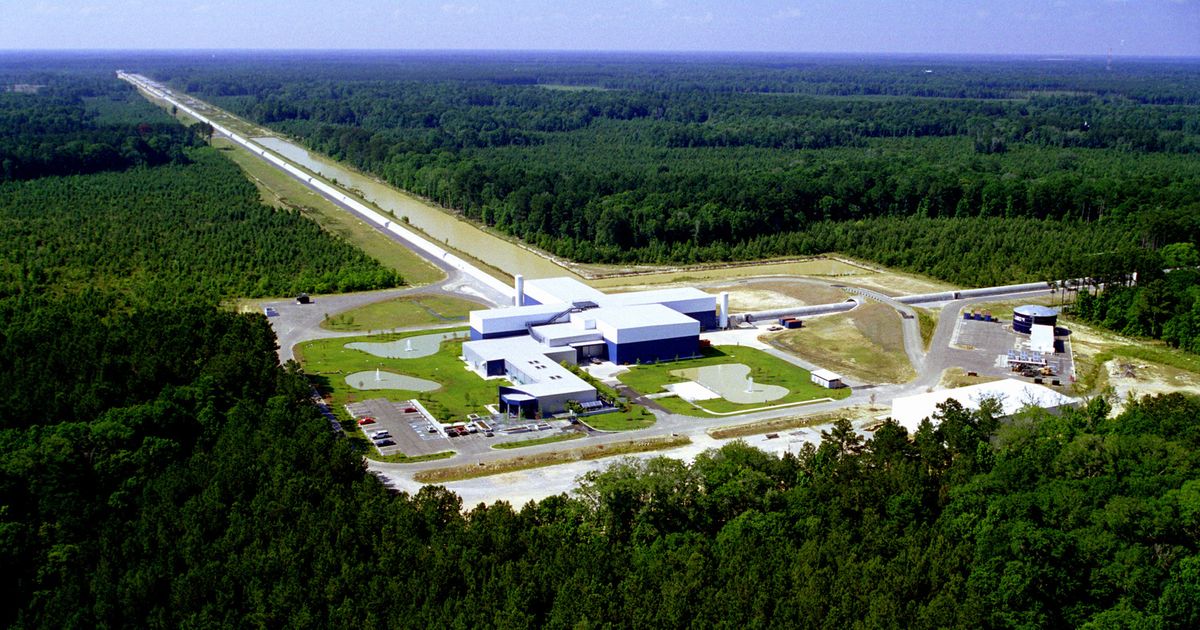
A research team at the University of California, Riverside, has devised a simple technique to enhance the efficiency of the Caltech- and MIT-operated Laser Interferometer Gravitational-Wave Observatory (LIGO), which has been designed to detect gravitational waves emanating from distant cosmic events such as the collision of two black holes. The technique, described in a paper published in Classical and Quantum Gravity, employs thermal imaging to detect tiny heat-induced distortions on LIGO’s massive mirrors. The new technique will not only help avert the effects of the distortions but also sharpen the detection capability of LIGO, thereby enabling it to detect weaker, more distant events.
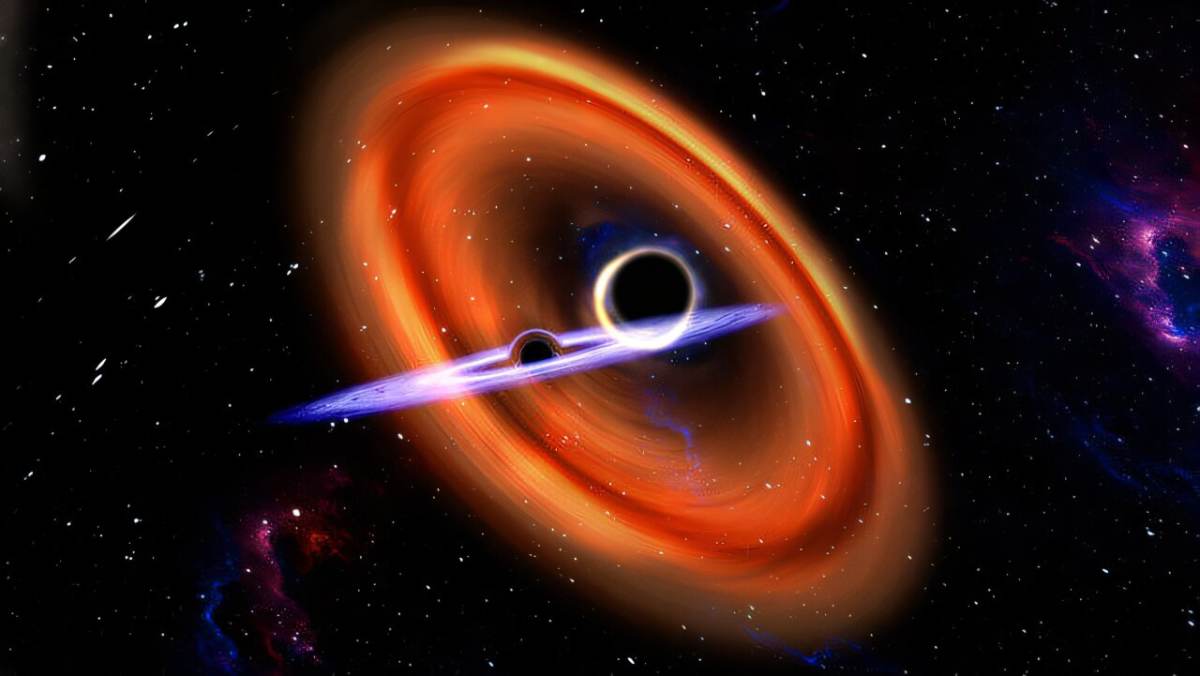
“The goal for the next generation of gravitational-wave detectors is to achieve about 10 times the sensitivity of today’s instruments,” said lead researcher Jonathan Richardson, an associate professor of physics and astronomy at UC Riverside, in a statement. When two black holes merge, they send out invisible gravitational waves—ripples in spacetime that propagate at the speed of light, carrying with them information about their origins. These waves travel millions or billions of light years before they reach Earth. So when gravitational waves arrive on Earth, their effects on the LIGO mirrors are extremely small. They cause the distance between the mirrors to change by a length that is ten thousand times smaller than the width of a proton. This, in turn, results in an interference pattern that helps trace the origin of a gravitational-wave signal.
Such measurement is so precise that it is equivalent to determining the distance to the nearest star (beyond our Sun) to within the width of a human hair. In 2015, LIGO first tasted success by detecting gravitational waves from two coalescing black holes 1.3 billion light years away. Since then, LIGO has captured gravitational-wave signals from various mergers of black holes and neutron stars. LIGO's extraordinary sensitivity comes from powerful lasers that travel through two four-kilometer-long vacuum tunnels, bouncing between the mirrors, which are among the purest optical components ever made. The laser light circulates with power approaching one megawatt, allowing the observatory to detect unimaginably small changes in distance when a gravitational wave passes through Earth.
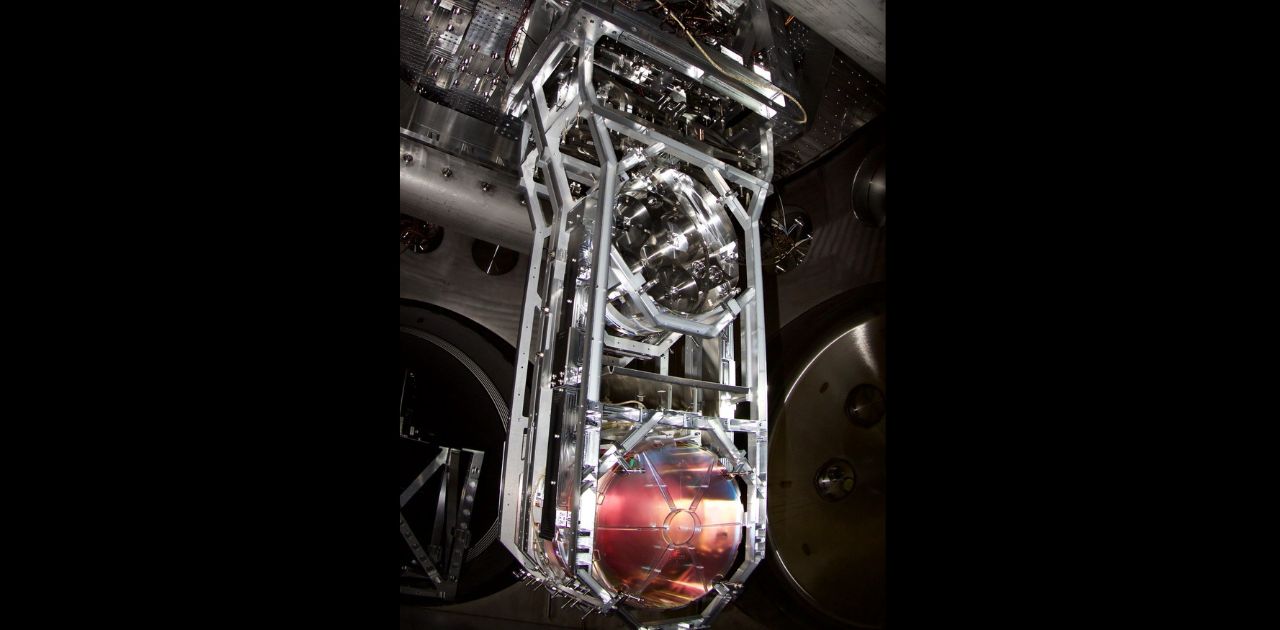
Such a seemingly perfect machine, too, has a limitation. The mirrors absorb a minute fraction of the laser energy. That tiny amount of absorbed heat changes the mirrors' shape by only a few nanometers. But even such a small change can alter the laser beam and reduce the detector's sensitivity. Researchers knew that applying carefully controlled heating patterns can restore the mirrors to their ideal shape. But the challenge was to know how each mirror is distorted in the first place. Richardson's team solved the problem by combining infrared thermal images of the mirror surface with existing wavefront measurements and sophisticated computer models of heat flow. This allowed them to reconstruct the mirror's optical distortions across its entire diameter. “You can think of it like taking an infrared picture of a car engine,” Richardson said. “An engineer can look at the temperature pattern on the outside and infer what’s happening inside the engine. We’re doing the same thing with LIGO’s mirrors.”
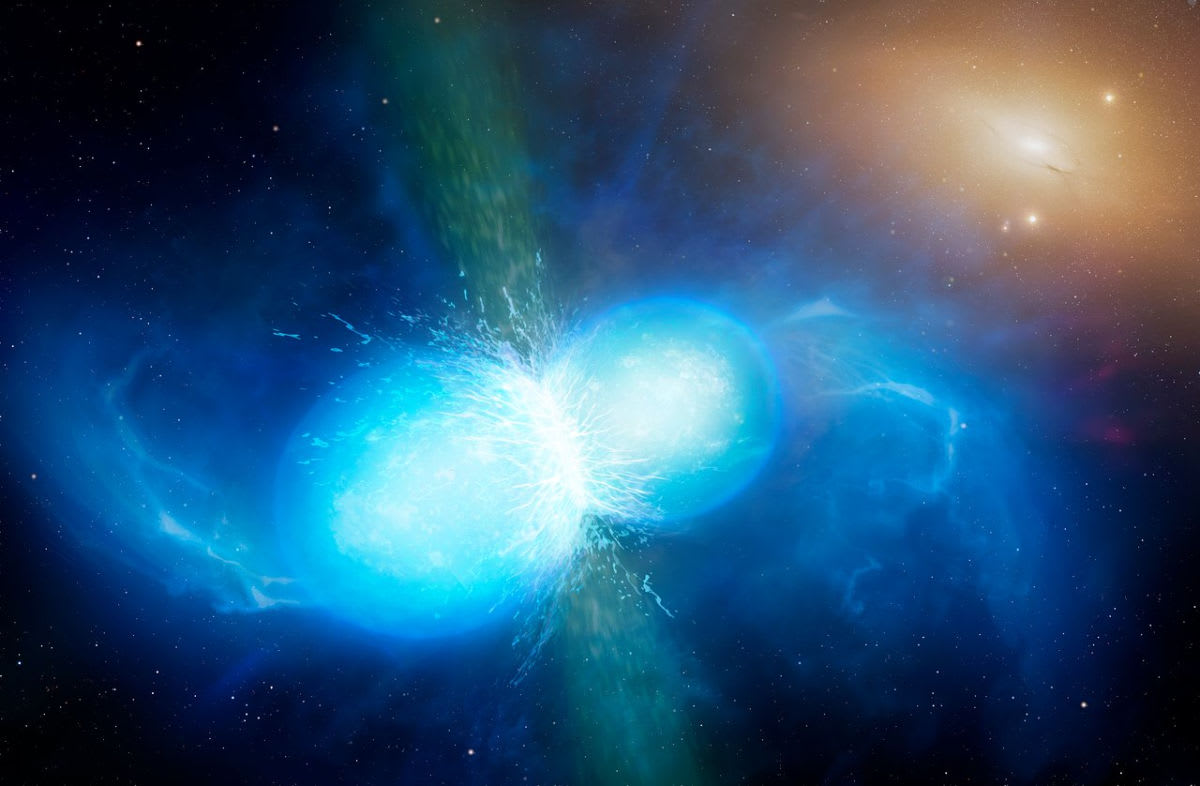
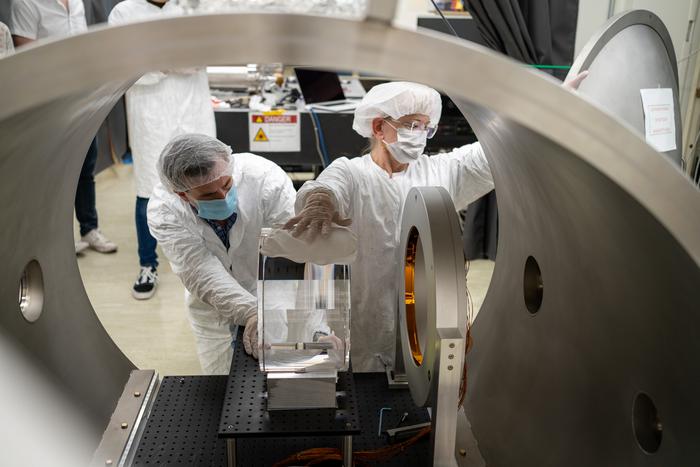
The researchers stumbled upon the breakthrough while testing adaptive optics on a full-scale, 40-kilogram LIGO mirror. Unlike many LIGO upgrades, the new approach relies on commercially available thermal imaging cameras mounted outside the interferometer, making it easier to implement. The researchers estimate that the method could increase the sensitivity of the upcoming LIGO A+ upgrade by 31 percent, allowing it to detect binary neutron star mergers about 10 megaparsecs—roughly 33 million light-years—farther away on average.
More on Starlust
Scientists discover three types of binary black hole mergers in the universe—here's what they are
Gravitational waves may finally reveal how fast the universe is expanding