Scientists propose novel particle detector that could help hunt down elusive dark matter
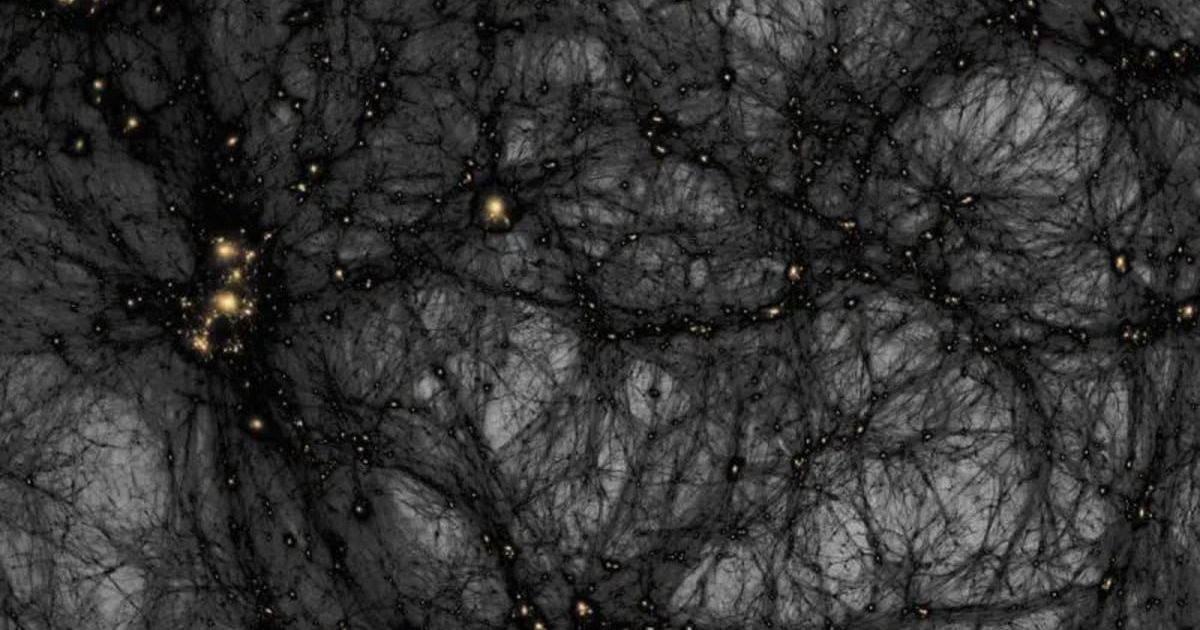
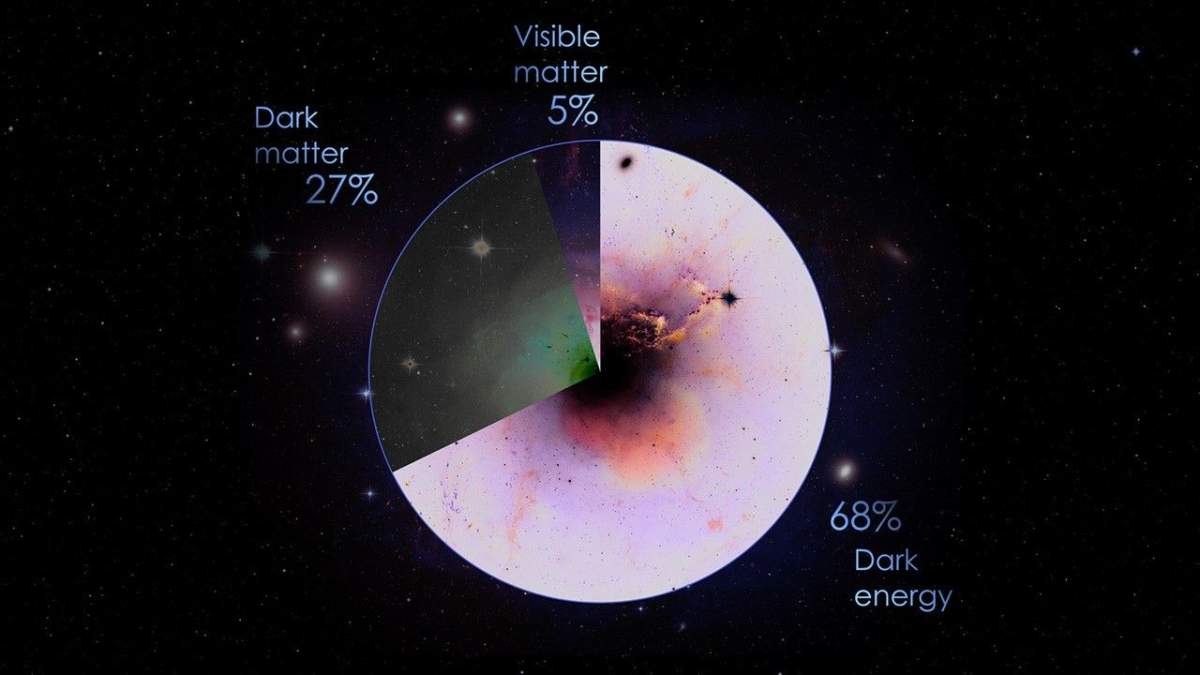
Dark matter and dark energy combined roughly make a whopping 95 percent of all matter and energy in the universe, but remain invisible to us. While dark energy is believed to be behind the accelerating expansion of the universe, dark matter acts as the glue that holds it all together. Despite being abundantly present in the universe, dark matter doesn’t emit or reflect light, making it nigh impossible for us to observe directly. However, now, a research team at Rice University in Houston, Texas, has theoretically outlined a strategy to help us search for and detect axions—hypothetical particles that have long been proposed as prime candidates for dark matter. If detected, axions could help scientists solve one of the biggest mysteries in astrophysics, finally revealing the source of the immense gravitational pull that shapes galaxies and influences the evolution of the universe. The Rice team describes their research in a paper published in Physical Review Letters.
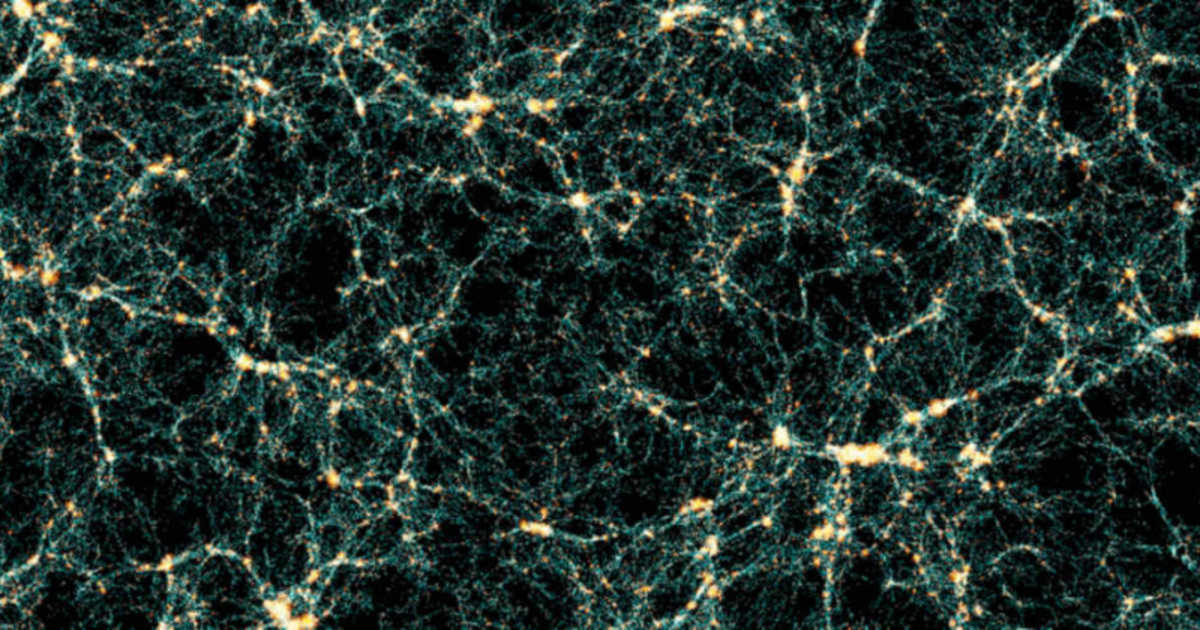
Previous research often suggested that dark matter is probably made of weakly interacting massive particles (WIMPs), which are heavy, sluggish particles with nearly the mass of an atomic nucleus, believed to have been produced in the early universe. However, physicists are yet to detect any signal of WIMPs, leading many to shift their focus toward an incredibly promising alternative. Axions, originally named by physicists Steven Weinberg and Frank Wilczek in the late 1970s, were not initially invented to solve the dark matter problem. Instead, they were proposed as a solution to what is known as the "strong CP problem." Only later did physicists realize this theorized particle was also a perfect dark matter candidate. Axions are extremely light particles, much lighter than neutrinos. Unlike many WIMP models, which are categorized as fermions (the building blocks of matter like electrons), axions are bosons. However, unlike some force-carrying gauge bosons such as photons, axions are categorized as pseudoscalar bosons that have no spin.

To try and detect axions, the Rice team takes a fresh approach to particle detection through what they call Semiconductor Quantum Well Axion Radiometer Experiments (SQWAREs). Instead of using mechanical components to scan for different axion masses, SQWAREs make use of the unique properties of specially engineered semiconductor materials. These materials can be tuned to scan across a broad range of possible axion masses simply by altering their orientation within a magnetic field. This offers a much simpler and potentially more versatile way to operate particle detectors.

“What’s different about this material is that it doesn’t have to use complex mechanical tuning mechanisms, it simply tunes with the magnetic field,” said first author Jaanita Mehrani, a doctoral student in Rice’s Applied Physics Graduate Program, in a statement. Since dark matter is invisible, scientists infer its existence by examining its gravitational effects on galaxies. However, quantum theories suggest that axions can morph into photons when exposed to a strong magnetic field. Relying on this phenomenon, the Rice team has proposed a design plan specifically engineered to force this exact conversion. The instrument will contain stacks of ultrathin semiconductor layers called multiple quantum wells, which are nano-scale structures excellent at trapping electrons in flat, two-dimensional sheets.
In this confined environment, these trapped electrons behave like a plasma, changing how light moves through the material. “What’s happening is this plasma is giving the photons an effective mass, which helps the momentum conservation between the axion and the photon, since in a vacuum, axions have a mass but photons don’t,” Mehrani said. “We’re trying to help that momentum mismatch and resonantly convert axions to photons, enhancing the photon signal so that we can more easily detect dark matter," she added. Despite the study being theoretical, the team is now looking to test this idea experimentally, with the statement by the Rice University saying that work on prototype development is already underway.
More on Starlust:
What happens to dark matter around black holes? New study supports long-held theory
Astronomers identify another galaxy missing dark matter, supporting collision theory