Crater Island in Utah becomes testing ground for DAVINCI, NASA's future mission to Venus
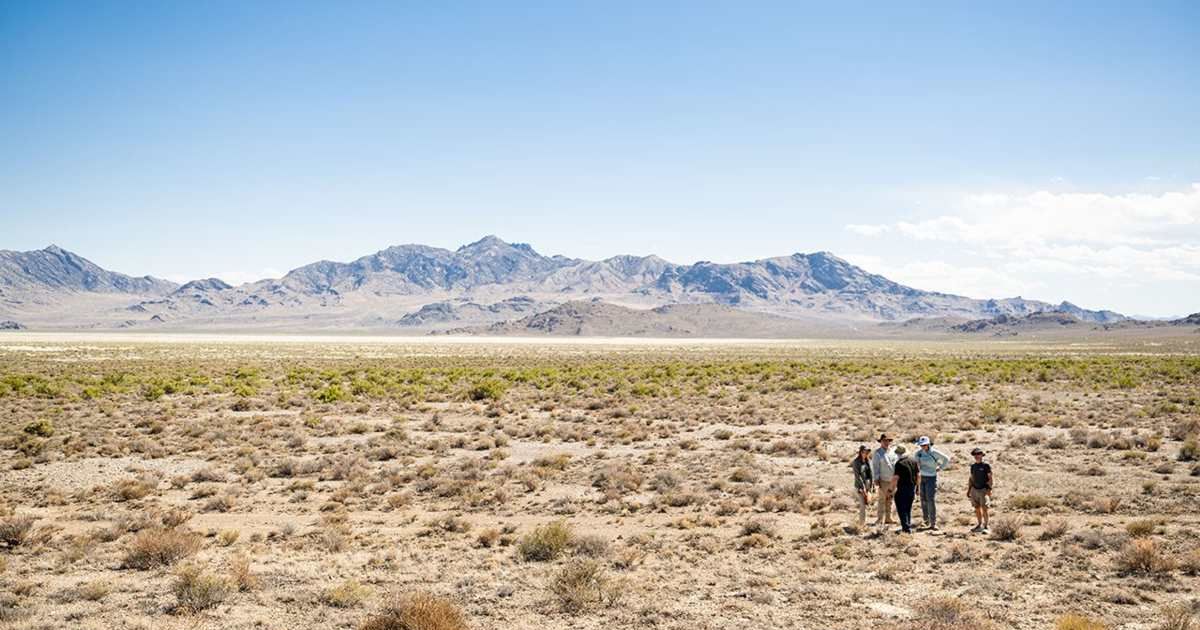
Scientists and engineers at NASA recently conducted tests of the imaging system that will be part of the agency's next mission to Venus. This mission, called DAVINCI (Deep Atmosphere Venus Investigation of Noble gases, Chemistry, and Imaging), features a probe that NASA intends to send to the surface of Earth's neighboring planet by the early part of the next decade. The tests were conducted over three days beginning on June 23, 2026, for which the team traveled to a mountainous region in northern Utah called Crater Island. This was chosen due to its close resemblance to Venus' Alpha Regio--NASA's target for DAVINCI.
Field test!
— NASA Solar System (@NASASolarSystem) July 14, 2026
Using a helicopter to simulate a slow fall through Venus’ atmosphere, the DAVINCI team confirmed that their probe’s descent imaging system can read the landscape below & deliver results. Here's what happened and how it's preparing us for Venus:… pic.twitter.com/mf4ViXcLsH
According to NASA, Crater Island was also ideal due to its history of having a water body surround the mountains (hence the name). The DAVINCI team suspects similar geology at Alpha Regio, with Venus thought to once have had oceans of water which shaped continents on the planet. Moreover, this was the best spot the team could find for imaging of the slopes of terrain and detecting the variety of minerals—features of Crater Island that would help confirm if the instruments tested can replicate the results at Alpha Regio.
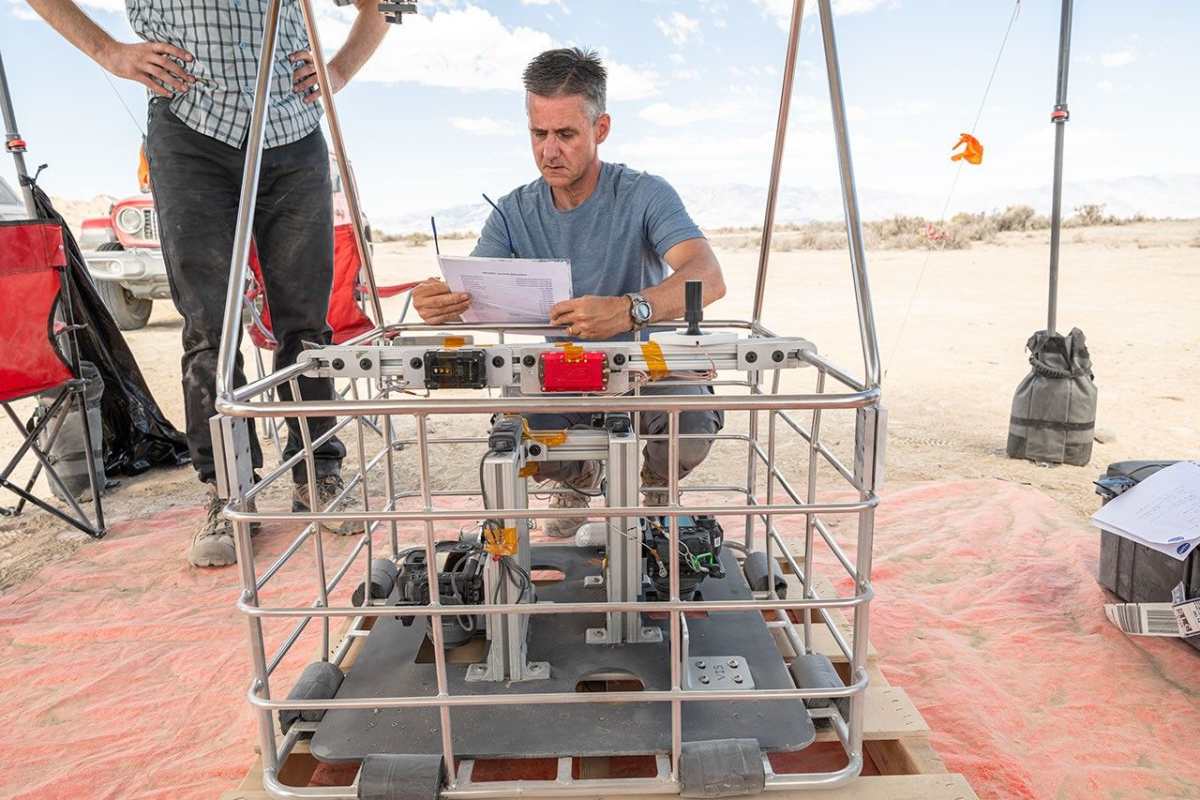
The test was done with the help of nine instruments secured to a basket, which was suspended from a helicopter by a 50-foot cable. The helicopter made a series of ten flights over the testing period and, after rising to as much as 18,000 feet on each, began descending to the surface over a period of 40 minutes to simulate the slow descent of DAVINCI through the thick atmosphere of Venus. The imaging data acquired by the team was processed into a topographical map of the entire region, which was then compared with the actual maps from the US Geological Survey to verify that the instruments work. To the engineers’ delight, the imaging done by the instruments to be deployed on DAVINCI produced highly accurate maps characterizing Crater Island.
These helicopter flights took place inside an airspace restricted by the Air Force. Between each flight, the teams collected the data, which in the end totaled three terabytes in size. The infrared imaging of the site also revealed that the instruments could distinguish between different rock types that DAVINCI could come across during the mission as it descends to Venus. Thanks to these tests, DAVINCI is expected to produce imagery which will be unprecedented due to the inhospitable conditions in the atmosphere of Venus. Here, temperatures can reach beyond 800 degrees Fahrenheit and pressures can be 93 times that of Earth’s, with high volcanic activity and ‘lava tubes’. Moreover, the atmosphere is extremely corrosive, which is why it has been challenging for spacecraft to remain operational for long after getting within the atmosphere. This has only been possible through the Soviet Venera and Vega probes, and that too only for a brief period and over a very small area.
However, with DAVINCI’s descending probe, teams at NASA hope to receive data through a period of an hour as it makes its way from above the hazy cloud tops all the way to the surface. This is going to produce images which have never been taken before. Only radar-enabled orbiters like Magellan have imaged the surface through its opaque clouds. This capability will also be improved upon by the VERITAS mission by NASA, which will launch around the same time and orbit Venus. As for the spacecraft which is part of the DAVINCI mission, it will make flybys in the two years prior to releasing the spherical probe. The 2030s could also see the exploration of Venus attempted by Russia with the Venera-D mission.
More on Starlust:
A giant volcanic tunnel on Venus has been confirmed. It dwarfs Earth’s caves
Did life come to Venus from Earth or Mars? New study offers clues