NOAA’s alert about a Type II radio emission from the Sun could signal an incoming CME
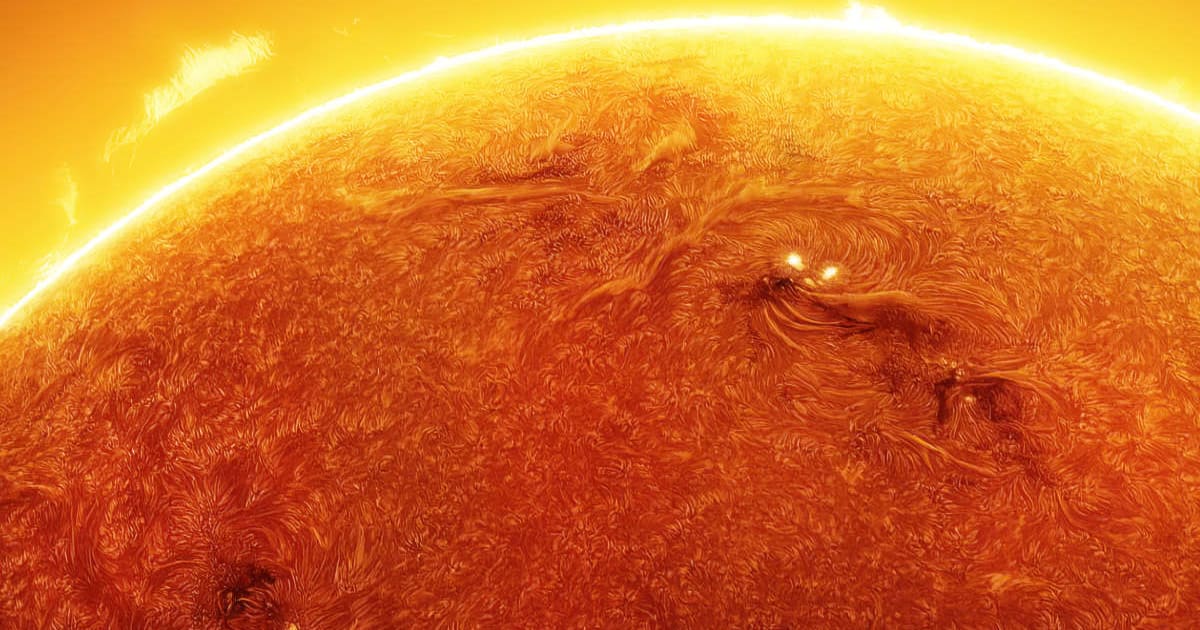
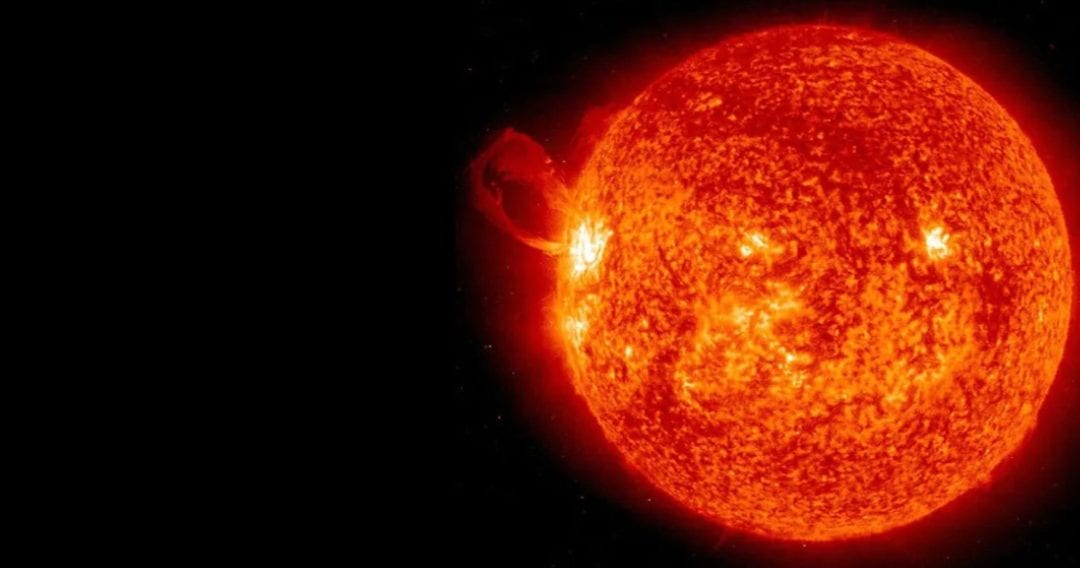
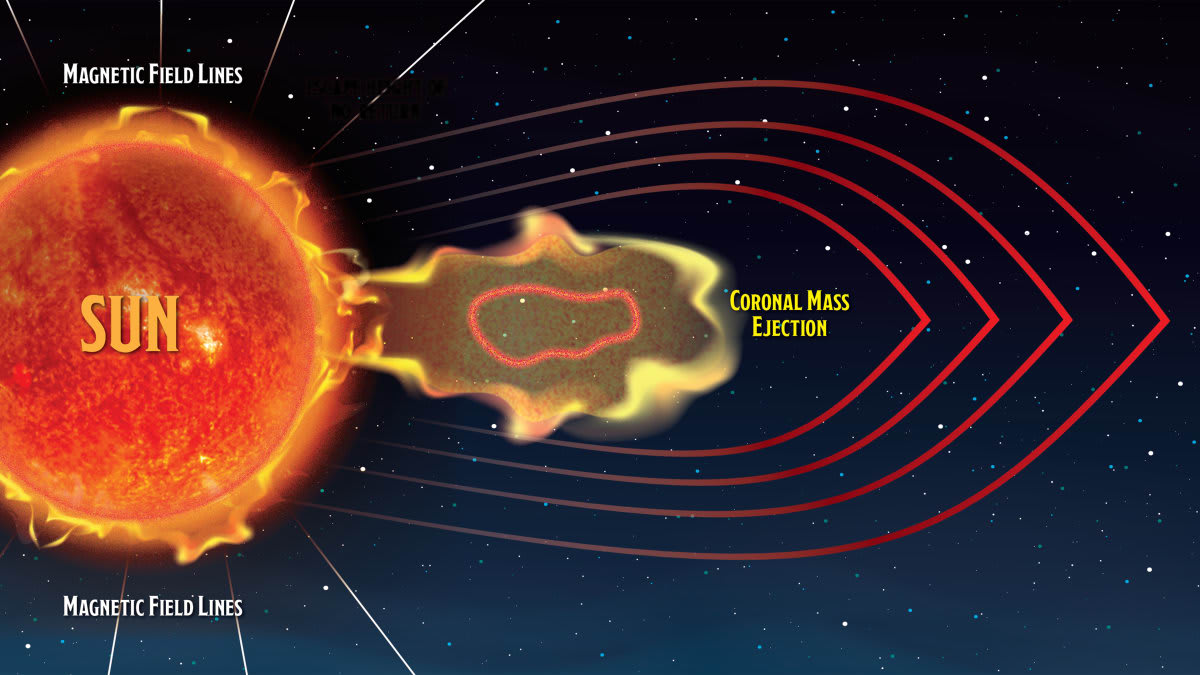
NOAA’s Space Weather Prediction Center on Thursday issued an alert related to a phenomenon known as a type II radio emission. This is an intense burst of electromagnetic radiation at radio frequencies, generated by electrons that are accelerated by naturally occurring processes on the Sun, such as solar flares. That said, statistical studies on the subject also show that such radio emissions are highly likely to be associated with a coronal mass ejection (CME)—a massive expulsion of solar plasma and magnetic fields. If that is indeed the case with this radio emission, it could have quite a few repercussions for Earthlings.
The alert issued by SWPC indicated that it would be effective from 4:29 pm UTC on September 3, 2026. The estimated velocity of the shock wave generating this type II radio emission is an extreme 1,359 kilometers per second. Shock waves of such speeds have been categorized as "fast" by scientists studying the correlation between these and other triggers for inclement space weather. Signatures of these radio emissions are now understood to be caused by what is known as a magnetohydrodynamic (MHD) pressure pulse, which propagates through the solar plasma and locally accelerates electrons to emit radio waves. Radio emissions can range from type I to type V, depending on their duration and frequency.
A small CME was launched towards Earth around the same time as the large CME launched off the East Limb.
— Zach Berman (@BermaniWX) September 3, 2026
This small eruption could combine with a transequatorial coronal hole CIR and give us a bit of geomagnetic storming in about three days pic.twitter.com/EgUvlwZyhA
The Sun periodically goes through cycles of increased and decreased activity, known as Solar Cycles, that span about 11 years each. At the moment, we are in the descending phase of Solar Cycle 25. To understand how type II radio emissions and CMEs might be related, researchers collected data from each of the previous two completed Solar Cycles and found that a majority of the radio emissions were associated with CMEs. Specifically, researchers found that 79% of such emissions were due to CMEs in Solar Cycle 23, while the number rose to 95% during Solar Cycle 24.
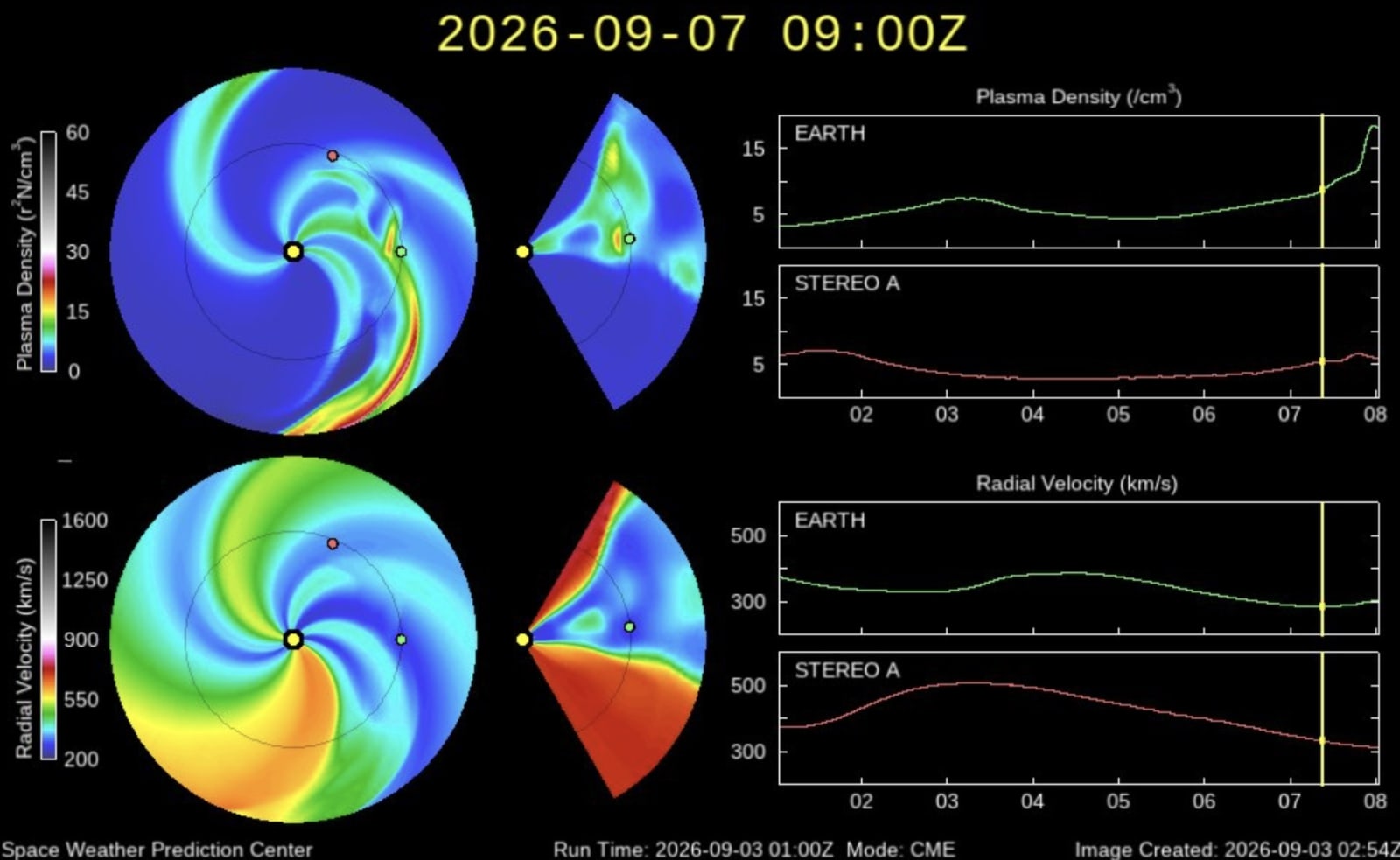
The impending arrival of a CME is also supported by recent data from sophisticated 3D models of the heliosphere employed by the SWPC to create predictions of these events. The said model showing the Sun’s outflow of solar wind indicates that a CME is indeed set to arrive at Earth by the latter hours of September 7 and continue into the start of September 8, 2026 (per UTC time). The data shows a spike in the density of solar plasma; after remaining below 9 particles per cubic centimeter all week, it is projected to rise to well above 15 particles per cubic centimeter around the aforementioned timings.
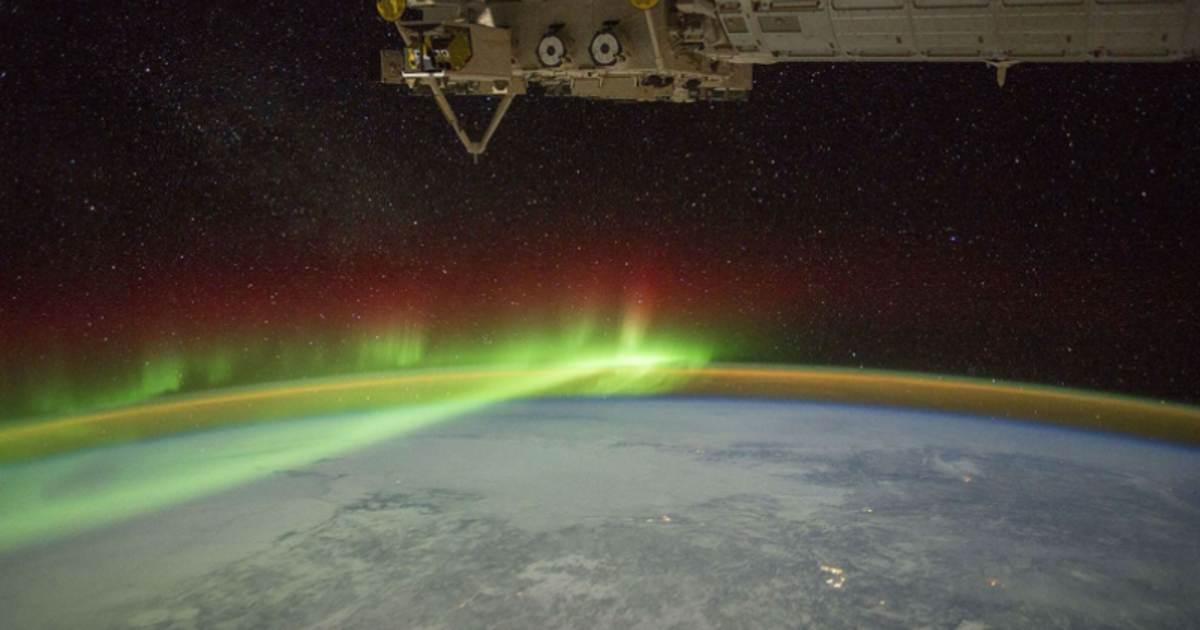
The arrival of solar plasma and embedded magnetic fields as a part of a CME means disturbances are caused within the vicinity of the Earth. These disturbances in the magnetosphere manifest themselves in the form of a geomagnetic storm. Such storms can cause malfunctions to occur in electrical grids and communication systems, while also posing threats to space infrastructure and astronauts. What’s more, their potential physiological effects on human health are an area of ongoing medical research, with some studies suggesting effects on the cardiovascular system. On the other hand, geomagnetic storms also present an opportunity for skywatching enthusiasts to capture the spectacular phenomenon of auroras, which take place when incoming solar particles strike gases in Earth's ionosphere, releasing energy in the form of light in a variety of colors.
More on Starlust:
What will happen when the solar activity declines in the descending phase of Solar Cycle 25?
NOAA’s SOLAR-1 is now operational—and it's changing how the U.S. watches space weather