NASA's Roman Space Telescope's primary camera beats its image-quality target by nearly 30%
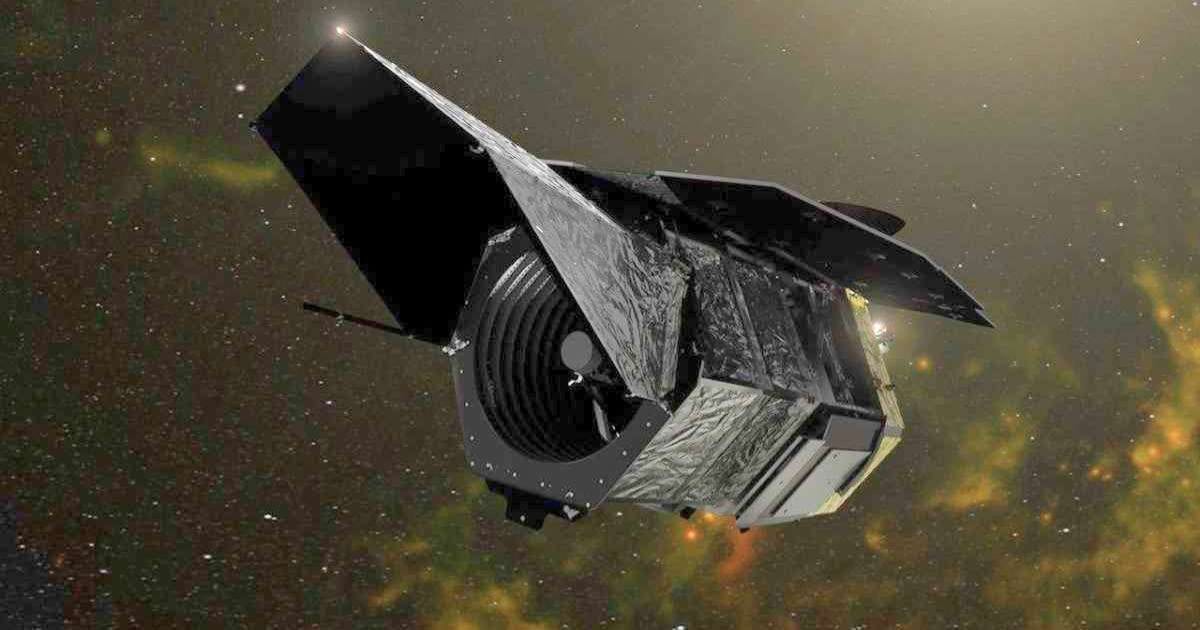
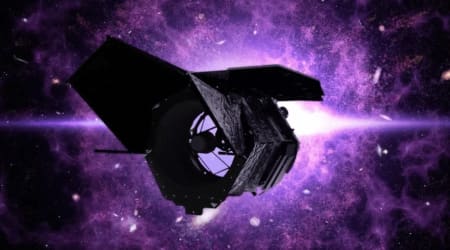
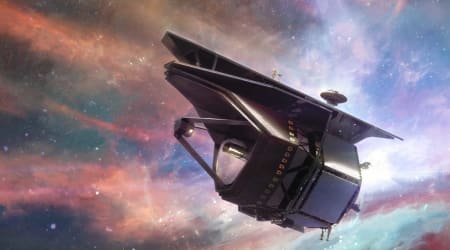
The Nancy Grace Roman Space Telescope team has completed a series of adjustments to improve the observatory's vision, making performance nearly 30% better than predicted. NASA announced on Wednesday, October 14, that engineers checked the 18 detectors that make up Roman's 300-megapixel Wide Field Instrument and its electronics before moving on to other calibration procedures and tests. “Calibrating an instrument is like tuning a piano or guitar before a concert. You adjust everything until it’s just how you want it and then leave the settings alone so it performs consistently while you use it," said Maxime Rizzo, a Wide Field Instrument systems engineer at NASA's Goddard Space Flight Center (GSFC) in Maryland, where the observatory was built.
Roman’s marathon of testing continues while it zooms toward L2! The team aligned and focused the telescope’s optics and gave Roman’s primary instrument a meticulous “eye” exam. The results: Roman’s cosmic surveys will be even sharper than expected! 🤩 https://t.co/Yc6vYKaQwp https://t.co/QCQ0T92hSB
— Nancy Grace Roman Space Telescope (@NASARoman) October 14, 2026
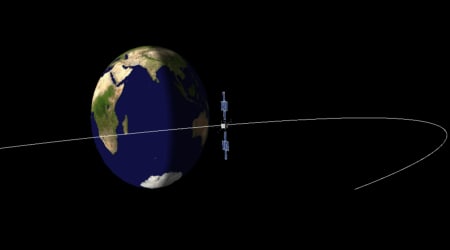
At the time of writing, Roman is nearly a million miles away from Earth on its way to its destination around the second Sun-Earth Lagrange point (L2), where it will have an unobstructed view of the universe with minimal fuel usage. The state-of-the-art observatory launched on August 30 aboard a SpaceX Falcon Heavy rocket from the Kennedy Space Center in Florida. The commissioning process began soon afterwards, which saw the team turn on its Coronagraph Instrument, which will image distant exoplanets, before activating the Wide Field Instrument, which will cover large swathes of the sky in great detail.
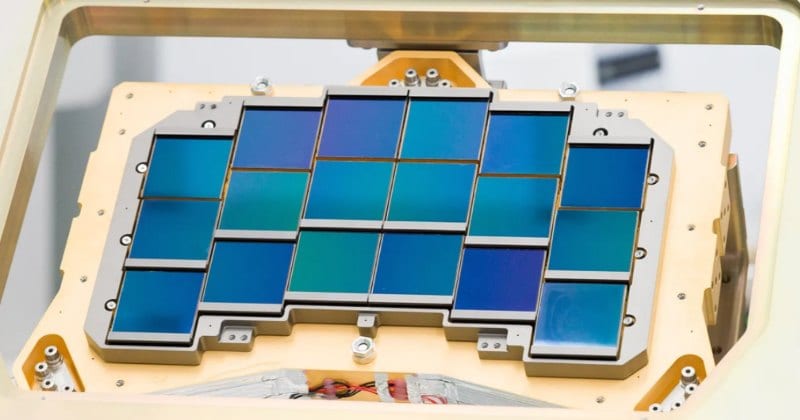
Since then, the Roman team has exercised the various components of the observatory both individually and in tandem with each other. This involved addressing the Element Wheel, which is a mechanism that contains filters and tools to let light of certain wavelengths pass into the 18 sticky-note-sized detectors and separate them into their constituent colors. The engineers also turned on all of the internal LEDs inside the calibration system. These LEDs allow engineers on the ground to adjust the sensitivity of the detectors by providing a way to test how the detectors respond to different colors of light. The brightness of these LEDs can be adjusted to precise intensities, which helps achieve this. The thermal system of the spacecraft was also tested.
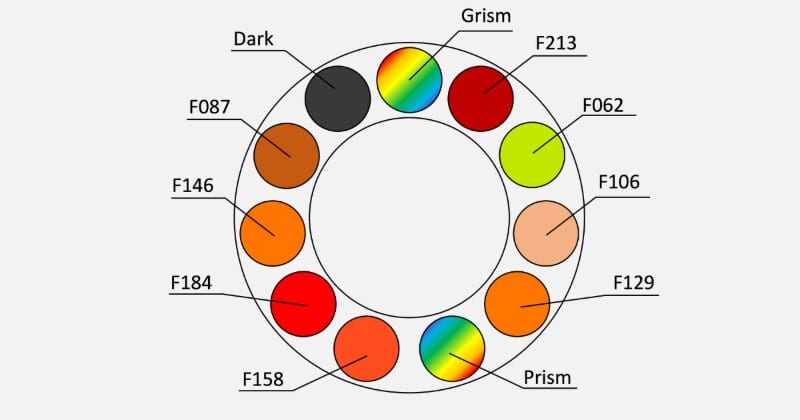
The team also adjusted the alignment of Roman’s optical systems. This involved moving the telescope’s secondary mirror by one-sixteenth of the diameter of a human hair. “This adjustment nudged the height of the secondary mirror above the primary. If we scale that height up to the height of the Empire State Building, the change in height is a little bit less than you would get by stacking a single U.S. penny on top of the tip of the tower," explained Alden Jurling, a senior optical engineer at GSFC. “All of the testing and modeling work done at Goddard and by contractors at L3Harris and BAE Space and Mission Systems left only small corrections for us to make to bring everything into near-perfect alignment," stated Matthew Bolcar, Roman’s optical systems lead at GSFC.
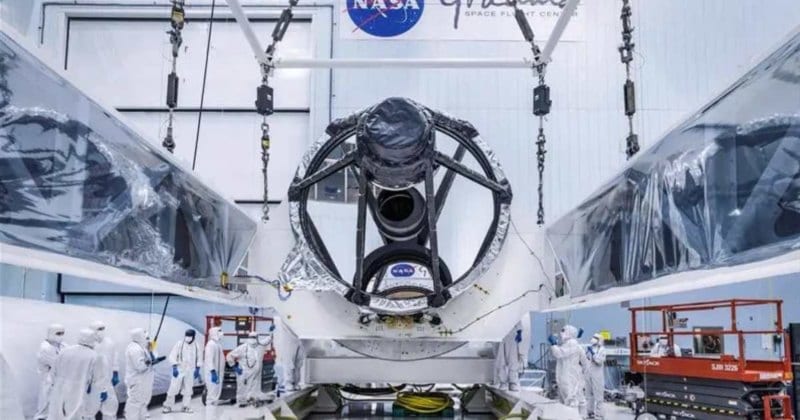
Roman’s coronagraph was initially found to be out of focus by a minuscule amount, which the team found relatively simple to calibrate. They will continue to make the necessary corrections in the days to come, keeping in mind the most appropriate settings for the telescope’s mirrors, which are deformable. As for the Wide Field Instrument, the Roman team had set the bar for the image quality at roughly 90 nanometers RMS (Root Mean Square). This meant the optical systems could only deviate by 90 nanometers from what the team deemed perfection, which is a thousand times thinner than a human strand of hair. After the latest series of corrections, the Wide Field Instrument was only found to produce an error of 63 nanometers RMS—an improvement of almost 30 percent over what the Roman team had expected. Dave Hickey, a Wide Field Instrument systems engineer at GSFC, said, “Many of the mission’s primary goals, like studying dark matter and dark energy, wouldn’t be possible without it, so it’s both exciting and a huge relief to see that it’s working well!”
More on Starlust
NASA's Nancy Grace Roman Telescope can now easily run for 22 years instead of 10. Here's how