Godspeed, Roman Telescope! Best images of SpaceX Falcon Heavy launching NASA's flagship observatory
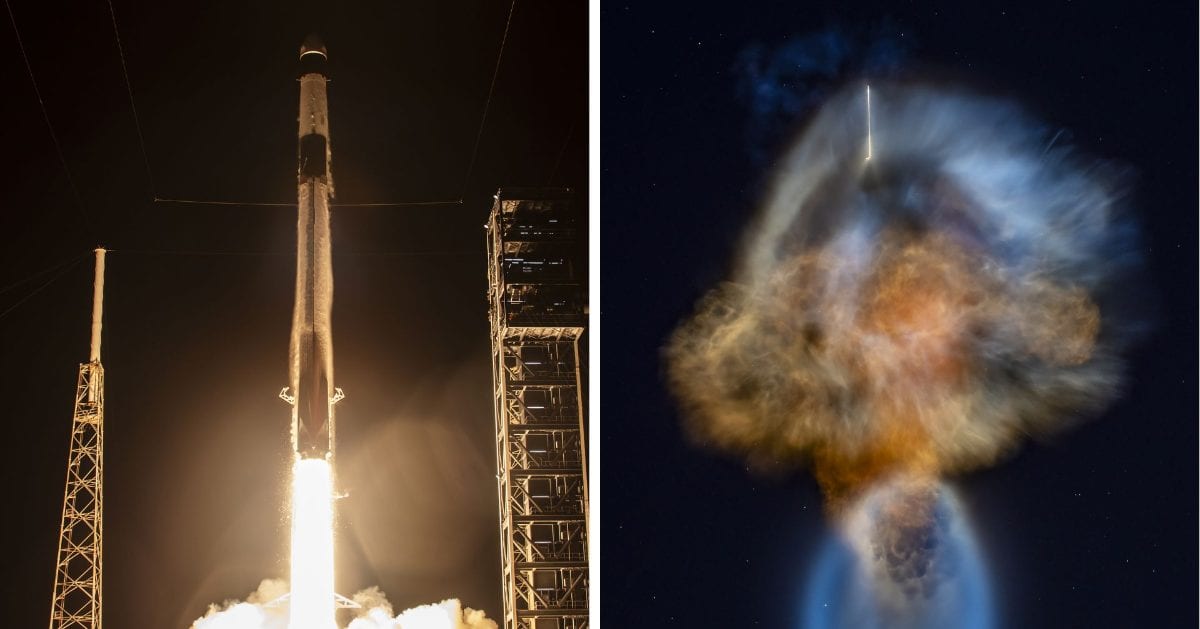
The Roman telescope hitched a ride atop the SpaceX Falcon Heavy rocket, which lifted off at 7:26 am ET from the Kennedy Space Center in Florida.
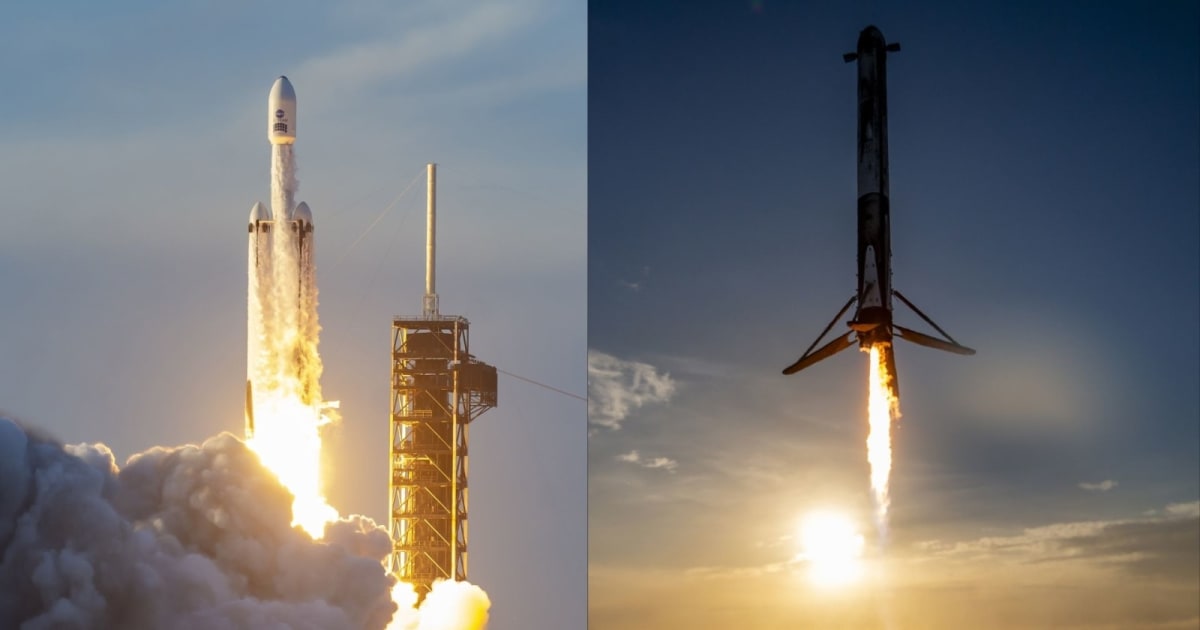
The Falcon Heavy rocket lifts off with NASA's Nancy Grace Roman Space Telescope from the Kennedy Space Center (L); One of the side boosters descend for a touchdown at the landing zone in Cape Canaveral (R). — (Cover Image Source: SpaceX)

NASA’s Nancy Grace Roman Space Telescope is currently cruising in space after its successful launch on August 30. The flagship observatory hitched a ride atop the SpaceX Falcon Heavy rocket, which lifted off at 7:26 am EDT from the Kennedy Space Center in Florida, completing its second mission of the year. Roman also marked the third NASA mission launched by Falcon Heavy, which has previously sent the Europa Clipper spacecraft to explore Jupiter’s moon Europa and the Psyche probe toward a metal-rich asteroid. 


The brilliant early morning event produced stunning pictures of the launch, which NASA and SpaceX said went flawlessly. At about 32 minutes after liftoff, SpaceX announced the successful deployment of the Roman telescope by the second stage. The company shared the picture below showing the Falcon Heavy lifting off with the Roman telescope, which is expected to shape our understanding of the universe in the years to come. 
The Falcon Heavy completed its second mission of 2026 with the launch of the Roman telescope.
The Falcon Heavy completed its second mission of 2026 with the launch of the Roman telescope. (Image Source: SpaceX)

Falcon Heavy is SpaceX’s most powerful operational rocket, and it’s capable of lifting nearly 64 metric tons (141,000 lbs) to orbit. During yesterday’s launch, its 27 Merlin engines on three boosters generated more than 5 million pounds of thrust at liftoff.
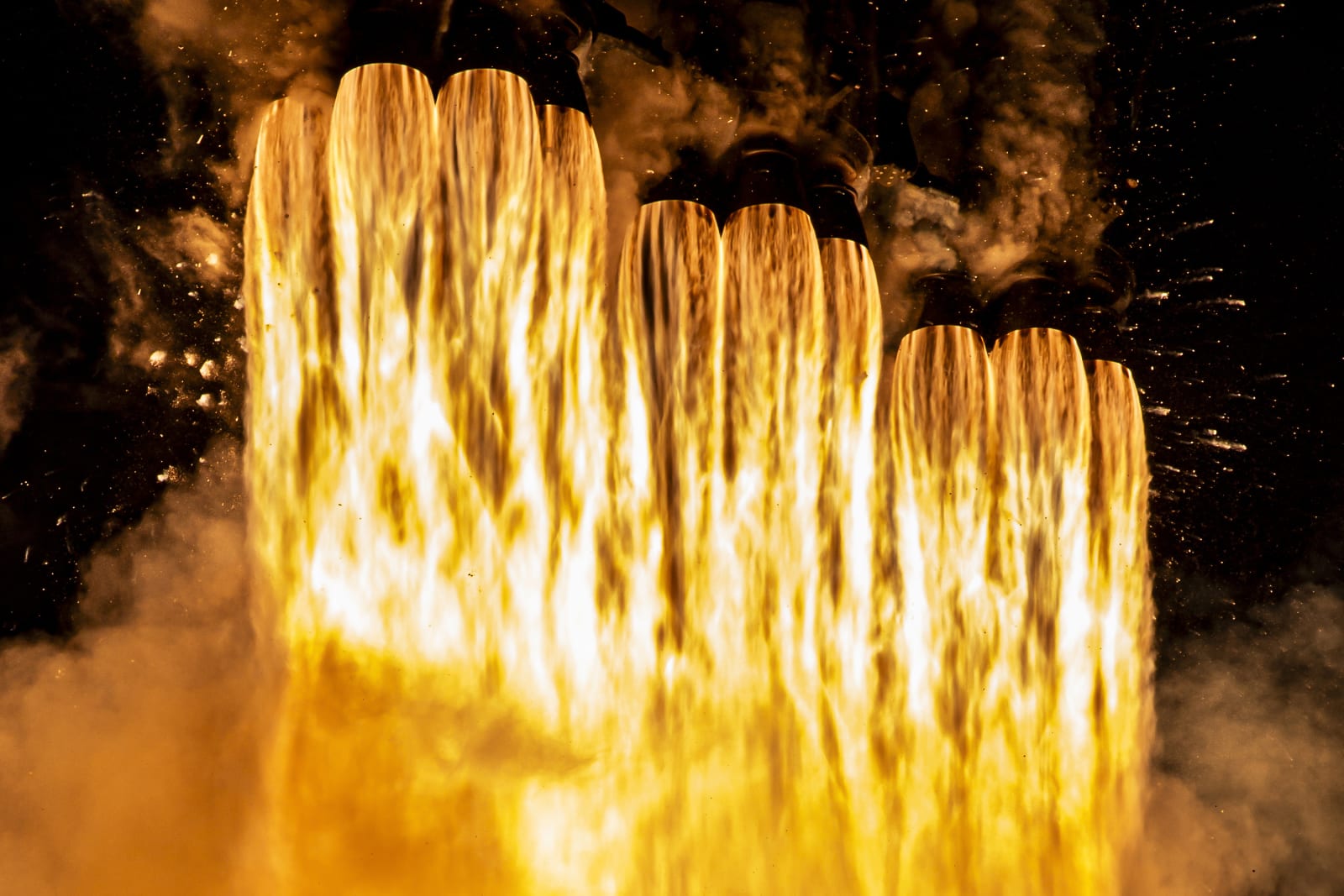
The Falcon Heavy boosters generating more than 5 million pounds of thrust.
The Falcon Heavy boosters generating more than 5 million pounds of thrust. (Image Courtesy: SpaceX)

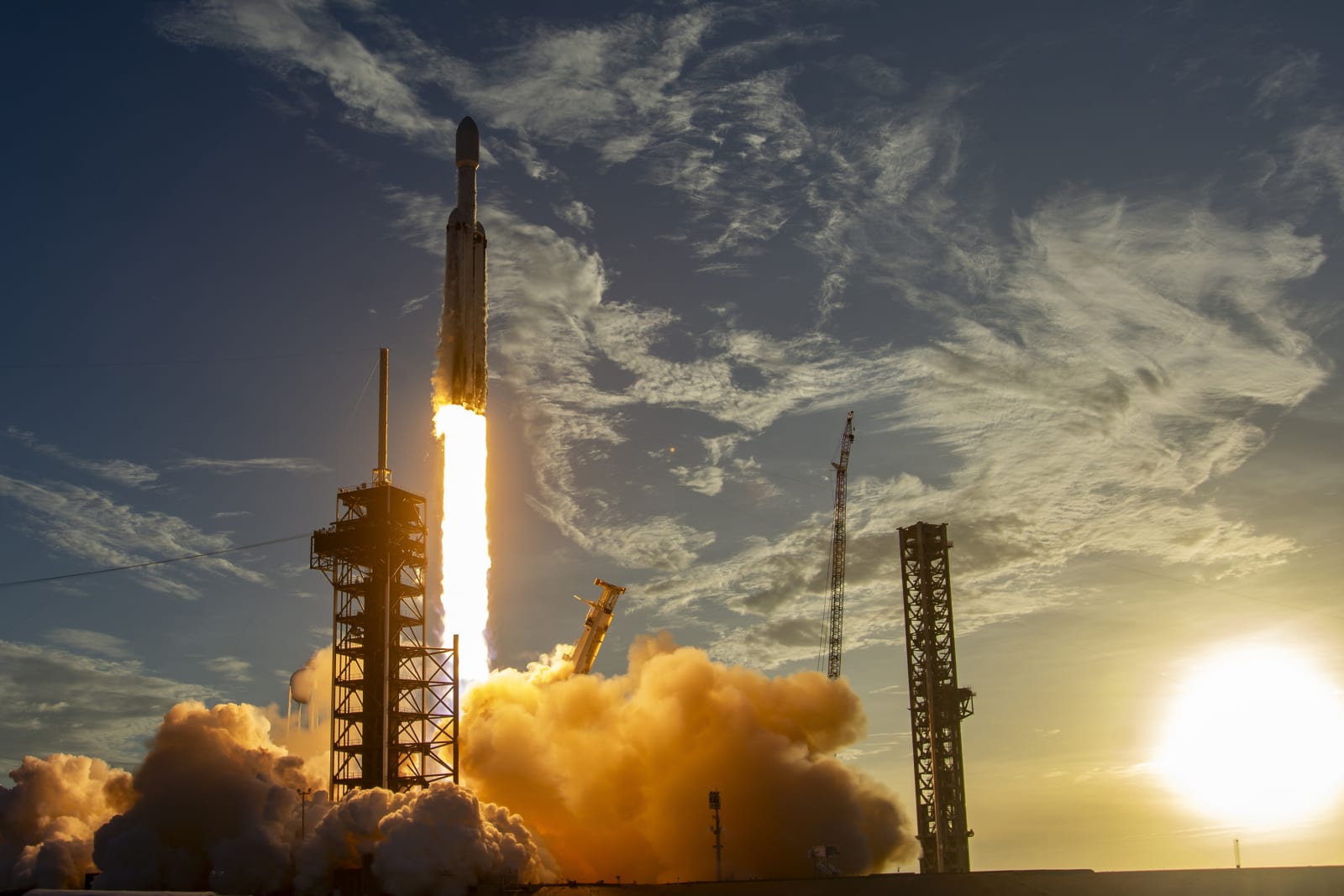
The picture below shows the Falcon Heavy rising through a cloud of smoke from the Kennedy Space Center. 
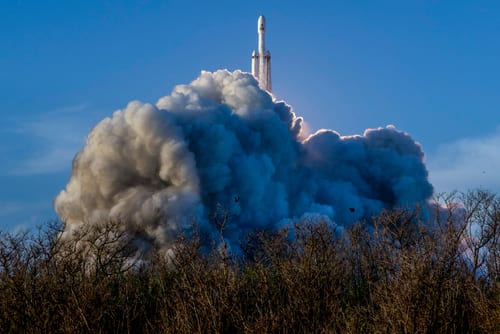
A SpaceX Falcon Heavy rocket launches with NASA’S Nancy Grace Roman Space Telescope onboard from Launch Complex 39A, Sunday, Aug. 30, 2026, at NASA’s Kennedy Space Center in Florida. Roman will investigate dark energy and dark matter, conduct a statistical census of planetary systems, and enable a broad range of additional astrophysics research. Launch occurred at 7:26 a.m. EDT. Photo Credit (NASA/Joel Kowsky)
SpaceX's Falcon Heavy has two side boosters which, together with the core booster, generate over 5 million pounds of thrust. (Image Source: Joel Kowsky/NASA via Getty Images)

A few minutes after the two Falcon Heavy boosters separated from the center core, they returned to Landing Zones 2 and 40 at the Cape Canaveral Space Force Station in Florida. The image below captures one of the two boosters moments before touchdown. It was the debut flight for one of the boosters, while the other completed its third mission, having previously supported GOES-U and Viasat-3 F3 launches.
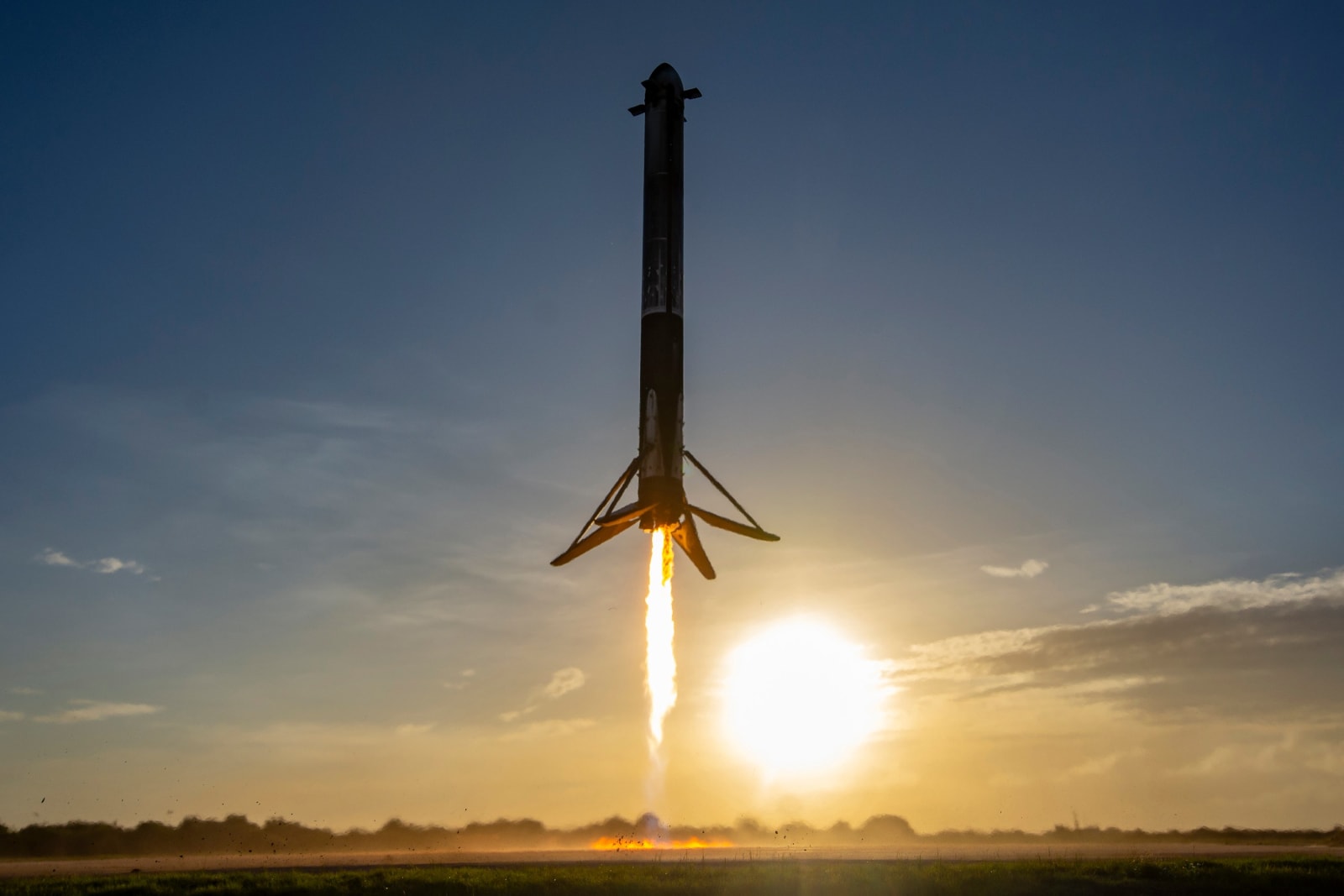
A side booster of the Falcon Heavy rocket attempting a touchdown on the landing zone at Cape Canaveral, Florida.
A side booster of the Falcon Heavy rocket attempting a touchdown on the landing zone at Cape Canaveral, Florida. (Image Source: SpaceX)

During the post-launch press conference, NASA officials lauded SpaceX for providing a launch vehicle on schedule for Roman, which launched nine months ahead of schedule. The following picture shows the Falcon Heavy seconds after its liftoff as the launch tower retracted away from the ascending rocket. 
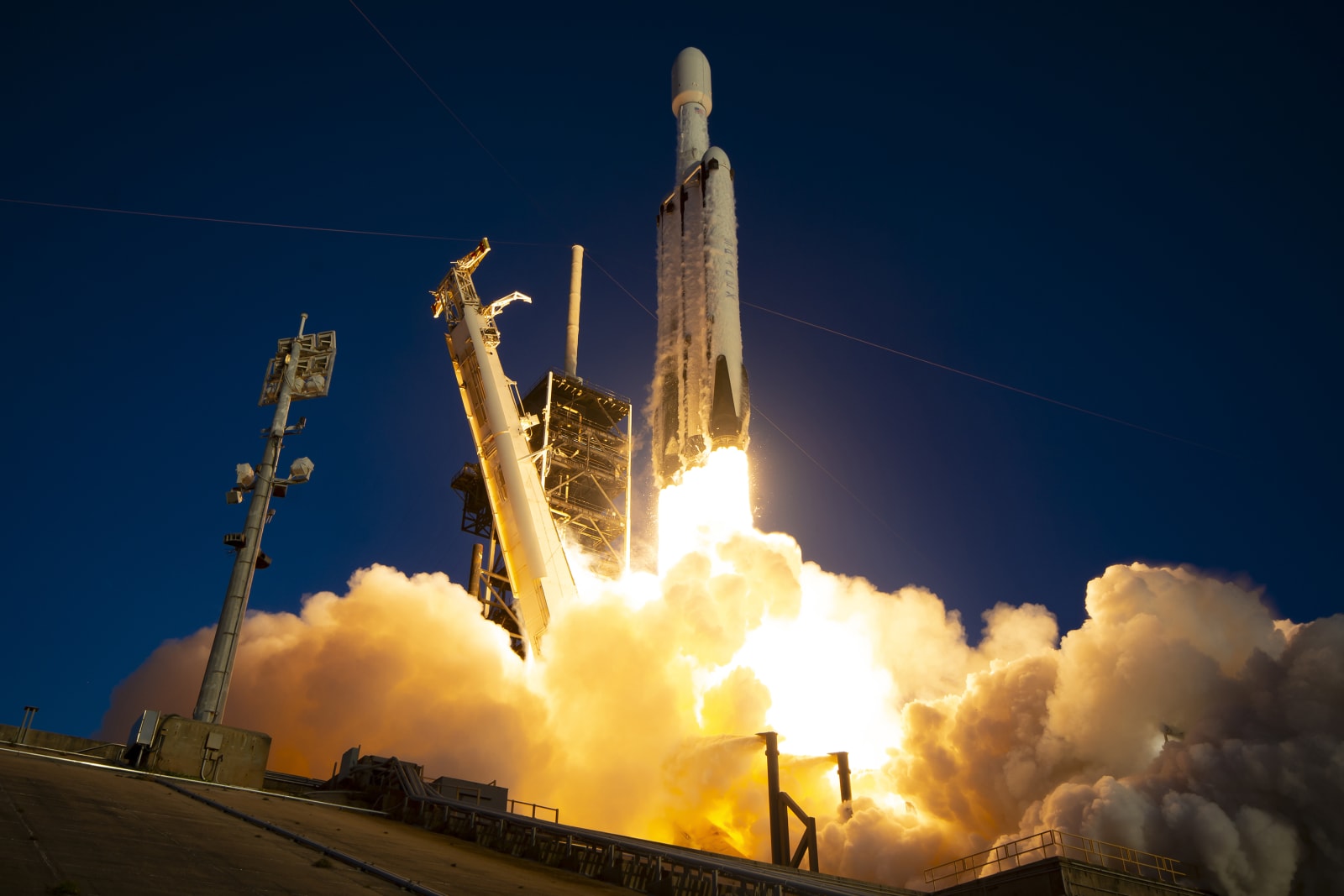
Falcon Heavy has previously launched two major deep space missions for NASA.
Falcon Heavy has previously launched two major deep space missions for NASA. (Image Source: SpaceX)

The Roman telescope is on its way to the second Earth-Sun Lagrange Point, or L2, which will provide it with an unobstructed view of the night sky. From this location, Roman will study billions of galaxies, stars, black holes, supernovae, and exoplanets for at least five years. The following picture shows Falcon Heavy firing all three boosters as it pushes Roman into low-Earth orbit.
A SpaceX Falcon Heavy rocket launches with NASA’S Nancy Grace Roman Space Telescope onboard from Launch Complex 39A, Sunday, Aug. 30, 2026, at NASA’s Kennedy Space Center in Florida. Roman will investigate dark energy and dark matter, conduct a statistical census of planetary systems, and enable a broad range of additional astrophysics research. Launch occurred at 7:26 a.m. EDT. Photo Credit (NASA/Joel Kowsky)
The Falcon Heavy is pictured here during its ascent. (Image Source: Getty/NASA/Joel Kowsky)

Equipped with a powerful 300-megapixel infrared camera and a coronagraph, Roman will scan the sky a 1000 times faster than the Hubble telescope with a field of view 100 times larger. According to NASA, it will also boost efforts to uncover mysteries of dark energy, which is believed to be causing the expansion of the universe.

More on Starlust

NASA’s Nancy Grace Roman Space Telescope successfully deployed in space: What happens next?

How NASA's Roman Telescope will find hidden 'rogue' planets despite challenges in observing them
MORE STORIES

Crew-13 was initially scheduled to launch no earlier than September 12.
2 hours ago
According to NASA, Roman will reach its destination in about three months from now.
13 hours ago
The Roman telescope is headed toward the second Earth-Sun Lagrange Point or L2, which is nearly a million miles from Earth.
17 hours ago
No location has been picked yet, but Trump says one is coming "very shortly."
1 day ago
The crew received America's highest honor for their historic, record-setting mission around the Moon.
1 day ago
Its construction will start in 2027, and the first Starship launch is planned for 2029. 
2 days ago
This record-breaking booster flight marked the end of Falcon 9 Starlink launches from Florida.
3 days ago
Engineers pulled tile samples and reentry data before the long tow back to Texas.
3 days ago
SpaceX will use Nvidia-powered Vera CPUs to accelerate computing for AI agents. The AI system is set for orbital launch in 2027
4 days ago
The observatory is scheduled to launch at 7:26 am EDT on August 30 atop SpaceX’s Falcon Heavy rocket from Florida.
3 days ago