NASA's James Webb Telescope captures stunning image of warped 'Butterfly Star' 525 light-years away
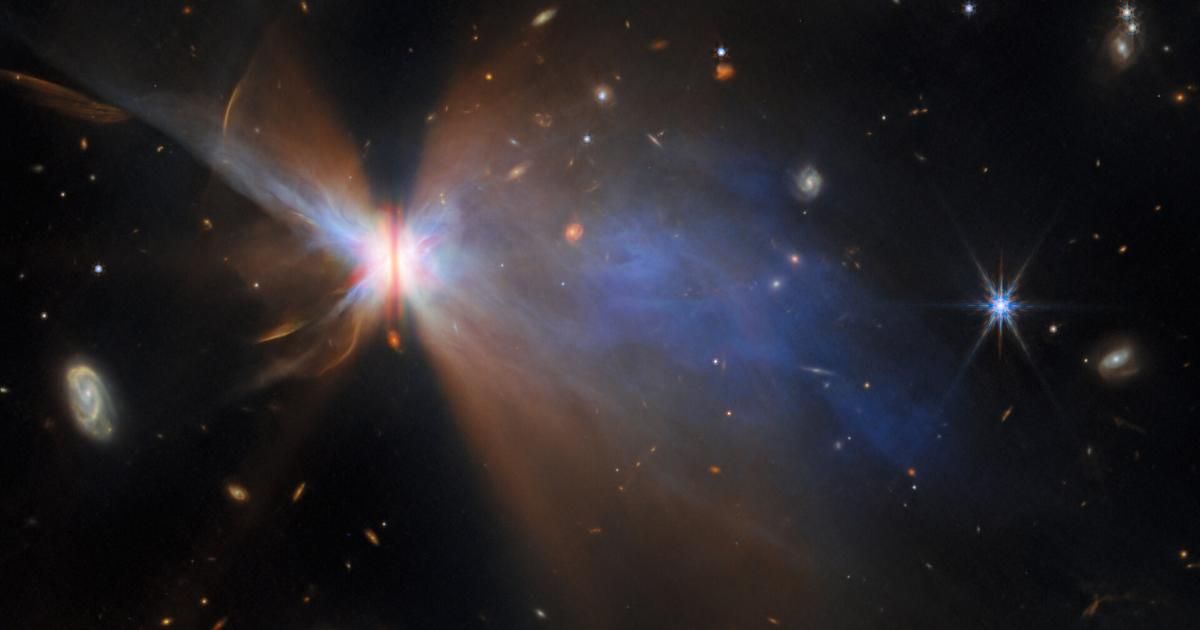
The James Webb Space Telescope (JWST) has captured a striking new image of a nascent stellar system nicknamed the 'Butterfly Star,' providing unprecedented detail of a planet-forming disc and the earliest stages of planetary formation. The discovery, featured as the space agencies' new "Picture of the Month," reveals a young star in the process of gathering mass, surrounded by a vast, dusty disc where new worlds may be taking shape, according to ESA.
Fluttering away with the Butterfly Star! 🦋⭐
— ESA Webb Telescope (@ESA_Webb) September 2, 2025
And check out more .gifs at our giphy page: https://t.co/y57p688FQX pic.twitter.com/Zf6VKRcbWm
Located 525 light-years away within the Taurus star-forming region, the system, officially designated IRAS 04302+2247, offers scientists a rare, edge-on view of a protoplanetary disc. This unique orientation allows researchers to study the vertical structure and thickness of the disc, a critical indicator of how efficiently dust is settling into a dense layer, a key step toward forming planets.
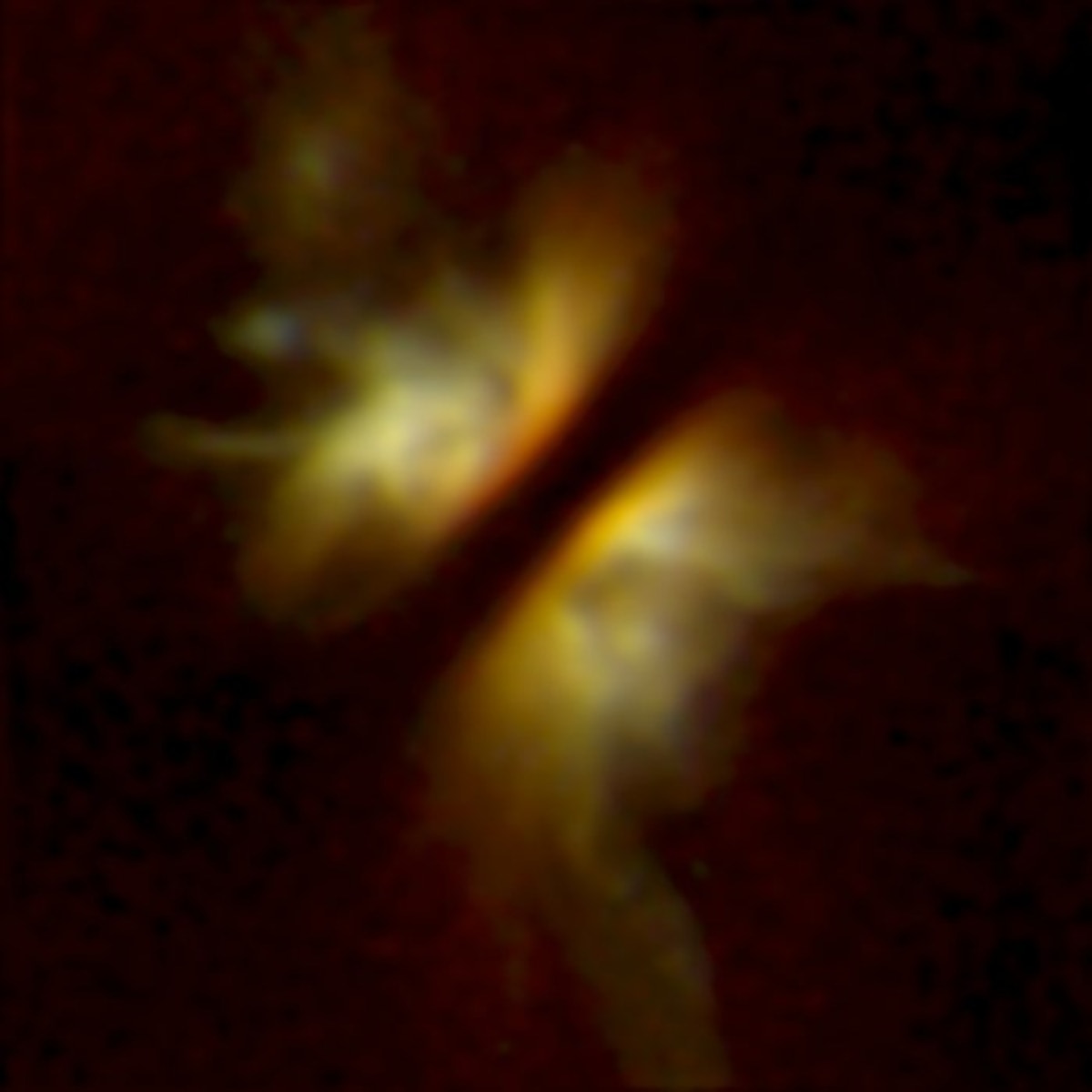
The JWST's powerful Near-InfraRed Camera (NIRCam) and Mid-InfraRed Instrument (MIRI), combined with data from the Hubble Space Telescope, were used to create the composite image. This multi-wavelength approach provides a comprehensive view of the system's delicate structures, revealing the distribution of dust and the reflection of light off the surrounding nebula.

The 'Butterfly Star' nickname comes from two gauzy reflection nebulas that flank the central disc, illuminated by the protostar's light. The star itself is largely obscured by a dense lane of dusty gas, a cocoon that makes it easier for Webb to observe the surrounding structures. Researchers believe studying systems like this can offer crucial insights into the formation of our own Solar System roughly 4.5 billion years ago.
The edge-on perspective provided by Webb's MIRI instrument shows the protoplanetary disc as a dark, dusty lane that bisects the bright nebulae, according to Live Science. At an immense size of approximately 40 billion miles across, this disc is several times wider than our entire solar system. While face-on views might reveal features like rings and gaps where planets are actively carving paths, this unique angle allows astronomers to focus on the disc's thickness and how dust is distributed, both crucial factors in how planets gather mass. Dust is expected to settle toward the disc's midplane, creating a dense layer where grains can clump together and begin the process of forming planets.

A study based on the image, published last year in The Astrophysical Journal, found that the brightness of the nebula surrounding the star fluctuates. This subtle but significant observation suggests that the inner disc is likely warped or misaligned, offering a fascinating glimpse into the chaotic and complex processes that may have shaped our own solar system billions of years ago. By studying the 'Butterfly Star,' scientists gain a window into the chaotic and complex processes that likely shaped our own solar system and the formation of Earth, offering a deeper understanding of our cosmic origins. This research helps us piece together the fundamental story of how planets, including our own, come to be.
More on Starlust
Webb Telescope discovers mysterious CO₂-rich disk with no water around a young star
6 mind-blowing cosmic surprises from NASA’s James Webb Telescope in its first three years