Webb Telescope discovers mysterious CO₂-rich disk with no water around a young star
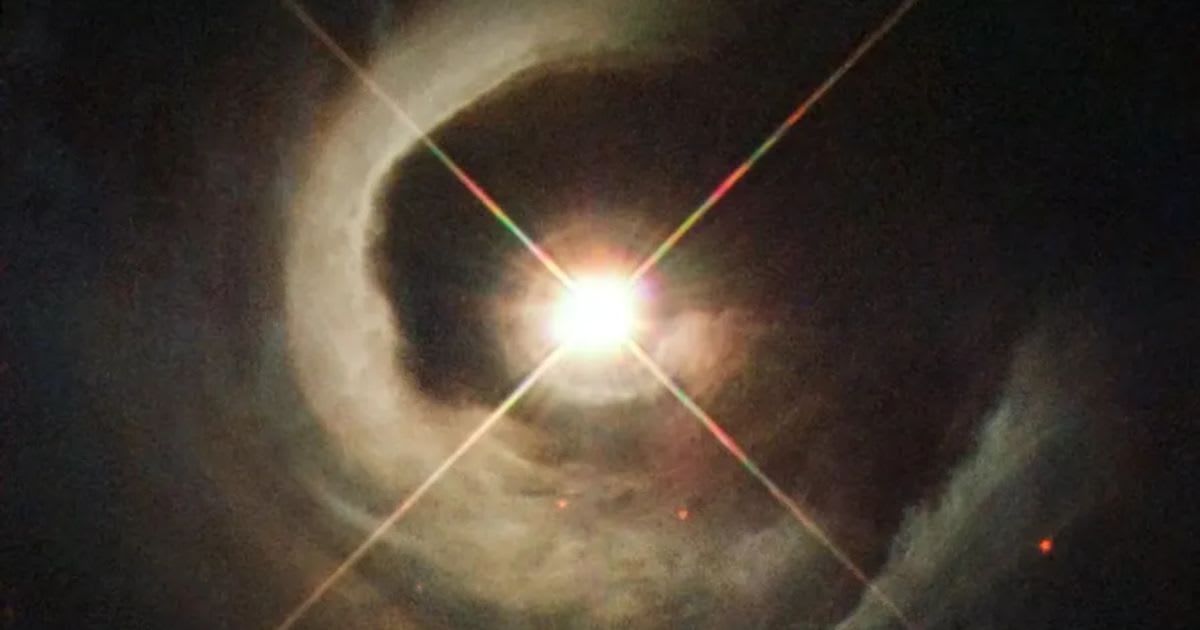
A team of astronomers has detected a surprising anomaly around a young star, challenging fundamental theories of planet formation. Using the James Webb Space Telescope (JWST), researchers found a planet-forming disk with an unusually high concentration of carbon dioxide (CO₂) in a region where Earth-like planets could form. The findings were published in the journal Astronomy & Astrophysics, according to Stockholm University.
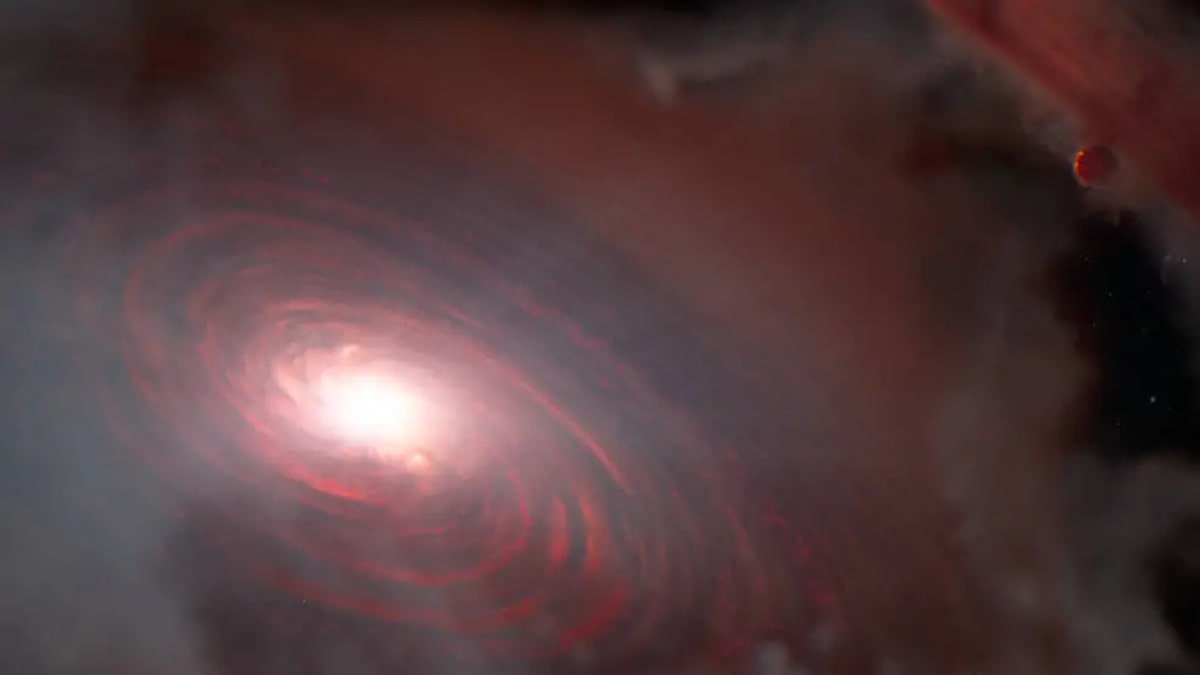
The discovery, led by Stockholm University's Jenny Frediani, stands in stark contrast to most known systems, where water vapor is the dominant component. "Water is so scarce in this system that it’s barely detectable — a dramatic contrast to what we typically observe," Frediani said. Traditionally, models of planetary birth suggest that ice-rich pebbles from a disk’s cold, outer reaches drift inward. As they approach the star, the ice melts into water vapor, creating a water-rich environment in the inner disk. However, this newly observed disk defies that expectation, instead exhibiting a strong CO₂ signature.
This unexpected chemical makeup has prompted scientists to reconsider how planetary systems evolve. According to Frediani, the high levels of carbon dioxide compared to water cannot be easily explained by current models. Arjan Bik, another researcher at Stockholm University, suggests a possible explanation. “Such a high abundance of carbon dioxide in the planet-forming zone is unexpected," Bik said. "It points to the possibility that intense ultraviolet radiation — either from the host star or neighbouring massive stars — is reshaping the chemistry of the disk.”
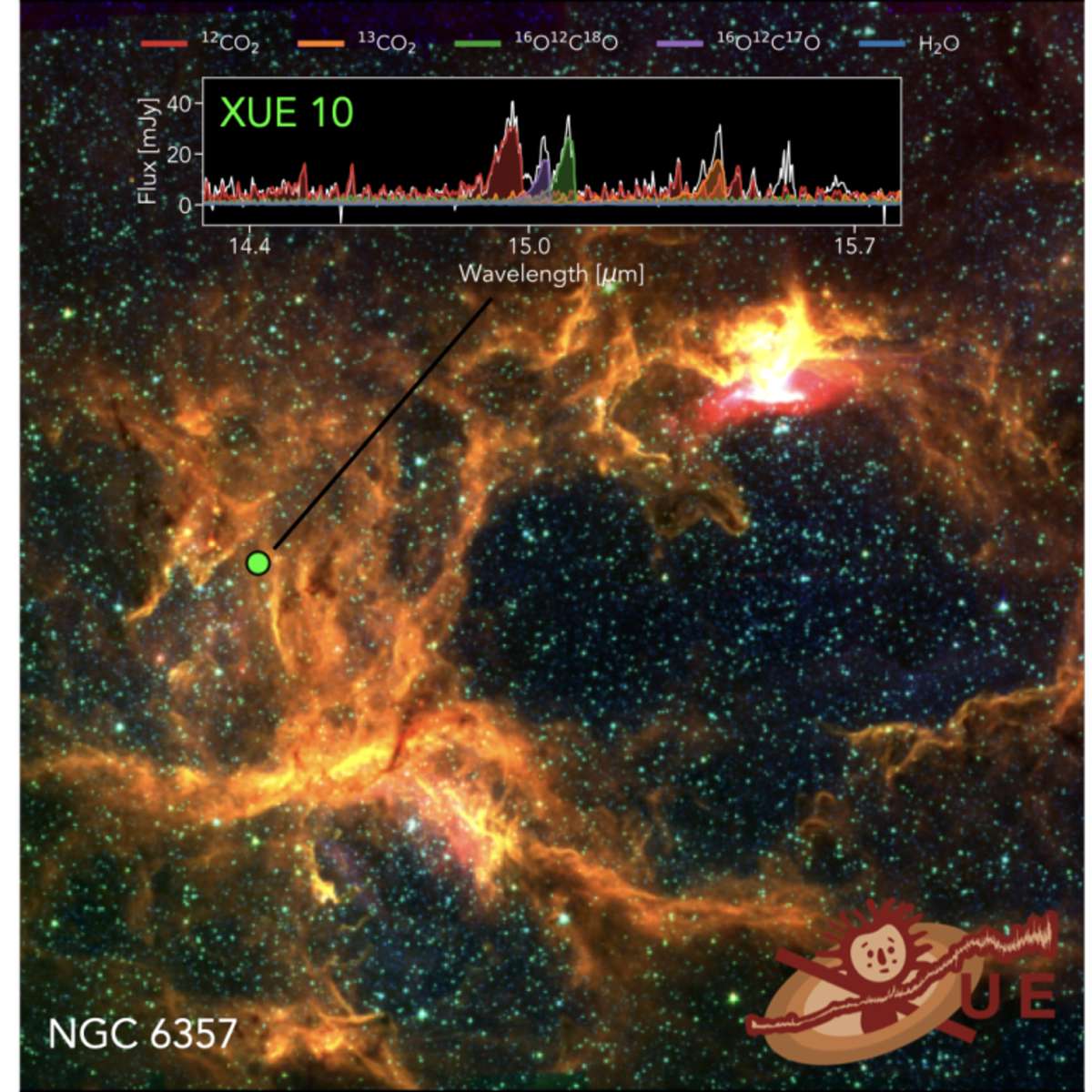
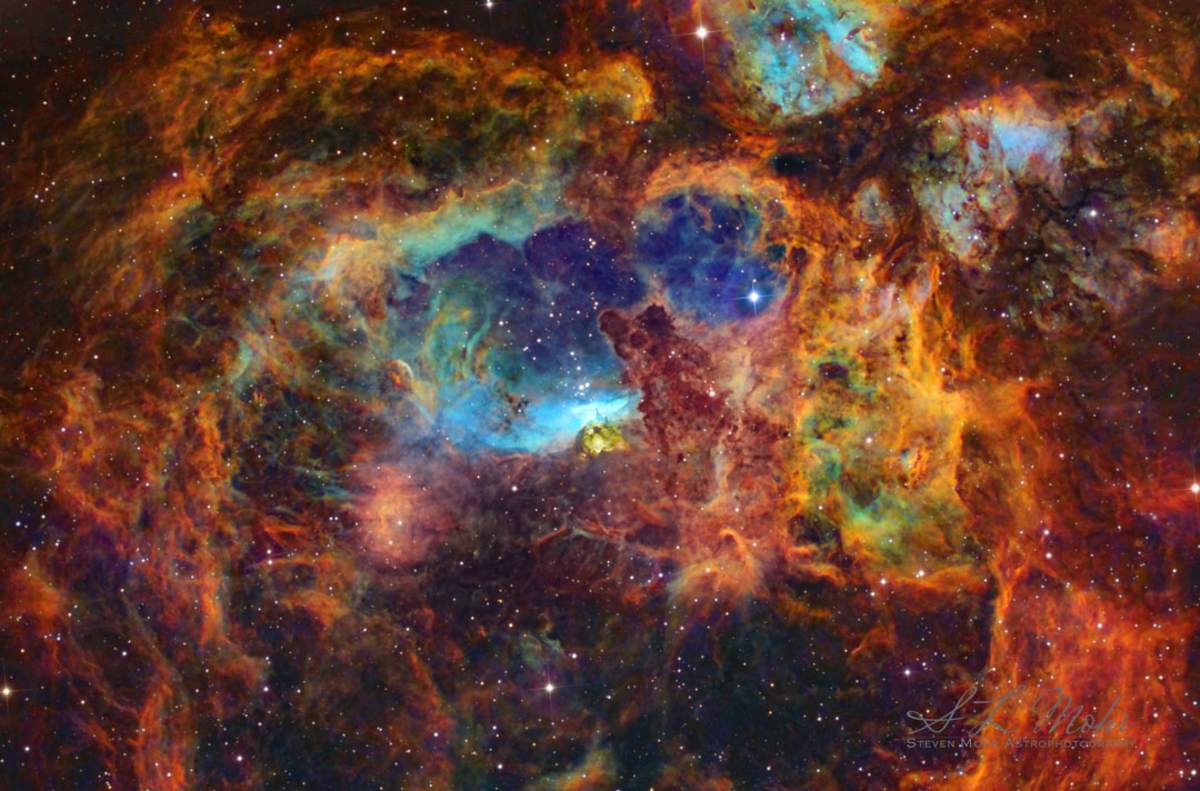
The team, part of the eXtreme Ultraviolet Environments (XUE) collaboration, discovered the massive star-forming region NGC 6357, located about 1.7 kiloparsecs away. Maria-Claudia Ramirez-Tannus, a lead researcher for the collaboration, emphasized the importance of the finding. “It reveals how extreme radiation environments — common in massive star-forming regions — can alter the building blocks of planets," she explained. "Since most stars and likely most planets form in such regions, understanding these effects is essential for grasping the diversity of planetary atmospheres and their habitability potential.”
The researchers also found rare isotopes of carbon and oxygen within the CO₂ signature, which may provide new clues to a long-standing puzzle in astronomy. These unique isotopes could help explain the unusual isotopic fingerprints found in meteorites and comets from our own Solar System, which are relics from its formation, as mentioned by Stockholm University.
The discovery was made possible by the JWST’s MIRI instrument, a camera and spectrograph co-developed by Swedish astronomers at Stockholm University and Chalmers. The MIRI instrument allows scientists to peer through the dust of distant, planet-forming disks, providing critical insights into the diverse environments that shape planetary systems. This groundbreaking discovery broadens our understanding of how planets form, suggesting that the building blocks of planets can vary dramatically depending on their environment. By studying these unusual disks, scientists can gain new insights into the immense diversity of planetary systems throughout the galaxy and the potential for life to exist in unexpected places.
More on Starlust
Astronomers unexpectedly capture a planet's birth within the swirling disk of a young star
Scientists discover 'water ice' around a young star, hinting at how our solar system was formed