6 mind-blowing cosmic surprises from NASA’s James Webb Telescope in its first three years

The James Webb Space Telescope (JWST) has been relentlessly observing our universe for the past three years. Utilizing its unparalleled infrared capabilities, Webb has accomplished what was once deemed impossible, fundamentally altering how we perceive the cosmos, from distant galaxies to our own solar system, as mentioned by NASA.

Designed to revolutionize astronomy and rewrite textbooks, Webb has exceeded all expectations. With over 860 scientific programs completed, dedicating a quarter of its time to imaging and three-quarters to spectroscopy, the telescope has amassed nearly 550 terabytes of data. This incredible haul has resulted in over 1,600 research papers, presenting groundbreaking findings and sparking a wealth of new scientific inquiries.
We love Webb’s spectrographic data and the way it studies stars. We love the way Webb sees exoplanets and can even study Mars. We love Webb’s big, gold mirrors and the way it sees back in time. We love Webb so much it even makes us rhyme!
— NASA Webb Telescope (@NASAWebb) July 2, 2025
10 things: https://t.co/bdcua98tEi
Here are six of the most astounding discoveries from Webb's initial three years of operation, provided by NASA
Rapid galactic evolution challenges prior models
Webb's observations of "cosmic dawn" revealed surprisingly bright galaxies formed within 300 million years of the Big Bang, including those with disproportionately massive blackholes and an infant Milky Way-like galaxy. This suggests a much faster cosmic evolution than theorized, per NASA. Webb also recently discovered what appears to be one of the most distant "jellyfish" galaxies ever seen, 12 billion light-years away, hinting that dynamic galaxy evolution processes occurred much earlier than previously understood, as mentioned on Live Science.

"Little Red Dots" puzzle astronomers
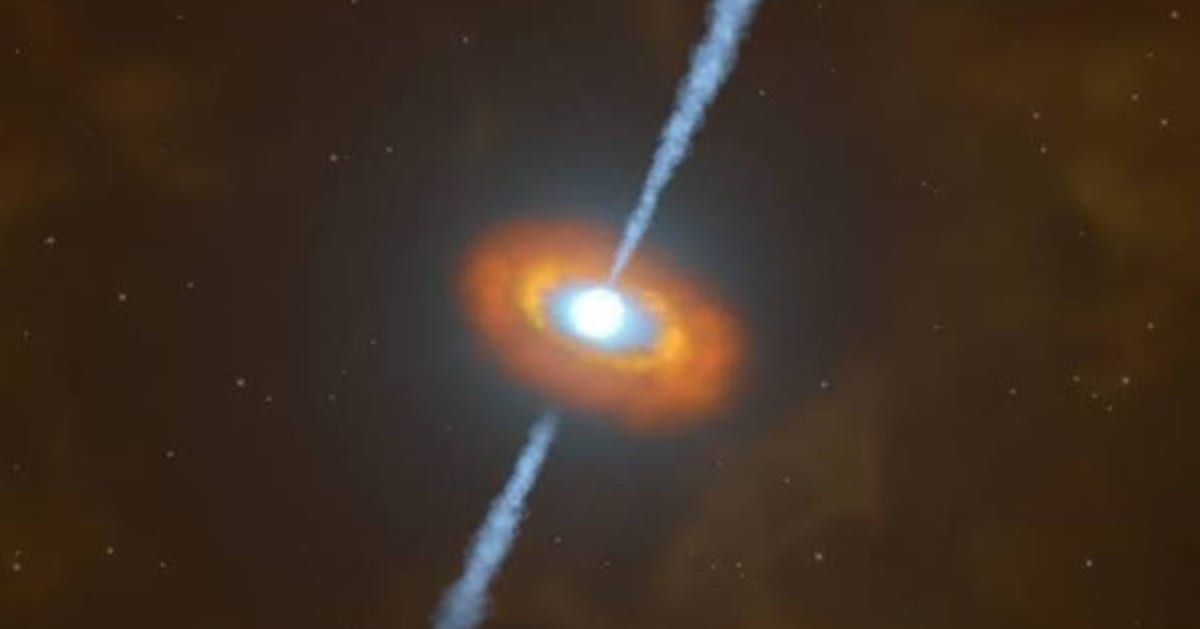
Webb identified a new class of distant, compact, luminous red galaxies dubbed "Little Red Dots." Their extreme brightness and color were a mystery, but many are now believed to be galaxies hosting rapidly growing supermassive black holes (Active Galactic Nuclei, or AGNs). This suggests their luminosity comes from these actively "feeding" black holes, rather than just massive star formation, providing a potential reason for their surprisingly early existence, according to Space.com.

Lava planet may boast an atmosphere from volcanic activity
Webb's precision allowed it to rule out substantial atmospheres on several rocky planets, yet it found tantalizing signs of carbon monoxide and carbon dioxide on 55 Cancri e, a lava world. This suggests its atmosphere might be replenished by gas bubbling up from its molten surface. Webb's observations revealed that 55 Cancri e's dayside is cooler than expected for a bare world, indicating an atmosphere efficiently redistributing heat, likely a secondary atmosphere composed of outgassed CO and CO2, per Eos.org.

Spiral galaxies revealed in striking detail
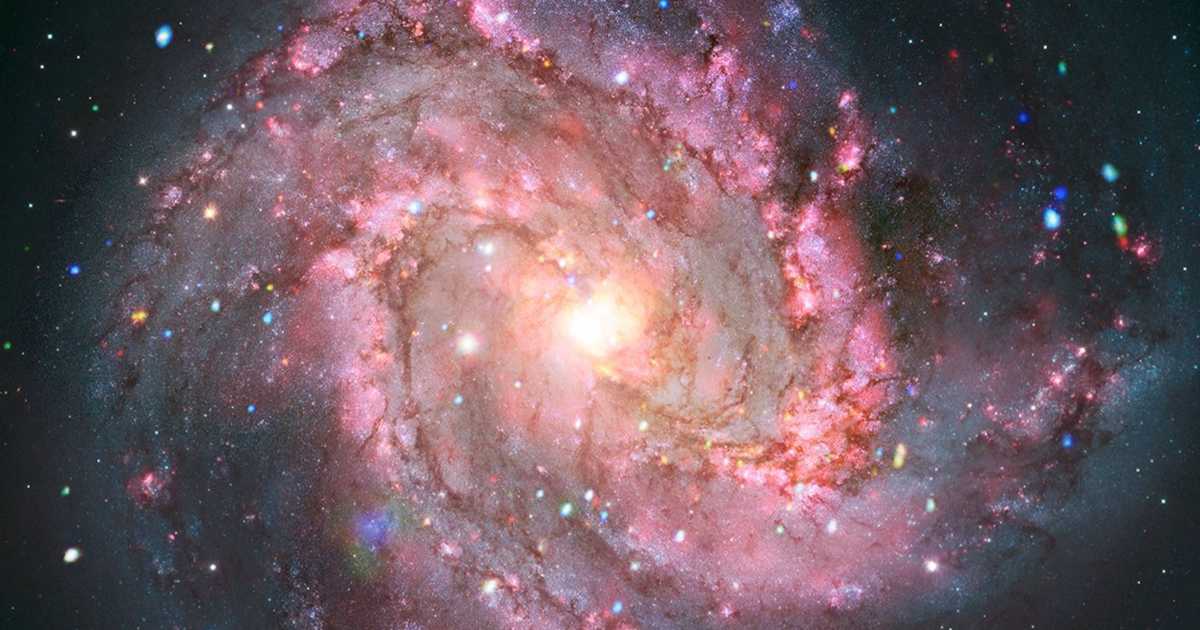
Webb provides unprecedented detail of nearby spiral galaxies, exposing filamentary dust structures, ancient star clusters, and newly forming stars still embedded in glowing cocoons. It clarifies how stellar winds and explosions remodel galactic homes. As part of the PHANGS program, Webb's NIRCam captured millions of sparkling blue stars, while MIRI highlighted glowing dust and even large, spherical shells likely created by past stellar explosions, providing key insights into galaxy evolution, as per ESA.

Planets might endure stellar demise
A long-standing question concerned planets' survival after their host star becomes a red giant and then a white dwarf. Webb may have identified several candidate planets orbiting white dwarfs. If confirmed, this would signify that planets can endure stellar death. Webb has directly imaged two candidate giant planets orbiting distinct white dwarfs, with one estimated to be 1.3 times Jupiter's mass with a Saturn-like orbit, strongly indicating such systems can persist after the host star's demise, per EarthSky.

Enceladus feeds Saturn's water supply with a gigantic plume
While Cassini detected Enceladus' water plumes, only Webb revealed their true scale as a vast cloud spanning over 6,000 miles, or more than 20 times the size of Enceladus, Saturn's small, icy moon. This water disperses into a torus around Saturn, with the majority spreading throughout the Saturnian system, even causing rain on the planet. This towering plume ejects water at an astounding rate of about 300 liters per second, with Webb observations confirming this outflow directly contributes to a vast, donut-shaped water torus around Saturn, per STScl.
The Webb telescope has brought the universe into a significant amount of detail within the grasp of ordinary citizens over its 3-year operation. Engineers estimate at least another 20 years of stellar work from the telescope, providing scientists the opportunity to have more perplexing questions answered.