Webb Telescope spots 300 unusually bright 'mysterious objects' that could rewrite galaxy formation history
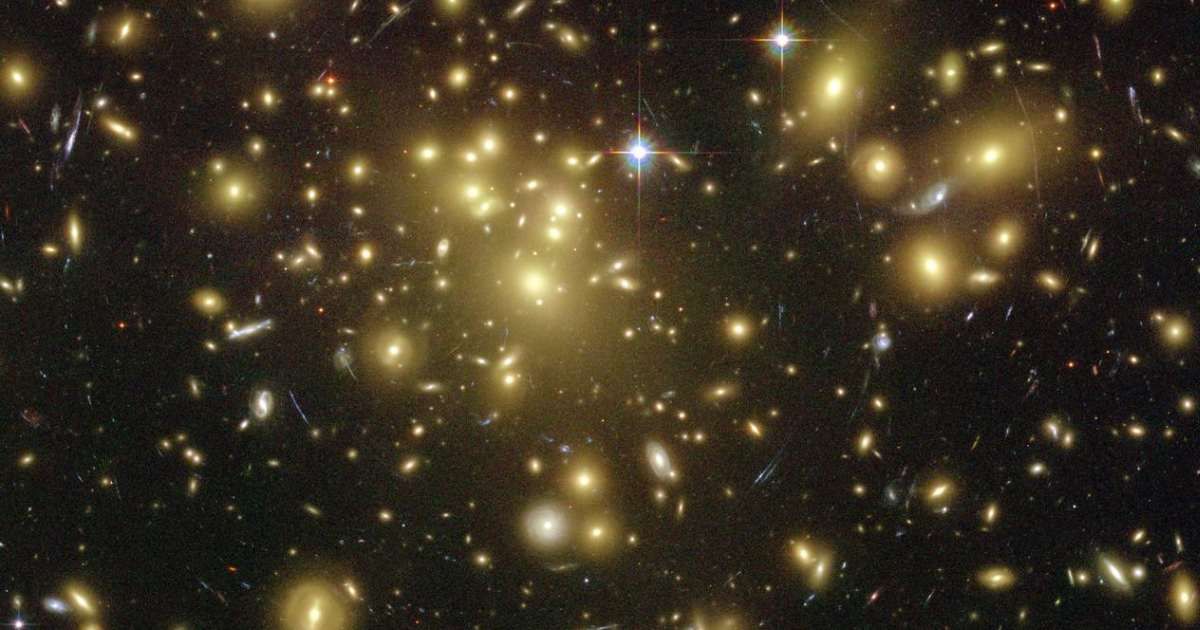
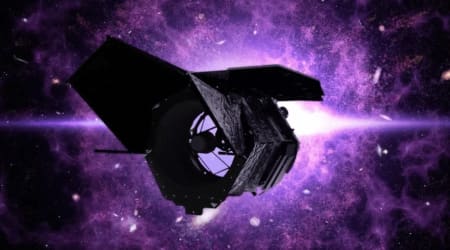
A team of astronomers, using the powerful James Webb Space Telescope (JWST), has identified 300 unusually bright objects in the early universe, a discovery that could challenge existing theories about galaxy formation. Published in The Astrophysical Journal, a study led by researchers from the University of Missouri describes the objects as "candidate galaxies" from a period when the universe's first stars and galaxies were just beginning to form, according to the University of Missouri.
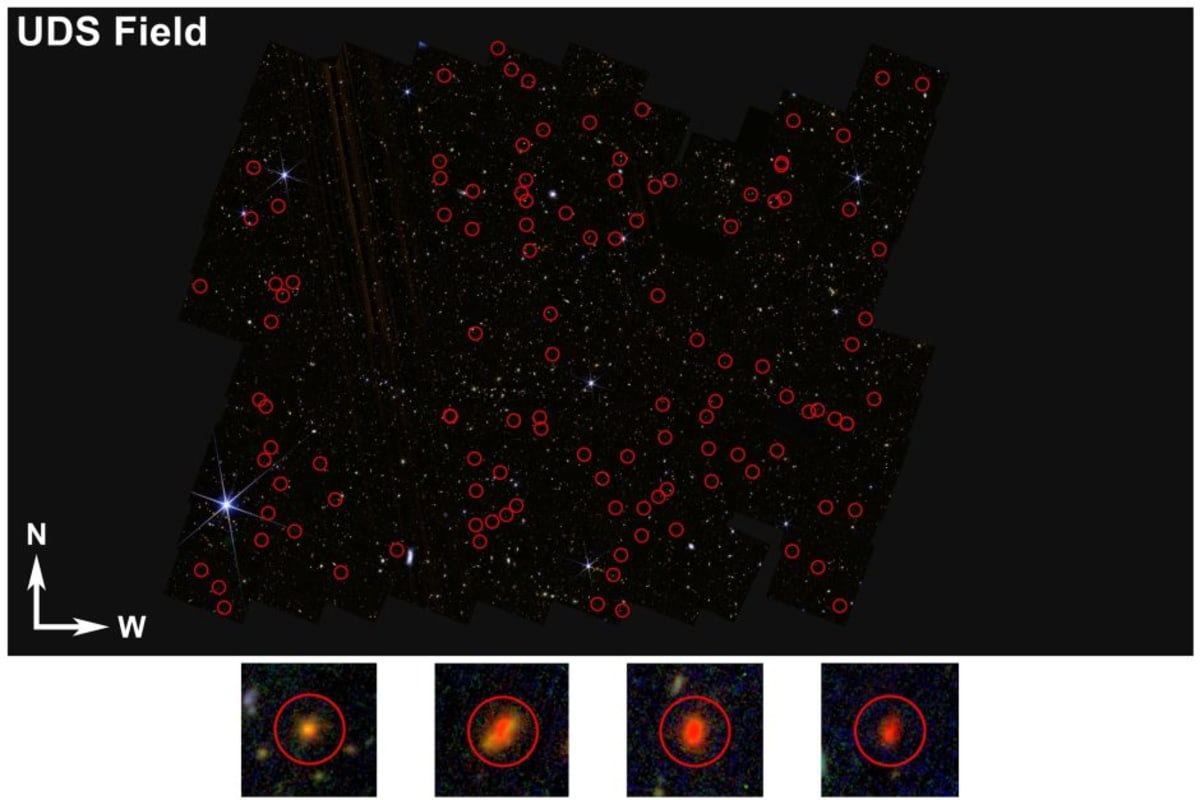
“If even a few of these objects turn out to be what we think they are, our discovery could challenge current ideas about how galaxies formed in the early universe," stated Haojing Yan, a professor of astronomy and a co-author of the study. The discovery was made possible by JWST's highly sensitive infrared cameras, which are designed to detect light that has been stretched into larger wavelengths by the universe's expansion, a phenomenon known as redshift. The higher the redshift, the farther away an object is and the closer it is to the beginning of the universe.
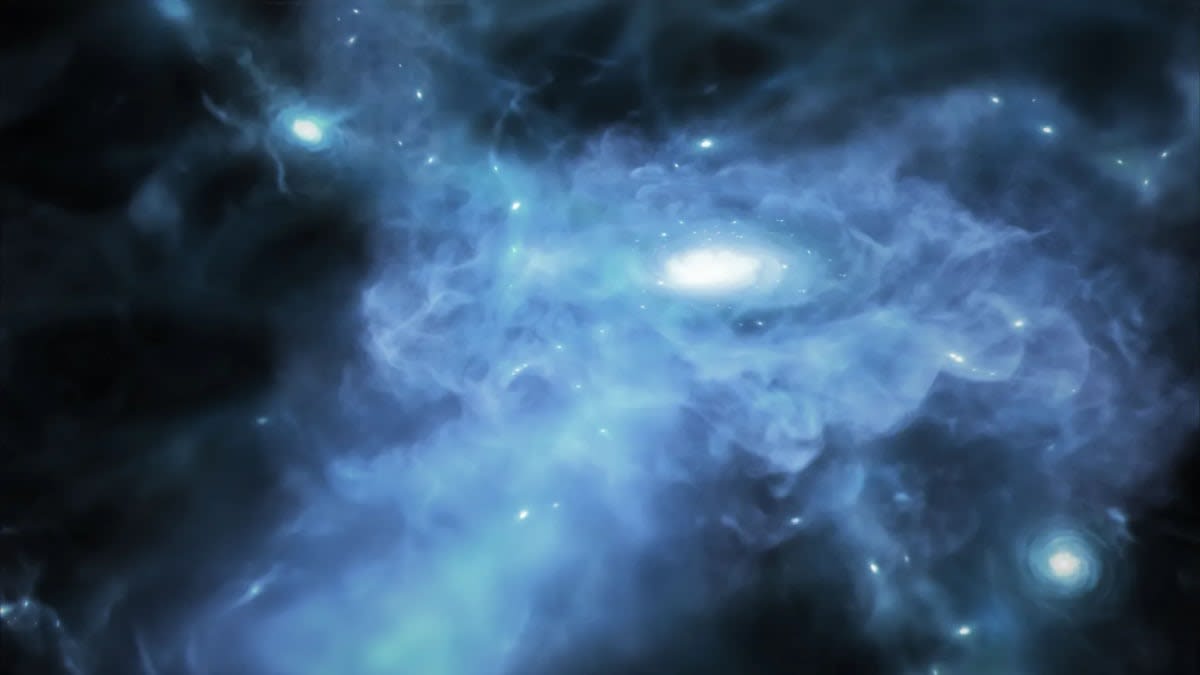
To pinpoint these specific objects, the researchers used a method called the dropout technique. This technique identifies distant galaxies by looking for objects that are visible in redder infrared light but "drop out," or vanish, in bluer wavelengths. This is a signature of their immense distance and the resulting redshift. “This phenomenon is indicative of the ‘Lyman Break,’ a spectral feature caused by the absorption of ultraviolet light by neutral hydrogen. As redshift increases, this signature shifts to redder wavelengths,” explained Bangzheng “Tom” Sun, a Ph.D. student and lead author of the study.
While the dropout technique provides strong evidence, the team is now seeking definitive confirmation through spectroscopy, the gold standard for astronomical measurement. Spectroscopy breaks down an object's light into a unique fingerprint, providing precise details about its distance, composition, and age. “One of our objects is already confirmed by spectroscopy to be an early galaxy,” Sun added. “But this object alone is not enough. We will need to make additional confirmations to say for certain whether current theories are being challenged.’’ Historically, astronomers have been cautious about interpreting such bright objects as early galaxies, often dismissing them as something else. However, based on their findings, the Mizzou team asserts that these candidates deserve a much closer look and should not be so quickly ruled out.
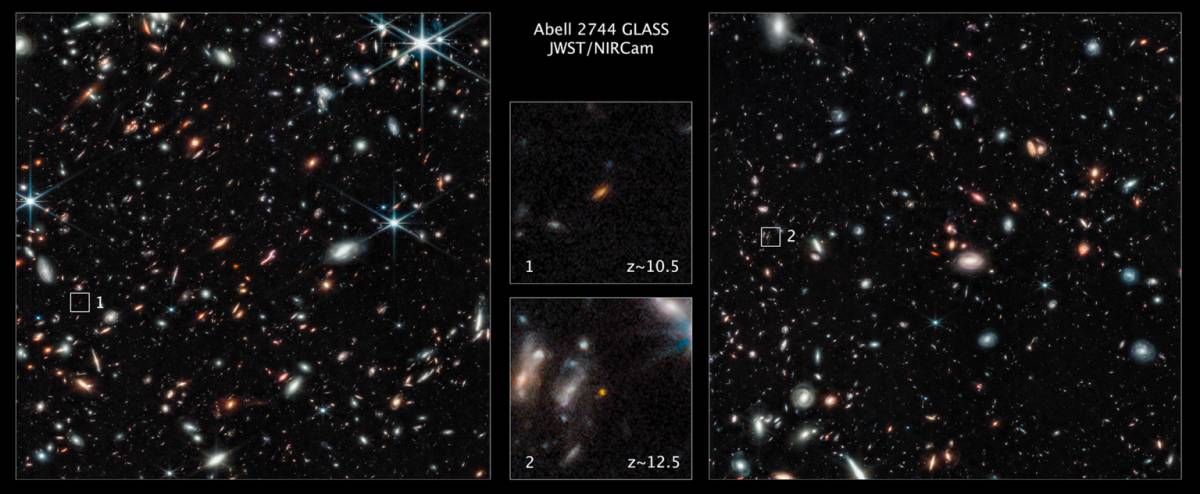
The discovery of the unusual galaxies in the early universe isn't the only finding pushing astronomers to rethink how galaxies form. Recent observations have also uncovered a galaxy that appears to be almost entirely devoid of dark matter, a finding that contradicts the long-held belief that dark matter is a universal building block for all galaxies. This dark matter-deficient galaxy, named FCC 224, was identified by astronomers at the W. M. Keck Observatory in Hawaii. It is an ultra-diffuse galaxy located on the outskirts of the Fornax Cluster, approximately 60 to 65 million light-years from Earth.
Until now, the only known galaxies without significant dark matter were found in the NGC 1052 group. This discovery marks the second instance of a dark matter-less galaxy, hinting that such formations may be more common than previously assumed. The findings challenge the prevailing cosmological paradigm, which posits that dark matter is essential for galactic formation and stability.