What happened to black holes from the Big Bang? Study says they might be alive today as white holes
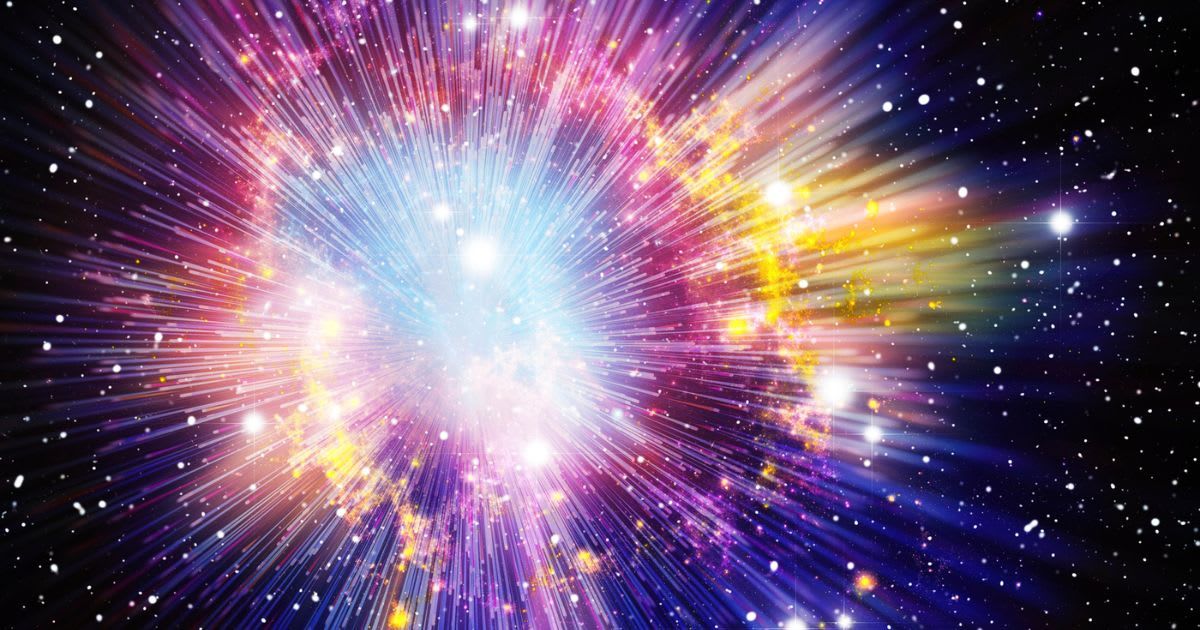
Physicists found something unexpected about the tiniest black holes created moments after the Big Bang. As per their research, these objects don't actually disappear the way scientists thought they would. Instead, they transform into white holes. The finding challenges what physicists have believed about how black holes die. Commenting on the study, co-author Daniel Paraizo said, "We found that the lifetime of black holes is much longer than previously thought." The research was led by Eugenio Bianchi and his team at the Eberly College of Science, and the pre-peer-reviewed version of this study is available on the preprint arXiv server.

For decades, physicists assumed that tiny black holes would have long since evaporated. Black holes leak energy called Hawking radiation, named after physicist Stephen Hawking, who proposed it in the 1970s. The smaller the black hole, the faster it leaks. So the tiniest ones, born right after the Big Bang, should have vanished billions of years ago. However, these primordial black holes are different from the massive ones. These are ones formed when the universe was incredibly hot and dense. It’s important to note that primordial black holes have never been observed. But the theory said they existed, and they should be gone by now.
What the study actually found
The team's calculations show that something different happens. When a black hole shrinks down to about 20 micrograms, roughly the weight of a human eyebrow hair, it reaches a threshold called the Planck mass. At this point, the black hole stops dying the way it's supposed to and becomes stable. Then it starts behaving like something theoretical physicists have only imagined: a white hole. A white hole would be the opposite of a black hole. Rather than pulling everything inward, it would push everything outward. "Once the black hole reaches the 20-microgram threshold, we find that it starts emitting purifying radiation due to behavior that is characteristic of a white hole," Paraizo explained. "Therefore, even though we do not yet know the physics near a white hole, we identify an object that has exactly the same properties from far away."
![An illustration supermassive black hole at the center of the Milky Way galaxy, known as Sagittarius A* (A-star). It is surrounded by a swirling accretion disk of hot gas (Image Credit: NASA, ESA, CSA, Ralf Crawford [STScI] )](https://de40cj7fpezr7.cloudfront.net/595fadf2-adbf-417b-b20b-2ee06c9d0b3d.png)
To study this, the research team traced what happens to primordial black holes as they shrink over billions of years. They calculated how much energy they leak. Primordial black holes that start with a mass of roughly 100 million tons would take a billion years to decay. But when they reach that critical 20-microgram threshold, they don't disappear. At this stage, the remnants become stable and start emitting radiation that looks like white hole behavior. "The phenomena that we identify are relevant for black holes possibly formed in the early universe," Paraizo added.
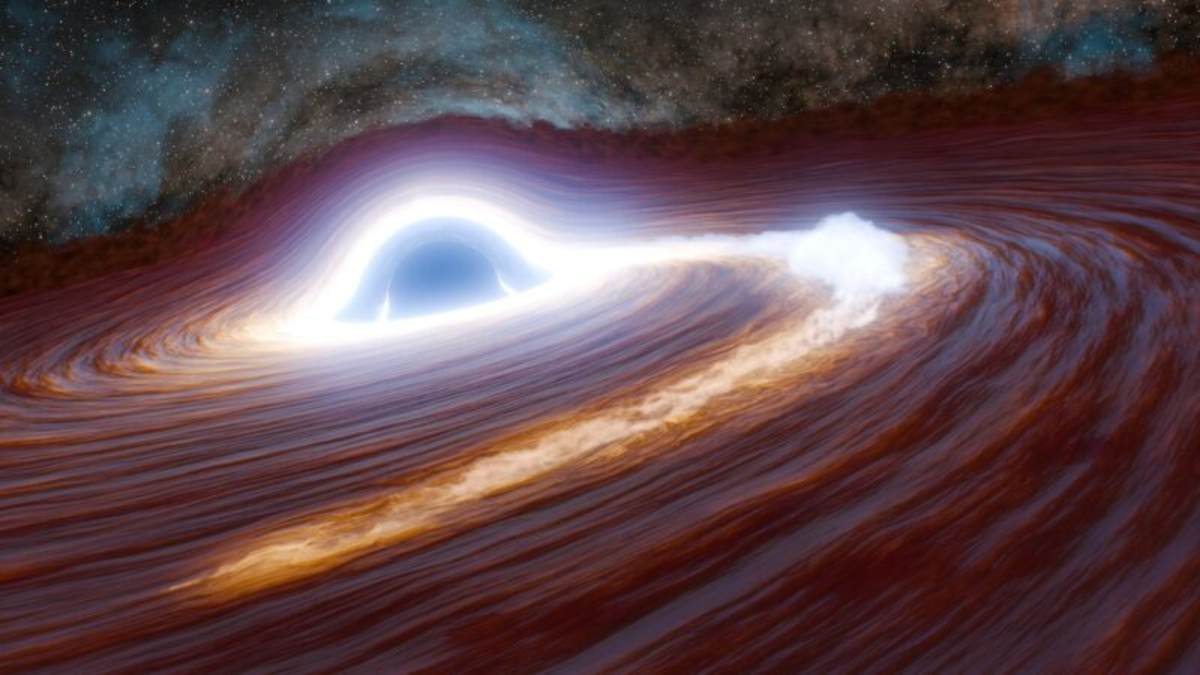
Based on this study, if these ancient black holes survived and transformed, they'd still be out there somewhere. The work also hints at solving one of physics' biggest problems: uniting quantum mechanics with gravity into a single theory called quantum gravity. That's been unsolved since the early 20th century. "The fact that we can infer these properties, using only minimal ingredients from quantum gravity, is remarkable," Paraizo said. The team calculated what happens from the outside. But they can't explain the inside physics because that requires a complete quantum gravity theory, which doesn't exist yet. So while the math suggests this transformation could happen, the scientists can't fully prove it actually does.
More on Starlust
Astrophotographer captures stunning image of Horsehead Nebula after over 115 hours of observation
Another planet in our early solar system? First evidence of Moon-sized object found from meteorite