Scientists find a new way to probe dark energy, thanks to a faint radio glow from the early universe
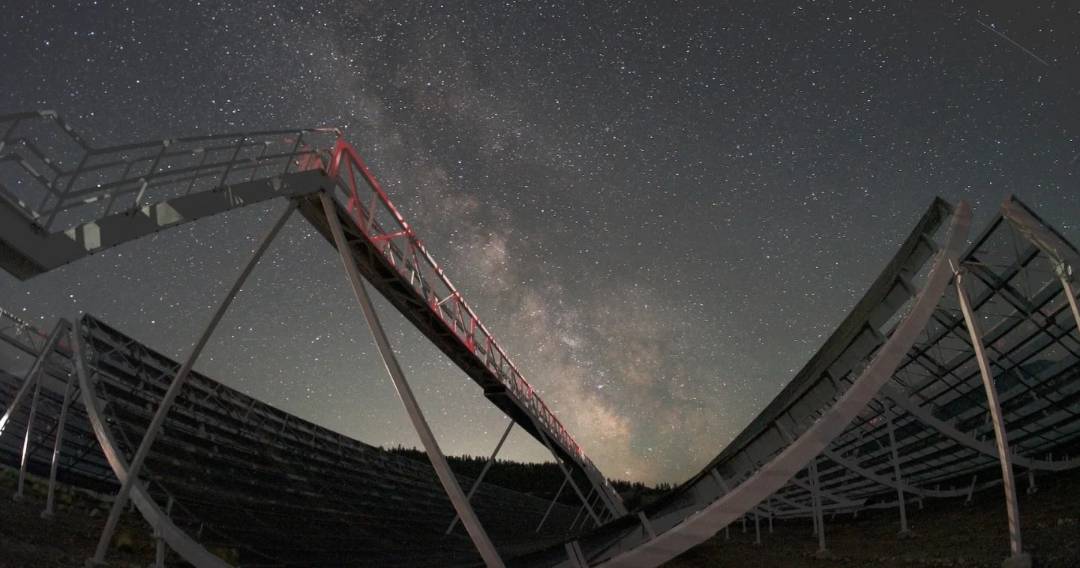
An international team of researchers has found a promising new way to investigate one of the universe’s biggest mysteries: dark energy, the unknown phenomenon driving the accelerated expansion of the universe. The Canadian radio telescope, CHIME, has made its first standalone detection of a faint radio glow emitted by hydrogen gas in the early universe, and by studying these signals, researchers hope to trace how the cosmos has expanded over time and determine whether our current understanding of dark energy is correct.
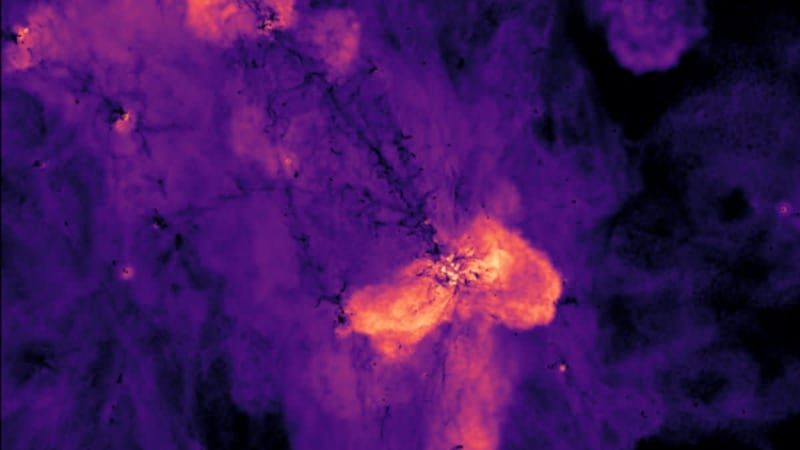
The observation by CHIME, or the Canadian Hydrogen Intensity Mapping Experiment telescope, was reported in The Astrophysical Journal and traces back to when the universe was five billion years old—around nine billion years ago. This detection was done using CHIME's own data without relying on findings from other telescopes. Moreover, astronomers' theories on dark energy have been conflicting so far, and CHIME has the potential to independently analyze these theories based on its own data, thereby helping in either proving or disproving them.

"Hydrogen is the most common element in the universe and the raw material from which stars form," said co-author Dr. Arnab Chakraborty, a postdoctoral fellow at the University of Toronto who first proposed the finding, in a statement. "Its faint radio emission acts like a cosmic tracer, revealing how matter is distributed across space." Meanwhile, the paper's co-author Dr. Mark Halpern, a professor in the UBC Department of Physics and Astronomy and CHIME's principal investigator, stated, "This is a completely new technique for probing the cosmos, delivered by an instrument that was conceived, built by Canadians. It's a bold new step in the global cosmology program and a Canadian success story."
CHIME telescope: Unlocking a less expensive route to study dark energy
Until now, CHIME’s hydrogen maps had to be validated by comparing them with galaxy surveys done by other telescopes, which explore the same research problem by applying light to spy on galaxies in fine detail. Those surveys can cost millions of dollars more, and mostly sample regions hot and dense enough to create stars. Measuring hydrogen’s collective glow directly lets CHIME survey far larger volumes of space, look further back in time, and work at a substantially lower cost. Hence, scientists say the feat could open a cheaper, faster route to solving the riddle of dark energy.
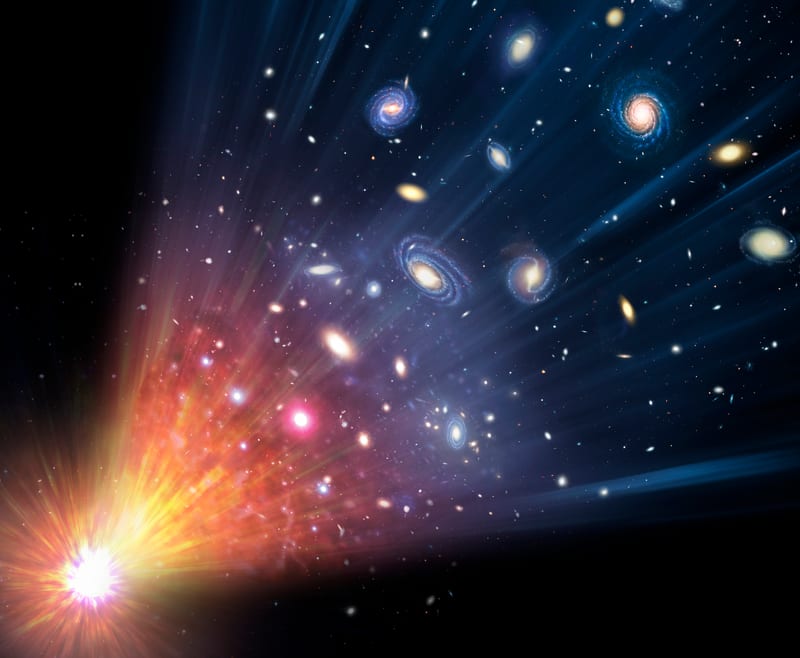
The study used only a small slice of the currently available CHIME data—findings collected from 94 nights of observations performed in 2019. Nevertheless, the detection was no overnight breakthrough. The signal had to be teased out from much stronger interference, including radio noise from the cosmos, human-made transmissions, and effects from the telescope itself. After spotting the signal, the team took more than a year to verify whether the signal dates back to a 5-billion-year-old universe. "We worked very hard to convince ourselves that this wasn't a false alarm," Chakraborty said. "After all the tests, the signal remained. That gave us confidence we were seeing real hydrogen from the distant universe."
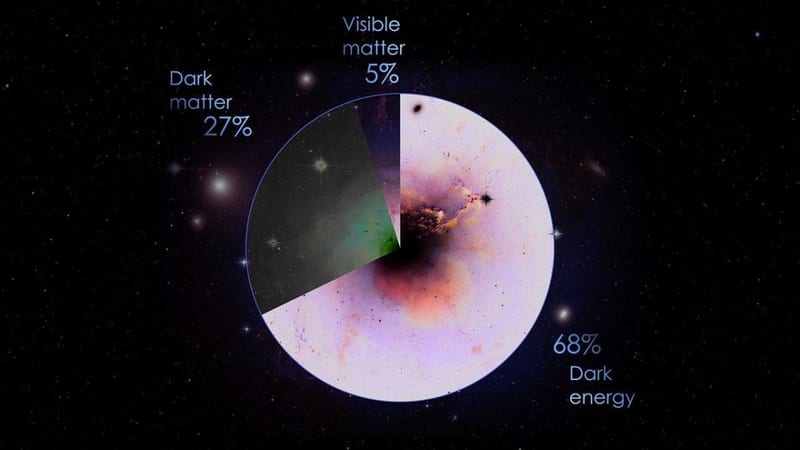
A second paper, published the same day in the same journal, revealed that only around 2% of the cosmos' hydrogen existed in neutral atomic form at the time of the emission of the signal, which fits with what other measurements have shown. These results also offer researchers a fresh technique to see how hydrogen is spread in the cosmos and to check their models of how galaxies form and change over time.
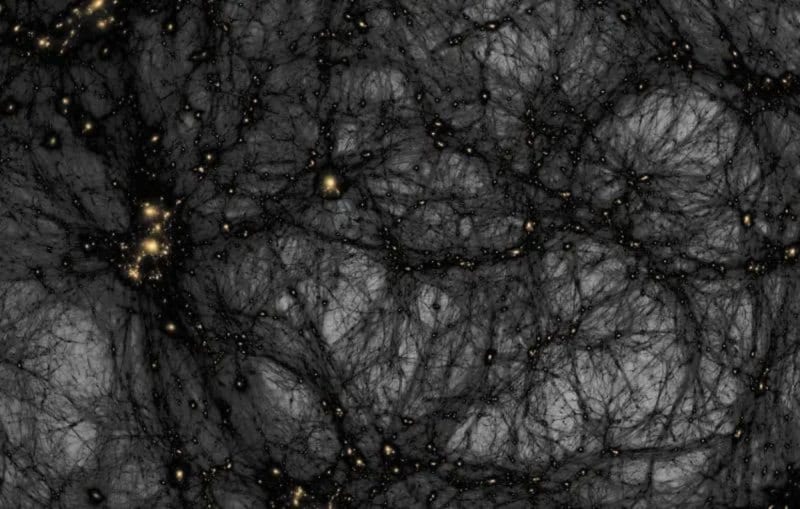
More work needs to be done
CHIME has gathered nearly seven years of data, which have not been analyzed thus far. In future research, the team hopes to push the technique back to when the universe was only three billion years old. Whether that window will settle the dark energy mystery is still unknown. But the telescope has now proven that the method works.
More on Starlust
What if dark energy is evolving? Comprehensive new dataset questions a core assumption
Scientists unveil the clearest image of the dark universe yet: 'The dream has come true'