Is the universe shaped like a doughnut? Here's what researchers say
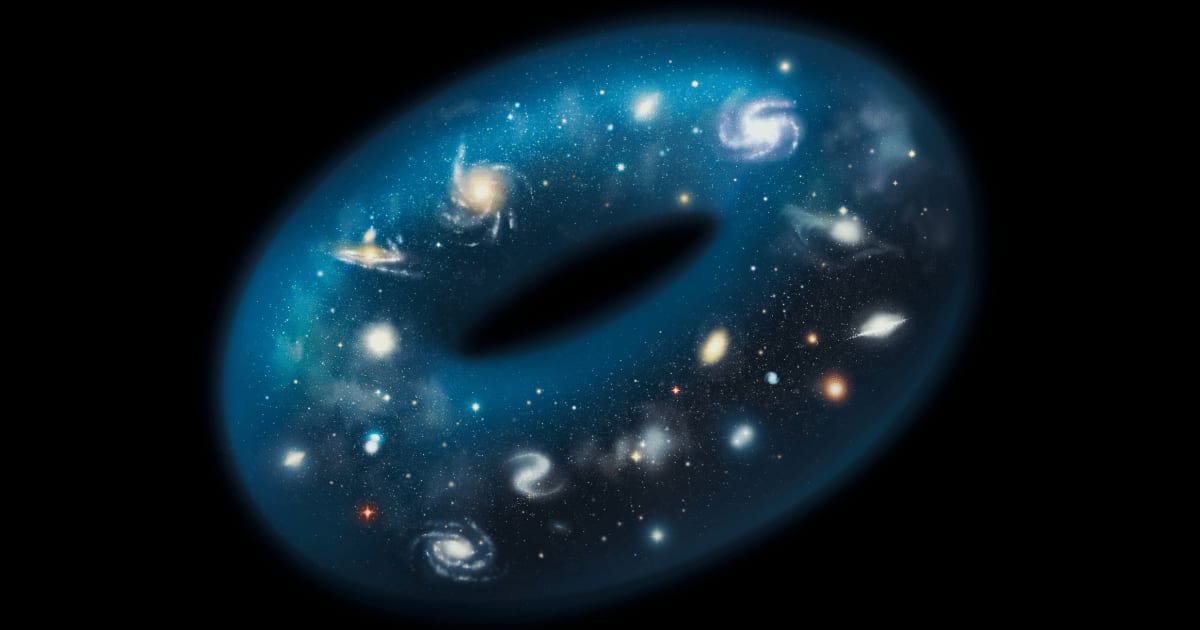
A new study into the shape of the universe offers fresh hope for scientists to be able to understand its limits. So far, there has been a lack of evidence to say that the cosmos as we know it is anything but a flat and forever-extending fabric of space and time. The idea is that even if there was a curve, our scope of vision may not be enough to make it discernible to us. However, an international collaboration of scientists has attempted to find ways to show how signs of the curvature of the universe might be detected.
![Small portion of DESI’s year-5 map where large-scale structure of the Universe, created by gravity, is visible. [Image Source: DESI Collaboration and DESI Member Institutions/DOE/KPNO/NOIRLab/NSF/AURA/R.Proctor; Image Processing: M. Zamani (NSF NOIRLab)]](https://d3hedi16gruj5j.cloudfront.net/817695/assets/8599f3b2-8d90-45a3-bb5b-14a614bcb0e2.jpg)
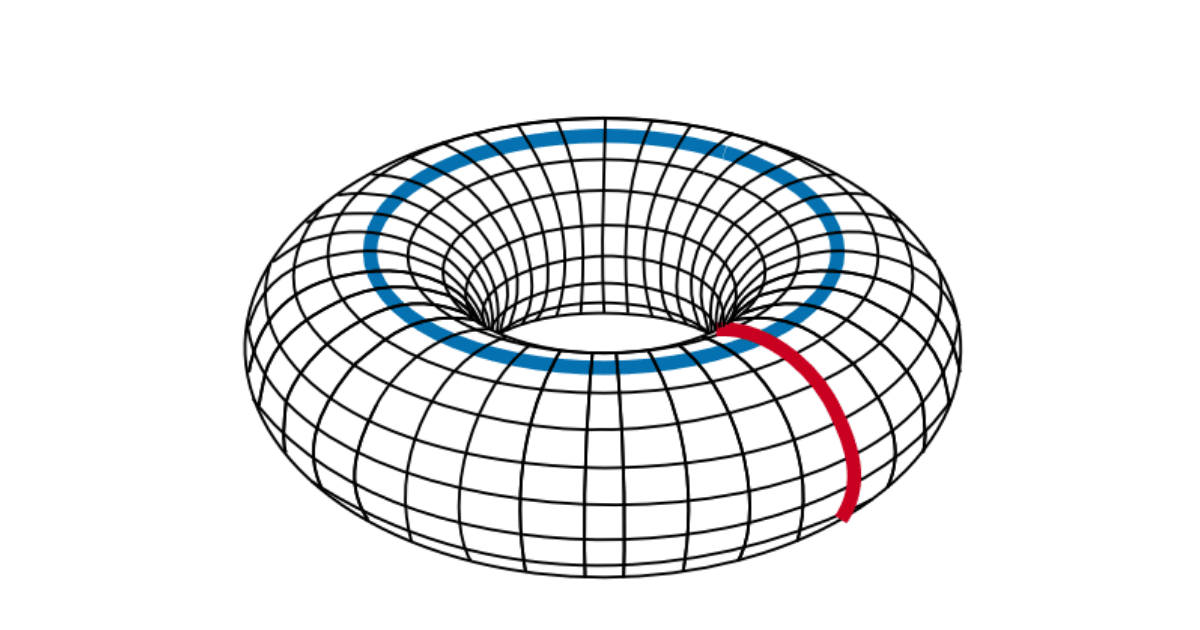
One of the key terms described in the study, which was published in Nature on September 11, 2026, is "non-trivial topology." Simply put, topology studies the properties of spaces that remain unchanged even under continuous deformations. Such deformations include pulling, twisting, crumbling, and bending but do not include tearing, gluing, or puncturing. In this context, a doughnut is said to be topologically similar to a coffee mug, since both have one hole. If one were to make a coffee mug out of stretchy clay, they could mold it into a doughnut without making another hole. The current understanding we have about the shape of our universe is described by "trivial topology." This is to say that the universe is a simple never-ending flat surface. Non-trivial topology, however, challenges this notion by suggesting that the universe may not be infinite but be multiply connected, looping in on itself like a doughnut. "The universe may be like an old-time video game, where leaving the right side of the screen would see you popping in from the left, so you can get back where you started by a straight-line path," Professor Glenn D. Starkman from Case Western Reserve University in Ohio, who's a co-author on the study, told Phys.org in 2024. "This is called being multiply connected."
Researchers look for signs of non-trivial topology in the Cosmic Microwave Background (CMB)—the primeval radiation emitted shortly after the Big Bang—and how matter is distributed across the cosmos in three dimensions. However, there has been little luck in finding undeniable proof of this view of the universe. The part of the universe that we can see is 93 billion light years across. Within this vast expanse, the researchers noted signs of non-trivial topology have not been observed despite efforts made by spacecraft like WMAP (Wilkinson Microwave Anisotropy Probe) by NASA and Planck by the European Space. As the paper describes, their "sophisticated searches for these signatures" of a closed universe included looking for matched circle pairs, which are intersections where light from the early universe crosses itself, but no such circles have been found.
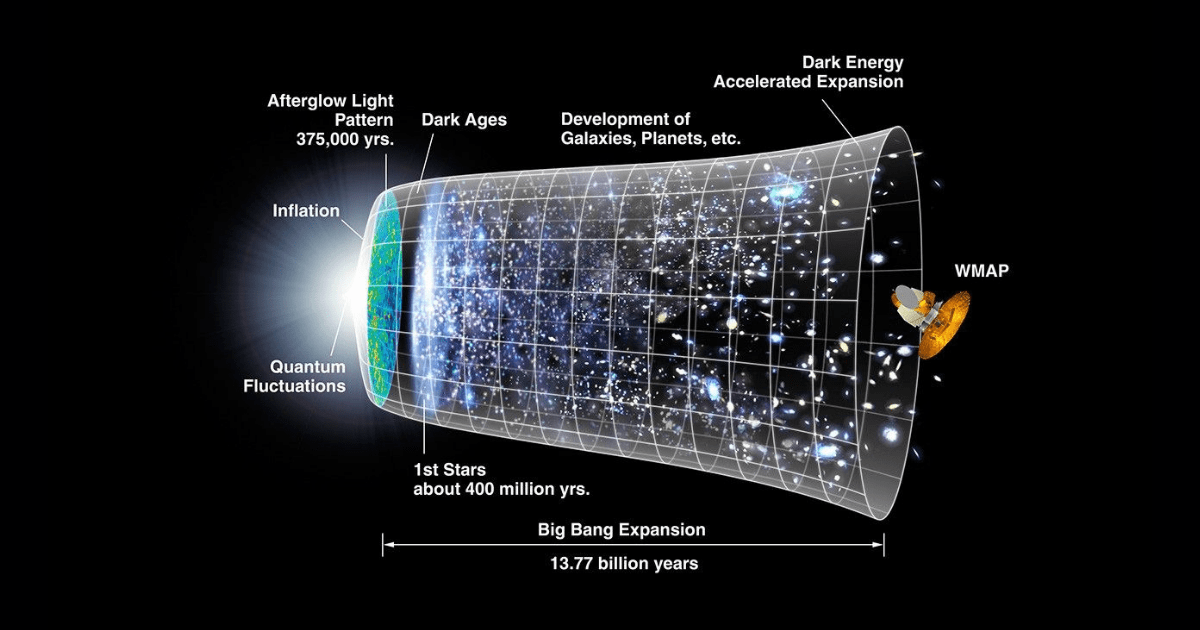
Building on the existing research, the recent study offers ways to analyze the universe in another way. It suggests that the signatures of a non-trivial, or closed-loop, topology may be detected even if they extend beyond the observable universe. This can be done with the aid of what is known as polarization data, as well as by looking for what are known as "topology-induced correlations at all accessible redshifts." Redshift is the phenomenon observed where distant galaxies appear to be redder due to their acceleration away from us in an expanding universe. This will be made possible by planned CMB experiments like LiteBIRD by the Japan Aerospace Exploration Agency (JAXA) and Taurus (a balloon-mounted telescope) by NASA, which are planned in the near future. “Whether cosmic topology is observable remains uncertain, but current and future data offer an unprecedented opportunity to probe the global structure of the Universe," the paper reads.
More on Starlust
Astronomers release the biggest 2D map of the universe, featuring nearly 4 billion celestial objects
Hubble sees starlight from a galaxy just 1.4 billion years after the Big Bang—what did it reveal?