What's hiding out there?: Biggest space mysteries NASA still can't explain
The mystery continues
Our universe is far larger than we can truly comprehend, and it holds many secrets. NASA and scientists around the world have conducted countless research and studies to better understand our place in the universe. While we've managed to explain some of it, much of it remains a mystery.
Along the way, we've also discovered strange objects and unexplained phenomena that continue to defy our understanding, even decades later. To this day, NASA has yet to find definitive answers. Here's a look at some of the long-standing mysteries the space agency is still struggling to explain.
Where did the Moon's water come from?
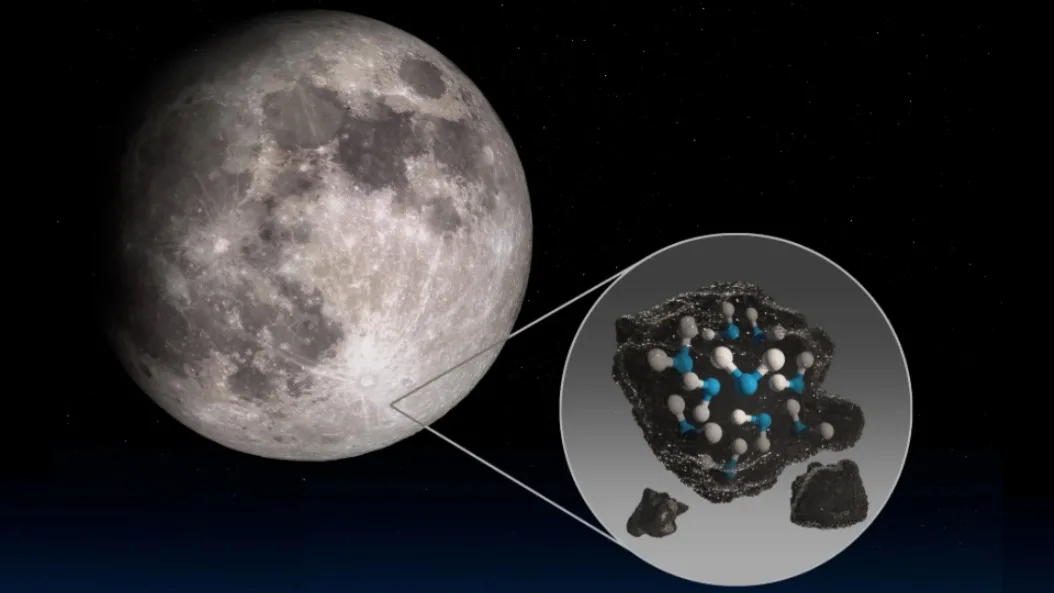
In 2020, NASA confirmed the presence of water on the sunlit surface of the Moon for the very first time. This discovery was made by the Stratospheric Observatory for Infrared Astronomy (SOFIA). Even the rock samples that were brought back to Earth by Apollo astronauts were later found to contain water. Since then, scientists have been trying to figure out exactly where it came from.
There are many theories regarding this. Some say that it was "seeded" by meteorites and asteroids, while other theories say that hydrogen was formed by the solar wind. However, NASA still doesn't have an answer. “Researchers have confirmed that water exists both in the sunlit and shadowed surfaces of the Moon, yet many questions remain. Lunar scientists continue to investigate the origins of water and its behavior,” NASA shared on its official website.
Where is Planet Nine, or does it even exist?
Far beyond Neptune, scientists believe there could be a massive, hidden planet in the outer reaches of our solar system. The mysterious object, called Planet Nine (X), has never actually been seen. Instead, astronomers noticed something unusual that hints at its existence. The orbits of more than a dozen icy objects appear to be bending in ways that suggest they're being pulled by the gravity of an unseen world.
If it exists, Planet Nine could be five to 10 times more massive than Earth and take as long as 10,000 years to complete a single orbit around the Sun. But despite years of searching, scientists still haven't found any direct evidence of the planet. As per NASA, “Planet X (Planet Nine) has not yet been discovered, and there is debate in the scientific community about whether it exists”
What is ʻOumuamua? An alien probe or something else?
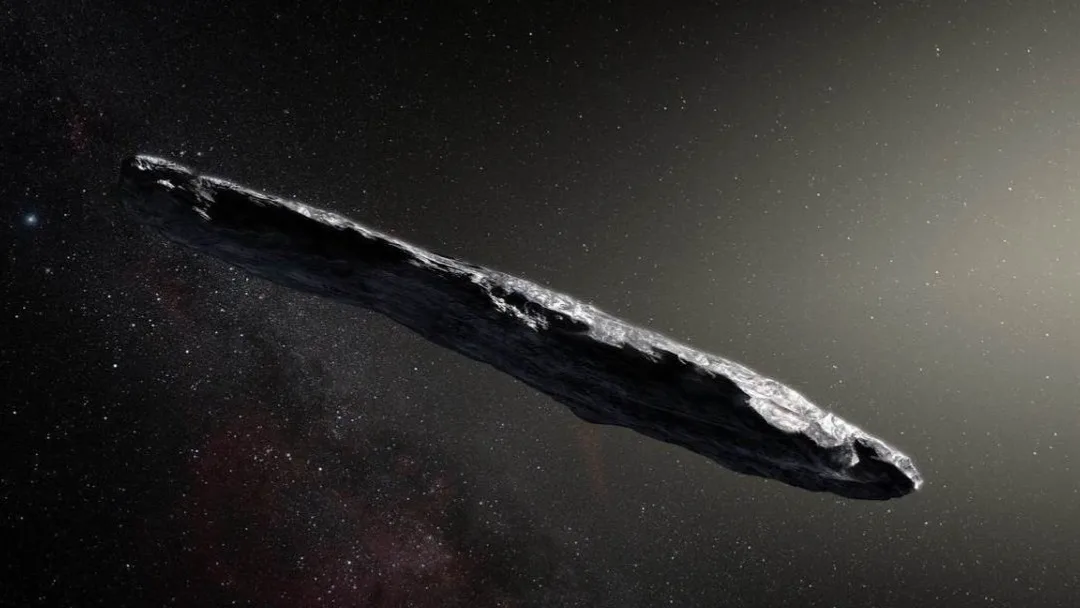
Every so often, we come across something so strange and unusual that it challenges what we know about space. ‘Oumuamua (Hawaiian for "a messenger from afar arriving first") is one such object that has puzzled NASA for years. It is the first known interstellar visitor to pass through our solar system, and some have even suggested it could be an alien probe. It was first discovered on October 19, 2017.
But where did it come from? “It’s a strange visitor from a faraway star system, shaped like nothing we’ve ever seen in our own solar system neighborhood,” said Paul Chodas, manager of the Center for Near-Earth Object Studies at NASA’s Jet Propulsion Laboratory. It is believed to have spent hundreds of millions of years traveling through space, but we still don't know its actual origin story.
What exactly is Dark Matter?
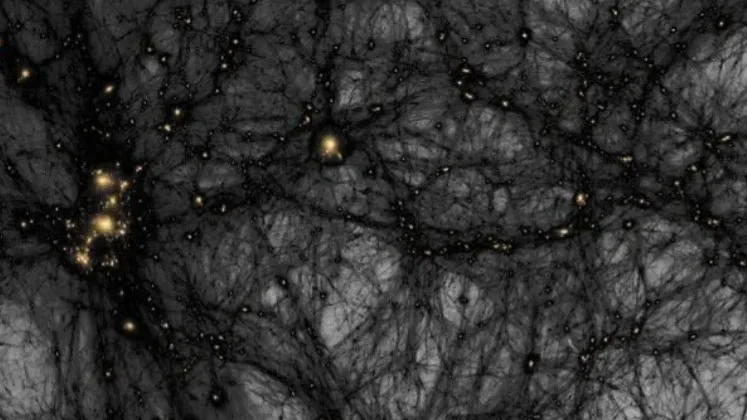
Among the many things that make up our universe, the majority of its matter is dark matter. It is said to account for 85% of all the matter in the universe, and even then, it remains one of the “biggest questions in science.” Dark matter doesn’t interact with light or ordinary matter, yet everything behaves as if it’s there.
Scientists have been trying to understand what dark matter is for almost 100 years. There are many theories about what it is made of. Some attribute it to primordial black holes, while others suggest it could be made of exotic particles such as sterile neutrinos. However, as NASA explains, “Scientists have been searching for these candidates but have not yet found evidence which would confirm any candidate. New candidates may also continue to emerge.”
There's a hole in the ISS, but where did it come from?
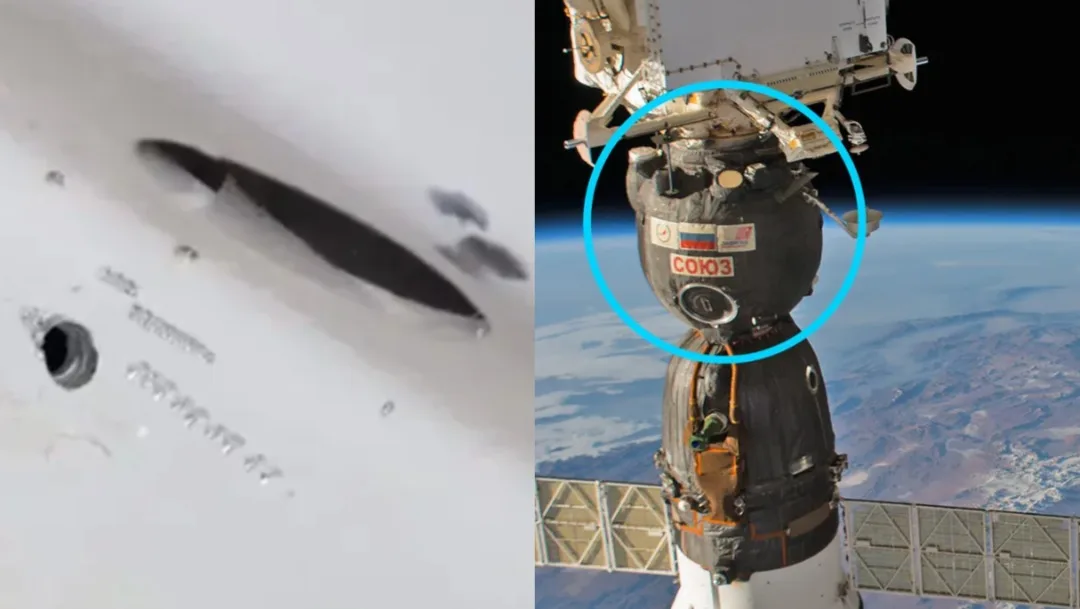
On August 30, 2018, flight controllers on Earth noticed something unexpected happening aboard the ISS (International Space Station). There was a dip in air pressure, and when astronauts searched for where it was coming from, they found a hole in a section of the Russian-made Soyuz space capsule. NASA said the crew was “never in any danger.” But the question still remains: where did that hole come from?
Dmitry Rogozin, the head of the Russian state space agency Roscosmos, first shared that the leak was caused by a micrometeorite. But an image shared by NASA of the hole showed drill marks around the spot. Soon after, NASA deleted the picture. While Rogozin suggested that someone might have deliberately sabotaged the ISS, NASA has yet to share a reason for the leak.