7 incredible Moon treasures brought back to Earth by Apollo astronauts
Exploring the Moon through Apollo's lunar treasures
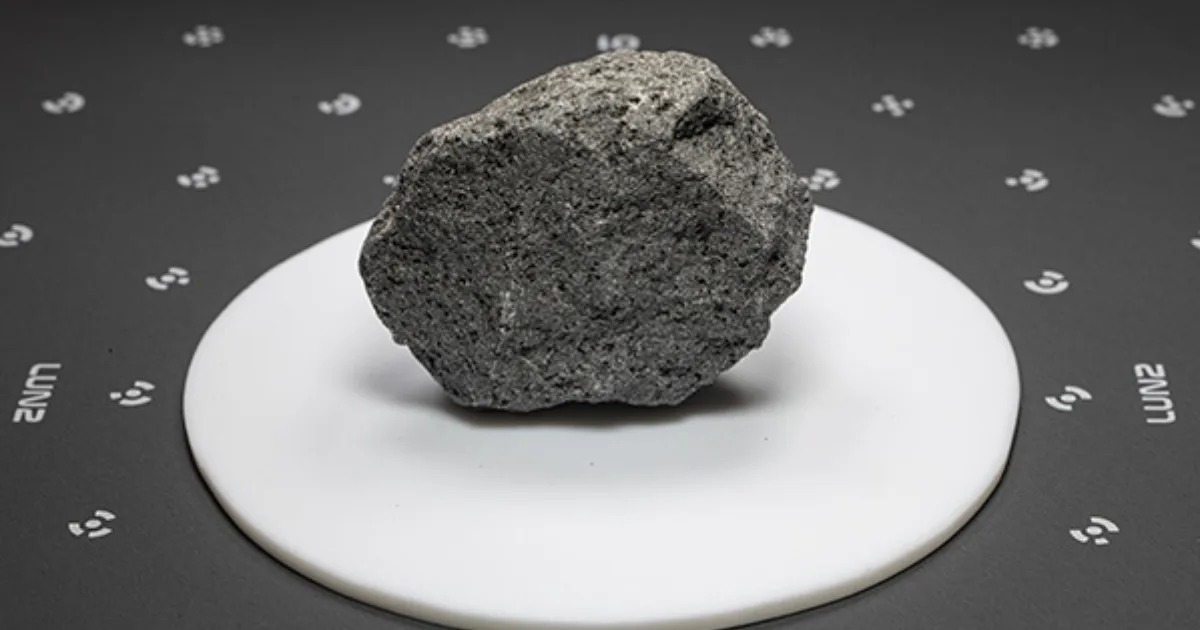
Although the Moon lacks the potential to host life, the rocks and dust on its surface hold enough data to help scientists study and understand cosmic history. On Earth, wind, water, and volcanoes constantly reshape the landscape, but as the Moon lacks wind, rain, rivers, oceans, or active volcanoes, it has managed to preserve its ancient past.
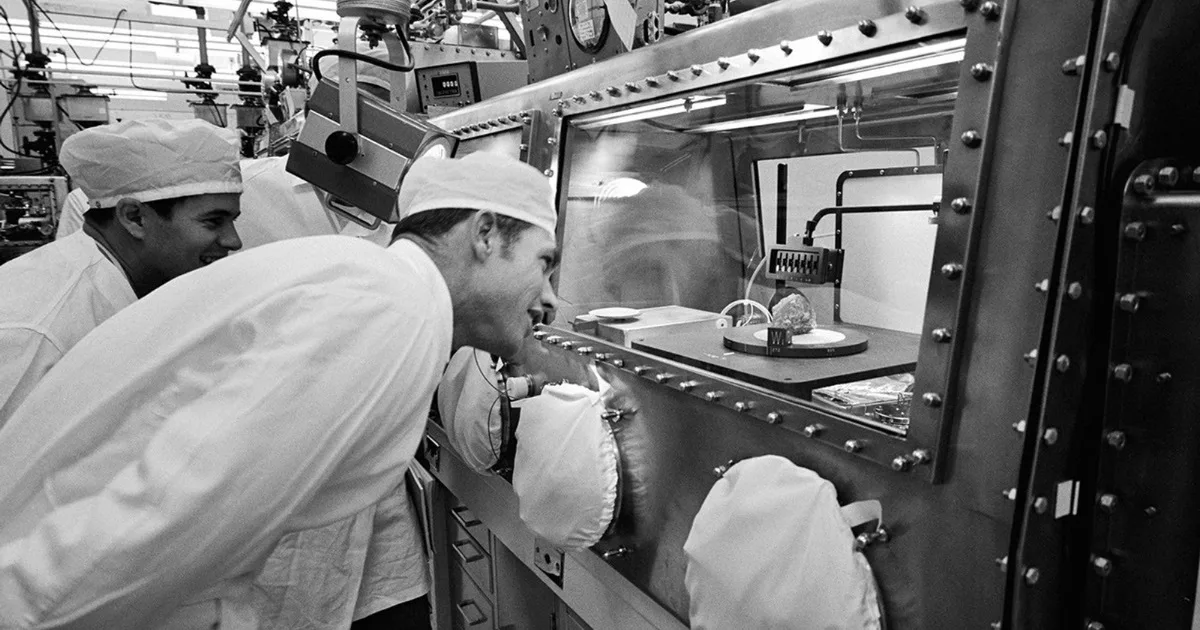
During the Apollo missions, astronauts brought back various samples from the lunar surface. 800 pounds of lunar rocks, soil, and other samples were brought back, which forever changed what scientists knew about the Moon. Let's take a look at a few of the Moon treasures brought back from the lunar surface by astronauts.
High-K Ilmenite Basalt Lunar Sample 10017 (Apollo 11)
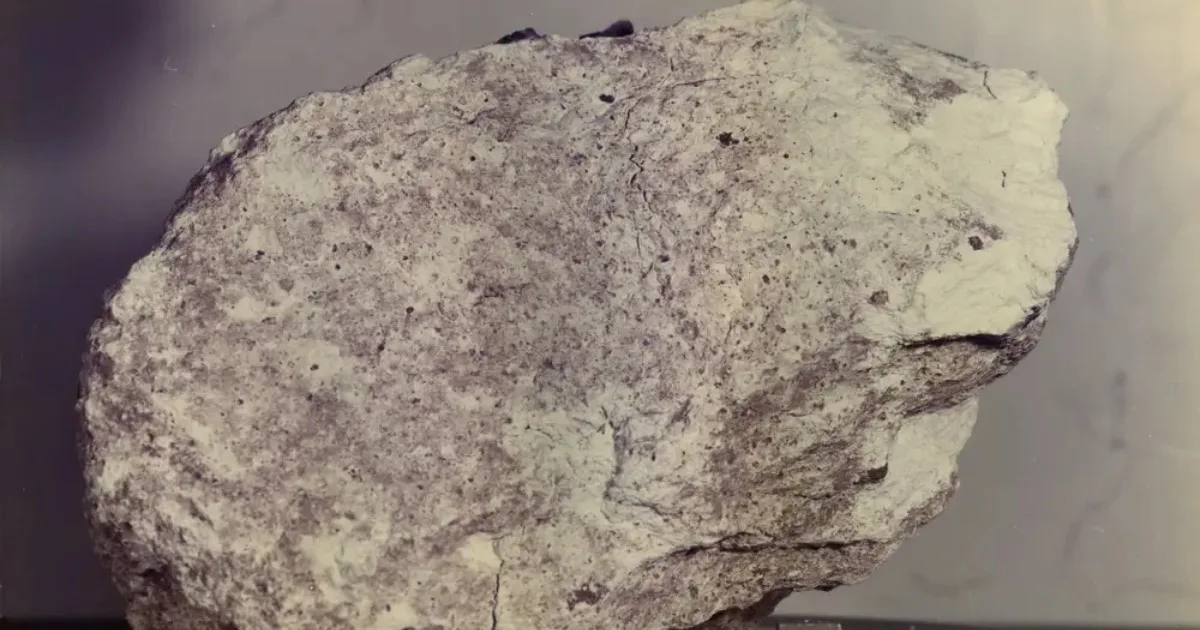
During Apollo 11, the crew (Commander Neil Armstrong, Command Module Pilot Michael Collins, and Lunar Module Pilot Buzz Aldrin) brought home Sample 10017, which was the largest rock brought by Apollo 11 from the Moon. The rock has been classified as the High-Ti, High-K Ilmenite Basalt. It is a type of volcanic rock that was formed from molten magma deep beneath the lunar surface. After studying the rock, scientists concluded that the magma that created this might have come from about 125 to 250 miles (200 to 400 kilometers).
10017 contains ilmenite crystals in high concentration, and ilmenite contains titanium and small amounts of potassium-rich glass. Observations further revealed that the sample was formed around 3.6 billion years ago. The rock has tiny holes (vesicles) inside it, which reveal that gas was trapped in the magma as it cooled and hardened.
Genesis Rock (Apollo 15)
“Guess what we just found! I think we found what we came for," said Apollo 15 mission commander David R. Scott after discovering the Genesis Rock (sample 15415). The Genesis rock was found on August 1, 1971. It is made of anorthosite, a rock that formed the Moon's original crust.
The Apollo 15 crew collected Genesis from the Hadley-Apennines region. Scientists believed the Hadley-Apennines region contained some of the Moon's oldest rocks. Although it is not the oldest Moon rock ever brought back to Earth, researchers at NASA's Johnson Space Center estimated that it is about 4 billion years old.
Anorthosite (Apollo 16)
When the Moon first formed, it was covered fully by molten magma. With the passage of time, the magma cooled, the heavier minerals settled deep below, and the lighter ones floated to the surface and formed the Moon's crust. Since then, the lunar surface has been struck by countless meteorites, and this has reshaped the lunar crust. The impact has given rise to the rugged highlands, which mainly contain anorthosite (a white calcium-rich rock).
A sample of the Anorthosite rock was collected by the Apollo 16 crew (Commander John W. Young, Command Module Pilot Thomas K. Mattingly II, and Lunar Module Pilot Charles M. Duke Jr.) in April 1972. After the sample was brought to Earth, studies show the rock has a crystallization age of 4.19 billion years.
Breccia (Apollo Missions)
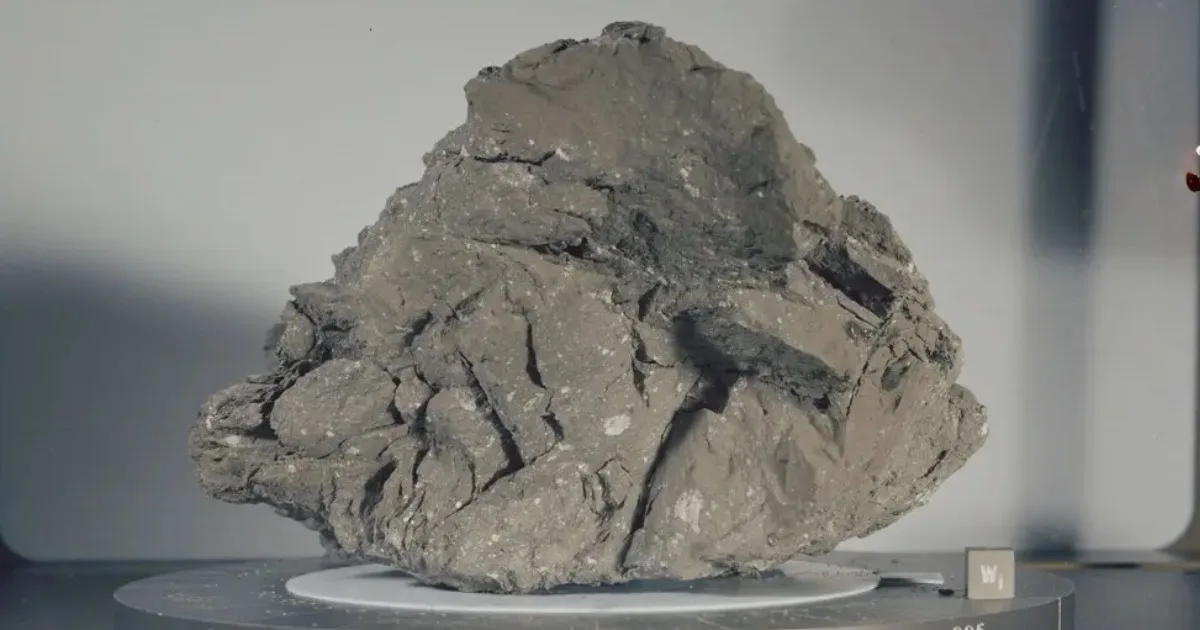
The Breccia were collected throughout the Apollo missions. But it was Neil Armstrong and Buzz Aldrin who first brought back Breccia samples to Earth on Apollo 11. After researching, scientists found that the fragmented rocks on the Moon that are caused by significant meteoroid impacts are known as Lunar Breccias.
As the Moon’s thin exosphere cannot slow down the space rocks, a lot of crystalline rocks on the lunar surface undergo constant bombardment by meteors. This results in the rocks getting crushed while exhibiting a property called granulation. Such a phenomenon makes it difficult for scientists to properly fathom the actual textures of the lunar crystalline rocks.
Basalt (Apollo 15)
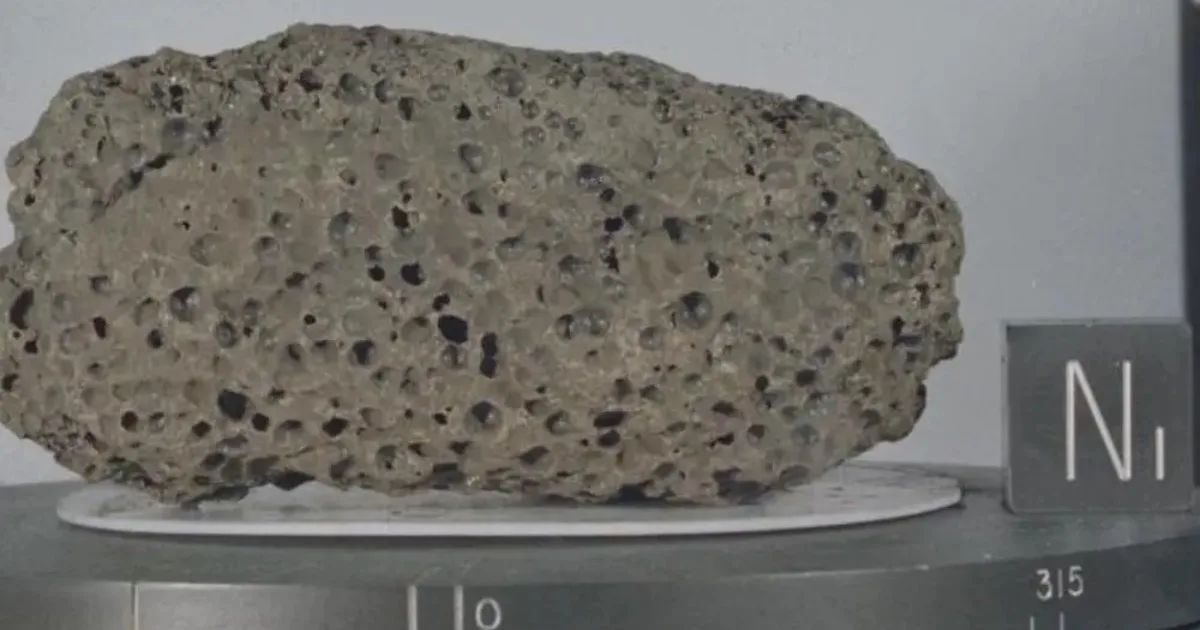
Basalt is quite common on the Moon. These are lavas that were formed from an eruption more than 3 billion years ago. Back in 1971, the Apollo 15 astronauts collected basalt samples from the Moon.
The image shows a basalt sample shaped by ancient volcanic activity, which was recovered from the Hadley Rille rim. As it hardened, the trapped gas bubbles left behind small cavities. The basalt’s gray appearance can be attributed to the presence of dark minerals in the Basalt.
Orange Soil (Apollo 17)
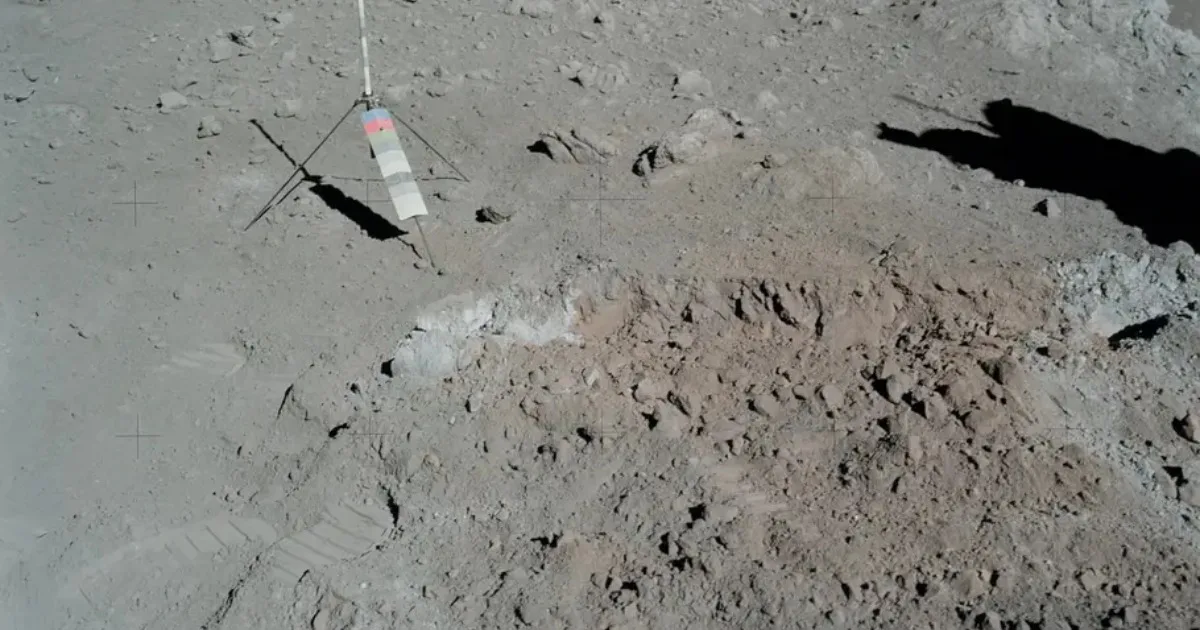
In the missions prior to Apollo 17, most astronauts noticed dark halos on the lunar surface. However, when geologist Harrison Schmitt visited the Moon during the Apollo 17 mission, he discovered orange soil. This unusual discovery was made on the Shorty crater’s rim, in the Valley of Taurus-Littrow.
Initially, Schmitt thought it to be a young volcanic deposit. But detailed studies showed that the soil was ancient. Rather, the dark material was a product of regional volcanic eruptions from billions of years ago.
Tube of Moon dust (Apollo 17)
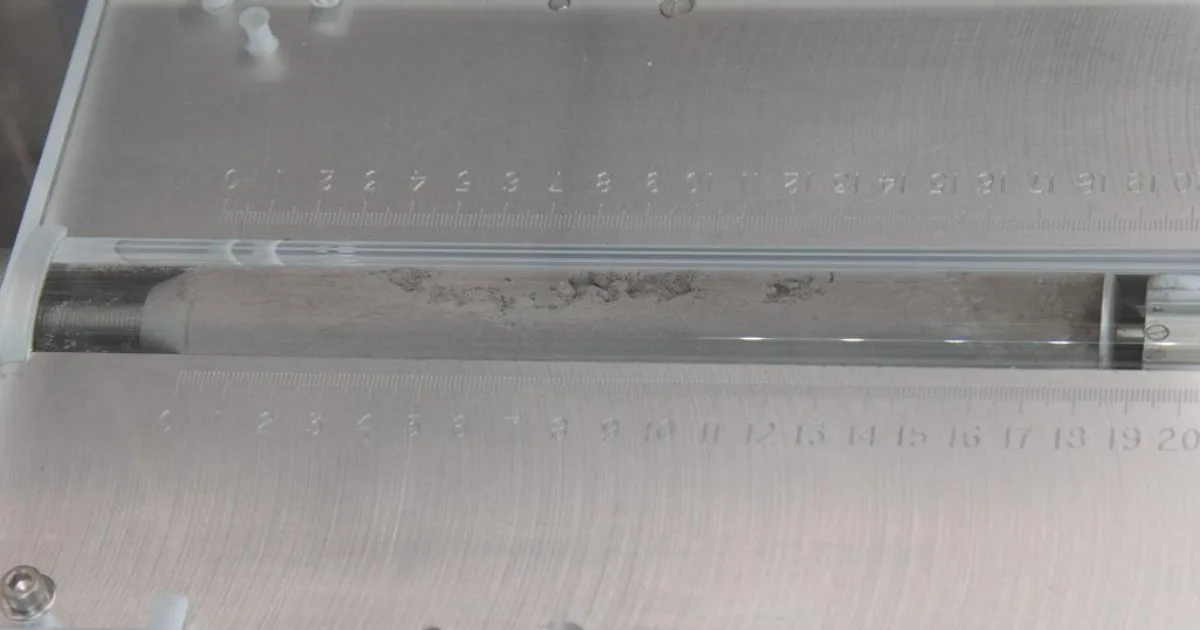
Back in December 1972, the Apollo 17 astronauts collected lunar regolith samples. It was not until 47 years later that NASA decided to open sample 73002. This was recovered by astronauts Jack Schmitt and Gene Cernan by hammering a two-foot-long tube into a landslide deposit at Lara Crater.
In 2019, NASA scientists tested the samples for advanced sampling technologies. “We have an opportunity to address some really important questions about the Moon by learning from what has been recorded and preserved in the regolith of these Apollo samples,” said NASA Astromaterials Curator Francis McCubbin. “We curated these samples for the long term, so that scientists 50 years in the future could analyze them. Through Artemis, we hope to offer the same possibilities for a new generation of scientists.”