✕
Astronomy Constellation Deep Sky Objects Skywatching Instruments Spaceflight Videos
Moon Phases
Home / Galleries

Scientists don’t know how Mars got its two moons, and a new probe is on its way to find out

Deep Sky Objects Oct 29, 2026
BY ANKITA GARKOTI
Phobos's transit of the Sun captured by Perseverance rover's Mastcam-Z camera on February 8, 2024. (Representative Cover Image Source: NASA/JPL-Caltech/ASU/MSSS/SSI)
Scientists still can’t say how Phobos and Deimos ended up around Mars, and JAXA’s new mission is meant to help solve that mystery.
5 Photos
1 / 5
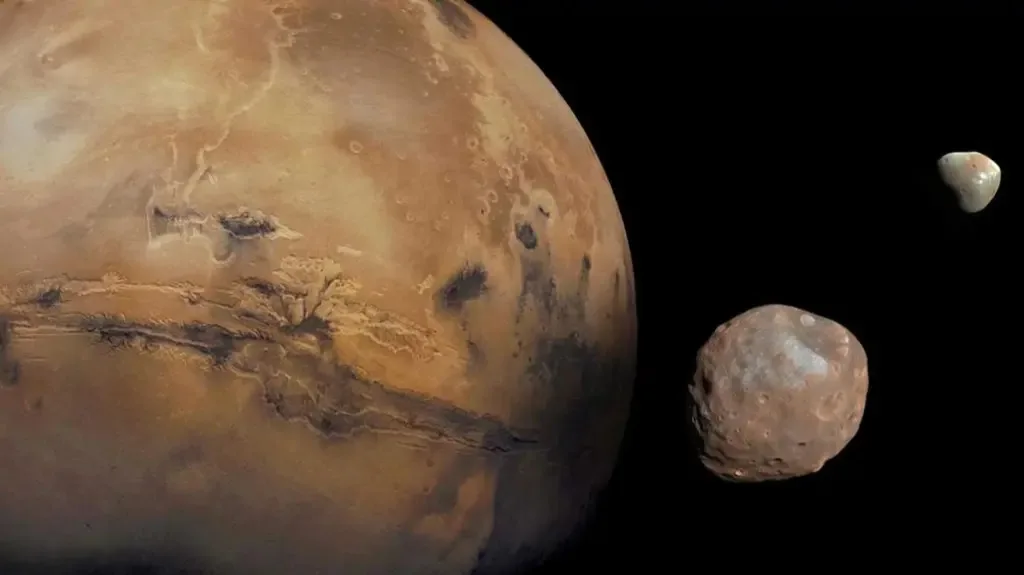
How did Mars get its two moons?
IMAGE SOURCE: JAXA

How did Mars get its two moons?

Mars has two small moons, Phobos and Deimos, with Phobos being the larger of the two. For a long time, scientists have argued about how they ended up circling the Red Planet. This is because there is a lack of data that explains their origins. And despite their potential importance, neither moon has ever been fully investigated.

Now, Japan’s space agency, JAXA, has launched a mission to study these moons and finally solve the mystery of how they formed. Here’s what we know so far about Mars’s moons and what lies ahead.

2 / 5
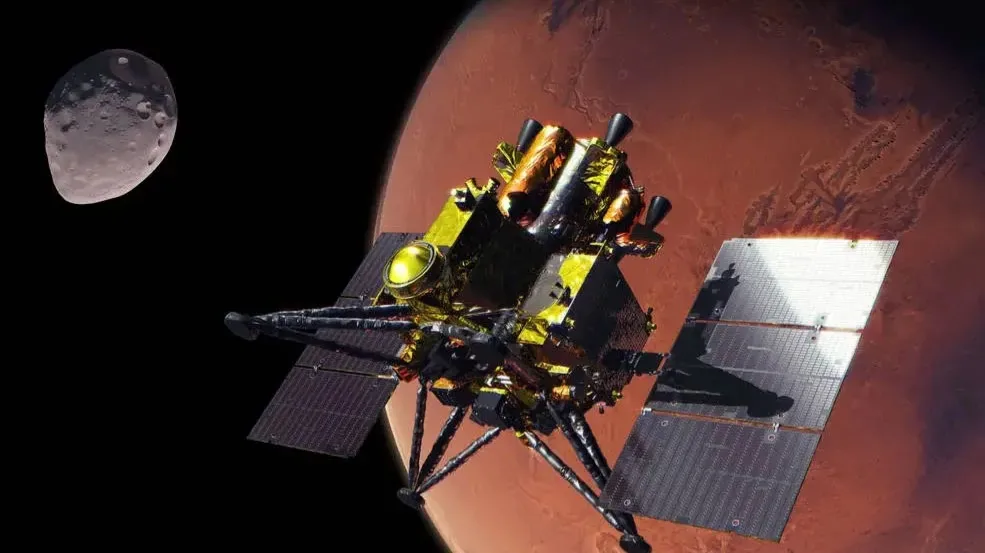
Japan launches probe to study Phobos and Deimos
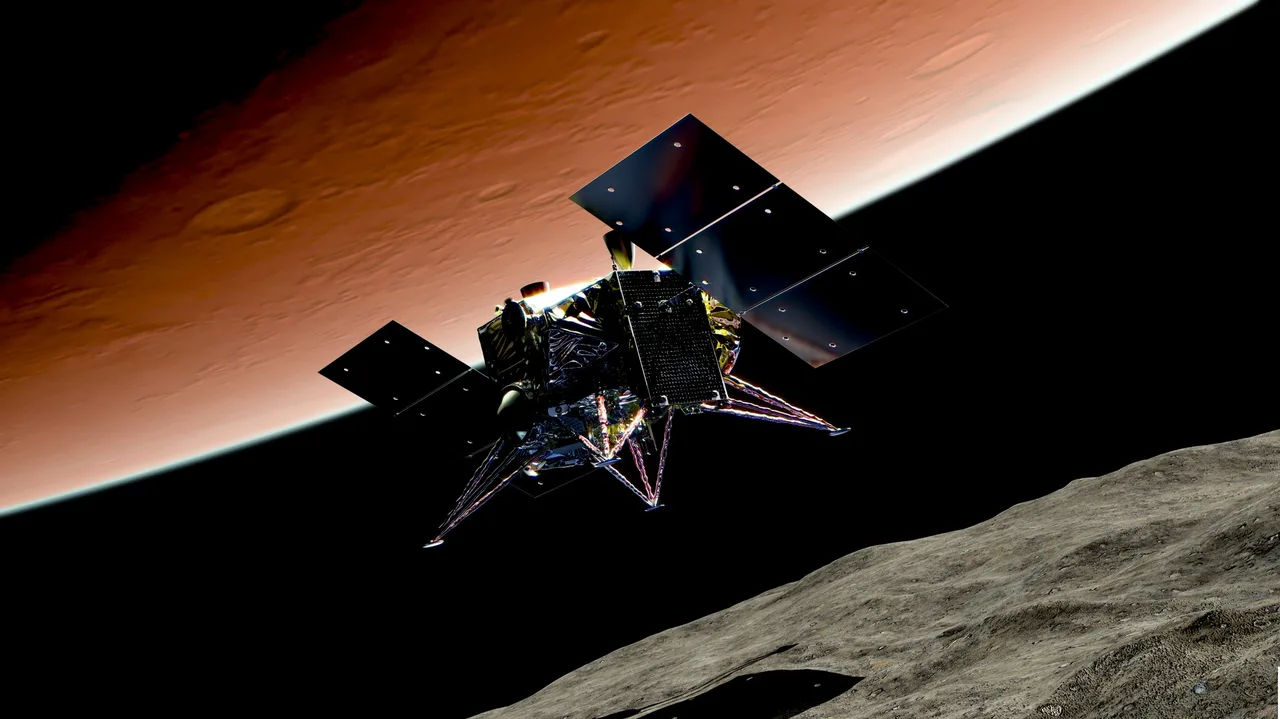
IMAGE SOURCE: NASA

Japan launches probe to study Phobos and Deimos

Japan’s space agency (JAXA) has recently launched its Martian Moons eXploration (MMX) probe from the Tanegashima Space Center on October 20, 2026. NASA, the European Space Agency, France’s National Center for Space Studies, the German Aerospace Center and the Australian Space Agency have all contributed to this project. 

Commenting on the significance of the moons, project manager Yasuhiro Kawakatsu explained, “They are known as the most important unclimbed mountains in the solar system.”

3 / 5
The two theories behind Mars’ moons
IMAGE SOURCE: ESA

The two theories behind Mars’ moons

As of now, there are two leading theories. One says that something huge might have hit Mars and flung its material into space, which then clumped together into the moons. That is also roughly how Earth’s moon is thought to have formed. 

But this theory doesn’t explain why the debris would form two small moons instead of one big one. The other idea says the moons were asteroids that Mars captured into its orbit millions of years ago.

4 / 5
The answer could say a lot about early Mars and Earth
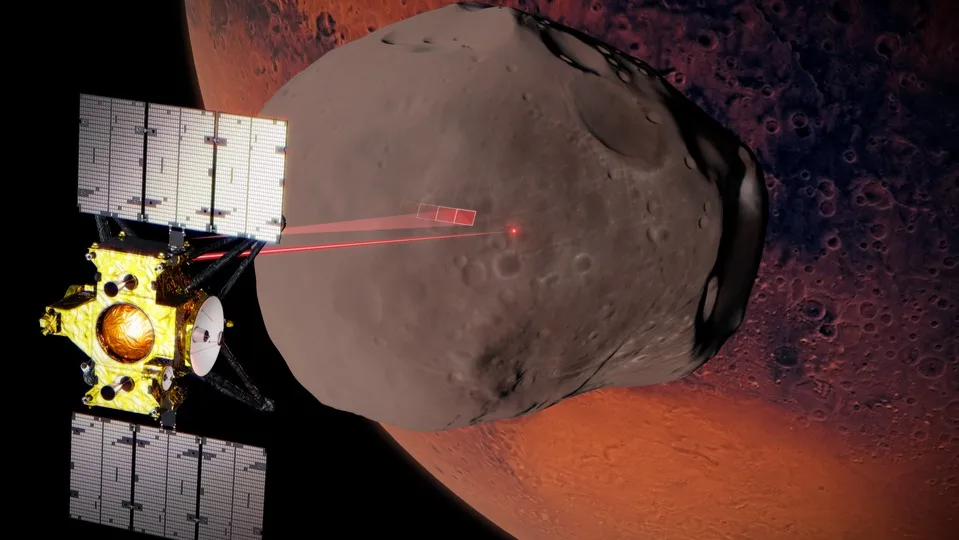
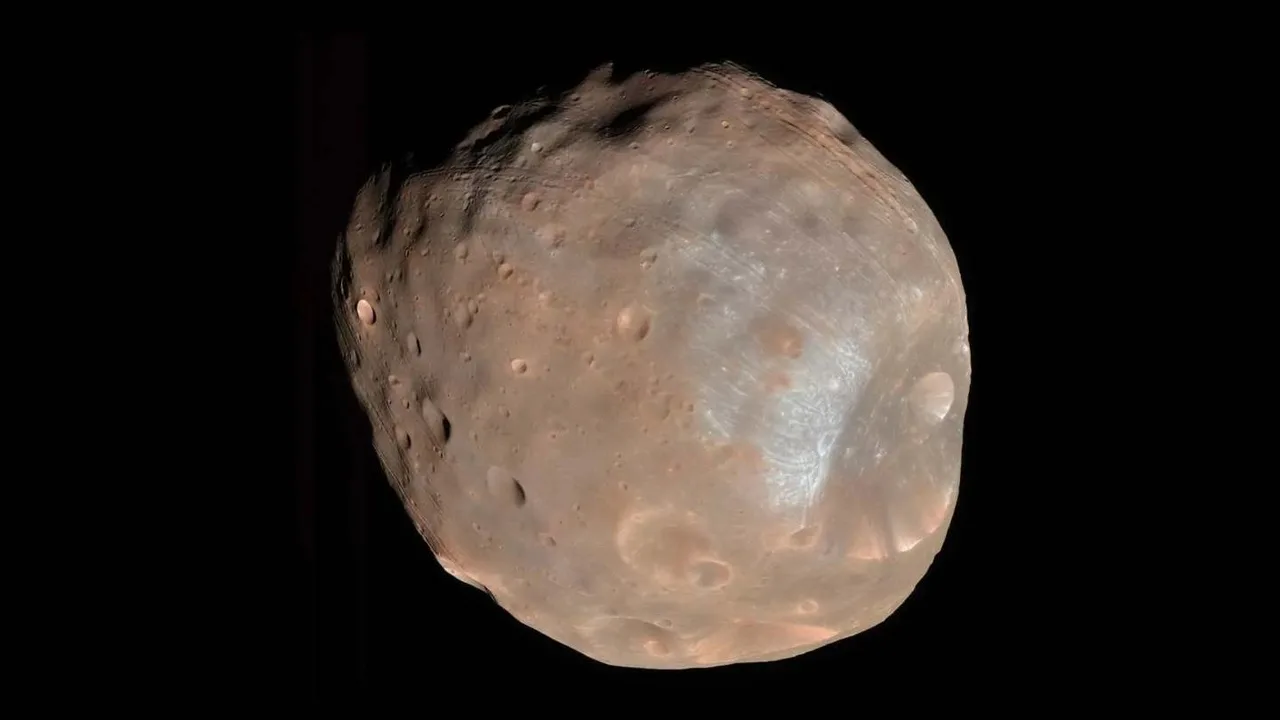
IMAGE SOURCE: NASA/JPL-CALTECH/UNIVERSITY OF ARIZONA)

The answer could say a lot about early Mars and Earth

Each theory points to a different story. If Phobos really came from Martian debris, it could hold material from Mars’ earlier days, when the planet may have been better suited to hosting life than it is now. 

And if it came from the outer solar system, it may have carried water-bearing minerals and organic compounds. Those could have helped life begin on Earth.

5 / 5
The samples may include a bit of Mars itself
IMAGE SOURCE: ESA

The samples may include a bit of Mars itself

As per JAXA, the MMX spacecraft is expected to reach the Mars system in 2027. It will then collect its sample no earlier than 2028 and deliver it to Earth in 2031. Phobos is the closest moon to Mars, so it has likely been sprayed with debris from asteroid impacts on the planet. 

Scientist Kiyoshi Kuramoto estimates only about 1 percent of the sample may be Martian, but he is hopeful: “I do think there’s a possibility that chemical traces of biological activity might be contained within that sand sample.”

MORE GALLERIES

‘Most UFO sightings can be explained’: SETI scientist Seth Shostak offers a scientific perspective on alien claims 5

‘Most UFO sightings can be explained’: SETI scientist Seth Shostak offers a scientific perspective on alien claims

Nov 18, 2026
‘They love to think the government is keeping it all secret’: SETI scientist Seth Shostak on America’s alien obsession 5

‘They love to think the government is keeping it all secret’: SETI scientist Seth Shostak on America’s alien obsession

Nov 16, 2026
‘Why are the aliens so interested in the United States?’ SETI scientist Seth Shostak questions UFO sightings 5

‘Why are the aliens so interested in the United States?’ SETI scientist Seth Shostak questions UFO sightings

Nov 14, 2026
Could microbes live beneath Mars’ surface? A new study raises the question 5

Could microbes live beneath Mars’ surface? A new study raises the question

Nov 12, 2026
How Soviet cosmonaut Alexei Leonov almost became the first human on the Moon 5

How Soviet cosmonaut Alexei Leonov almost became the first human on the Moon

Nov 10, 2026
Could a black hole actually split in two? Physicists say it’s not impossible 5

Could a black hole actually split in two? Physicists say it’s not impossible

Nov 10, 2026
The Soviet Union built its own space shuttle to rival NASA, only for it to end in tragedy 5

The Soviet Union built its own space shuttle to rival NASA, only for it to end in tragedy

Nov 9, 2026
Pilots report a mysterious pill-shaped UFO at 41,000 feet over Ohio, and the case remains unexplained 5

Pilots report a mysterious pill-shaped UFO at 41,000 feet over Ohio, and the case remains unexplained

Nov 7, 2026
President Trump honored with gold plaque at MAX POWER Expo by NASA chief and Artemis crew: See images 5

President Trump honored with gold plaque at MAX POWER Expo by NASA chief and Artemis crew: See images

Nov 7, 2026
Are we alone in the universe? 5 discoveries that made alien life seem possible 6

Are we alone in the universe? 5 discoveries that made alien life seem possible

Nov 6, 2026
How a 1947 UFO sighting near Mt. Rainier popularized the term “flying saucer” 5

How a 1947 UFO sighting near Mt. Rainier popularized the term “flying saucer”

Nov 5, 2026
NASA-funded study reveals a Sahara meteorite is one of the oldest pieces of Mars ever found 5

NASA-funded study reveals a Sahara meteorite is one of the oldest pieces of Mars ever found

Nov 5, 2026
What does the Moon smell like? Here’s how Apollo astronauts described it 5

What does the Moon smell like? Here’s how Apollo astronauts described it

Nov 5, 2026
This mysterious radio source has baffled astronomers for more than 20 years: Here’s why 5

This mysterious radio source has baffled astronomers for more than 20 years: Here’s why

Nov 4, 2026
Goodbye, 3I/ATLAS: What scientists learned from this mysterious interstellar comet’s flyby 6

Goodbye, 3I/ATLAS: What scientists learned from this mysterious interstellar comet’s flyby

Nov 2, 2026
Does dark energy really exist? Some physicists are betting it doesn’t 5

Does dark energy really exist? Some physicists are betting it doesn’t

Nov 1, 2026
NASA’s Webb telescope reveals thousands of galaxies in its first deep field image 5

NASA’s Webb telescope reveals thousands of galaxies in its first deep field image

Oct 30, 2026
Project Sign: The U.S. Air Force's first UFO investigation that left 20 percent of cases a mystery 5

Project Sign: The U.S. Air Force's first UFO investigation that left 20 percent of cases a mystery

Oct 30, 2026
Hundreds reported UFO sightings in 1951, and the mystery remains unsolved 5

Hundreds reported UFO sightings in 1951, and the mystery remains unsolved

Oct 29, 2026
Starlust.org is part of the Scale Content Inc. publishing group.

Google Source

About Us
Editorial Guidelines
Privacy Policy
Cookie Policy
Terms of Use
Contact Us
Link to Facebook
Link to Instagram

© Scale Content Inc. 1178 Broadway, 3rd Floor #3469, New York, NY 10001, United States