Could a black hole actually split in two? Physicists say it’s not impossible
Can black holes break apart?
Black holes are known to be some of the most mysterious objects in our universe. This is because we don't know much about them. What we know is that when two black holes collide, they can combine and turn into a bigger one. But can the opposite happen?
Researchers have long studied whether a big black hole can actually break into two smaller ones. On this topic, a team of physicists has done the math, and they have interestingly found an answer to this question. Here’s what their study says.
There's a major obstacle standing in the way
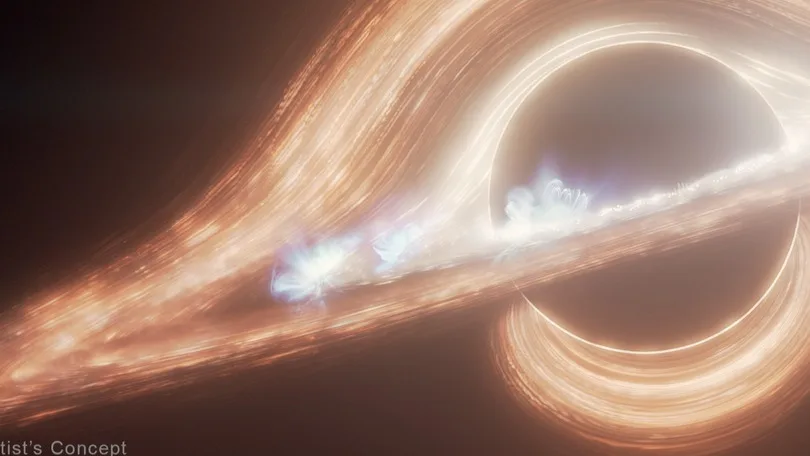
Francesco Sannino, a physics professor at the University of Naples Federico II, co-authored the study titled “When black holes admit pair-of-pants topologies.” He says, “In our study, we investigate which physical laws normally prevent a black hole from splitting into two. We also investigate if certain circumstances may allow a split to happen.”
According to the study, the main obstacle in this case is entropy, which is a measure of how many different microscopic arrangements a system can have while looking the same from the outside. If a non-spinning black hole were to split, it would then end up with less total entropy. This is what makes the split unfavorable.
But can extreme spin change everything?

Based on the calculation, the research team found that a black hole that rotates at an extremely high speed could eventually slip past the entropy rule. In principle, the restriction can be overcome. Still, it only applies to black holes at the far end of the spin scale.
There’s also another hurdle. Sannino explains, “But the two resulting black holes must also be able to separate rather than immediately fall back together. When we include this requirement, the window largely closes again, except possibly for black holes rotating close to their maximum possible rate.”
Extra dimensions could also change the rules
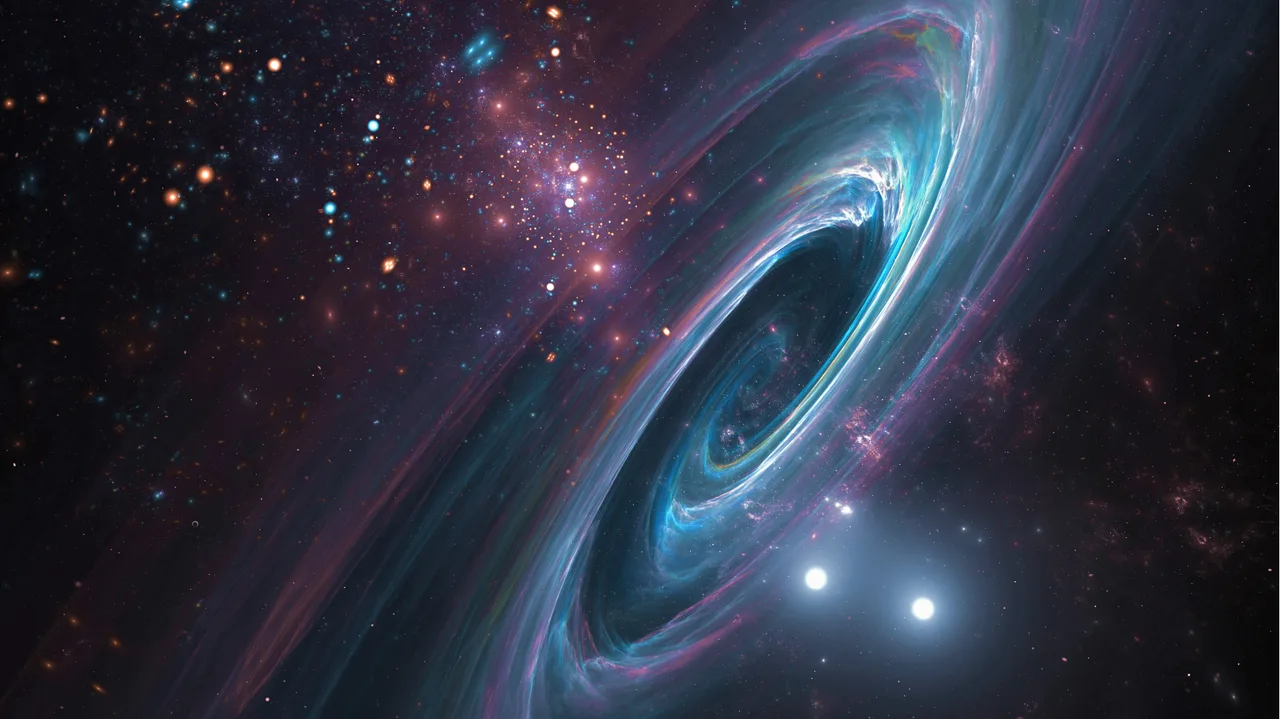
In addition, the researchers studied the theory that proposes an extra dimension beyond what we experience in our daily lives. In those scenarios, black holes can become unstable, and this would cause them to break apart.
But scientists have yet to confirm whether this is possible.
If a black hole splits, its tiny fragments could give it away
According to the researchers, we have not yet observed a split. But there's a way to look for one. Explaining this, Sannino said, “We cannot yet give a single probability for a black hole to split. It depends on how gravity behaves beyond Einstein’s theory, and we are working to quantify this.”
He further added, “We expect small primordial black holes to be more prone to splitting than much larger astrophysical black holes. We may detect a split indirectly: gamma-ray telescopes such as Fermi-LAT can search for signals from tiny black-hole fragments that might form during mergers.”