Dark energy may be changing over time, and this new study could explain why
What if dark energy isn't constant after all?
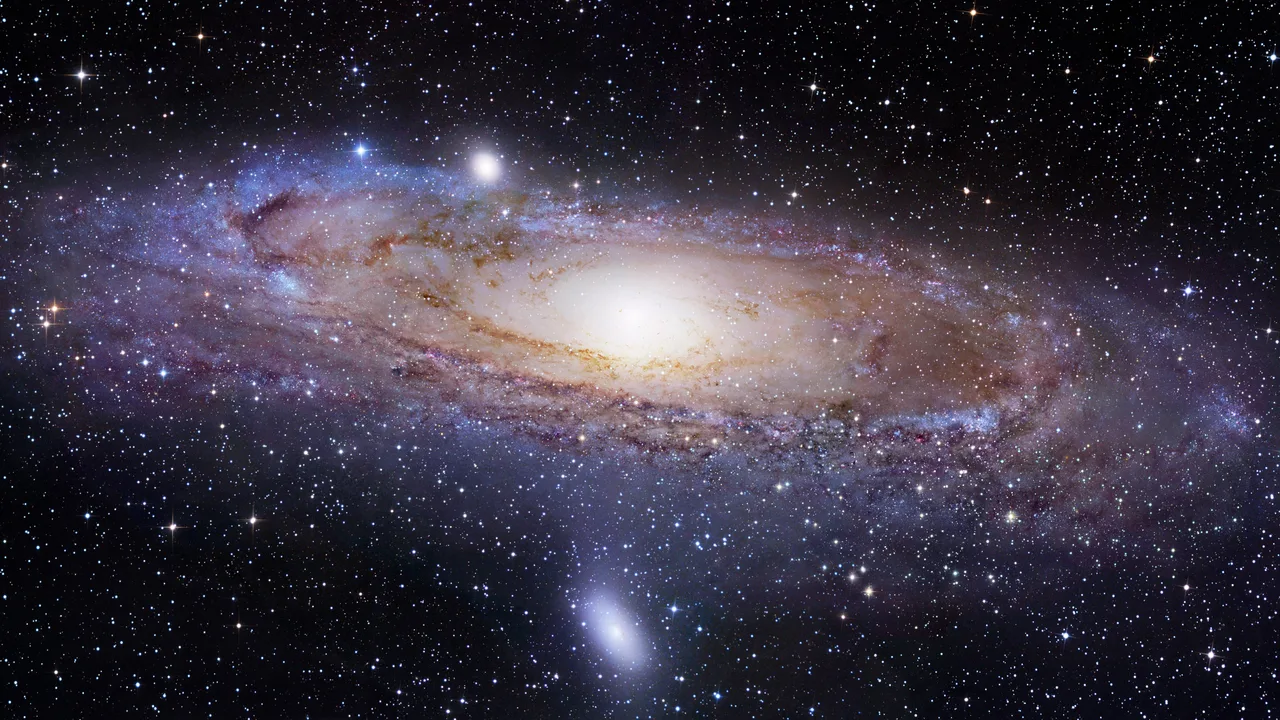
Dark energy is the mysterious and invisible form of energy that makes up about 68.3 to 70% of our universe. It is also believed to be the reason our universe is expanding at an accelerating rate. For years, scientists have believed that dark energy behaves the same way. But now, this assumption may no longer hold true.
In a new study, scientists have discovered that dark energy may be changing over time. Here's what's happening and what could be behind this change.
A cosmic map reveals a possible dark energy shift
The Dark Energy Spectroscopic Instrument (or DESI) has officially built the largest ever three-dimensional map of our universe. It measured the positions of millions of galaxies and quasars and let scientists trace how the universe has expanded over billions of years.
In March 2025, the DESI team shared results from its first three years of data. When researchers combined these results with other observations, they found that dark energy may have been changing over time.
Scientists uncover a different timeline for dark energy

A research team at Istanbul Technical University, led by physics professor Özgür Akarsu, then took a second look at an existing alternative to Einstein’s theory of gravity, called teleparallel f(T) gravity. Earlier studies of this theory had assumed that dark energy’s density can never be negative. But in this study, Akarsu’s team set that assumption aside.
And that path leads to a surprising result. In their model, dark energy’s density was negative during the universe’s first few billion years. It crossed zero roughly 9.5 billion years ago and has been positive ever since.
The search for dark energy's physical cause
For years, Akarsu and collaborators have explored a scenario in which the cosmological constant switches from negative to positive a few billion years after the Big Bang. It is consistent with DESI data, and it could also ease several long-standing tensions. This includes the Hubble tension, which is a disagreement over the universe’s expansion rate.
Akarsu explained, “For several years we have been studying a scenario in which dark energy switches sign, and it has held up remarkably well against data such as DESI’s. The open question was what physical mechanism could produce such behavior.”
The real test is still ahead
This study was submitted in October 2024, and only months after DESI shared its next result in March 2025. Hence, the model has yet to review the full DESI dataset. The next step is to test the model with the new dataset and see whether it's plausible.
Commenting on what’s ahead, Akarsu said, “We identified an alternative path for the universe within an existing theory. The next step is to test it rigorously against the full observational data. The preliminary picture is encouraging, and we are particularly interested in what it may tell us about the Hubble tension.”