This mysterious radio source has baffled astronomers for more than 20 years: Here’s why
What is behind this strange radio signal?

For over 20 years, astronomers have been trying to make sense of a strange radio signal. This particular signal first peaked in 2014, and it faded for years after that. But, strangely enough, the signal came back brighter than before in 2025. Even now, the source of this signal remains a mystery.
So, what exactly is happening out there? Here's a look at what researchers have found so far.
A sudden glow in an empty patch of sky
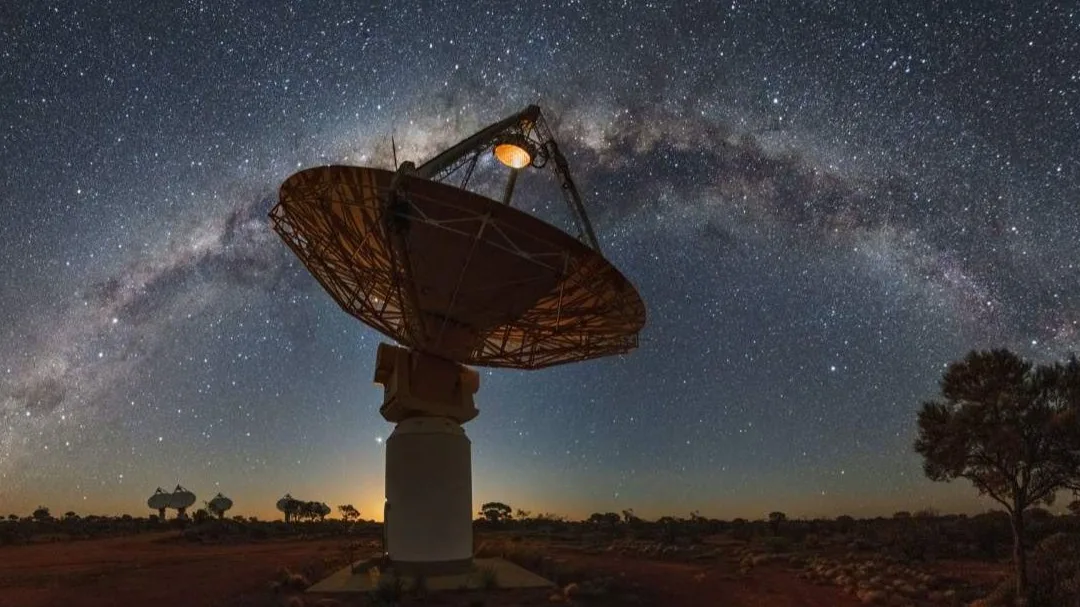
When the NVSS radio survey first scanned a region of the sky in 1996, it found no unusual radio source there. But then, a bright source was detected at the same location by a survey called VLASS on October 27, 2017. This time, the radio brightness was recorded at around 70 millijanskys.
Based on this observation, astronomers found that the source has actually brightened by at least six times over two decades. This single was later identified as VT J1906+0849, and it remains the brightest ever detected by VLASS.
What makes this radio source so difficult to explain?

To better understand the source, the team looked at older observational records. They found more than 30 detections that go back as far as 2005. On top of that, after fading for several years, the source actually began brightening again in late 2025.
Researchers also noted that the frequency of the source was not steady. Based on the observations, the peak was noted at 1.9 GHz in 2019 and at 0.8 GHz in 2024. After this, its frequency went up to 2.2 GHz in 2026.
Could this radio signal be an alien message?

As of now, astronomers do not think that it could be an alien signal. This is because a signal that spans such a wide range of radio frequencies would need a very high amount of energy. So if any alien civilization out there is trying to reach us or even just talking among themselves, they would use narrowband signals.
Additionally, there is also a difference in behavior across observations taken at different times. What causes these variations is still unclear.
So what could this object be?
The researchers suggest that the object could be a young cousin of SS 433. SS 433 is a system in our galaxy where a normal star transfers material to a compact companion, likely a black hole. According to the study, this interpretation currently makes more sense based on what they have observed so far.
In the study, the authors noted, “One possible interpretation is that VT J1906+0849 is a young analog of the microquasar SS 433, with a dense disk wind confining a continuously powered synchrotron outflow.” Still, the team acknowledges that this signal leaves many unanswered questions.