15 years of data reveals temperate super-Earth around a red dwarf star just 28 light-years away
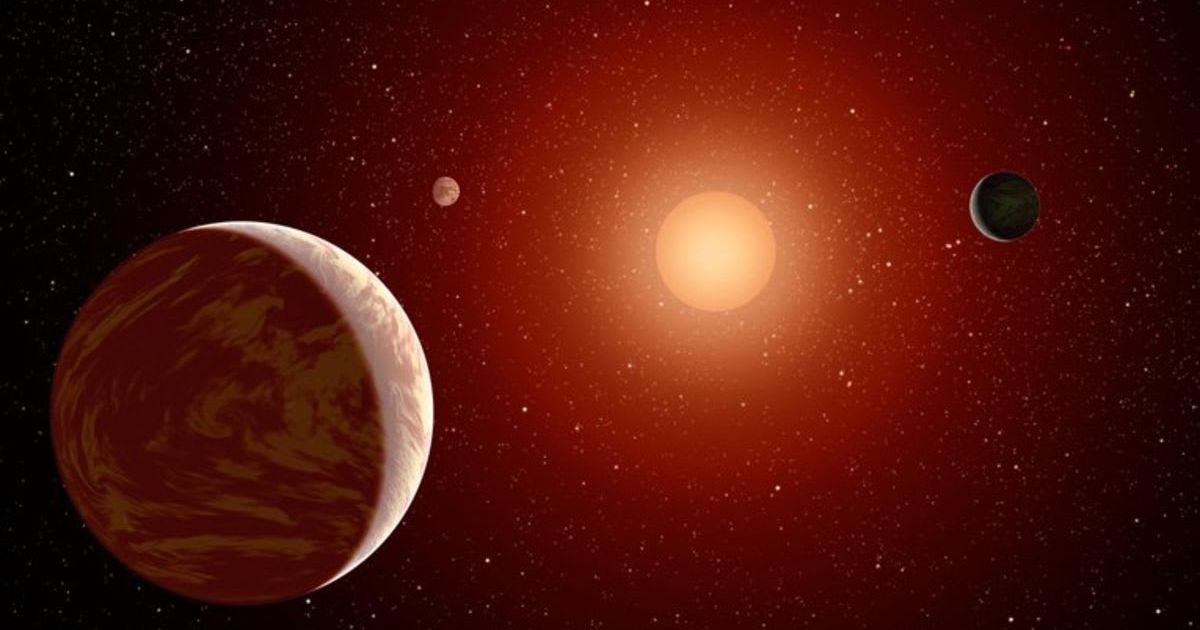
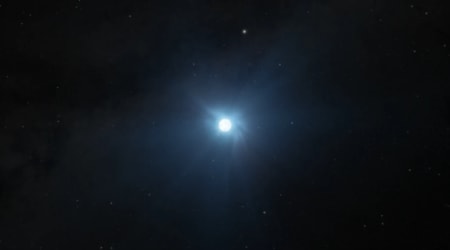
Astronomers from Italy and Brazil have discovered an exoplanet that is six times more massive than Earth and orbits a faint red dwarf star. The star, named Ross 318, is located 28 light-years away in the constellation of Cassiopeia. The discovery did not arrive with dramatic images or a sudden flash of light. Instead, the team found the planet by closely monitoring the star and tracking delicate changes in its light signals for nearly 15 years. The team reported their discovery in a research paper submitted to the journal Earth and Planetary Astrophysics. The study is currently available on the arXiv preprint server.
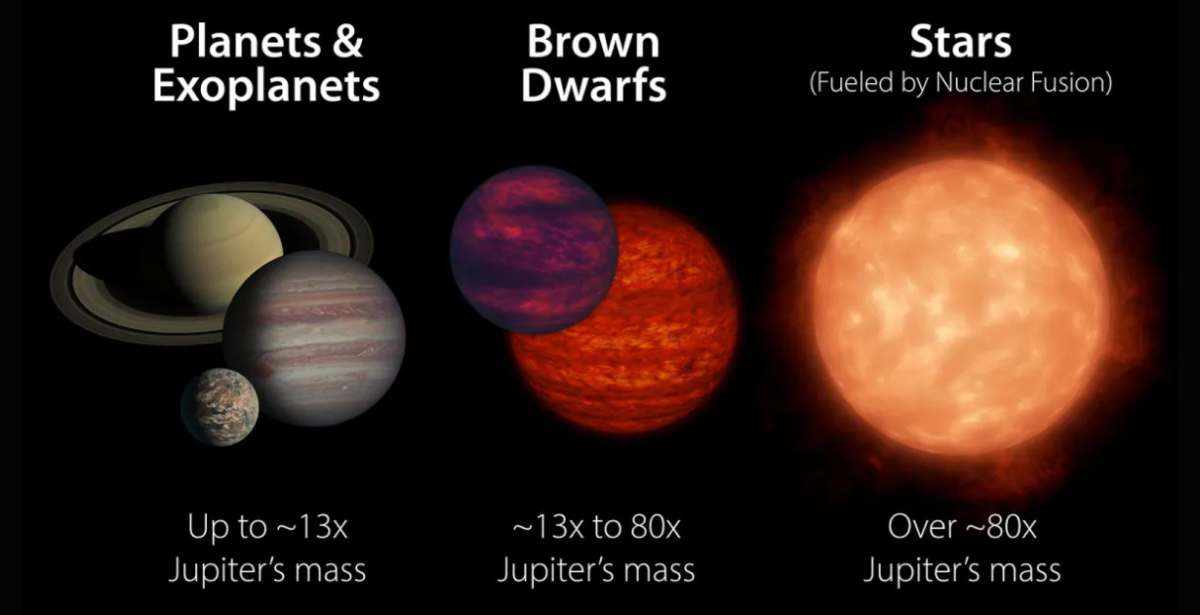
Ross 318 is a small M-dwarf only about a third the mass of the Sun. Such stars dominate the Milky Way. They are dim, cool, long-lived, and notoriously active. With a rotation period of 51.5 days, the star has an effective temperature of 3,450 Kelvin. This stellar spin produces strong magnetic activity, which poses a major challenge to detecting any planets around Ross 318. Yet, hidden beneath that magnetic rhythm, researchers found another signal repeating every 39.63 days. To decode the signal, the scientists, led by Giuseppe Conzo from the amateur astronomy association Gruppo Astrofili Palidoro (GAP) in Italy, combined observations from two of the world’s premier exoplanet instruments: the CARMENES spectrograph in Spain and the HIRES (High-Resolution Echelle Spectrometer) in Hawaii.
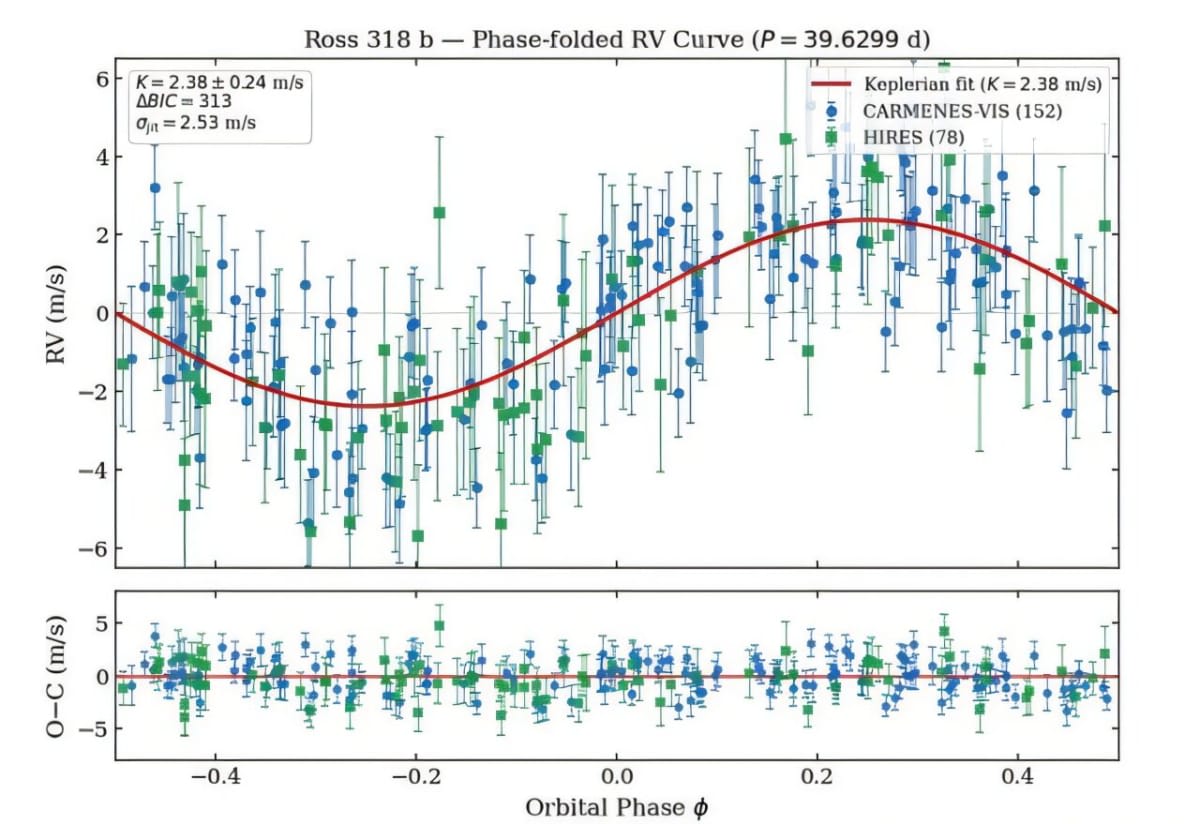
The scientists were hoping to zero in on an alien world that might orbit the dim star. By re-analyzing radial velocity (RV) data from the CARMENES spectrograph and decade-long HIRES observations, and supporting their work with data from the Transiting Exoplanet Survey Satellite (TESS), the team pinpointed the existence of an exoplanet that completes an orbit around Ross 318 in 39.63 days. The exoplanet, named Ross 318 b, has a mass of at least 6.21 Earth masses. With a possible radius of around 1.74 Earth radii, the planet’s temperature has been estimated to be around 237 K, which is cold by Earth standards.
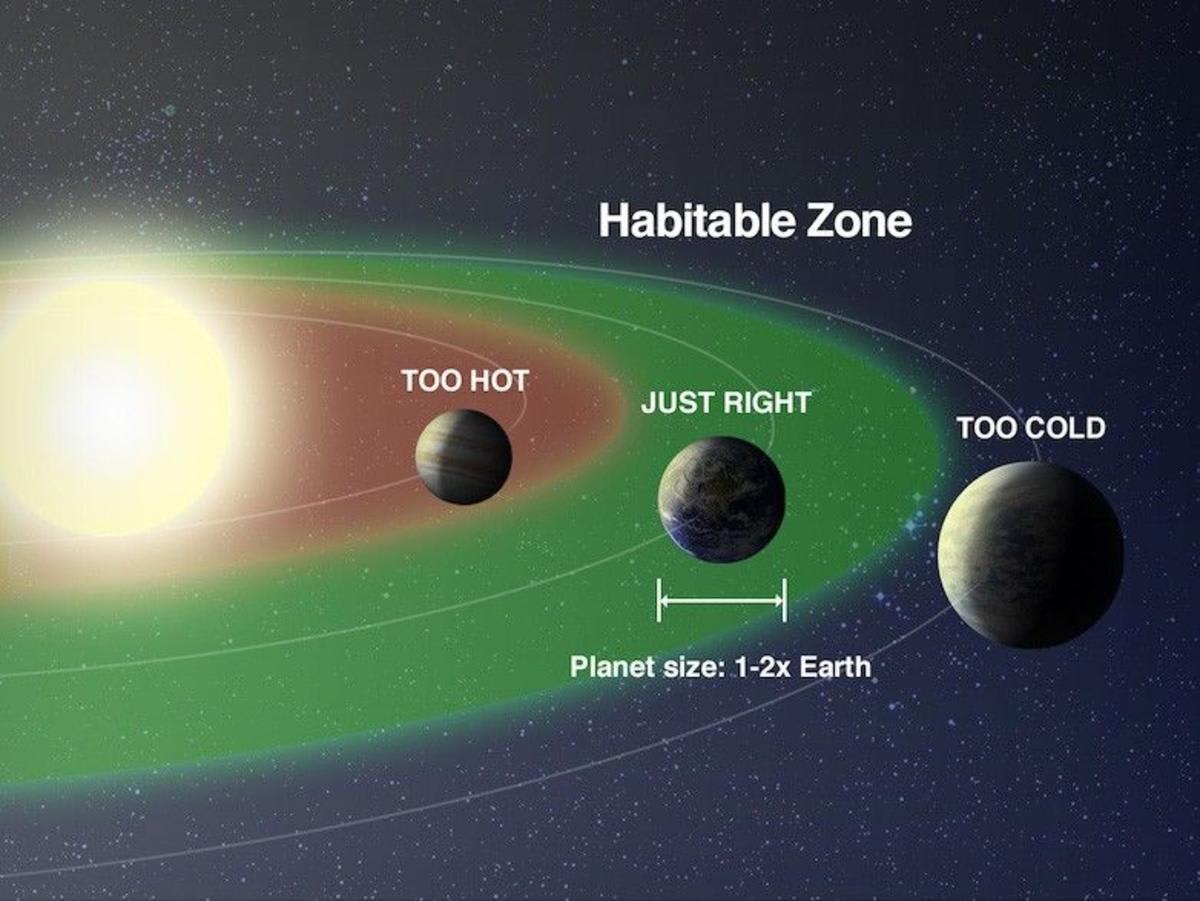
Ross 318 b's orbit lies close to its faint host star. That places the planet inside the star’s so-called Conservative Habitable Zone—the region where liquid water could potentially exist under the right atmospheric conditions. However, it remains unknown whether the planet is rocky, ocean-covered, or wrapped in a dense atmosphere. It has never been glimpsed in transit, making it difficult to predict for scientists to predict its exact size. As a last resort, the researchers turned to data from NASA’s TESS mission, hoping to catch the planet passing in front of its star. But Ross 318 b never showed up. The researchers hope that future observations with the James Webb Space Telescope (JWST) or upcoming extremely large ground-based telescopes will help collect data that will allow for a further refinement of the planet’s properties. For the moment, Ross 318 b remains something both familiar and mysterious—a super-Earth that revealed its presence solely by exerting a gravitational tug on its host star, causing a subtle wobble just beyond our cosmic neighborhood.
More on Starlust
Scientists discover an exoplanet system that is constantly changing on human timescales
'A dark, hot rock': Astronomers directly study exoplanet surface for the first time using JWST