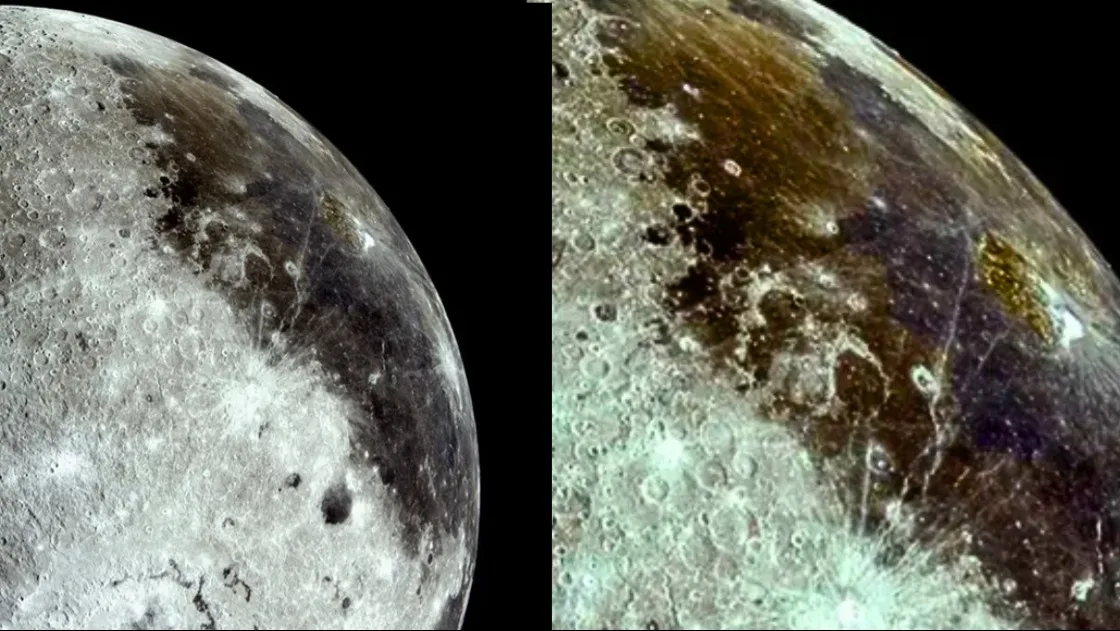
NASA's Artemis II crew reported "almost swamp-like colors" on the Moon: See the images
What color is the Moon?
When we think of the Moon, we often imagine it in white or gray. But what if there are more colors on its surface than we realize? In April, four NASA astronauts got a much closer look. Reid Wiseman, Victor Glover, Christina Koch, and Jeremy Hansen spent nearly seven hours circling the Moon, getting as close as about 4,000 miles (6,400 kilometers) above its surface.
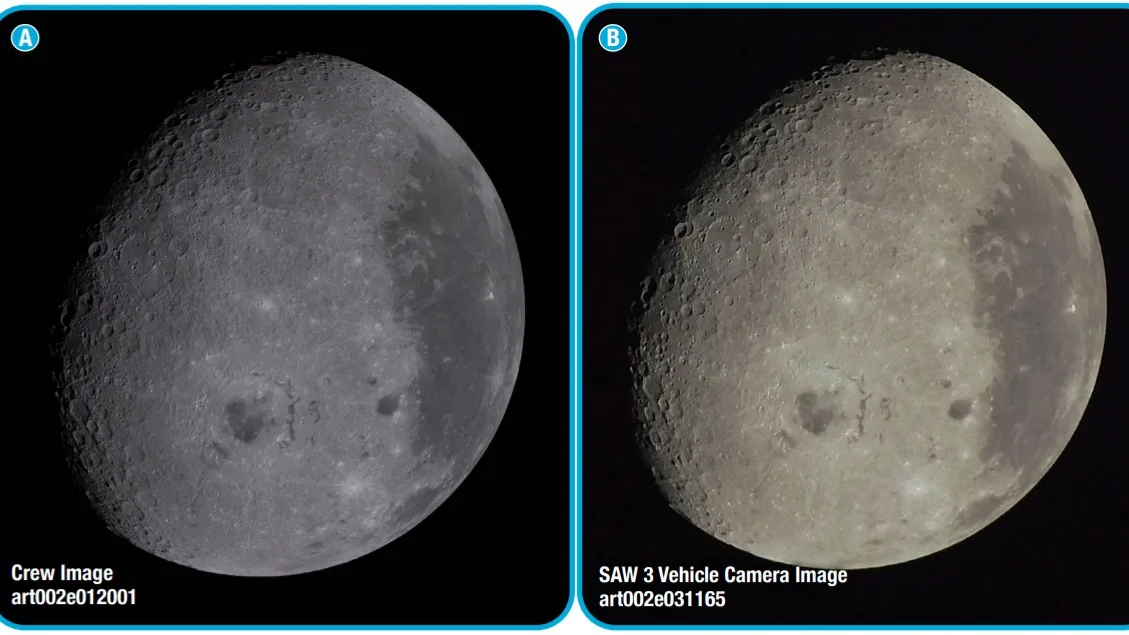
NASA has now shared their observations from the Artemis II flyby, which include 814 gigabytes of photos, videos, and audio recordings. Here’s what the crew described about how the Moon really looked up close.
One part of the Moon looked surprisingly yellow
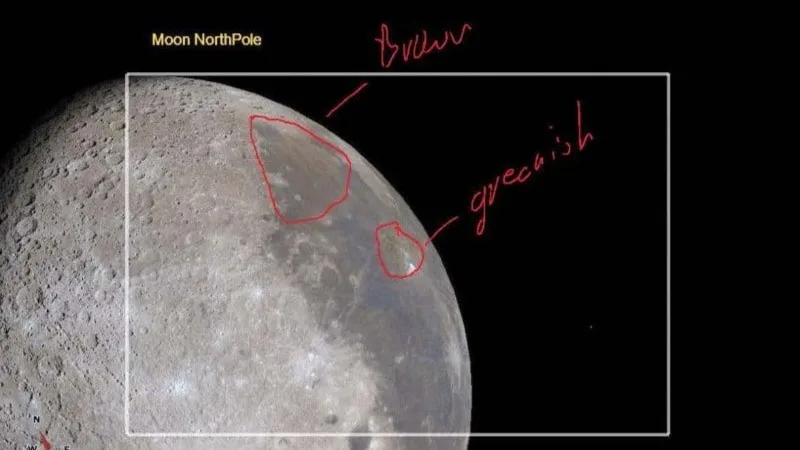
The Aristarchus Plateau particularly fascinated the astronauts. It's a broad, elevated region on the northwestern edge of the Moon's nearside (the side that faces Earth), and it holds one of the Moon's densest collections of ancient volcanic features. This includes swaths of dark lava deposits and colorful volcanic glass.
Koch, the mission specialist, was shocked to see distinct yellow shades there. She likened the plateau to "a yellow snow-capped mountain," with sunlight-reflecting craters standing in for the snow. She also called it "a jaundiced cheek of the Moon."
Then the crew spotted even more colors
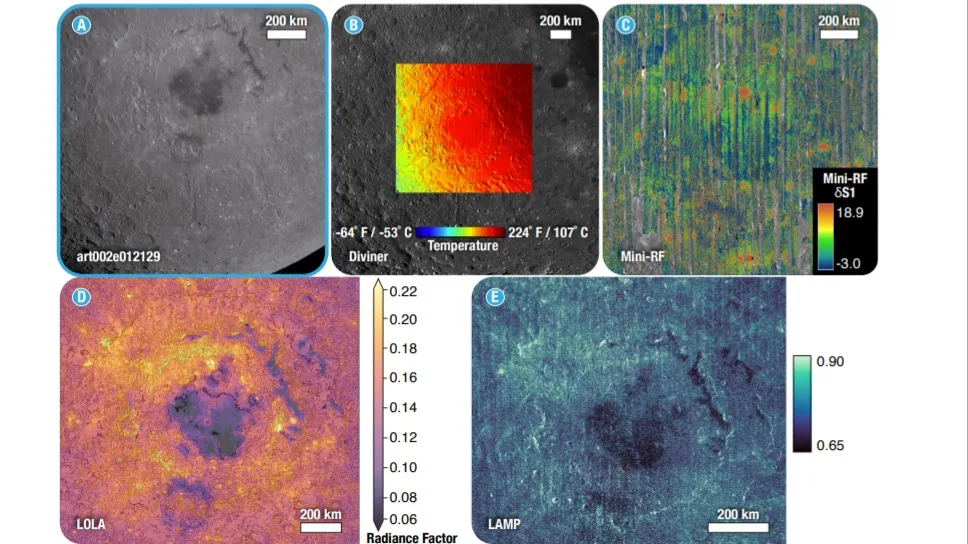
While photographing the area, Victor Glover, Artemis II's pilot, said, "There are so many colors now." He went on: "There's also a green. I see brown, especially Aristarchus and north toward the north pole. … It kind of flows down from the north in brown streaks."
Similar volcanic glass beads were collected by Apollo 15 and 17 on separate parts of the Moon.
A giant crater that's rarely seen from Earth
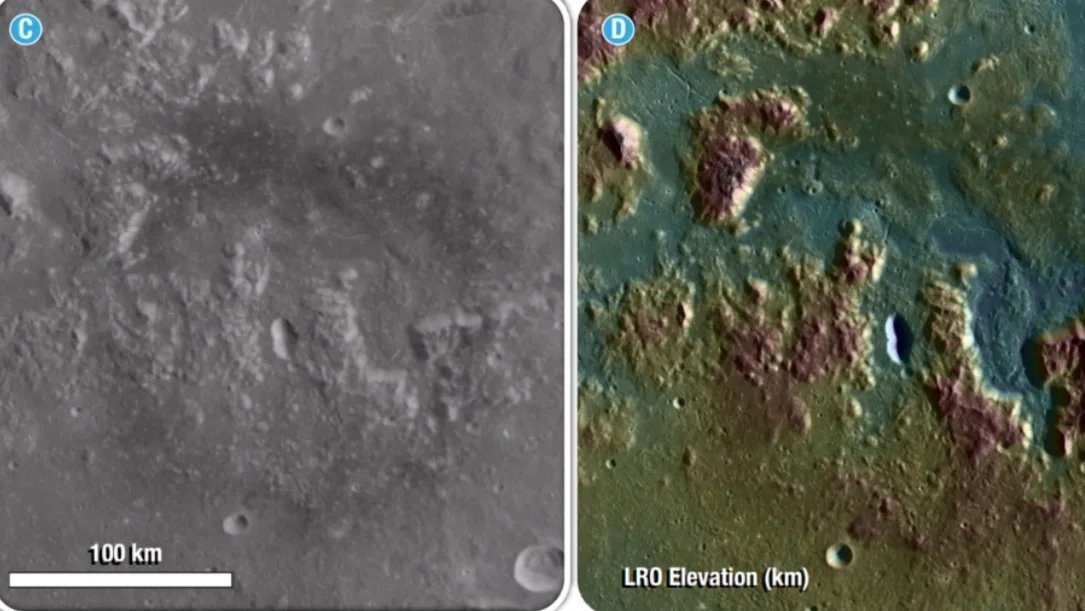
Orientale Basin is a huge, young impact crater with several rings, about three times as wide as Massachusetts, according to NASA. It straddles the Moon's near and far sides, so it's rarely visible from Earth. But it dominated the crew's field of view as they orbited.
Wiseman, the mission commander, said at the time, "It has just created chaos across that entire area." Looking down, the crew noted gray, brown, tan, and green.
There are also swamp-like colors and craters like bubbles
The largest, outermost ring of Orientale Basin held "almost swamp-like colors," Koch reported. Glover spotted what looked like "dusted peaks" and "white on the very edges of [the mountains], the spines, the ridgebacks."
Koch also described chains of craters stretching away from the impact site as looking "like bubbles rising from a team of scuba divers below." Readers who want to see the crew's photos can find them on NASA's website, Artemis II: Sights & Sounds of Science.