Fact check: Viral claim about NASA's 'Project Anchor' and a 7-second disappearance of Earth's gravity
A conspiracy theory that claimed that millions of people would lose their lives on August 12, 2026, was recently debunked, with nothing of the sort happening on the predicted date, perhaps unsurprisingly. The conspiracy theory in question had claimed that the Earth's gravity would "switch off" for seven seconds on August 12 due to a cosmic anomaly, resulting in millions flying up into the air and then crashing down to the ground. The proponents of this conspiracy theory had also alleged that NASA was aware of the impending disaster but chose not to divulge the information. In fact, the theory claimed that NASA was secretly working on 'Project Anchor' to shield global elites from the catastrophe. Here's everything you need to know about these claims and what actually came to pass on August 12.
🚨 Shocking New Hoax/Psyop Just Just Dropped - Project Anchor -Nasa's Project Anchor - according to the claims sparked online, on Aug , 12 , 2026 Earth's Gravity will be affected by intersection of two distant blackholes that will cause a gravitational anomaly ,meaning Earth's… pic.twitter.com/zO1trPpTFS
— T R U T H P O L E (@Truthpole) January 17, 2026
What was the conspiracy theory?
The conspiracy theory, which unsurprisingly had sprung from a viral claim made online, suggested that 40 to 60 million people could lose their lives on August 12, 2026, due to Earth's gravity 'switching off' for seven seconds. At this time, untethered people and objects would float up before plummeting down, the theory claimed. This anomaly, as per the conspiracy theory, would be caused by intersecting gravitational waves from black holes—a concept allegedly backed by a scientific paper that has since vanished, along with its author.
What was this so-called Project Anchor?
Proponents of the conspiracy theory also alleged that NASA had set aside a whopping $89 billion to fund its secret 'Project Anchor'. Like a plot out of a clichéd science fiction movie, the theory alleged that NASA was looking to ensure the survival of select "essential personnel," including leaders of governments, military service members, and scientists, from the ravages of the cosmic anomaly. The original posts detailing this so-called Project Anchor also described underground bunkers and securing systems built specifically to protect said essential personnel. The conspiracy theorists also claimed that NASA had not informed the public, as news warning about the deaths of millions could induce "mass panic and chaos" and bring about global hysteria.
🚨Are you prepared for "Project Anchor"?
— UAPWixy (@UAPWixy) August 12, 2026
On the 12th August. 2026, at 14:22 UTC, the Earth's gravity will cease for 7 seconds..
Strap yourself in & Buckle up...
H/T: @OMGTheWhyFiles pic.twitter.com/PuZUIwd2Wy
What actually happened on August 12, 2026?
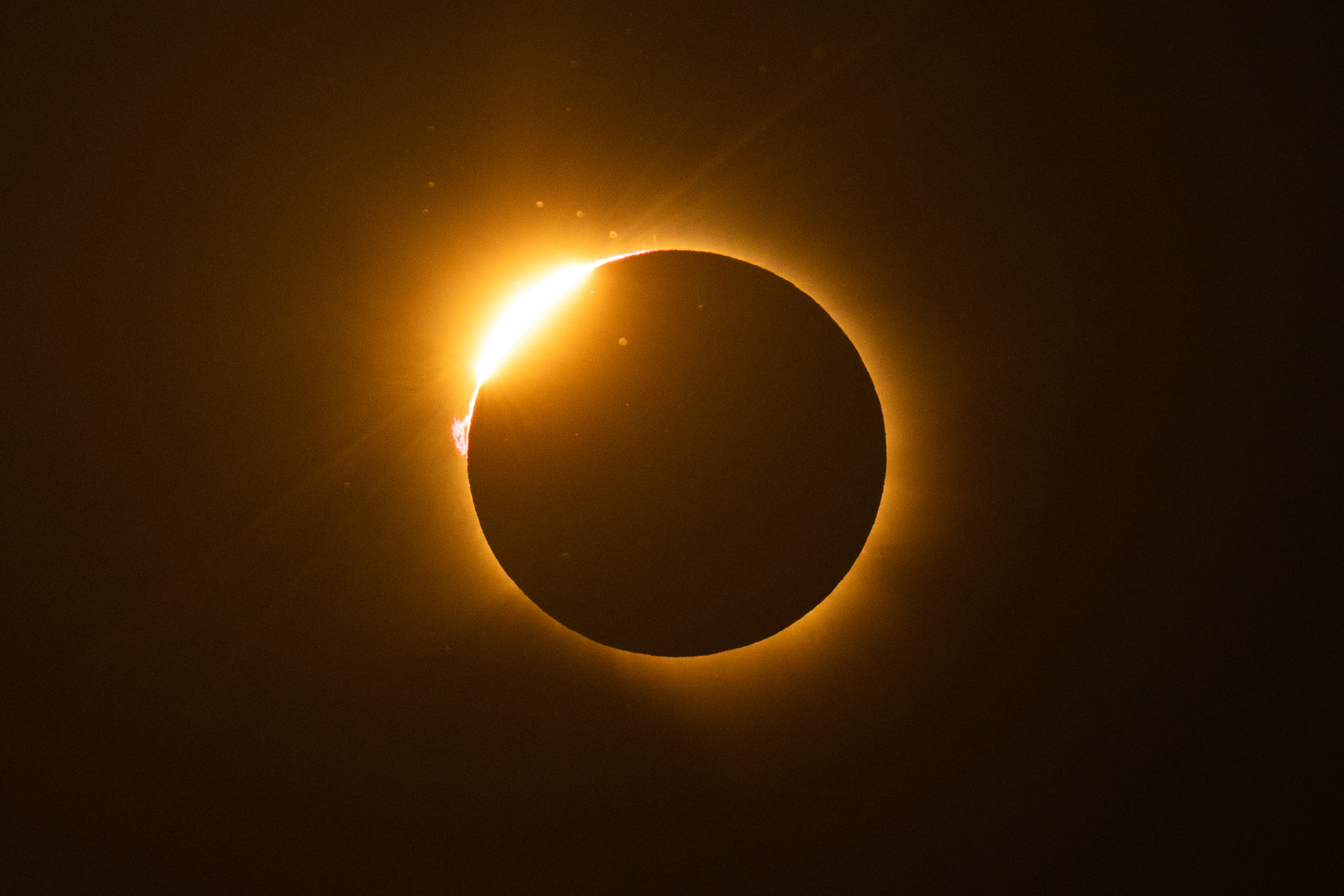
Nothing of what was predicted came to pass on August 12, 2026, making an already outlandish claim lose all semblance of credibility. On that very day, instead of catastrophe, a few genuine astronomical events regaled stargazers, with auroras, the Perseid meteor shower, and a total solar eclipse offering spectacular sights. While this rare convergence of celestial phenomena might have alarmed some of the superstitious, they were entirely natural, predictable, and had been on the calendars of stargazers and astronomers alike.
Did NASA say anything about the allegations?
NASA, on the week leading up to August 12, 2026, came forward to dispel rumors about the predicted catastrophe, explaining how Earth's gravity cannot simply be "turned off" by external sources beyond our planet, such as the Moon and the Sun, with the space agency's Senior Science Communicator Karen Fox even telling Newsweek that this type of outlandish claim "comes around every year."
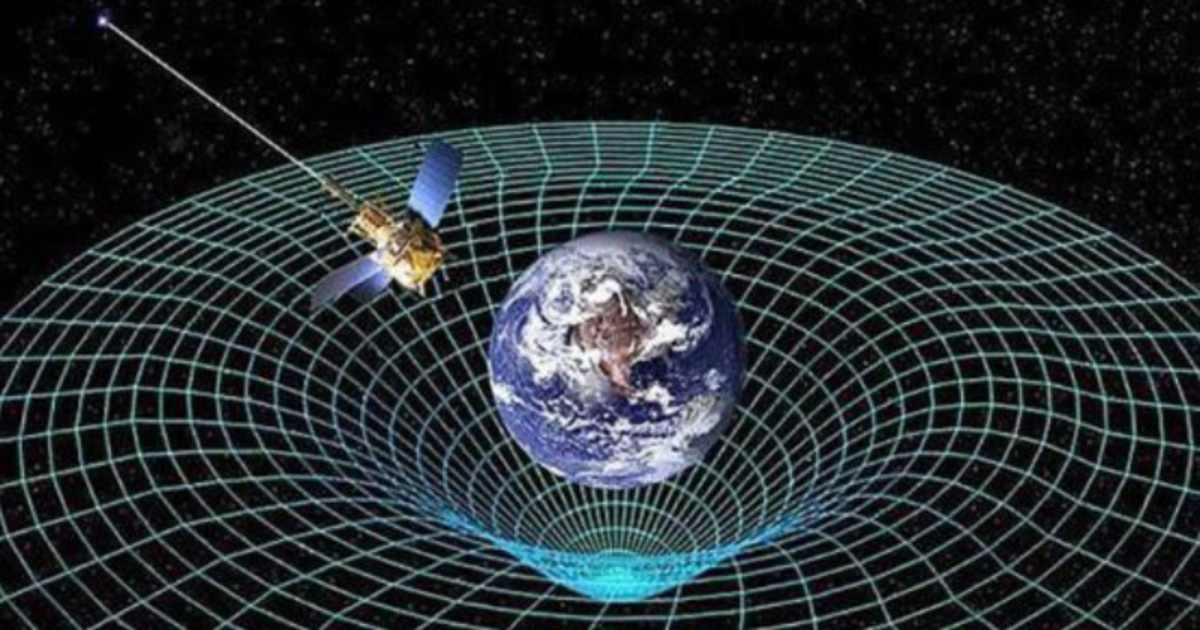
A NASA spokesperson, meanwhile, explained to PEOPLE, "The Earth will not lose gravity on August 12, 2026. Earth's gravity, or total gravitational force, is determined by its mass. The only way for the Earth to lose gravity would be for the Earth system, the combined mass of its core, mantle, crust, ocean, terrestrial water, and atmosphere, to lose mass." Expanding on the occurrence of the solar eclipse on August 12, the statement added, "A total solar eclipse has no unusual impact on Earth's gravity. The gravitational attraction of the Sun and Moon on the Earth, which doesn't impact Earth's total gravity, but does impact tidal forces, is well understood and is predictable decades in advance."
What else do we know?
Prior to NASA's public pushback against the conspiracy theory, the fact-checking outlet Snopes had already carried out a comprehensive examination of the claims and declared them false. Published earlier this year, the Snopes article states that no reputable sources found any documents pertaining to the alleged Project Anchor, and that no social media posts from 2024 or 2025 actually discussed such a secret project prior to the recent viral trend. Furthermore, the original post and the user account it came from have also been deleted since.

Beyond its sketchy origins, the conspiracy theory also fails to hold up against basic science, with its claims about gravitational waves defying the laws of physics. Gravitational waves are ripples in spacetime that come from extreme objects or phenomena such as the merging of black holes and neutron stars, as well as supernovae. These waves then travel outward from their origin at the speed of light, but they do not "cancel out" the gravitational field generated by a planet's mass. Because sources of these gravitational waves are unimaginably far away, their spacetime-stretching effects are also so negligible that by the time they reach Earth that they barely register on even our most advanced detectors. It is, therefore, physically impossible for gravitational waves to "turn off" Earth's gravity.
More on Starlust:
NASA aircraft captures stunning footage of August 12 total solar eclipse from 50,000 feet; watch