Our Moon offers unique environment for detecting gravitational waves from early universe, study suggests
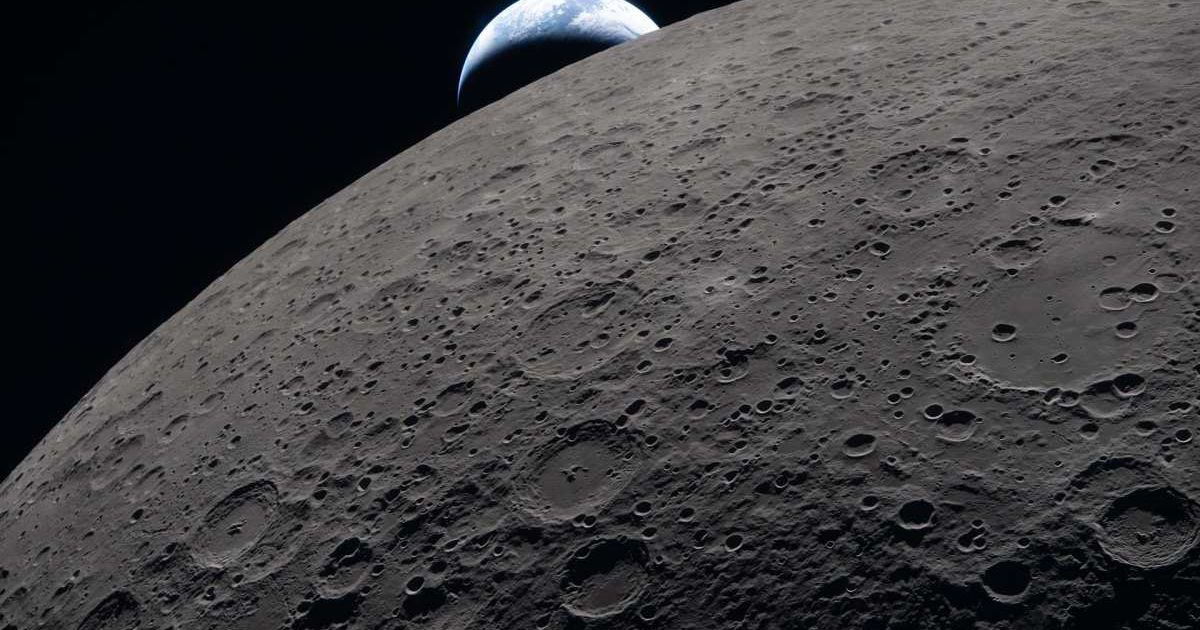
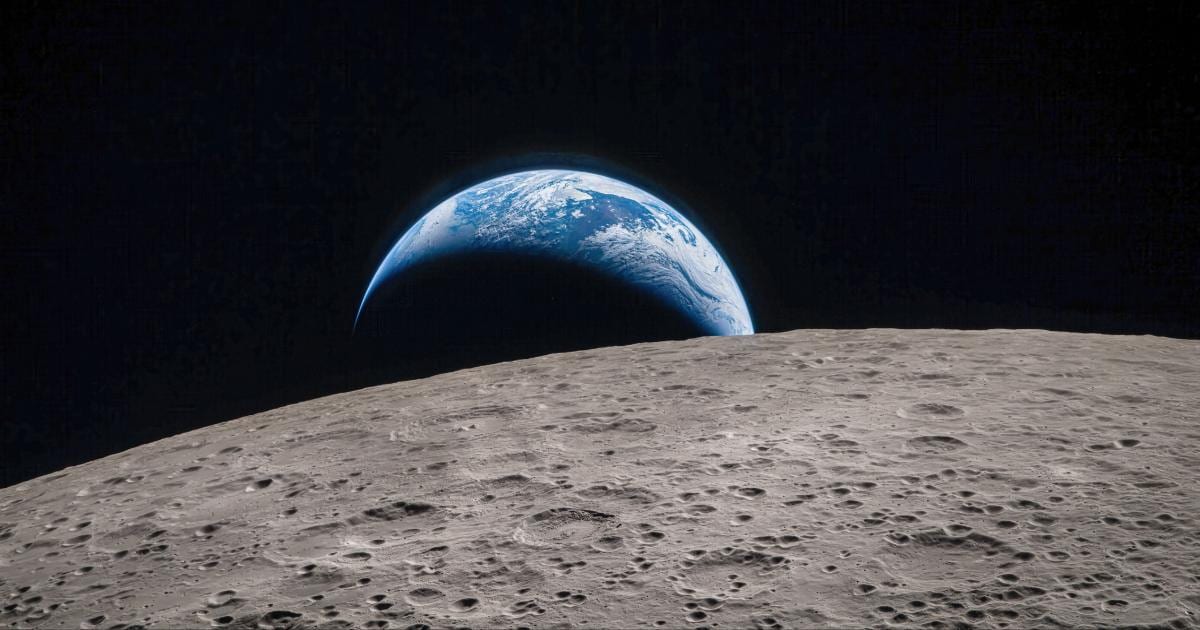
The Moon offers a unique environment for capturing gravitational waves that could unlock the secrets of the early universe, suggests a paper published recently in Nature. As their name suggests, gravitational waves are ripples in spacetime, observed to have been coming from sources like merging black holes and neutron stars. However, existing detectors like LIGO (Laser Interferometer Gravitational-Wave Observatory) have been rendered ineffective in capturing gravitational waves of a certain frequency band. These waves are expected to have originated in the early universe.
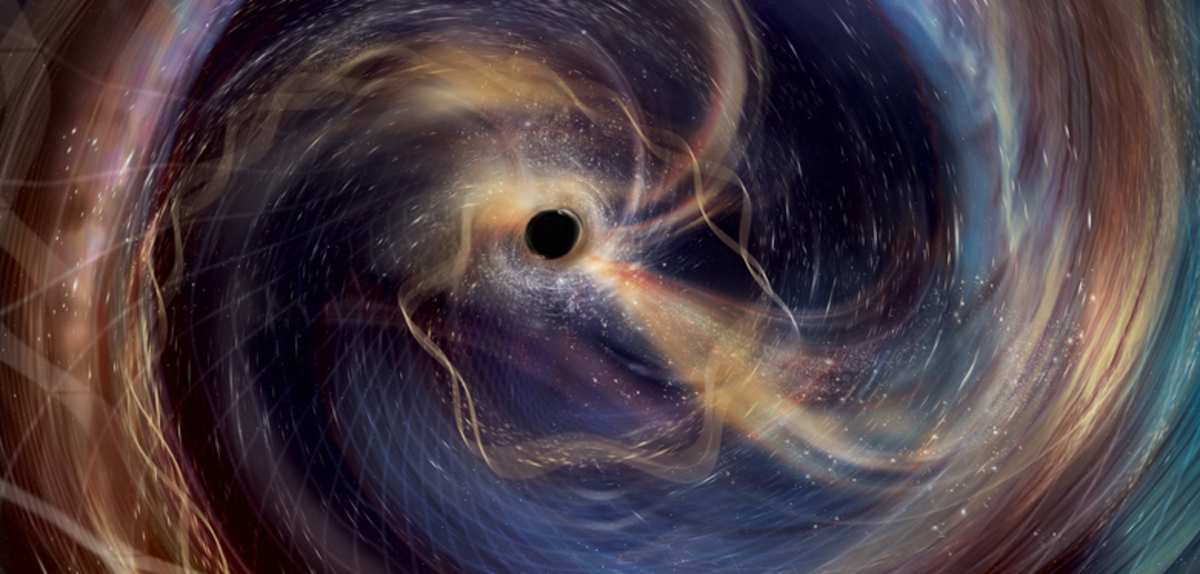
The paper, authored by Xian Chen of Peking University in Beijing, China, states that the Moon's environment, which is seismically quiet, devoid of an atmosphere, and has thermally stable interiors, is the perfect place to bridge a frequency gap in the currently available data. The aforementioned frequency gap exists between 0.1 Hz and 1 Hz, where signals from the precursors to black hole mergers and quantum fluctuations from the dawn of time are expected to hide in.
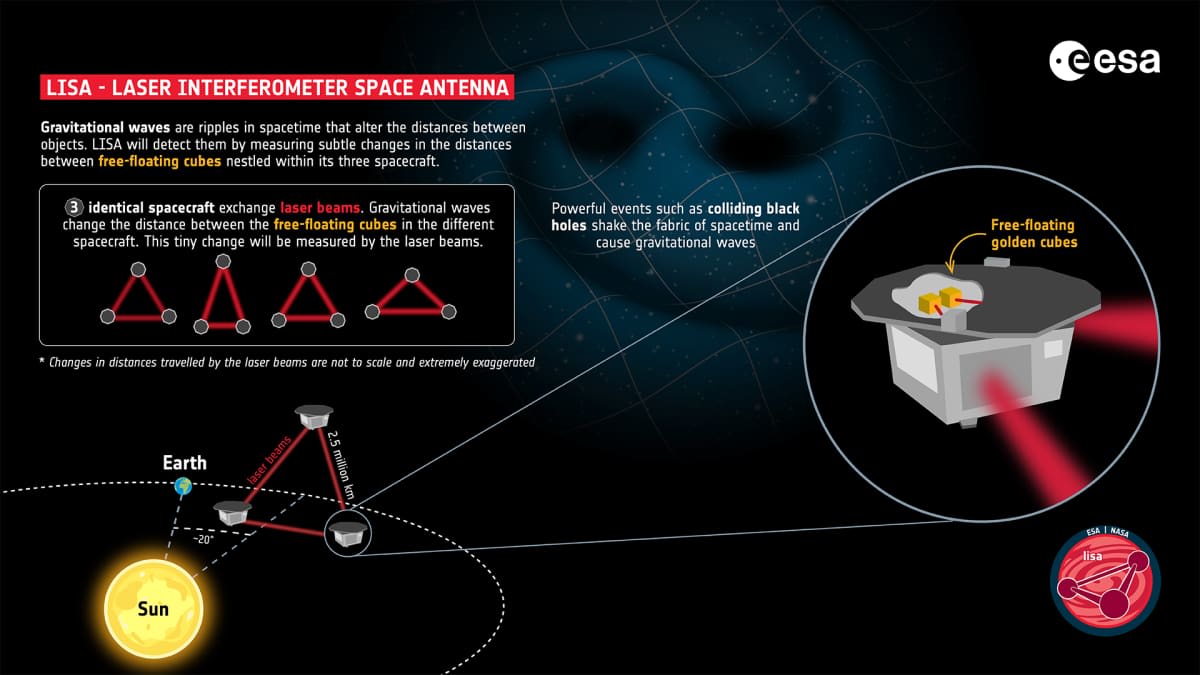
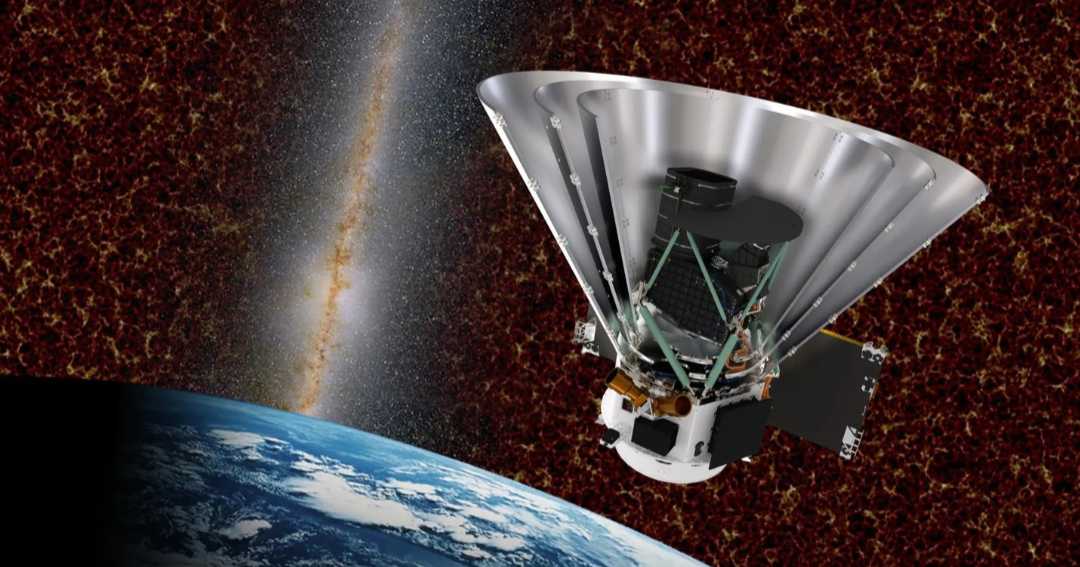
Current ground-based technology is limited by seismic interference to frequencies above 10 Hz. Even the LISA (Laser Interferometer Space Antenna) observatory, which is scheduled to launch in 2035, will not be sensitive enough to catch frequencies over 0.1 Hz. The Moon offers a middle ground both literally and figuratively. Placing ultra-sensitive equipment on the lunar surface may allow scientists to answer fundamental questions about how matter interacts with spacetime, why black holes form in the first place, and how our universe came into being.
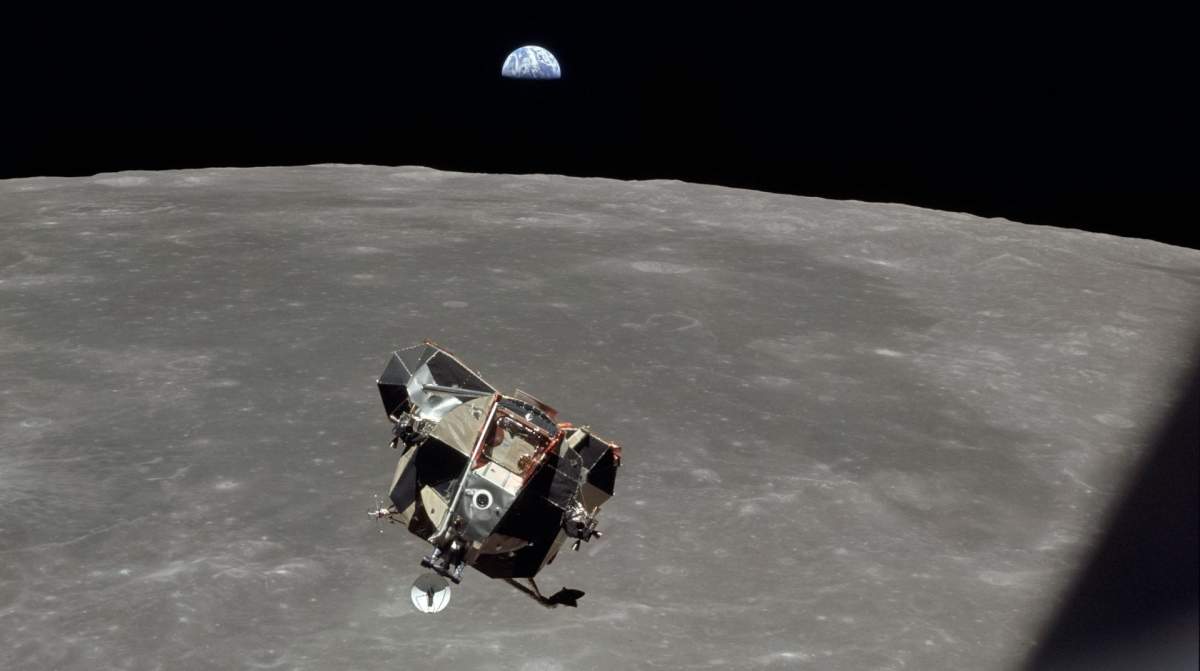
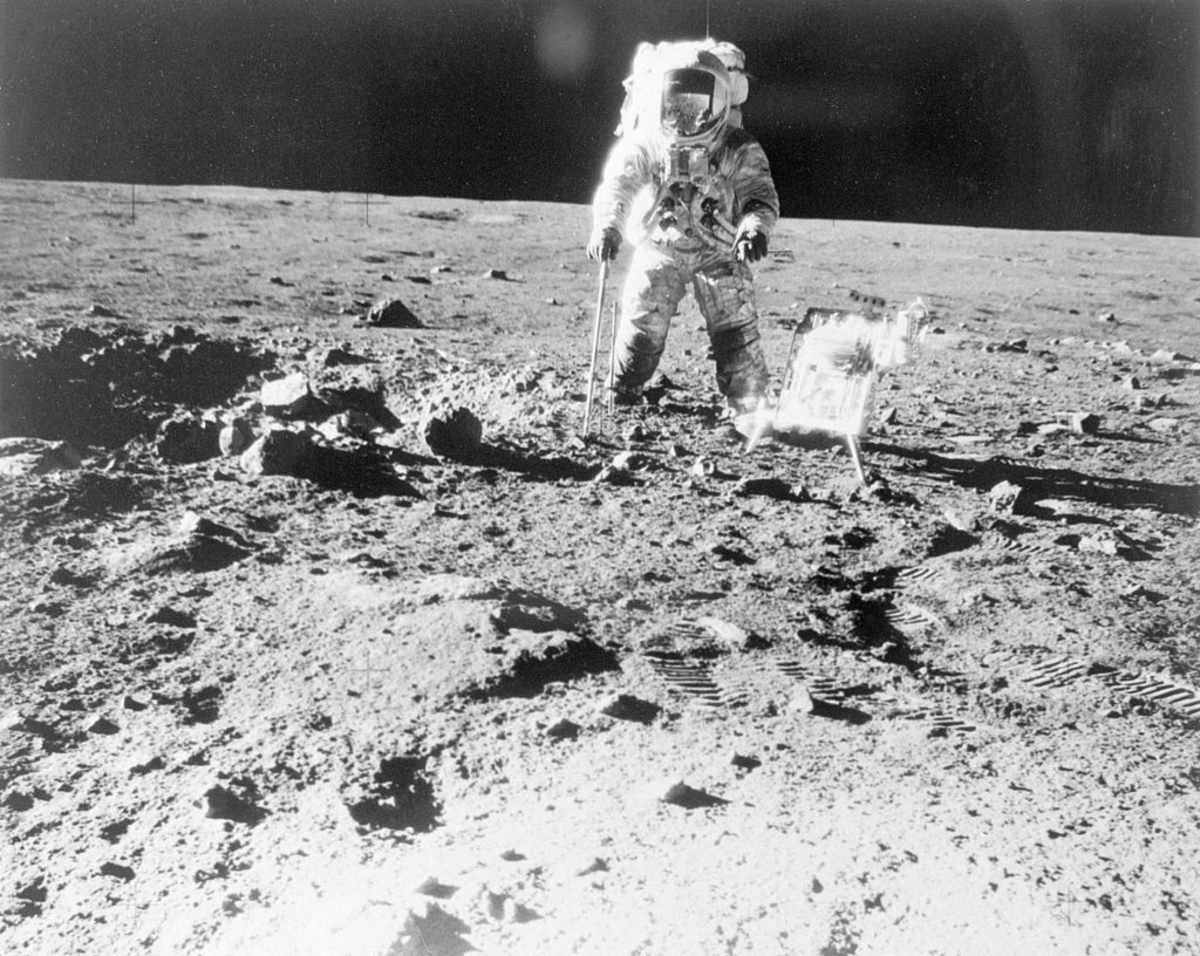
The strategy involves transforming the Moon into a multidisciplinary laboratory through three primary methods: lunar seismology, laser interferometry, and laser ranging. The concept of lunar seismology suggests that the Moon itself vibrates when hit by gravitational waves. Seismic studies on the Moon, in fact, date back to the Apollo days. During the Apollo 12-17 missions, seismometers were deployed on the lunar surface to detect quakes. While no detections were made, the efforts still helped develop a theoretical understanding of the Moon's response to mid-frequency band gravitational waves. In fact, the modern European-led Lunar Gravitational-Wave Antenna (LGWA) slated for the 2030s to deploy sensors on the Moon will make use of the concept.
Meanwhile, the Gravitational-wave Lunar Observatory for Cosmology (GLOC) aims to look for signals from seed black holes using laser interferometry. This technique involves measuring spacetime distortions through phase shift in laser beams over long distances. As far as lunar laser ranging is concerned, it involves measuring the variations in the time taken for laser pulses to travel between the Earth and the Moon to detect tiny perturbations in the distance caused by gravitational waves. "Although LLR’s sensitivity in the 0.1–10 Hz band remains below that of interferometric or seismometer-based methods, it provides an essential complementary channel for detecting very low-frequency or broadband GWs," the paper states.
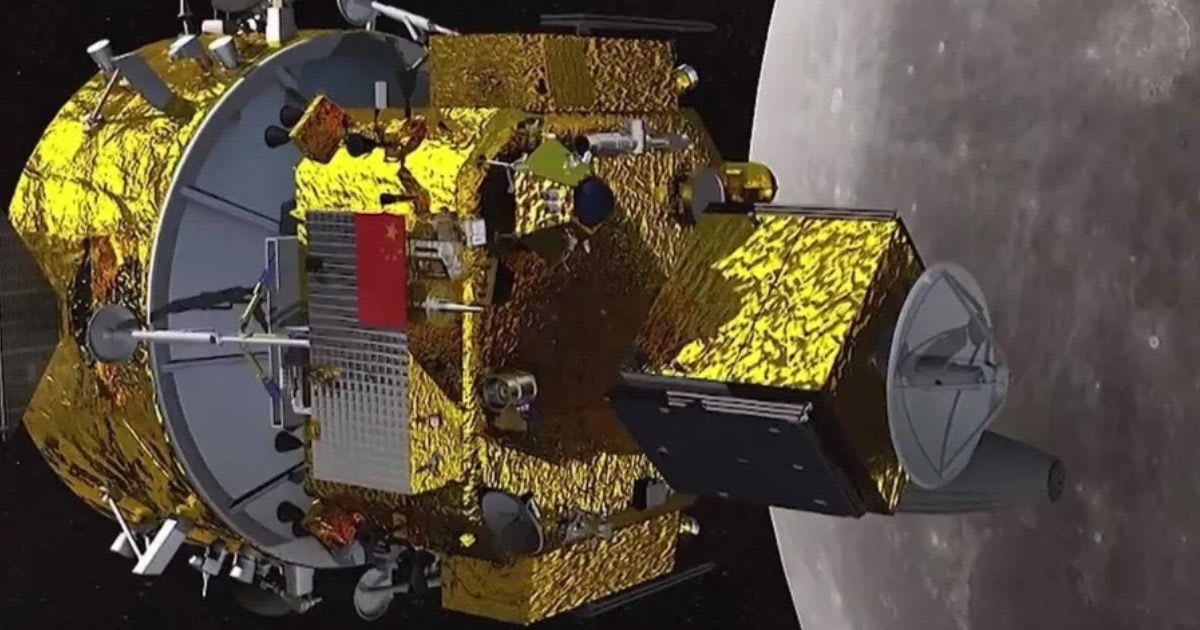
Global space agencies are already laying the groundwork for these observatories. China's Chang'e-7 mission, scheduled for later this year, is expected to carry a seismograph to study the lunar environment. The US, through its Artemis program and Commercial Lunar Payload Services by NASA, is also slated to deliver seismic payloads. As these instruments improve, researchers are updating their theoretical models of the Moon's response to gravitational waves, using state-of-the-art lunar structural models.
More on Starlust
Half-century-old Apollo 17 moon sample uncovers new clues to the origin of a lunar landslide