Two million black holes, galaxies and more: Groundbreaking discovery nearly doubles known cosmic X-ray sources
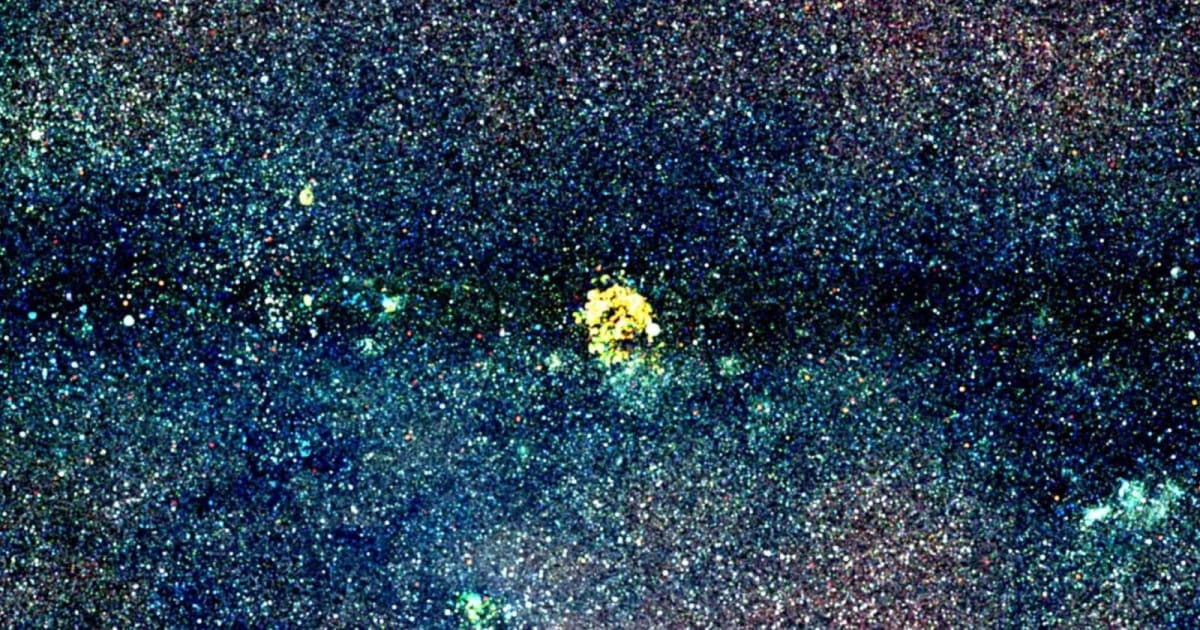
This eROSITA data set is the most comprehensive catalogue of the X-ray universe currently available.
The colour image shows X-ray sources in the western galactic hemisphere of the X-ray sky by the e-ROSITA telescope. — (Cover Image Source: Jeremy Sanders/MPE)

Scientists at the Max Planck Institute for Extraterrestrial Physics have released the second data set from the eROSITA X-ray telescope, which has doubled the number of known X-ray sources in the sky. The Institute revealed that this data set (DR2) is the most comprehensive catalogue of the X-ray universe currently available and contains two million sources including supermassive black holes, galaxy clusters, nearby galaxies, and remnants of exploded stars or supernovae.
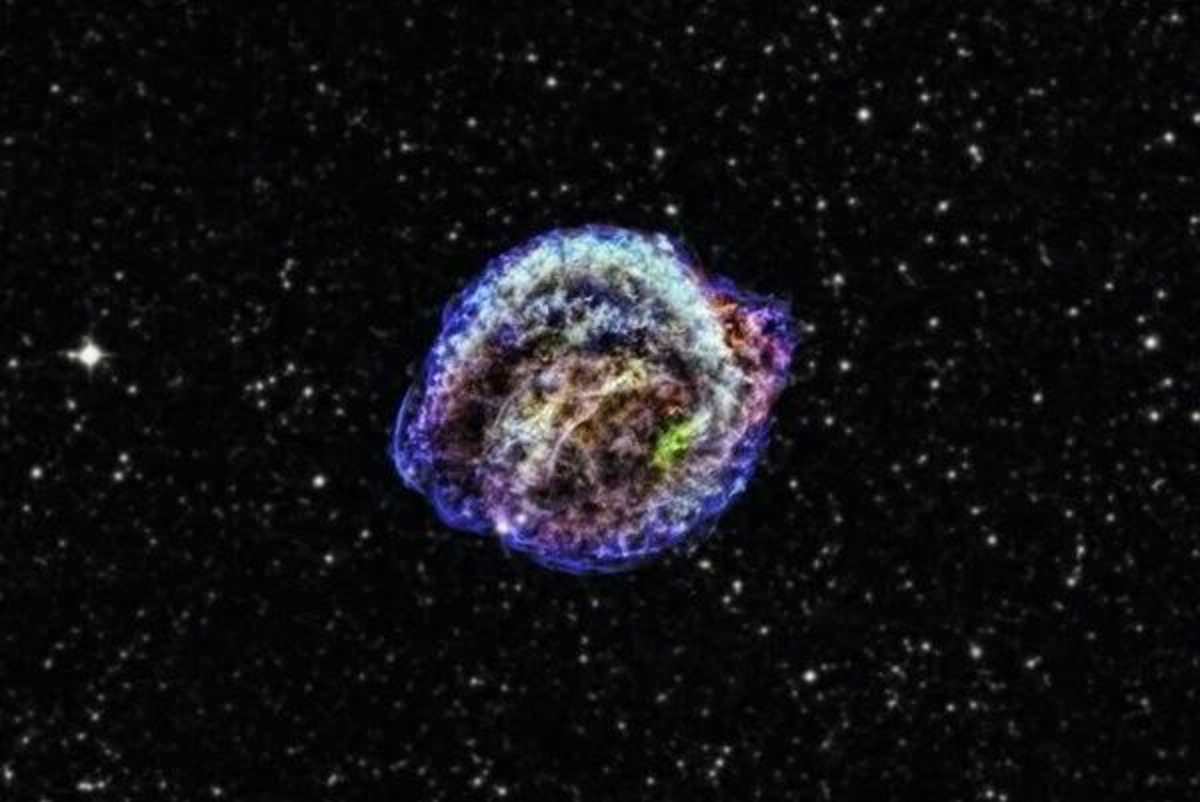
The remnants of a Type 1a supernova that erupted in 1604. Unlike with a nova such as T CrB, a Type 1a supernova completely obliterates the white dwarf that causes it. (Representative Image Source: NASA/CXC/NCSU/DSS/M. Burkey et al)

The observations started in December 2019, when eROSITA started surveying the entire sky every six months. eROSITA is part of the Russian-German "Spectrum-Roentgen-Gamma" (SRG) satellite, which is at the second Earth-Sun Lagrange Point, or L2, approximately 932,000 miles (1.5 million kilometers) away from Earth. Its primary goal, before it stopped operations in 2022, was to study extragalactic X-ray sources and galaxy clusters to determine the role of dark energy in the expansion of the universe. Earth’s atmosphere blocks X-ray radiation, so most telescopes designed to study the universe in this wavelength must be installed in space for uninterrupted observations.
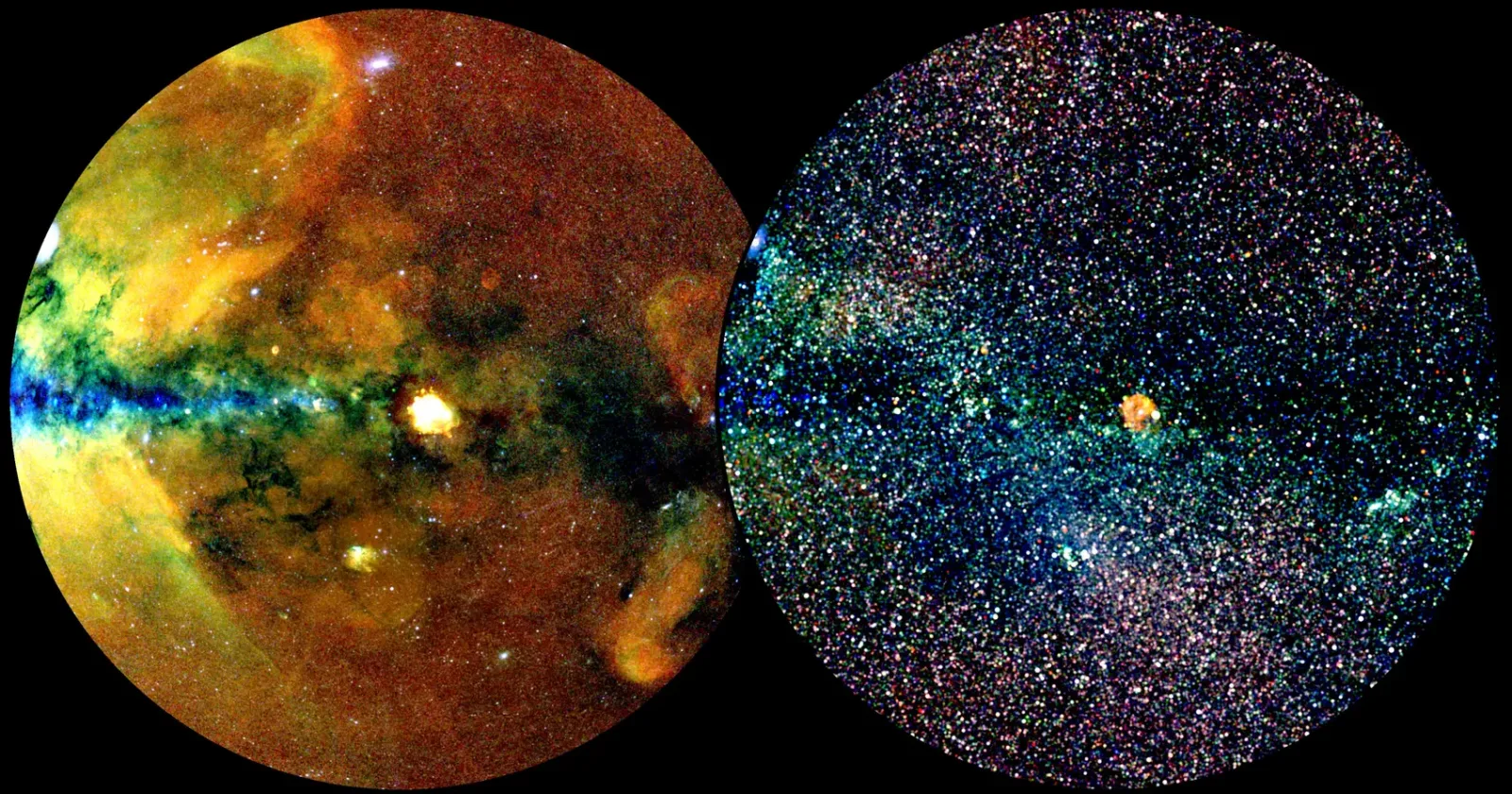
The sky section of the eRosita All-Sky Survey Catalogue (eRASS1) in two different representations from DR1. The left image shows extended X-ray emission while the right image shows point-like X-ray sources.
The sky section of the eRosita All-Sky Survey Catalogue (eRASS1) in two different representations from DR1. The left image shows extended X-ray emission while the right image shows point-like X-ray sources. — (Image Source: MPE, J. Sanders für das eROSITA-Konsortium)

According to the Max Planck Institute, DR2 combines data collected over the mission’s first 556 days, spanning three full sky surveys which were conducted by progressively increasing depth and sensitivity for X-rays. Out of two million objects, more than 1.9 million are point-like sources such as stars and supermassive black holes, along with around 64,000 galaxy clusters, individual galaxies, and supernova remnants. The catalogue also includes nearly 15,000 heavily obscured and intrinsically energetic systems that are often missed at softer X-ray energies. 

NASA's Hubble Space Telescope captured the magnificent starry population of the Coma galaxy cluster, one of the densest-known galaxy collections (Image Source: NASA, ESA, and the Hubble Heritage Team (STScI/AURA))

“DR2 is the best inventory of the X-ray sky we have to date and opens the door to robust statistical studies of cosmic populations,” Miriam E. Ramos-Ceja, Ground Segment Manager of the eROSITA instrument and lead author of the DR2 publication, said in a statement.

3d render image of a Black Hole in space surrounded by its orbiting remnants. (Representative Photo by Cavan Images / Luca Pierro / Getty Images)

The authors noted that the catalog also includes optical and infrared counterparts of the X-ray sources to help differentiate the nature of the entities. Of the objects for which they found a counterpart in different wavelengths, roughly 88 percent turned out to be extragalactic—dominated by supermassive black holes actively feeding on material from their surroundings. “X-ray detection is only the first step. By linking X-ray sources to their counterparts at other wavelengths, we can work out what these objects are, where they sit on the cosmic distance ladder, and build clean, well-defined samples on an unprecedented scale,” said Mara Salvato, eROSITA spokesperson and chair of the follow-up working group.
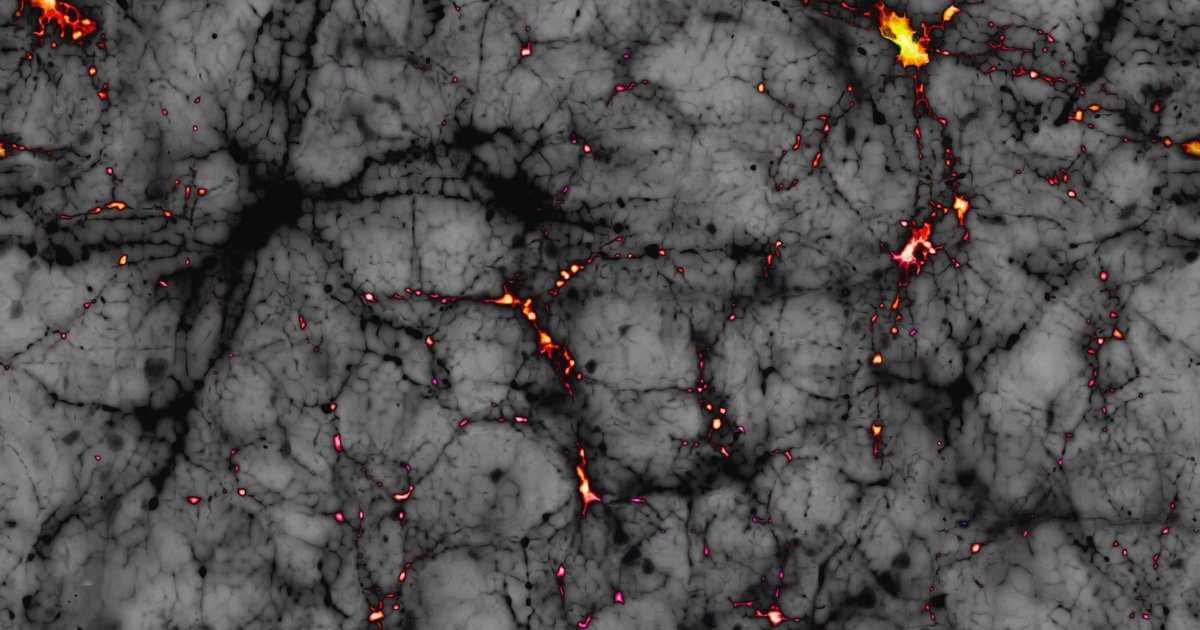
Conceptual illustration of dark matter (Representative Cover Image Source: Getty | MARK GARLICK/SCIENCE PHOTO LIBRARY)

William Roster, lead author of another study based on a data release by the Sloan Digital Sky Survey (SDSS), said that DR2 suggests that rapidly growing black holes were more abundant in the early universe than previously thought. Notably, the next data release from eROSITA is planned for 2028, and it will further boost the effort to uncover the mysteries of the dark universe.

More on Starlust:

World’s largest digital camera captures over 500,000 galaxies in spectacular new image
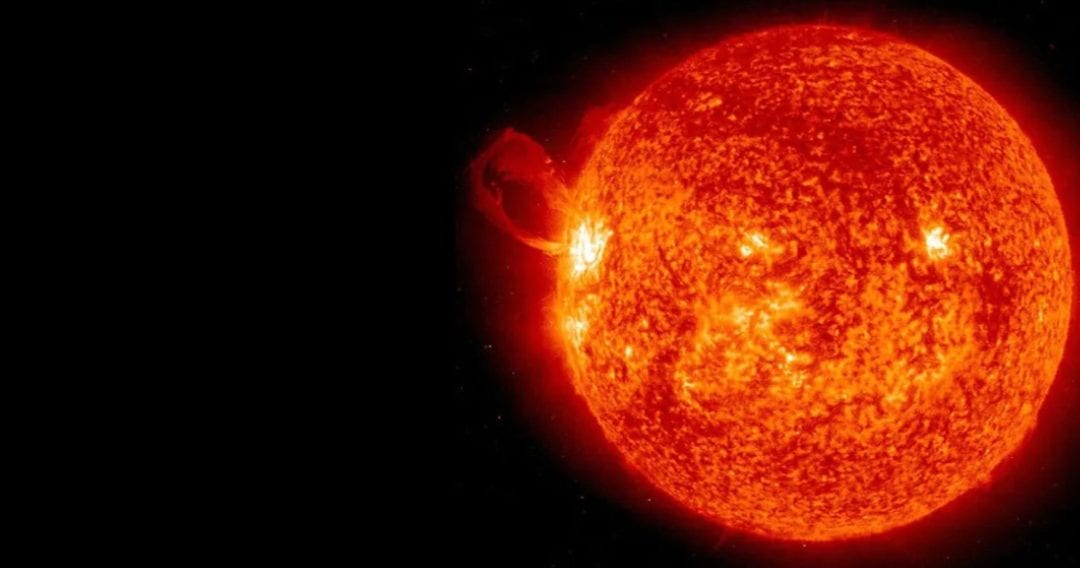
Astronomers saw the first light of a massive star dying in a galaxy located 500 million light-years away

MORE STORIES

Geomagnetic storms can wreak havoc on both technology and, potentially, biology.
4 days ago
Ocean loss of Venus was akin to the drying up of Mediterranean Sea around six million years ago.
4 days ago
The astronomers have also detected how these vortices shape magnetic field lines, key to causing nanoflares.
5 days ago
Our planet was about 195 million miles away from Mars when the pictures were taken.
6 days ago
From where did our solar system get its first solids? A research team from Caltech may have found the answer by analyzing pieces of a meteorite.
6 days ago
Discovering water ice on the Moon will be a huge step toward building a sustainable, long-term human presence there.
Aug 4, 2026
With Mars thought to be wet and habitable once, the study is helping provide new insights into how it came to be the bone-dry planet we know today.
Aug 3, 2026
The composite image provides a clear view of the COSMOS field, which is a popular region in the sky located in the constellation Sextans.
Aug 3, 2026
A new study has found that the process of heavy metal formation in neutron star mergers proceeds more slowly than previously thought.
Jul 31, 2026