SpaceX Starship Flight 14 launches today: When and how to watch the livestream
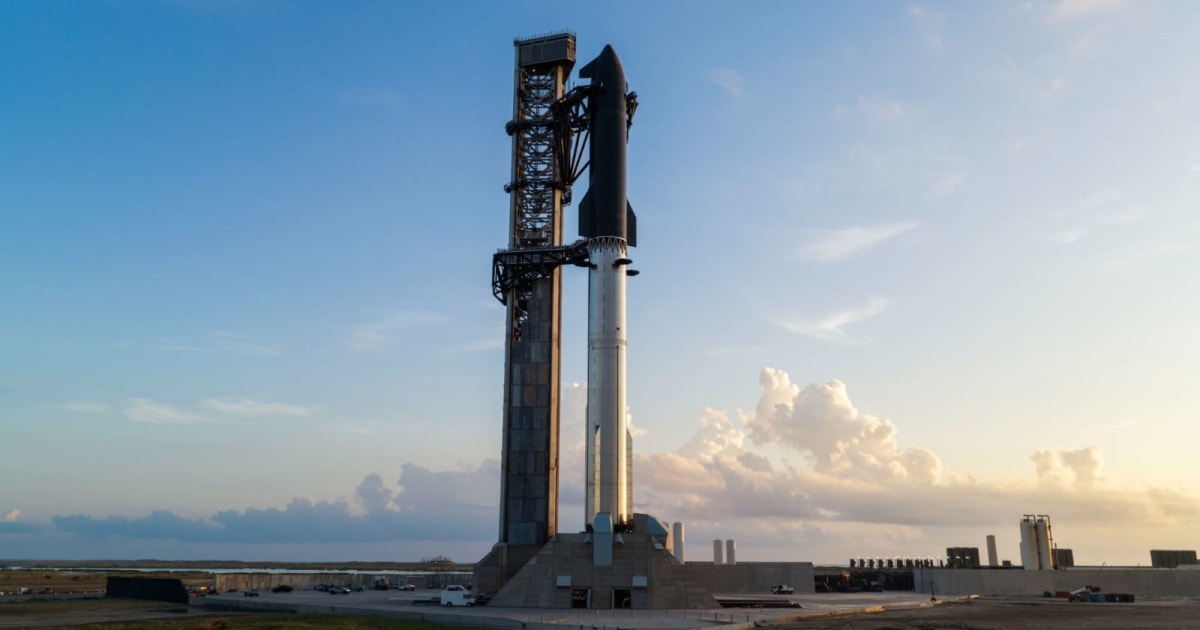
SpaceX is set to carry out the third flight of Starship V3 on Monday, September 28. This will be the fourteenth overall flight of the heavy-lift rocket by the Elon Musk-owned company, and has been dubbed Flight 14. It is slated to launch during a 75-minute launch window that will open at 7:15 am CDT from Pad 2 at the company's Texas spaceport, Starbase. Here's how you can catch this landmark flight of Starship from within your local time zone.
Starship’s 14th flight is set to launch on Monday, Sept 28. The 75-minute launch window opens at 7:15 a.m. CT. Live coverage of the mission starts ~35 minutes before launch → https://t.co/uQKQvgaTmJ
— SpaceX (@SpaceX) September 27, 2026
How to watch
SpaceX will begin live coverage of the event, including its pre-launch terminal countdown and liftoff, around 30 minutes ahead of the targeted launch time. The company's live webcast will be available on SpaceX's official account on X. At the moment, the total length of the mission is scheduled to last just over 9 hours and 50 minutes, with Ship 41 slated to splashdown off the west coast of Chile. SpaceX will stream the entire flight, featuring views from space as the Starship upper stage coasts for over 8 hours in orbit, culminating in a splashdown in the Pacific Ocean.
Starship Flight 14 orbital visuals, an Interactive 3D page https://t.co/khJdDsd0Ko
— Mickey (@mickeywzx) September 24, 2026
- two contigency splashdown zones, Indian and Pacific
- planned Pacific landing west of Chile
- planned deorbit burn and twilight jelly scatter southern China pic.twitter.com/aJEPbkR007
Timings across global time zones
Following are ten major cities around the world with their respective launch window opening and closing times. The possible splashdown windows are also given for each city according to local time zones and the mission schedule. SpaceX has also provided a heads up about a potential change to mission timelines, given this is the first orbital test of Starship V3.
Los Angeles, USA - Launch window: September 28, 5:15 am to 6:30 am PDT; Possible splashdown window: September 28, 3:05 pm to 4:20 pm PDT
Mexico City, Mexico - Launch window: September 28, 6:15 am to 7:30 am CST; Possible splashdown window: September 28, 4:05 pm to 5:20 pm CST
New York City, USA - Launch window: September 28, 8:15 am to 9:30 am EDT; Possible splashdown window: September 28, 6:05 pm to 7:20 pm EDT
London, UK - Launch window: September 28, 1:15 pm to 2:30 pm BST; Possible splashdown window: September 28, 11:05 pm to 12:20 am BST on September 29
Paris, France - Launch window: September 28, 2:15 pm to 3:30 pm CEST; Possible splashdown window: September 29, 12:05 am to 1:20 am CEST
Dubai, UAE - Launch window: September 28, 4:15 pm to 5:30 pm GST; Possible splashdown window: September 29, 2:05 am to 3:20 am GST
New Delhi, India - Launch window: September 28, 5:45 pm to 7 pm IST; Possible splashdown window: September 29, 3:35 am to 4:50 am IST
Tokyo, Japan - Launch window: September 28, 9:15 pm to 10:30 pm JST; Possible splashdown window: September 29, 7:05 am to 8:20 am JST
Sydney, Australia - Launch window: September 28, 10:15 pm to 11:30 pm AEST; Possible splashdown window: September 29, 8:05 am to 9:20 am AEST
Auckland, New Zealand - Launch window: September 29, 1:15 am to 2:30 am NZDT (Daylight savings began on September 27); Possible splashdown window: September 29, 11:05 am to 12:20 pm NZDT
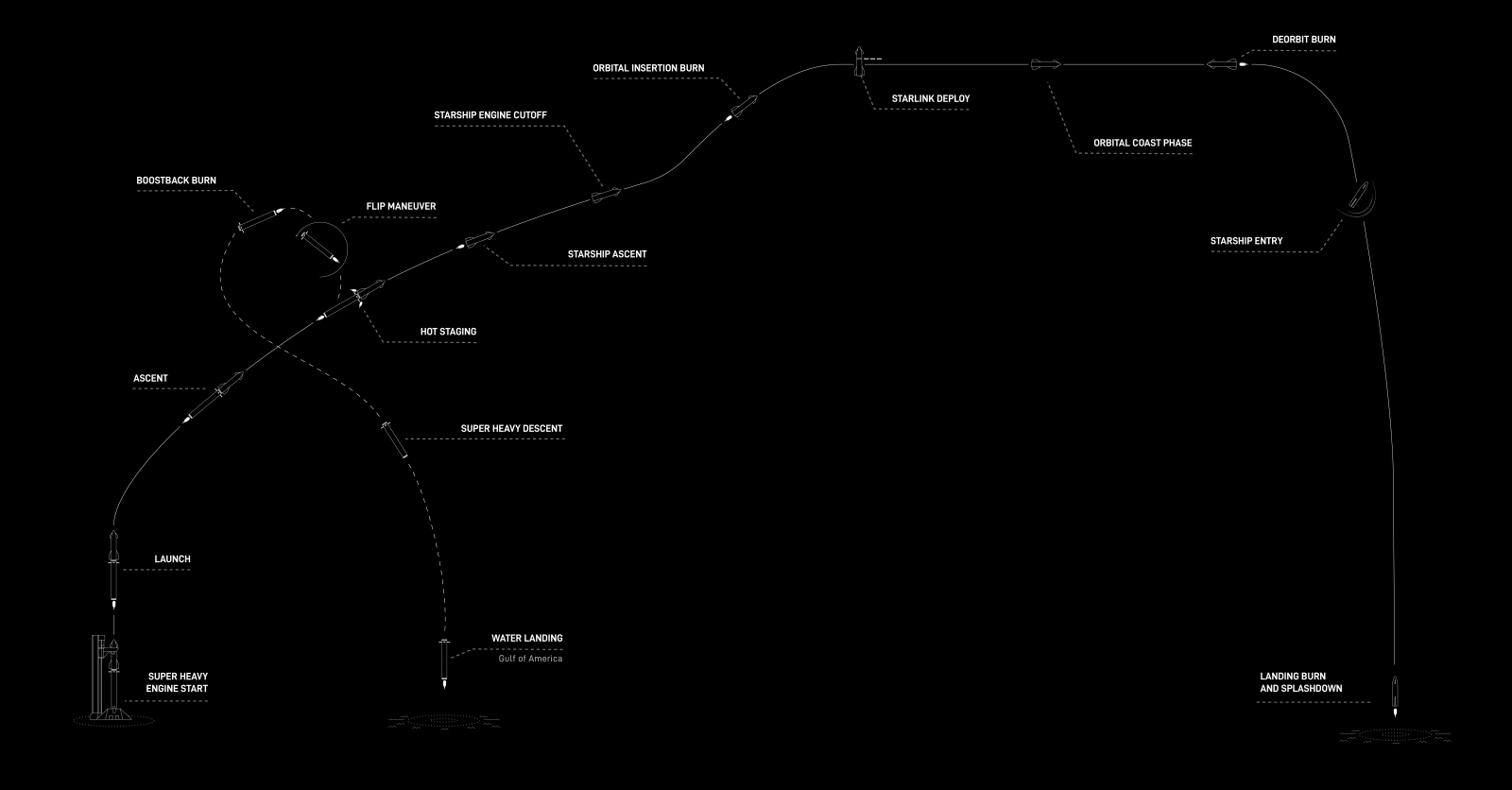
Major phases of Monday's test flight
Just as the mission clock hits two minutes and twenty seconds, the 171-foot Ship 41 will separate from the Super Heavy booster in a process called 'hot staging'. Just over seven minutes into Flight 14, the Super Heavy booster will perform a landing burn to make a controlled splashdown in the Gulf of America—a maneuver that allows the aerospace giant to safely test the limits of its upgraded Version 3 hardware over water before attempting a return-to-launch-site catch. A little over a minute after that, the Starship upper stage will see its main engines cut off. Between 25 minutes and one hour and five minutes after liftoff, Ship 41 will perform an orbital insertion burn before releasing its operational payload of 26 Starlink V3 satellites into orbit. After this, the vehicle will remain in a coast phase while making a few orbits of the Earth. At the 8-hour-and-52-minute mark, the massive spacecraft is poised to perform its deorbit burn to put it on course for another controlled splashdown. Depending on how the test flight goes, this will be the last water landing of Starship ahead of a catch-landing of Flight 15.
More on Starlust
'The Holy Grail of Rocketry': How SpaceX recovered stranded Starship upper stage from sea
SpaceX completes Starship launch rehearsal ahead of first orbital mission on September 28. See pics