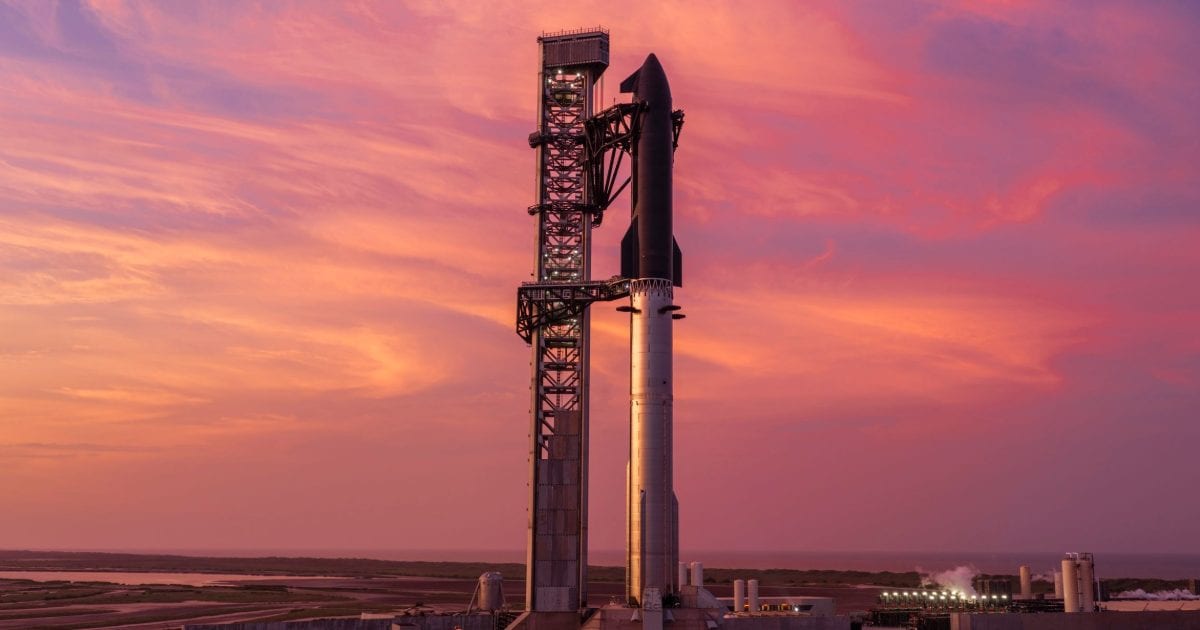
SpaceX moves Super Heavy booster to launch pad ahead of Starship’s historic orbital flight. See photos
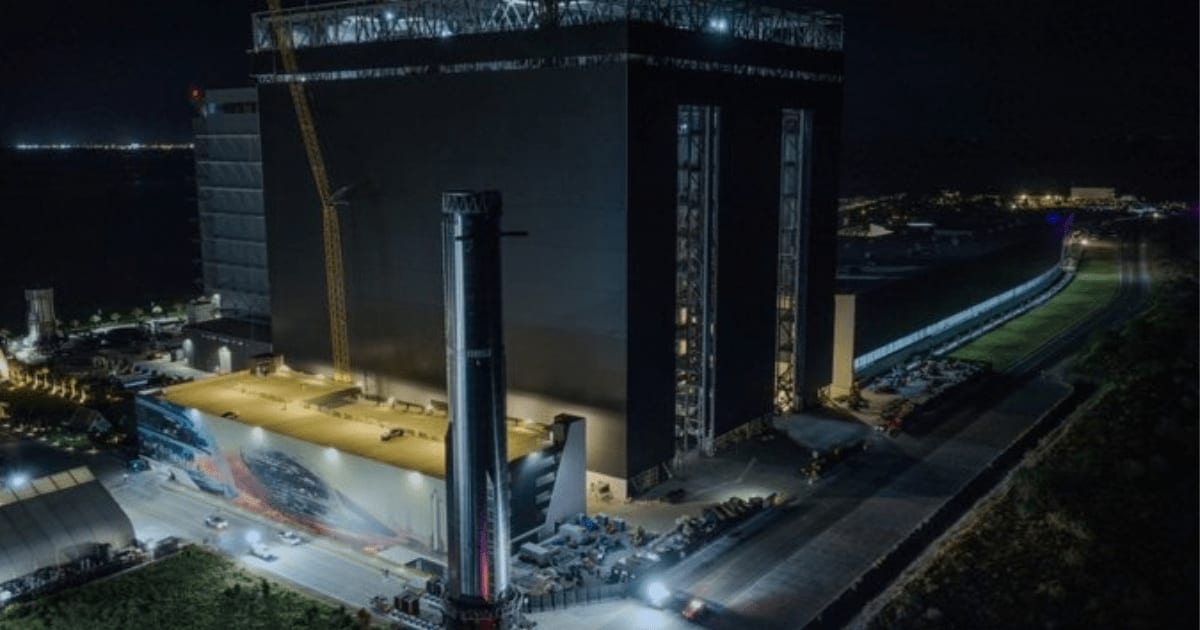
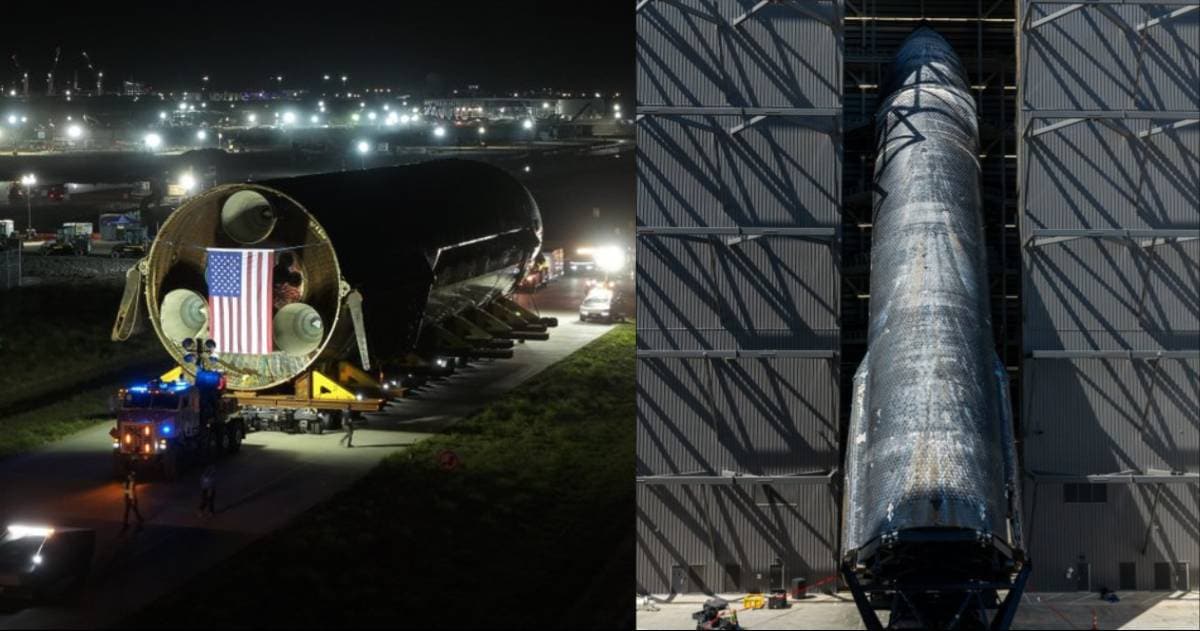
SpaceX is now one step closer to launching Starship on its most ambitious flight to date. Booster 21, the first stage for Starship's 14th integrated test flight, has been moved to the launchpad at Starbase in Texas, SpaceX announced in an X post on Monday, September 21. The company is planning to launch the rocket next Monday, September 28, pending regulatory approval, with the 75-minute launch window opening at 7:15 a.m. CDT (8:15 a.m. EDT).
Booster 21 moved to the pad at Starbase pic.twitter.com/GwW45MAkZY
— SpaceX (@SpaceX) September 21, 2026
Flight 14 will be the first time SpaceX attempts to send Starship into orbit. "By going to orbit, the next phase of developing Starship to be fully and rapidly reusable can begin," reads the mission description on SpaceX's official website. During the flight, Super Heavy will perform a splashdown in the Gulf of Mexico approximately seven minutes following the liftoff. Meanwhile, the upper stage (Ship 41) of Starship will fly at an altitude of 275 km above Earth and complete six orbits of the planet over the course of the approximately 10-hour-long flight before splashing down into the Pacific Ocean near Chile.
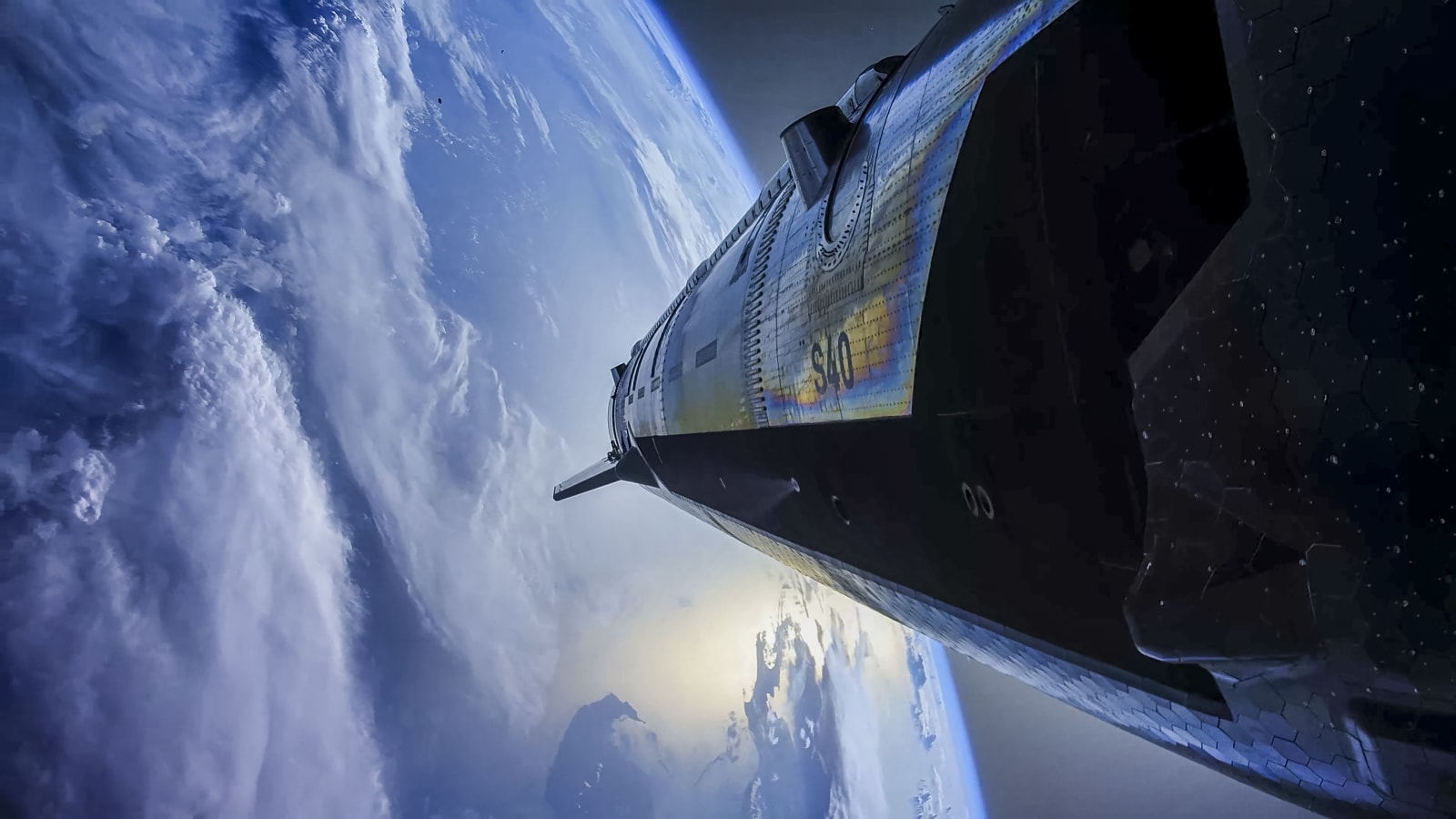
While in low-Earth orbit, the upper stage will also deploy 26 of SpaceX's next-gen Starlink V3 satellites, thereby beginning the assembly of the megaconstellation. Once released into space, the satellites will deploy their antennas and solar arrays and establish initial contact with ground stations and other Starlink satellites using radio frequency and laser links. The satellites will then use their thrusters to raise their orbits and start providing customer service within a few weeks of launch after on-orbit checkouts.
The first Starlink V3 satellites in space successfully deployed their solar arrays, fired their thrusters, established connections with the Starlink constellation using radio frequencies and laser links, and captured imagery of Starship https://t.co/Ro8MRXFu08
— Starlink (@Starlink) July 30, 2026
Each Starlink V3 satellite deployed by the spacecraft will add 1 Tbps of capacity to the current Starlink constellation, reportedly consisting of more than 11,000 satellites. Hence, a total of 26 Tbps of capacity will be added through this mission alone, which is approximately 10 times the capacity obtained from a single launch of V2 mini Starlink satellites on Falcon 9. The upcoming launch is thereby expected to considerably boost the network's capacity and user speeds.
In 7 days, the first Starship launch to orbit will be carrying Starlink V3 satellites intended for operational use https://t.co/bx24B1nz9x
— Elon Musk (@elonmusk) September 21, 2026
SpaceX deployed 20 of these V3 satellites during Flight 13 as well. But they were sent on a suborbital trajectory and were designed to fall to their demise approximately 20 minutes into their deployment after establishing communication with the ground.
SpaceX launched Starship Flight 13 from Starbase, Texas — deploying next-gen Starlink V3 satellites and testing an in-space Raptor relight. The mission followed two delays: a last-second engine abort on July 16 and a weather postponement on July 23. Video Credit: SpaceX https://t.co/VTK45Dbu8O
— Starlust (@starlustorg) July 24, 2026
Starship is the biggest and the most powerful launch vehicle ever built, with its current iteration (V3) standing at a staggering height of 408 feet (124 meters). Unlike the Falcon 9, both the stages on Starship have been designed to be reusable, and the vehicle can carry more than 100 tons to orbit in that configuration. Elon Musk has long held that full and rapid reusability will be the point of difference between humanity staying a single-planet species or becoming a multi-planet one. Starship, however, still has a long way to go before it reaches operational readiness.
More on Starlust
'The Holy Grail of Rocketry': How SpaceX recovered stranded Starship upper stage from sea