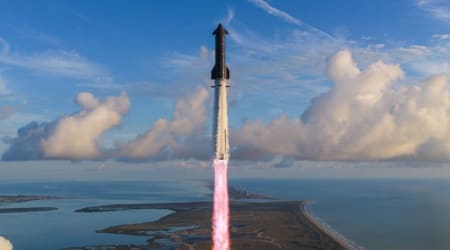
SpaceX names Bitcoin tycoon as commander of its first crewed Mars mission—all you need to know
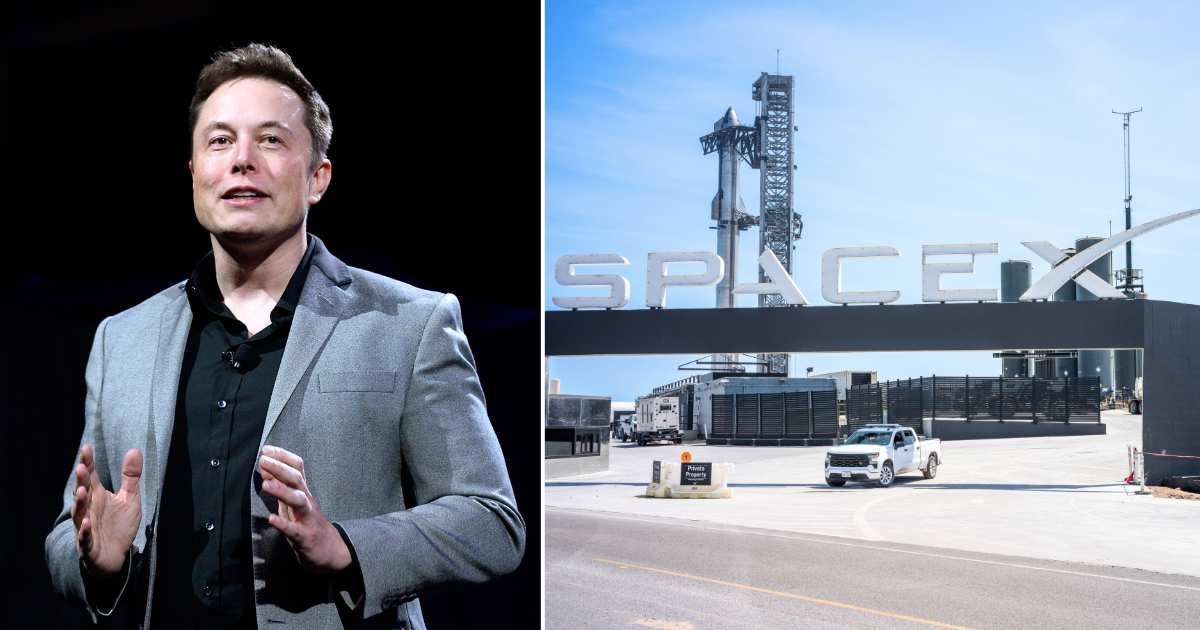
SpaceX has named the person who will command its first privately crewed mission beyond the Moon, a two-year round trip that includes a flyby of Mars. The commander is Chun Wang, a Maltese entrepreneur and co-founder of F2Pool, one of the world's largest Bitcoin mining pools. "So it's going to be a flyby mission of Mars," Wang said in the announcement. "A lot of people talk about Mars. We like Mars, we're gonna land on Mars. We're gonna do a city on Mars. But let's get it started with a flyby."

The announcement came on May 21, 2026, during the live countdown for the debut launch attempt of Starship Version 3, SpaceX's newest and most powerful rocket, from Starbase, Texas. With less than 15 minutes left on the clock, the company played a recorded video introducing the mission commander. However, the Starship V3 launch was ultimately scrubbed that day due to a mechanical issue with the launch tower, but the Mars announcement was not affected.
Wang has been to space before
Chun Wang is a Maltese entrepreneur originally from China. Wang's mining pool controls roughly 11.3% of the global Bitcoin network hashrate, and his personal Bitcoin assets are estimated to exceed $300 million, as reported by CoinDesk. Last year, he funded and commanded SpaceX's Fram2 mission that made him and his crewmates the first humans to fly in orbit over both the North Pole and the South Pole. During this mission, the team spent roughly four days in orbit and conducted 22 research experiments.
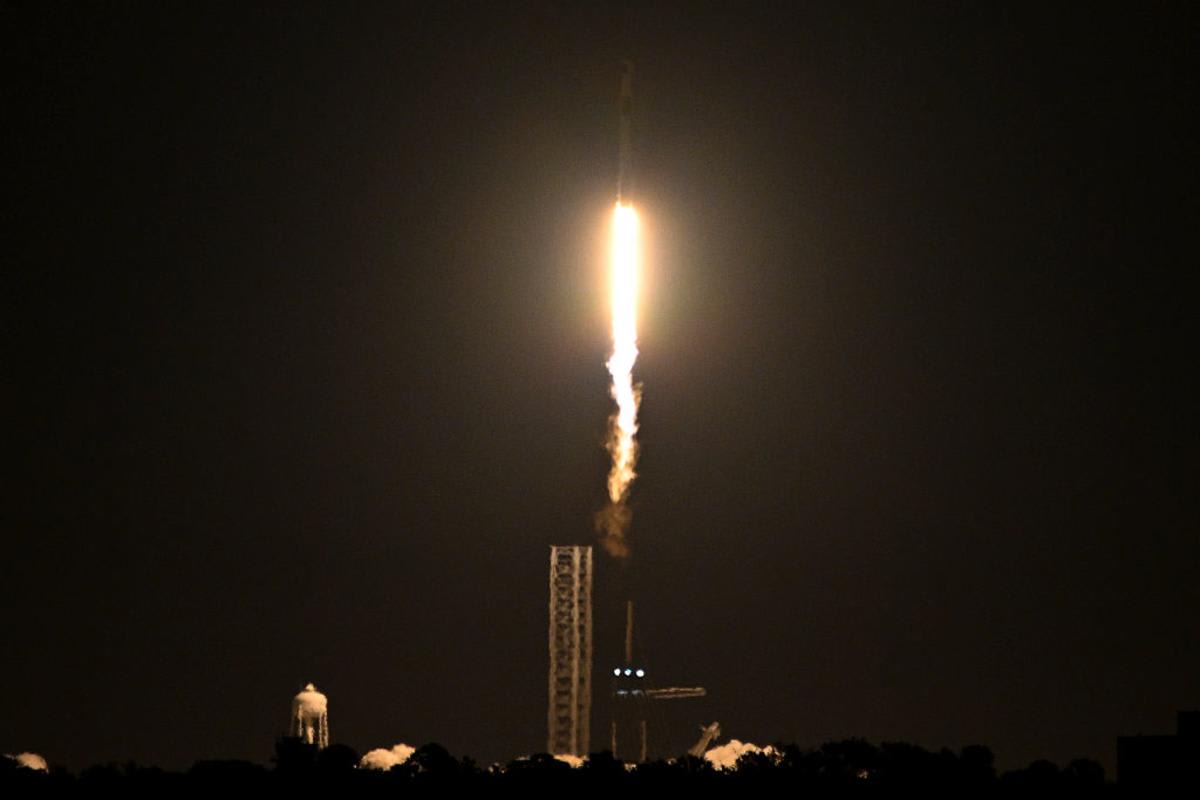
On the significance of the Mars mission, he added, “It will light the fire. It will ignite the imagination, and it will build momentum. After we come back from Mars, we will have the opportunity to take some real photos, especially of Mars. Mars will no longer become a distant place. It will become a reality." Commenting on the two-year journey, he added: "I can stare at the map view on airplanes all the way from takeoff through landing, so I think I'm going to enjoy the trip."
What the mission will do
The mission has two phases. The first is a separate, one-week commercial lunar flyby on Starship alongside Dennis and Akiko Tito. Dennis Tito became the world's first paying space tourist when he visited the International Space Station in 2001, and he booked his Starship lunar seats in 2022. On this mission, SpaceX has confirmed the spacecraft will fly within 200km of the Moon's surface. "The week-long circumlunar fly-by mission will help advance Starship's systems for deep-space, long-duration missions”, SpaceX described in a published statement.
Liftoff of Starship on its twelfth flight test pic.twitter.com/I7N0zYIqkH
— SpaceX (@SpaceX) May 23, 2026
The second phase is the Mars mission itself. The crew will pass by the planet with the flyby itself lasting roughly two hours and then return to Earth. The full round trip is expected to take approximately two years. According to SpaceX, the mission will also explore outside the Earth-Moon system before flying to Mars. "Even though it's a flyby, it will try a lot of things never attempted before," Wang commented.
What has to happen before it can fly
SpaceX did not announce a target launch date or year for Wang's Mars mission. No other crew members have been named either. As of this announcement, Starship has not yet reached orbit, let alone carried astronauts to space. Before any crewed deep-space mission can fly, the vehicle needs to complete a series of milestones, such as orbital flight and in-space propellant refueling, a technical requirement for a deep-space mission of this distance.
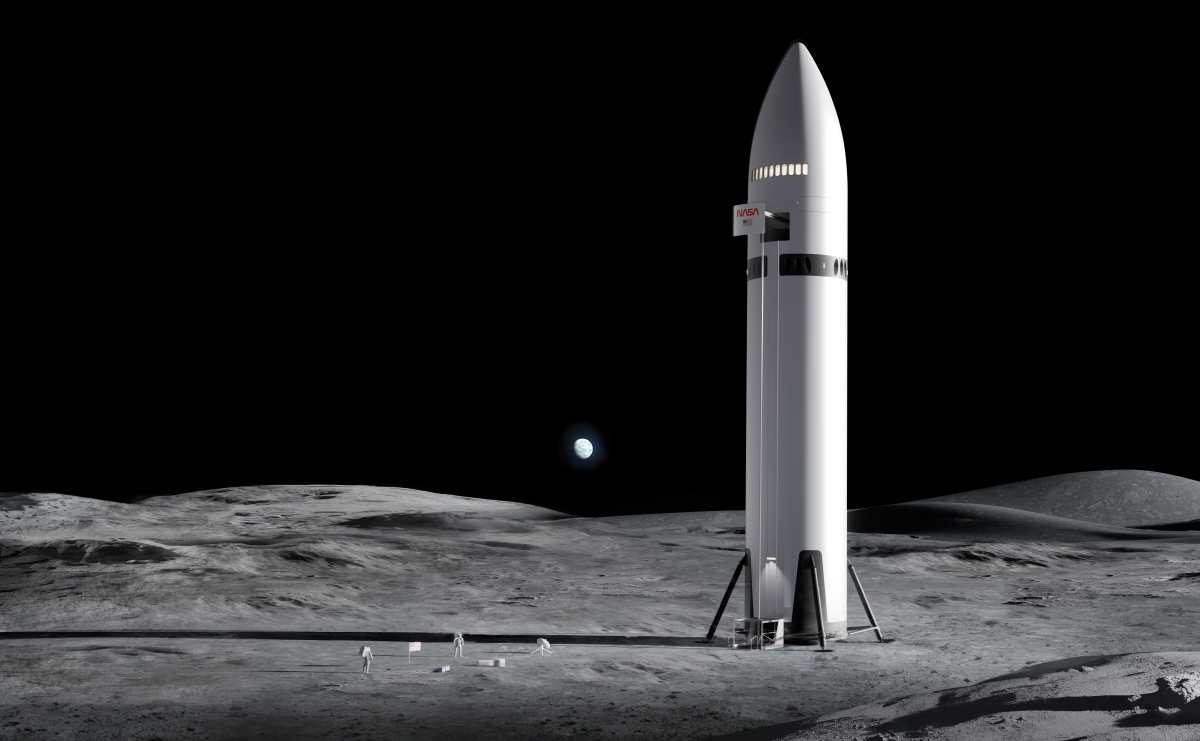
NASA is also depending on Starship as a crewed lunar lander for its Artemis program, with a crewed Moon landing currently being targeted in 2028. This milestone represents an earlier and less complex use of the same vehicle. This is not the first time a private passenger has announced plans to fly on Starship without a firm date following. Japanese entrepreneur Yusaku Maezawa announced a crewed lunar flyby mission, called dearMoon, on Starship in 2018, then canceled it in 2024 after delays. "I signed the contract in 2018 based on the assumption that dearMoon would launch by the end of 2023," he wrote at the time. "It is still uncertain as to when Starship can launch." Wang's Mars mission carries the same dependency: it can only fly once the vehicle is ready to carry humans beyond Earth orbit.
More on Starlust
Blue Origin's rocket explodes on launch pad in Florida—a look at New Glenn's troubled past