Why do astronauts train underwater before going on spacewalks?
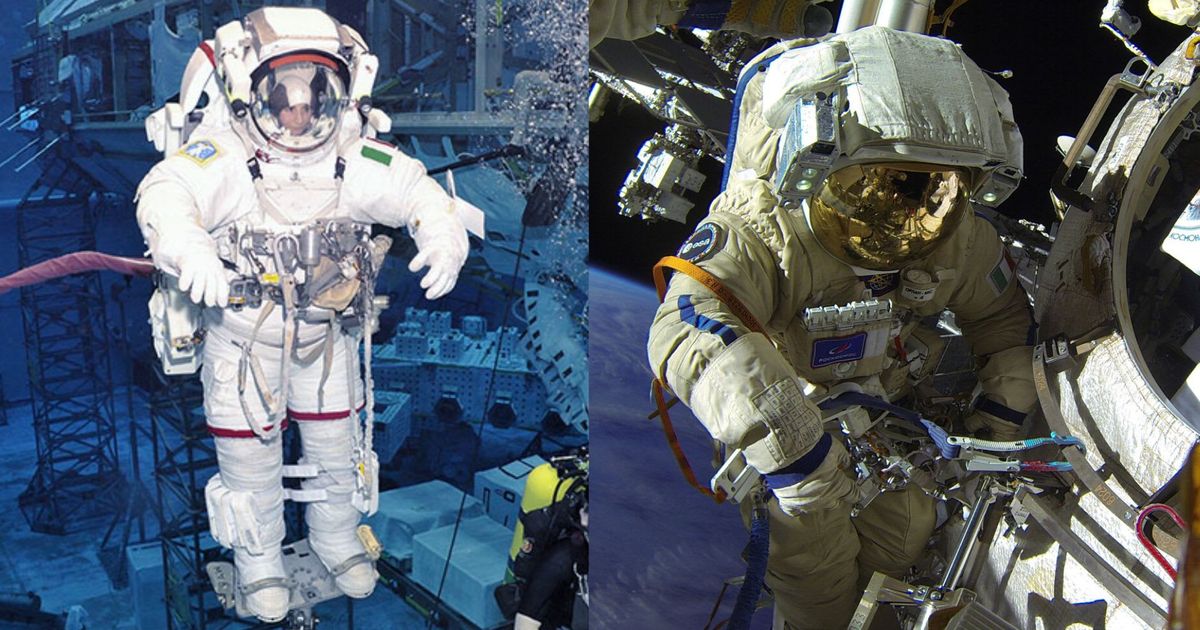
Extravehicular Activity (EVA), or a spacewalk, is an essential part of space exploration, and dozens of astronauts have performed them to repair spacecraft and deploy key instruments. Residents of the International Space Station (ISS) often step out into the vacuum of space for maintenance and upgrades of the lab’s components, but also to practice for bigger missions that would require them to work in weightlessness. Learning how to handle essential tasks while wearing bulky spacesuits is mandatory for all astronauts, and the preparation for that begins in Earth's waters.

Astronauts today are trained at the Neutral Buoyancy Lab (NBL) located at NASA’s Johnson Space Center in Houston, Texas. This facility has a vast pool which contains more than six million gallons of water and is the best training ground for spacewalks. NASA relies on underwater training as it is the closest way to mimic the weightlessness astronauts experience in space.
The term "neutral buoyancy" means that the astronauts neither sink nor float when they’re in the training pool; this gives them an idea of the space environment and how to work with tools. Initially, officials didn’t anticipate the challenges that spacewalks would pose. Edward White was the first American to conduct a spacewalk in June 1965, but since he didn’t do much complex work, the challenges weren’t obvious. At the time, NASA did not utilize neutral buoyancy for preparation; instead, White trained in a zero-G airplane and on a frictionless air-bearing floor that provided a two-dimensional analogue to weightlessness.
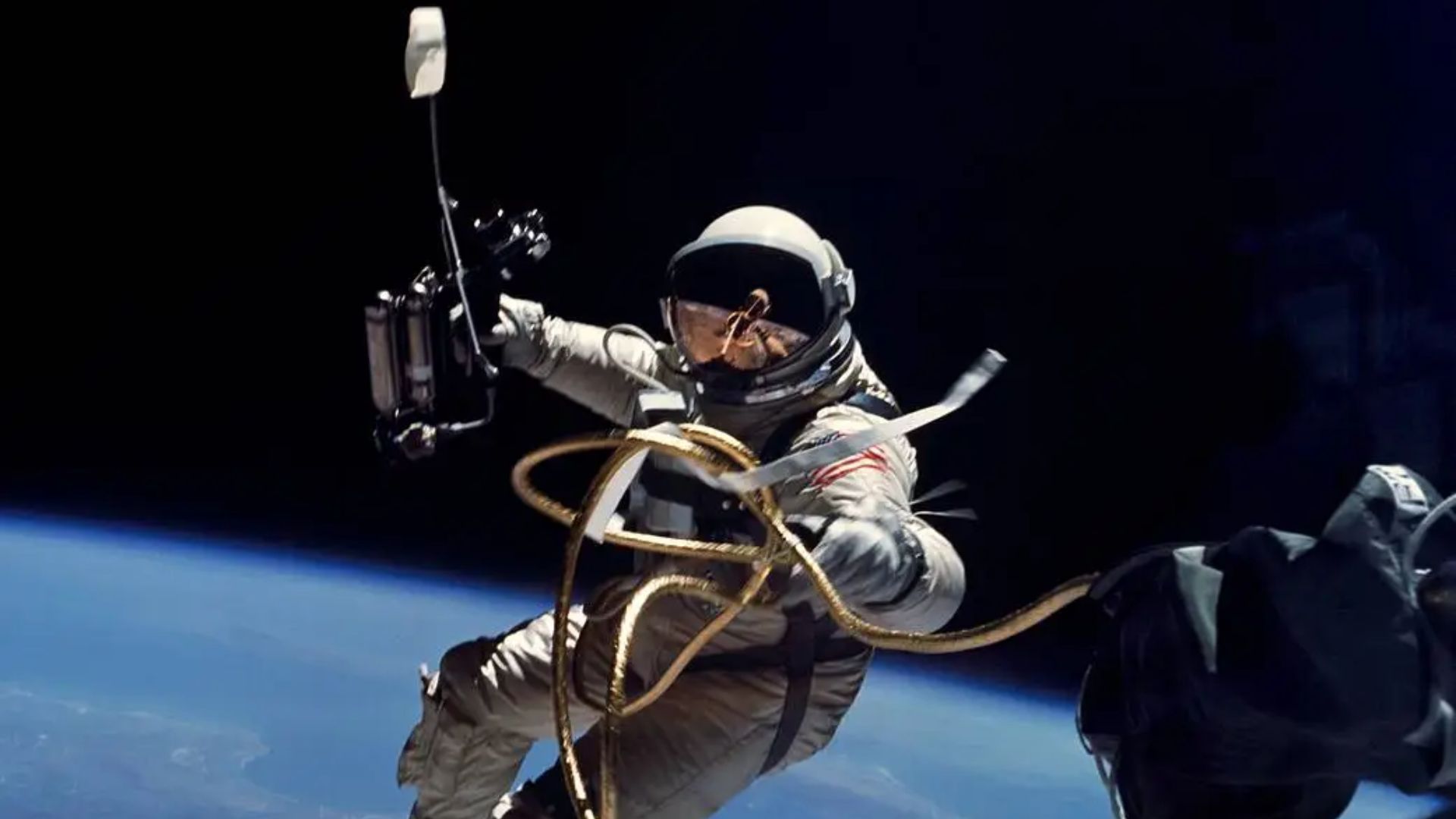
Why is underwater training necessary?
It wasn’t until astronaut Eugene Cernan’s EVA during the Gemini IX-A mission in 1966 that the true physical demands of spacewalks were revealed. Packed in his pressurized suit, Cernan had to carry out most of his tasks without adequate handholds and footholds, which left him exhausted and overheated. After noting the complexities of the spacewalk, officials started exploring better ways to rehearse EVAs—which turned out to be underwater training. Research on neutral buoyancy was already underway, but Cernan’s EVA was the one that convinced officials that underwater training was necessary.
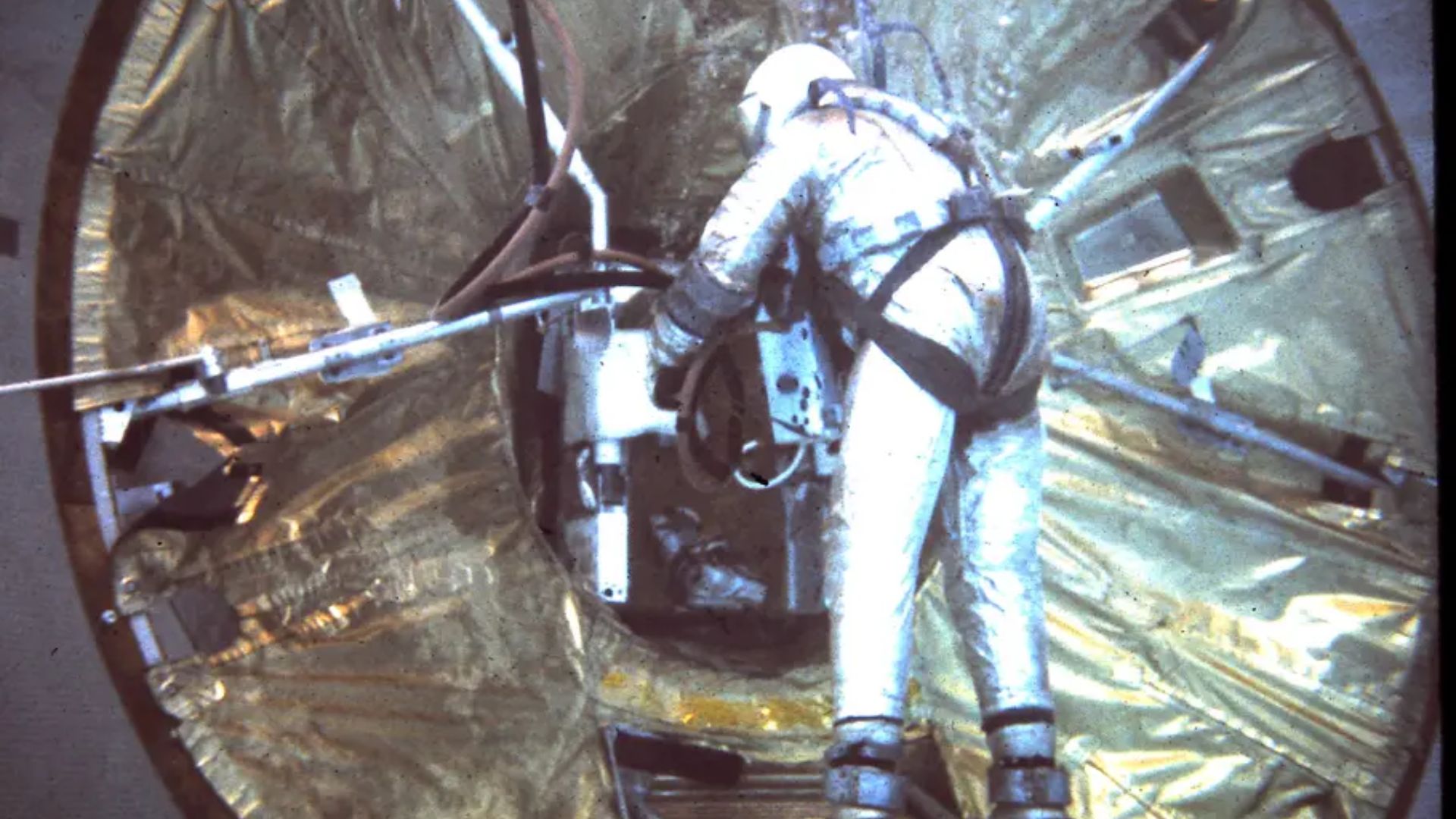
In 1966, Buzz Aldrin—the second man to walk on the Moon after Neil Armstrong—was the first to receive meaningful EVA training in a pool at a private military boys’ school in Maryland. A year later, the Johnson Space Center opened its first dedicated water training facility in Houston.
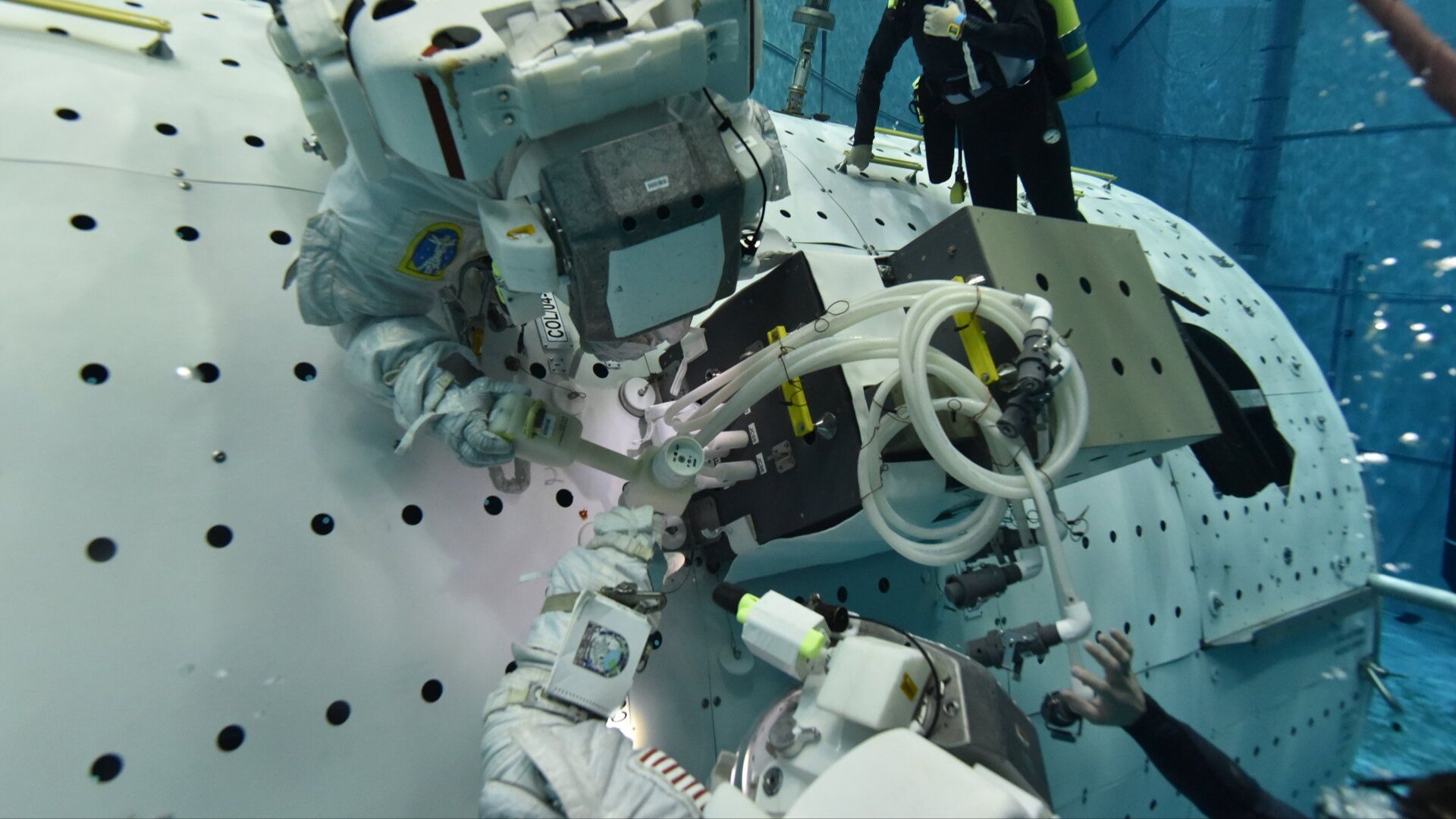
A much larger facility was opened in 1968 at NASA’s Marshall Space Flight Center, followed by the NBL in 1997. Aldrin’s spacewalk on the Gemini XII mission demonstrated that working in a pressurized suit can be managed by tethers, handholds, and footholds—and the lessons learned then are used to this day in the training pool as well as in space.
How do astronauts train underwater?
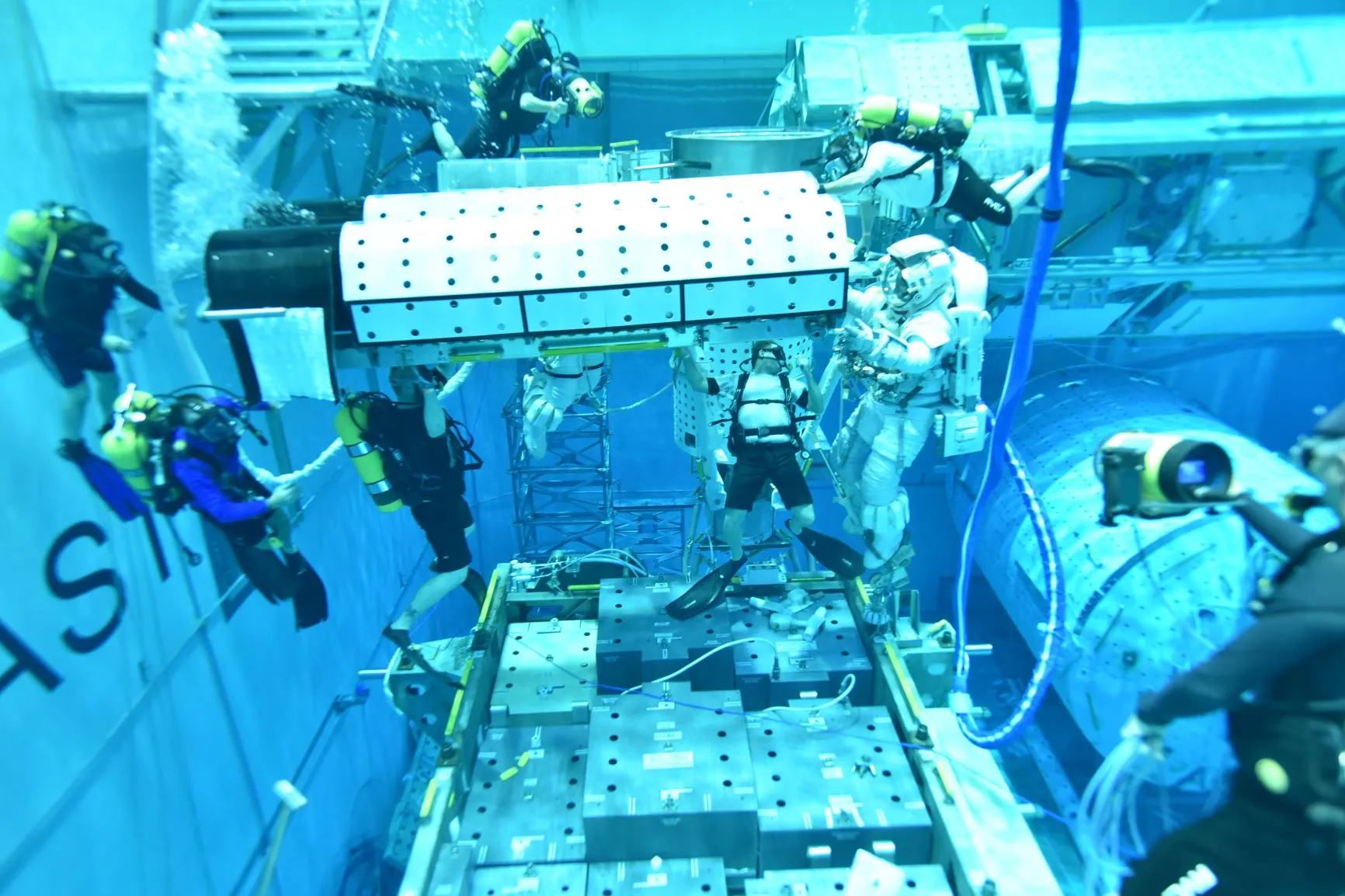
Today, the NBL is where astronauts get their training in a 202-foot-long, 102-foot-wide, and 40-foot-deep pool which has full-scale components that replicate the exterior of the ISS for practice. The trainees also wear a backpack which provides oxygen and monitors their health.
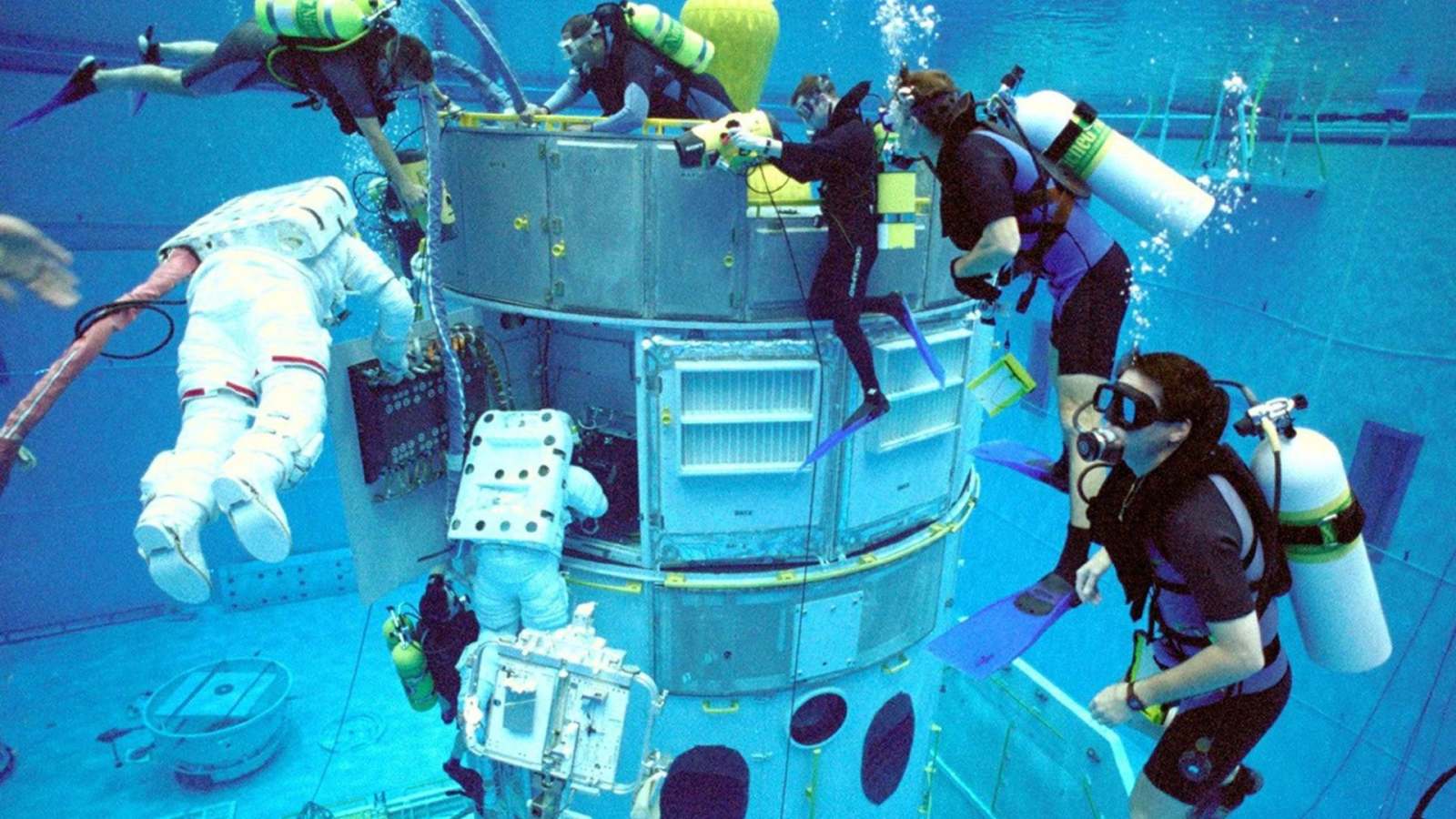
Their suits are also fitted with weights and flotation devices to make them feel like they’re ‘hovering’ instead of sinking or floating, all under the guidance of trained scuba divers. Each training session could last for several hours, just like a real spacewalk. “When I did my first spacewalk, shortly after we went out the hatch, the Sun set and it got dark, and it felt exactly like I was in the pool,” NASA astronaut Nick Hague said, describing his experience.
Spacewalk training using virtual reality
Apart from underwater training, astronauts also train using virtual reality. They wear a helmet with a video screen inside that simulates outer space and looks just like a real spacewalk. During this training, they practice necessary tasks while wearing special gloves that allow their hand movements to be shown on the video.
Why are spacewalks necessary?
Spacewalks are necessary for a wide range of tasks, ranging from installing new equipment on the ISS to carrying out repair and maintenance work. During the Space Shuttle era, NASA launched several missions to service the Hubble Space Telescope in low-Earth orbit through spacewalks.
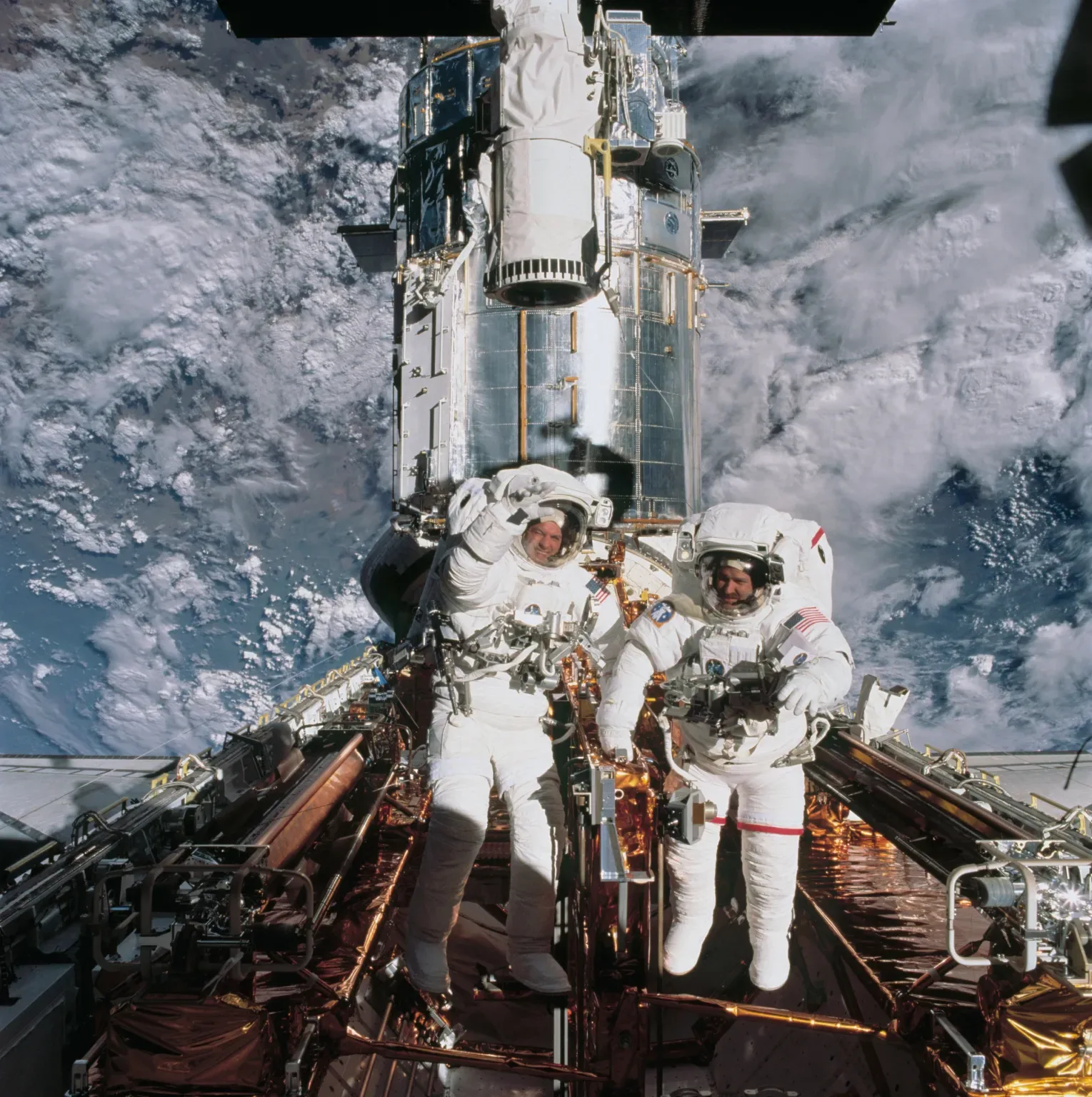
Residents of the ISS have also conducted spacewalks for either installing new experiments and equipment outside the station or repairing critical components. For instance, NASA astronauts Chris Williams and Jessica Meir went on a 7-hour spacewalk on June 30, 2026, to remove and replace a malfunctioning wrist joint of the Canadarm2 robotic arm.
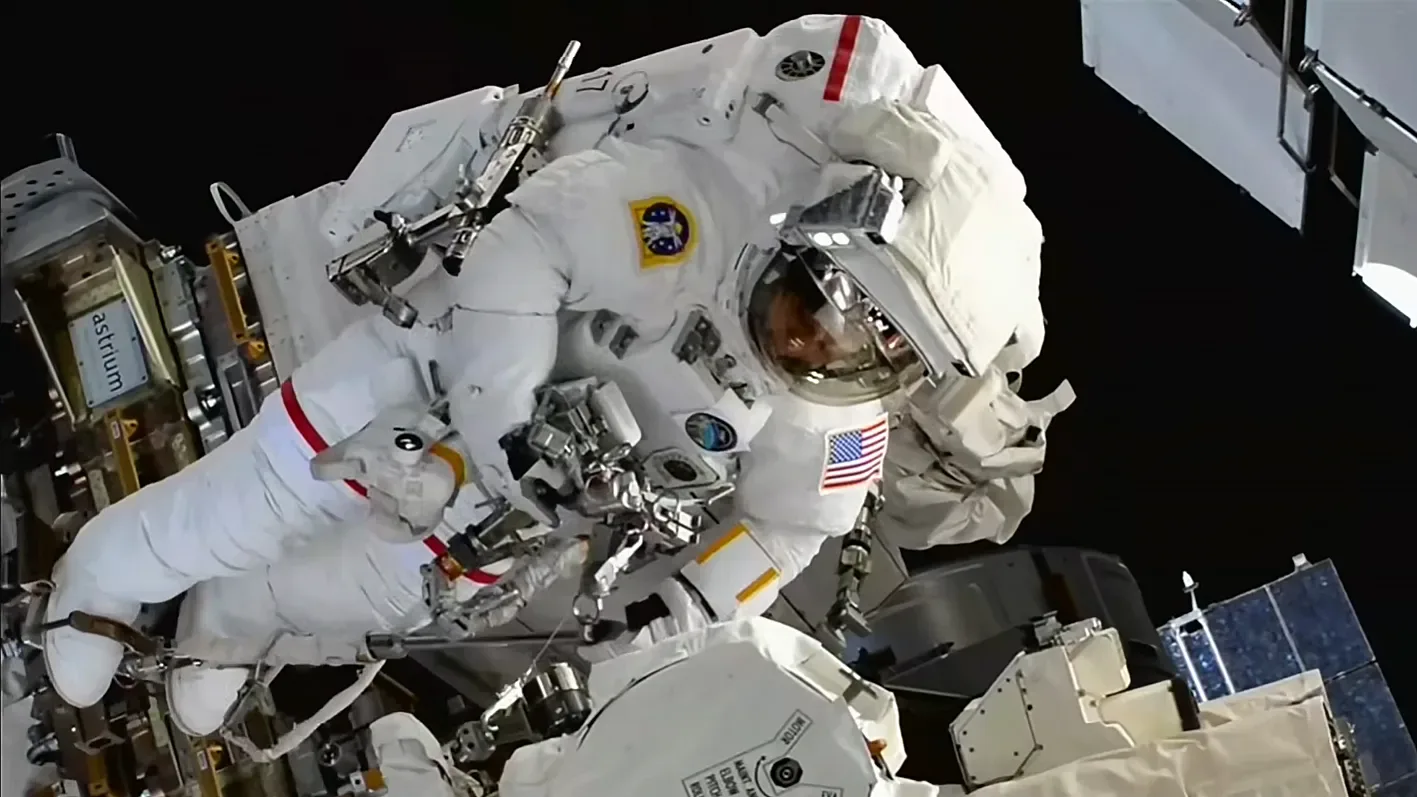
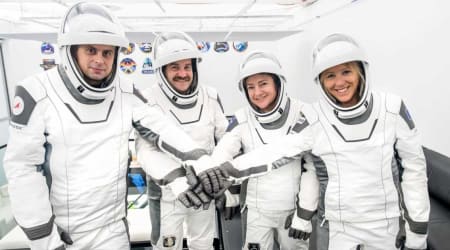
Spacewalks serve another purpose—testing the robustness of a suit. During the Polaris Dawn mission in 2024, billionaire entrepreneur Jared Isaacman, along with crewmate Sarah Gillis, conducted the world's first private spacewalk wearing brand new suits made by SpaceX.
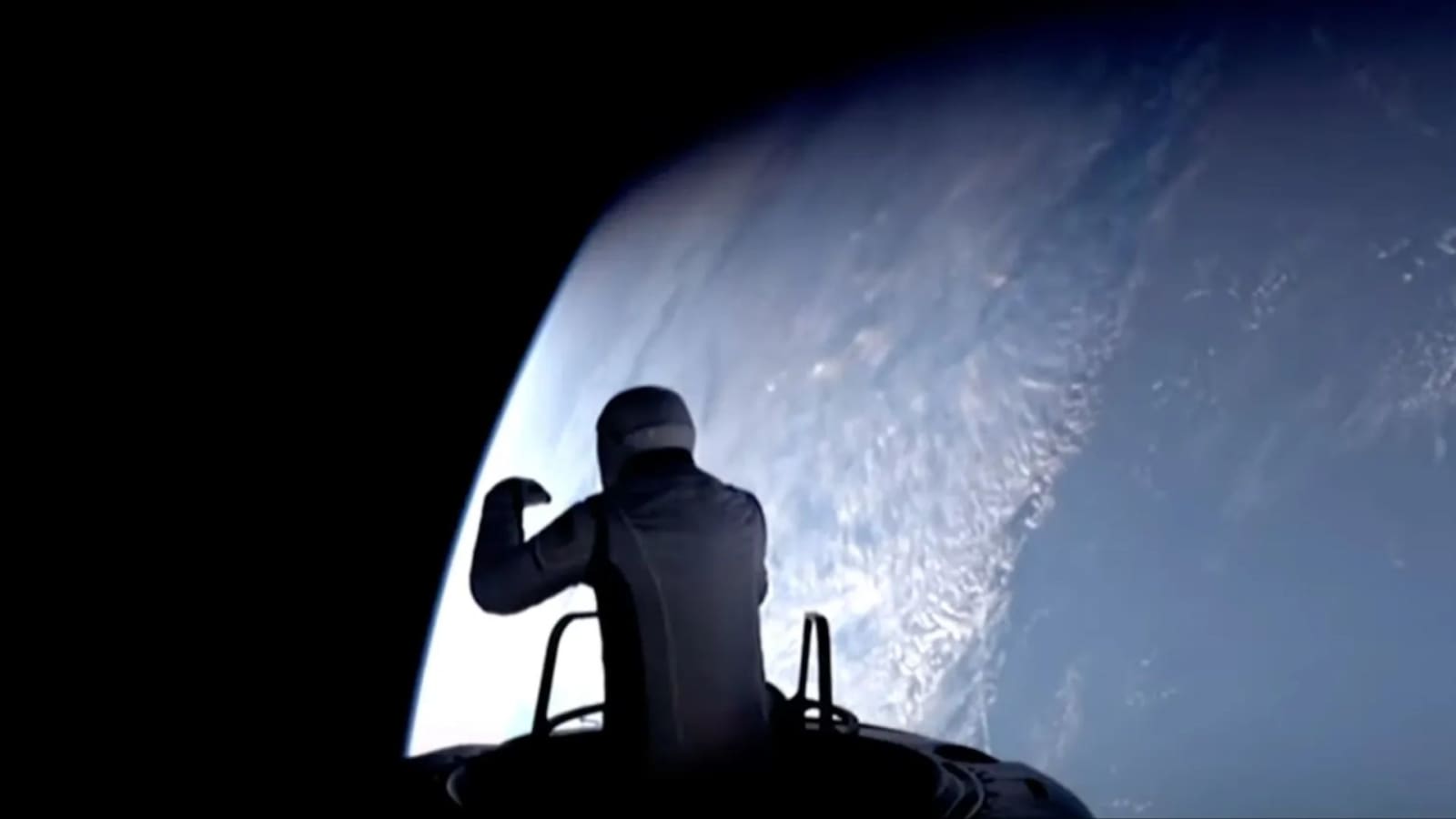
It marked an important step toward spacesuit design that could aid long-duration missions in the future.
What happens if an astronaut floats away during spacewalk?
Drifting away from the space station, or any spacecraft during a spacewalk, is a possible risk, which is why astronauts tether themselves to a stationary object (relatively speaking). These tethers are thick cords that are connected to an astronaut’s suit and the spacecraft. These cords are also used to keep tools from flying away, because if they’re lost, they could float around Earth or deorbit and reenter the atmosphere (check out what would happen to lost tools in space here).
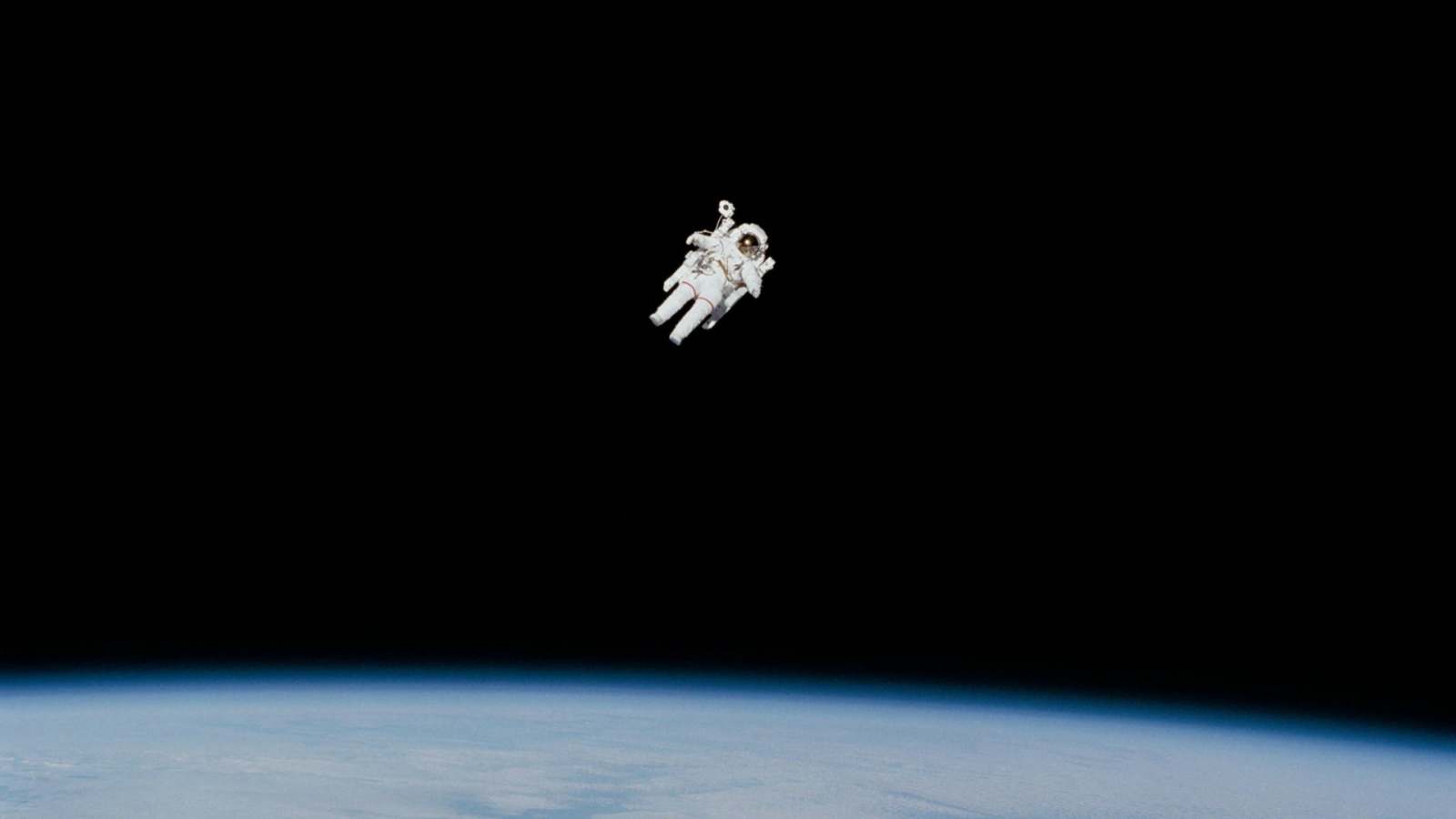
Notably, there have been several daring instances when astronauts floated away from their spacecraft for spacewalks without a safety cord. The first untethered spacewalk was conducted by NASA astronaut Bruce McCandless to test the Manned Maneuvering Unit (MMU) on February 7, 1984, during the STS-41B mission. The MMU, however, is no longer in use for spacewalks, as tethers are considered safer. Although even today, astronauts wear a backpack called the Simplified Aid for EVA Rescue, or SAFER, that has small thrusters to help them move around. It’s also a backup option in case they somehow get untethered.
How do astronauts breathe during spacewalks?
A spacewalk can last more than six hours, and astronauts need adequate water, oxygen, and optimum temperature to operate. This is where the spacesuits work their magic. The suits are filled with pure oxygen before astronauts exit the spacecraft to ensure all nitrogen in the body is flushed out. If not eliminated before stepping out into space, nitrogen gas bubbles can cause astronauts to feel pain in their shoulders, elbows, wrists, and knees—a condition known as decompression sickness, or "the bends."
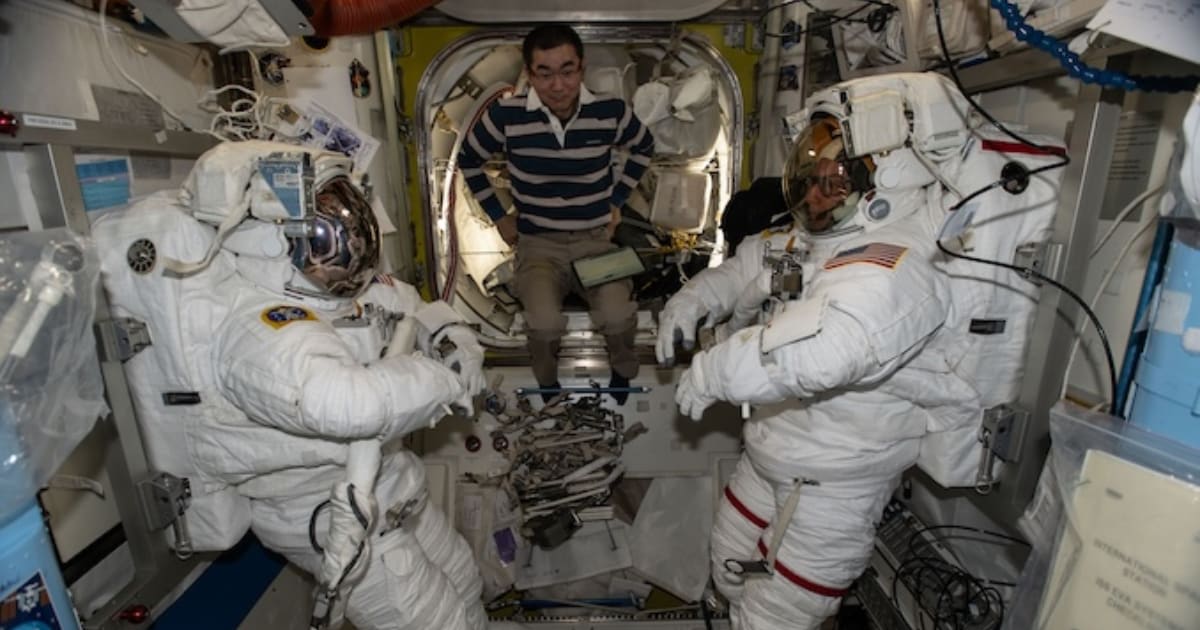
The spacesuit also has a backpack called the Portable Life Support System (PLSS), which runs on electricity and provides oxygen, recycles carbon dioxide, maintains temperature, circulates cooling water, and provides communications and warnings during emergencies. Beneath the suit, astronauts wear another piece of clothing which has tubes woven into it to circulate cold water; this water is provided by the PLSS to keep the temperature within acceptable limits.
More on Starlust:
NASA and SpaceX Crew-13 ready for Sep 2026 launch to the ISS: Key highlights, crew details, and more
NASA astronaut Anil Menon to conduct his first spacewalk with veteran Jessica Meir on August 6