Blue Origin's rocket explodes on launch pad in Florida—a look at New Glenn's troubled past
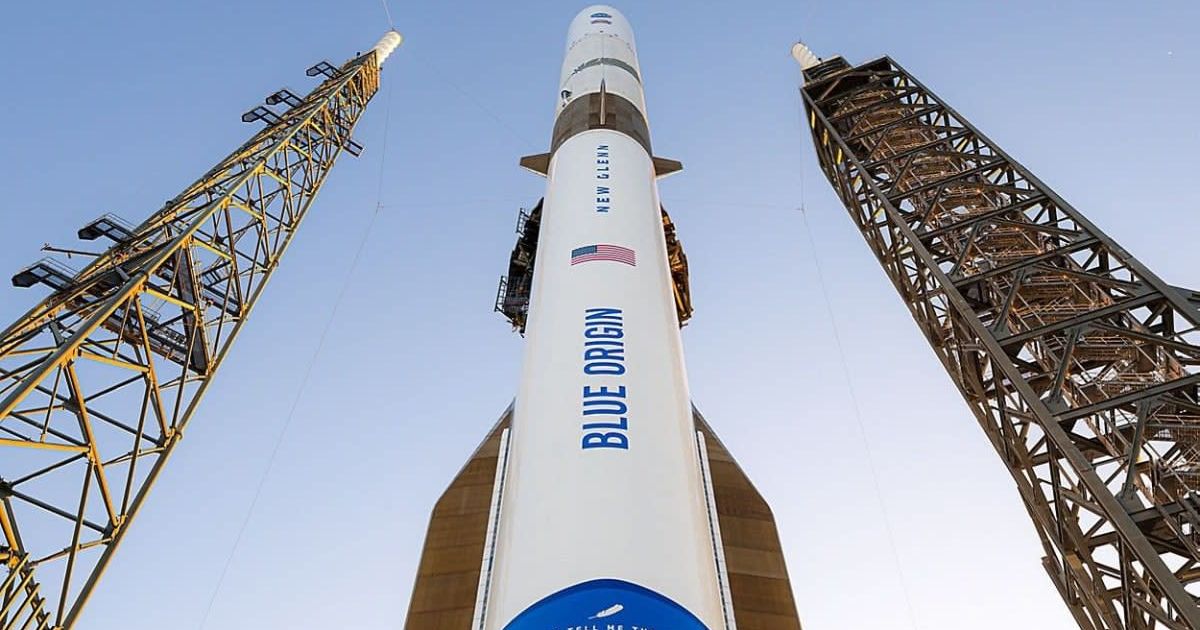
A New Glenn rocket made by Jeff Bezos-owned Blue Origin exploded on its launch pad in Cape Canaveral, Florida, at 9:00 PM local time on 28 May, 2026. The explosion took place during a test prior to an expected June launch that was supposed to insert 48 satellites for Amazon's Leo internet service into low Earth orbit.
Footage circulating on social media showed the rocket exploding violently before liftoff. Thankfully, Bezos confirmed that there had been no casualties in the accident. "All personnel are accounted for and safe. It’s too early to know the root cause but we’re already working to find it. Very rough day, but we’ll rebuild whatever needs rebuilding and get back to flying. It’s worth it," wrote the Amazon founder on X.
All personnel are accounted for and safe. It’s too early to know the root cause but we’re already working to find it. Very rough day, but we’ll rebuild whatever needs rebuilding and get back to flying. It’s worth it.
— Jeff Bezos (@JeffBezos) May 29, 2026
SpaceX CEO Elon Musk, meanwhile, commented on footage showing New Glenn's explosion, saying, "Most unfortunate. Rockets are hard."
But what caused the malfunction that led to the fiery explosion? NASA and Blue Origin both attributed the blast to an "anomaly." NASA Administrator Jared Isaacman said, "NASA is aware of the anomaly that occurred tonight at Launch Complex 36 involving Blue Origin’s New Glenn rocket at Cape Canaveral Space Force Station. Spaceflight is unforgiving, and developing new heavy-lift launch capability is extraordinarily difficult. We will work with our partners to support a thorough investigation of this anomaly, assess near-term mission impacts, and get back to launching rockets," adding that the space agency would issue an update on whether the failed launch would affect its timeline for the Artemis and Moon Base programs.
NASA is aware of the anomaly that occurred tonight at Launch Complex 36 involving Blue Origin’s New Glenn rocket at Cape Canaveral Space Force Station. ⁰⁰Spaceflight is unforgiving, and developing new heavy-lift launch capability is extraordinarily difficult. We will work with…
— NASA Administrator Jared Isaacman (@NASAAdmin) May 29, 2026
While New Glenn's explosion on Thursday night was indeed shocking, the rocket had run into problems earlier, as well.
A critical mission failure in April 2026
Weeks before the explosion in Cape Canaveral, on April 19 this year, Blue Origin reported a critical mission failure during New Glenn's third flight (NG-3): during the flight, the rocket's second stage suffered a malfunction, preventing the rocket from reaching its target orbit. Consequently, New Glenn inserted its payload, the BlueBird 7 satellite for AST SpaceMobile, in an orbit that was too low.
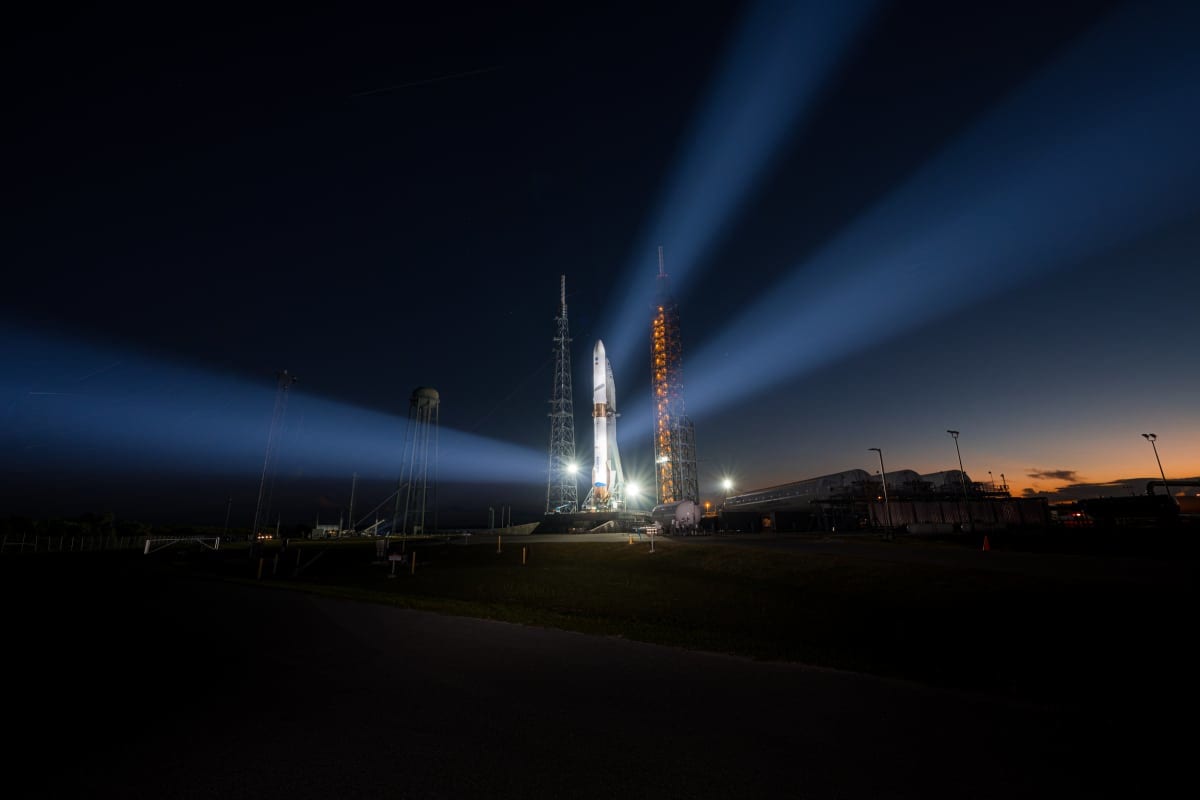
“Prior to our second GS2 burn, we experienced an off-nominal thermal condition, and, as a result, one of the BE-3U engines didn’t achieve full thrust to reach our target orbit,” Blue Origin stated at the time. While the Federal Aviation Administration (FAA) had grounded New Glenn and launched a probe into what led to this failure, SpaceNews reported that the investigation had been closed prior to Thursday's failed launch. “The final mishap report identified the direct cause of the mishap as a cryogenic leak that froze a hydraulic line and led to a thrust anomaly during the second-stage engine burn,” the publication quoted the FAA as saying on the April malfunction.
Hiccups on NG-1, success on NG-2
While the first and second flights of the New Glenn rocket, named NG-1 and NG-2, respectively, were both deemed successes, NG-1 did experience a hiccup. Although New Glenn made it to orbit in its maiden flight, the rocket's first stage (GS-1) or booster, which was intended to be captured and reused, was lost on descent. Following its failure to land the booster as intended, Blue Origin, in association with the FAA, launched a probe into what went wrong during atmospheric re-entry. The investigation was concluded in March 2025, with the FAA stating, "The final mishap report identified the proximate cause of the mishap as an inability of New Glenn’s first stage to restart the engines, preventing a reentry burn from occurring, and resulting in the loss of the stage," reported SpaceNews.
However, NG-2, which lifted off on November 13, 2025, was a complete success: not only did the New Glenn rocket manage to successfully deliver its payloads, but Blue Origin was also able to land the booster on its Landing Platform Vessel 1 (LPV1), named Jacklyn, in the Atlantic Ocean. This marked Bezos' company's first successful attempt to catch a rocket booster, making Blue Origin the second firm to achieve this feat, after SpaceX. Commenting on the success, Blue Origin CEO Dave Limp said in a statement, “We achieved full mission success today, and I am so proud of the team. It turns out Never Tell Me The Odds had perfect odds—never before in history has a booster this large nailed the landing on the second try. This is just the beginning as we rapidly scale our flight cadence and continue delivering for our customers.”
Unreported failures brought to light
April's mission failure on Blue Origin's part was the company's first major failure in some years: the last time Bezos's company faced an issue was in 2024, with Bloomberg News reporting a couple of previously unreported incidents that took place that year.
In an August 2024 report, Bloomberg said that the upper portion of a New Glenn rocket had crumpled into itself due to a worker's error in the factory. Further, in a separate incident, the upper portion of another rocket failed during stress testing and exploded, the publication added.
Trouble with New Glenn engines
Prior to these issues, in 2023, the company's BE-4 rocket engines that power the New Glenn's first stage experienced a catastrophic failure. As reported by CNBC, a BE-4 engine exploded in June 2023 during testing, with people familiar with the test describing a "video of a dramatic explosion that destroyed the engine and heavily damaged the test stand infrastructure." Despite the failure, Blue Origin, at the time, said in a statement that no one was injured in the incident.
More delays on the card?
Beyond these issues, Blue Origin's New Glenn rocket has been plagued by delays due to several factors, including sluggish development and leadership changes. Officially announced in 2016, New Glenn was slated to take to space by 2020. However, it wasn't until January 16, 2025, that the Bezos-owned company's rocket had its maiden flight.
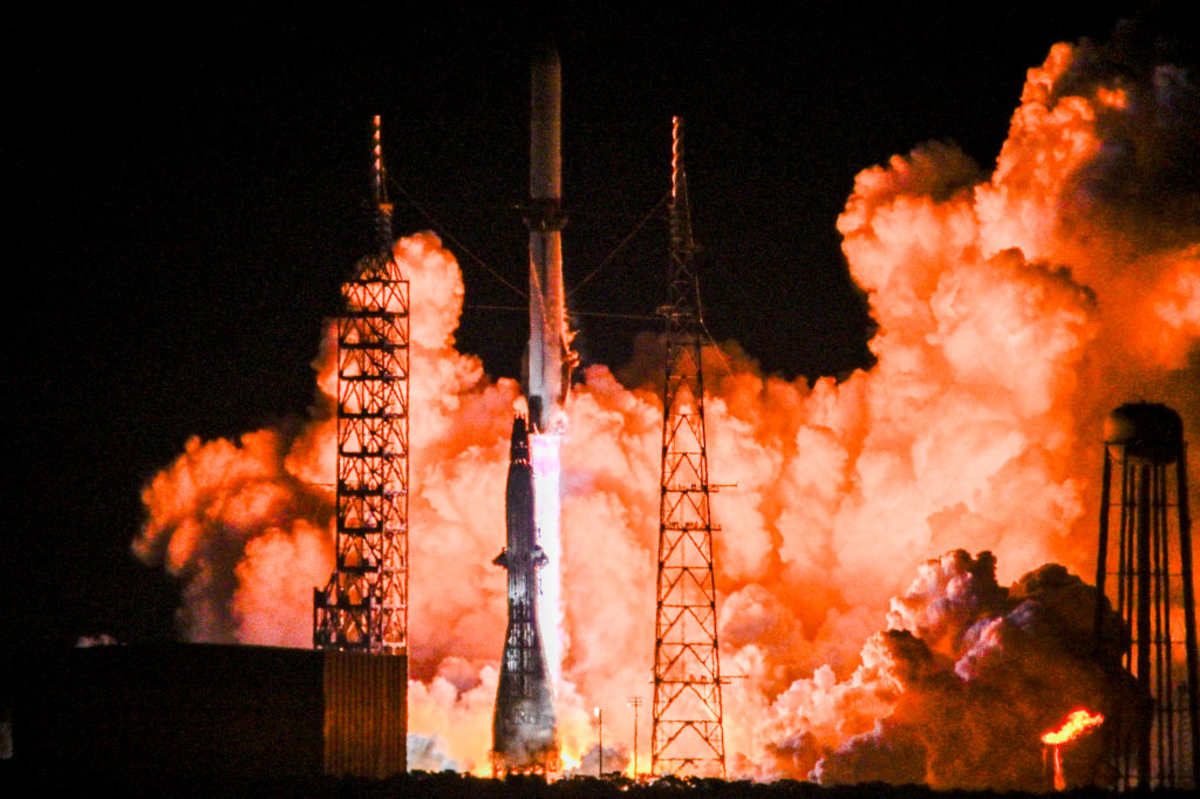
May 28's explosion of the New Glenn rocket could set back Blue Origin even further; Thursday's explosion took place on the Space Launch Complex-36 (SLC-36) in Cape Canaveral, the only launch pad capable of hosting a New Glenn flight. While the failure did not result in any loss of lives, the damage to launch pad infrastructure from the violent explosion could affect how soon New Glenn can take to the skies again.
More on Starlust:
NASA’s permanent Moon base could span hundreds of square miles: 'We'll not slow down'
Artemis program receives boost as Blue Origin's lunar lander passes critical test at NASA facility